Learning number patterns Addition & Subtraction Worksheets
3 filtered results
-
From - To
Explore our engaging Learning Number Patterns Addition & Subtraction Worksheets, designed to boost your child's mathematical understanding through fun and educational exercises. Perfect for young learners, these worksheets help develop essential skills in recognizing and applying number patterns. By practicing addition and subtraction within patterned sequences, students build strong problem-solving abilities and numerical fluency. Our colorful, expertly crafted worksheets offer varied levels of difficulty to cater to different learning needs, making math enjoyable and accessible. Help your child gain confidence and excel in math with Kids Academy’s top-notch resources!
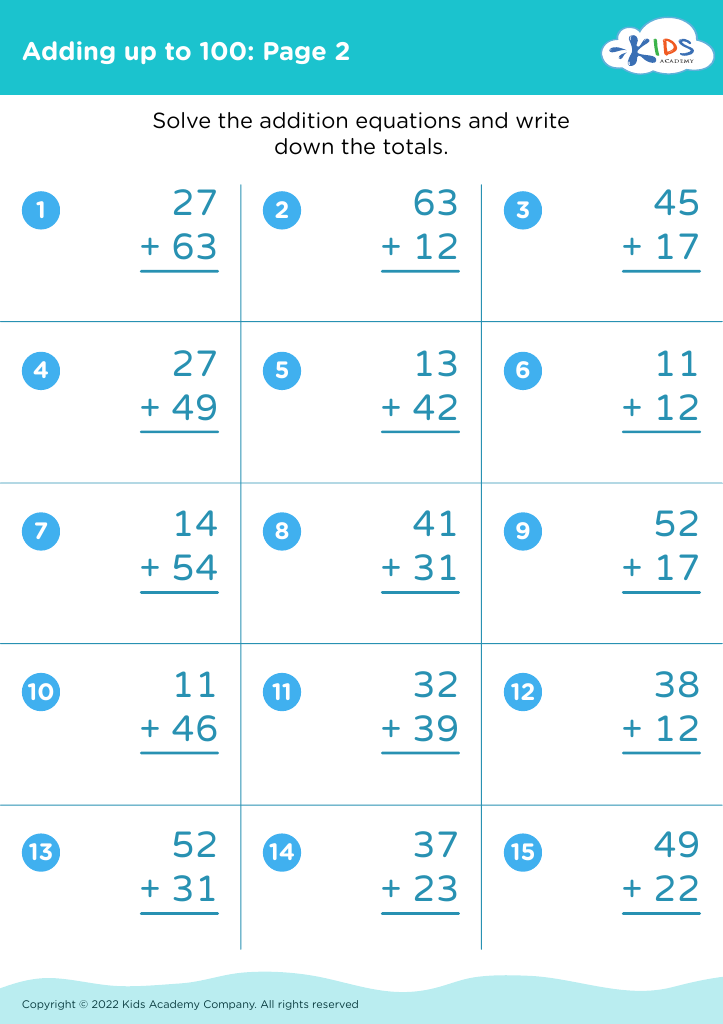
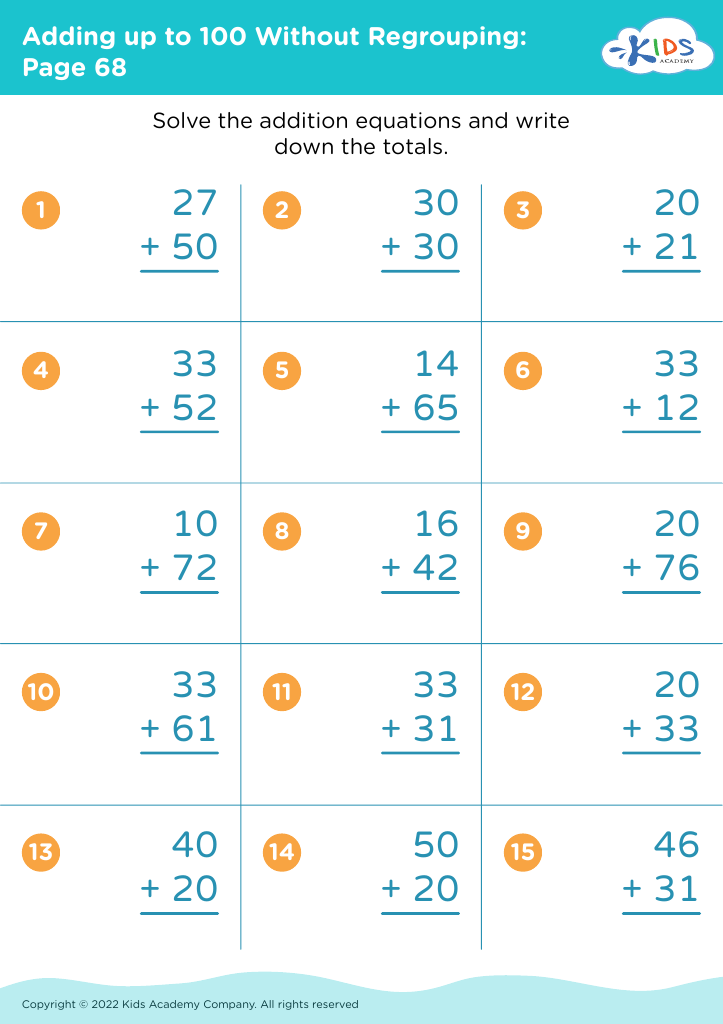
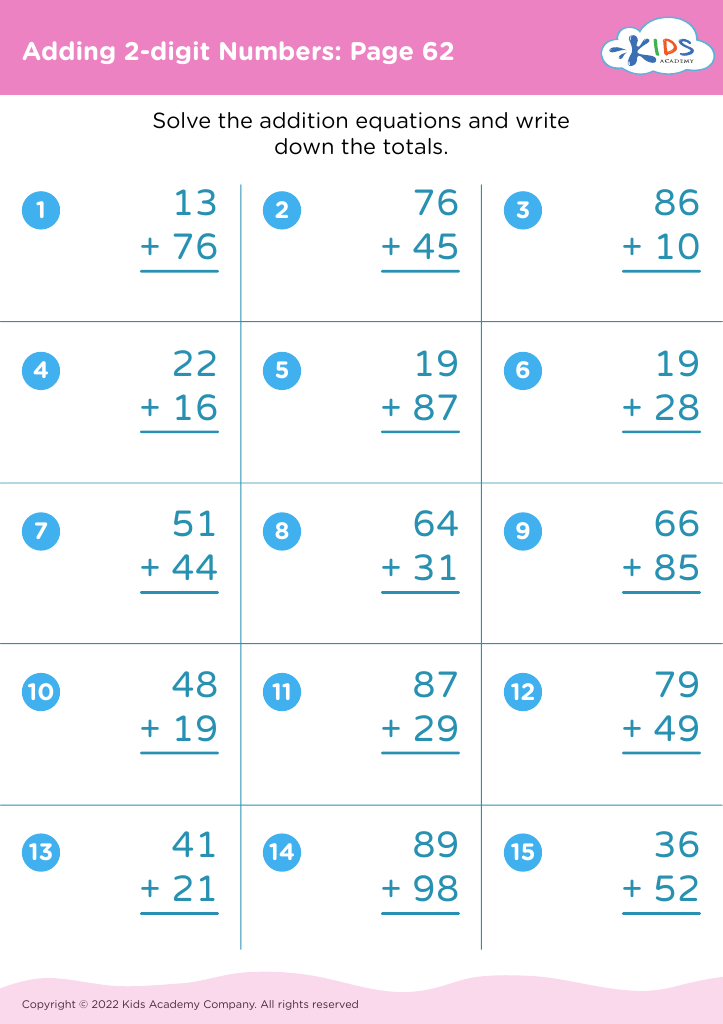








Understanding number patterns in addition and subtraction is fundamental to a child's mathematical development and should be a high priority for parents and teachers. By learning these patterns, children develop critical thinking and problem-solving skills essential for more complex math concepts. For instance, recognizing that adding two to a number repeatedly results in an even-odd-even sequence builds a foundation for understanding arithmetic progression, multiplication, and division.
Moreover, mastering these basic patterns enhances a child’s confidence in handling numbers, reducing anxiety and making math a more enjoyable subject. When children spot patterns, they learn to make predictions and see relationships between numbers, which can lead to better mental math capabilities and quicker calculations.
For teachers, fostering a deep understanding of number patterns helps in teaching more advanced topics as students progress. It equips them with tools for scaffolding future lessons, ensuring students are not just memorizing facts but genuinely understanding concepts.
For parents, supporting this learning at home reinforces what is taught in school and aids in building a cohesive educational experience. Engaging in simple pattern-based activities like playing number games or exploring number sequences during daily routines can make learning efficient and fun.
In summary, focusing on number patterns in addition and subtraction builds a solid mathematical foundation, enhances cognitive skills, and fosters a positive attitude towards math, benefitting both immediate learning and future academic endeavors.








