Filters

570 filtered results

Clear all filters
Favorites
With answer key
Interactive

570 filtered results

Difficulty Level

Grade


Check out this FREE Trial Lesson on Addition & Subtraction!

Making 11

Favorites
With answer key
Interactive
  • Number Recognition
  • Addition & Subtraction
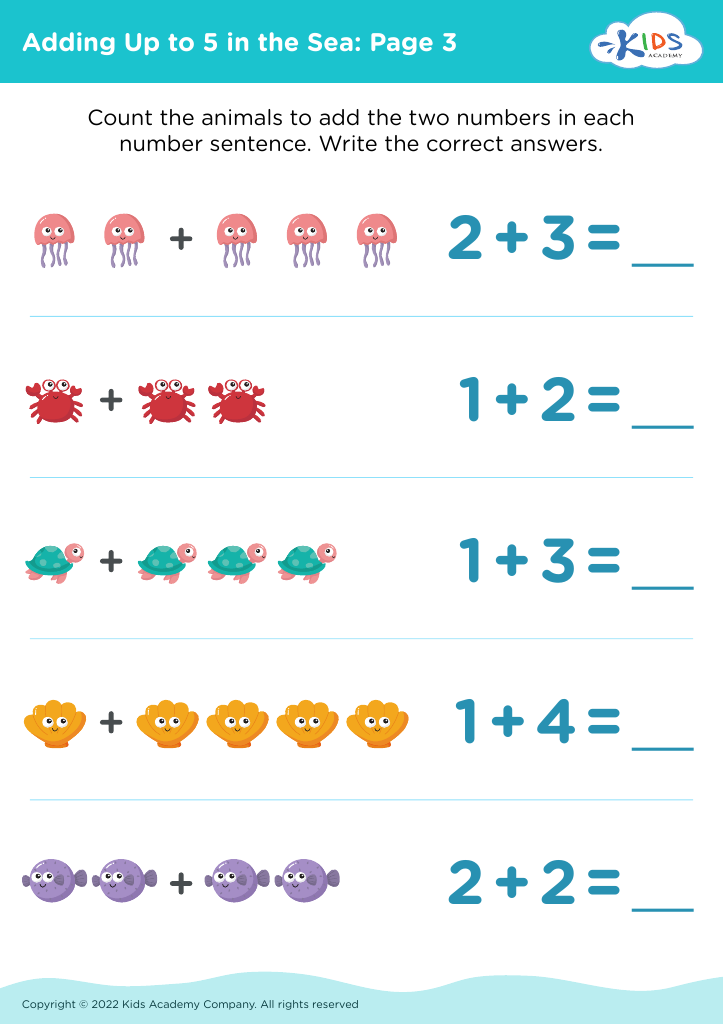
Adding Up to 5 in the Sea: Page 3

Adding Up to 5 in the Sea: Page 3

Adding Up to 5 in the Sea: Page 3
Worksheet
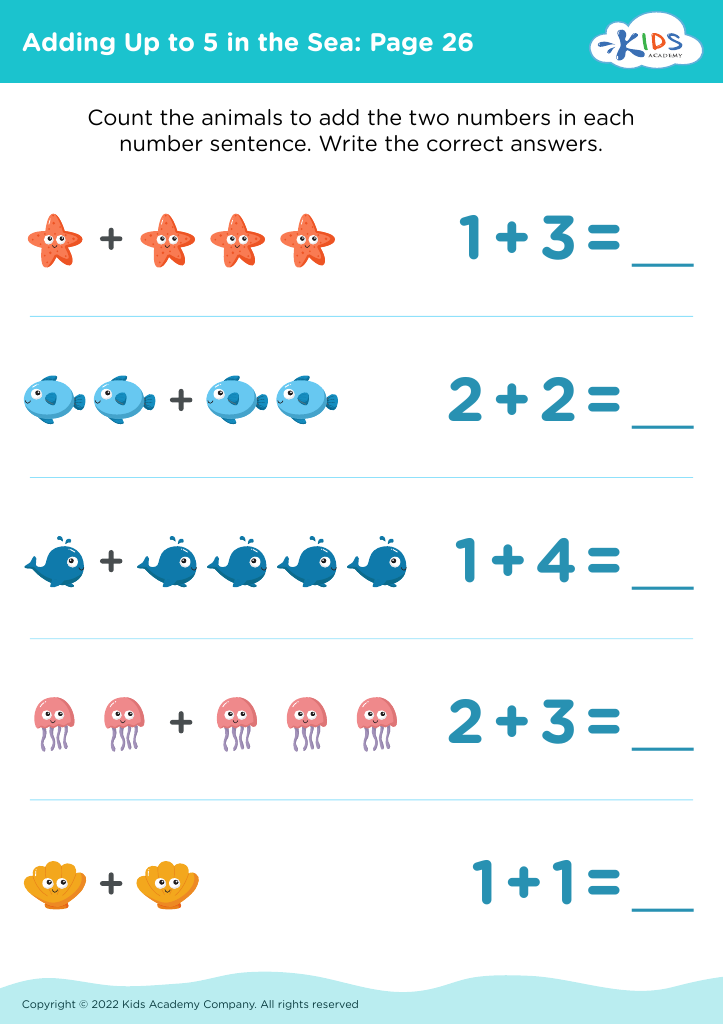
Adding Up to 5 in the Sea: Page 26
Worksheet
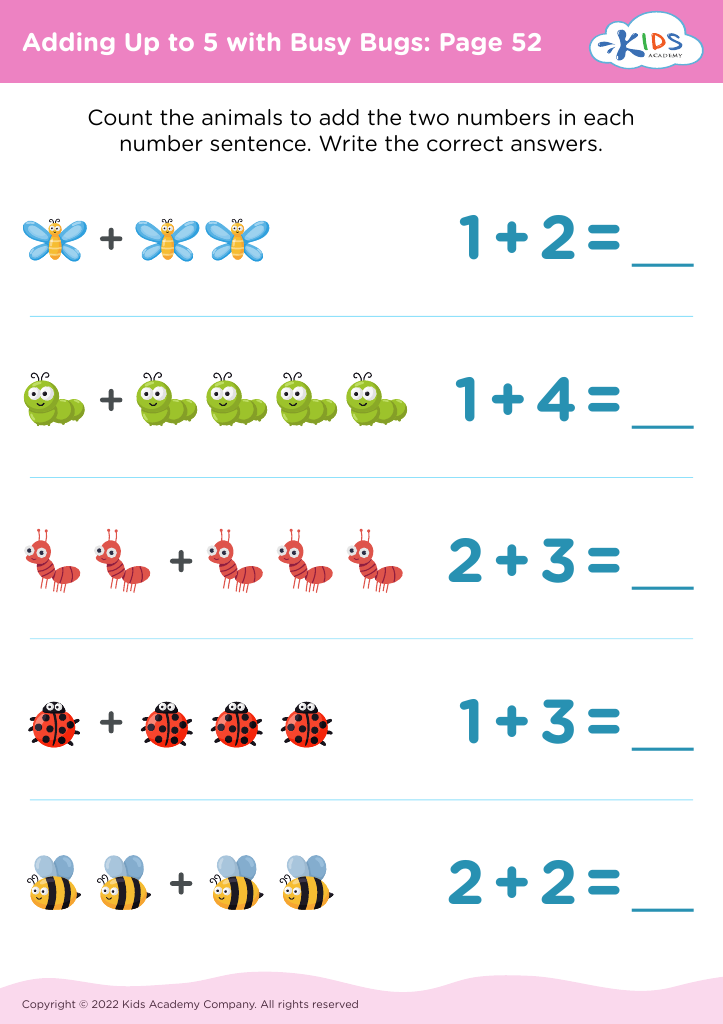
Adding Up to 5 with Busy Bugs: Page 52
Worksheet
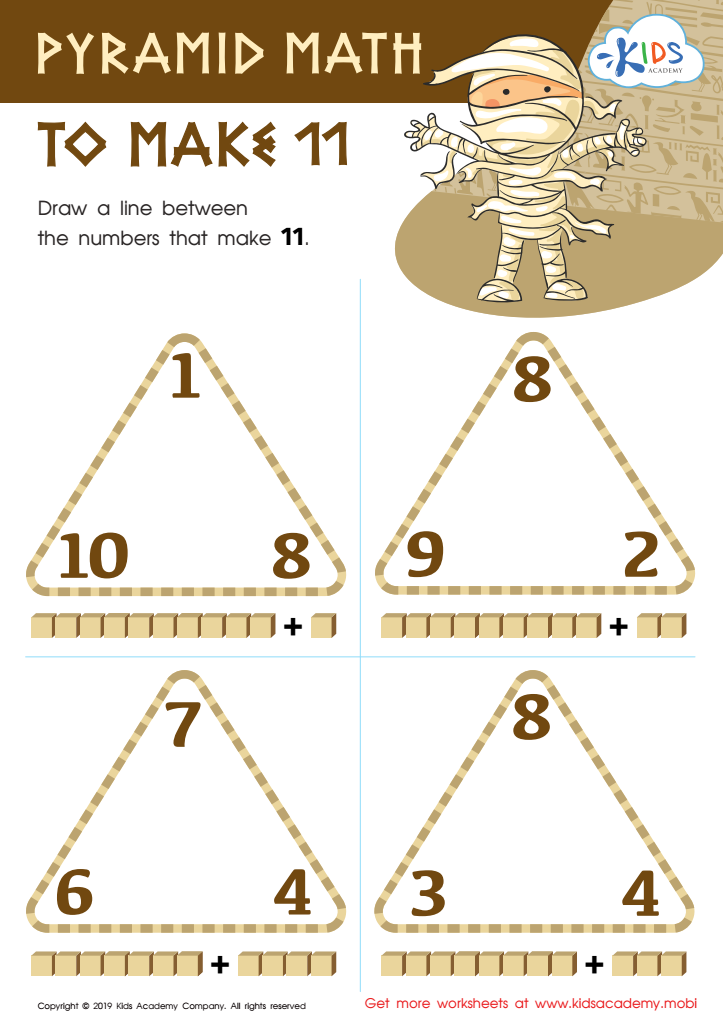
Pyramid Math to Make 11 Worksheet

Pyramid Math to Make 11 Worksheet

Have your kids look at the picture of the Egyptian pyramids and tell you what they see. Then, help them do simple math by adding up the numbers in the pyramids and connecting those that make 11. This worksheet is perfect for teaching your kids about history, mathematics, and problem-solving.
Pyramid Math to Make 11 Worksheet
Worksheet
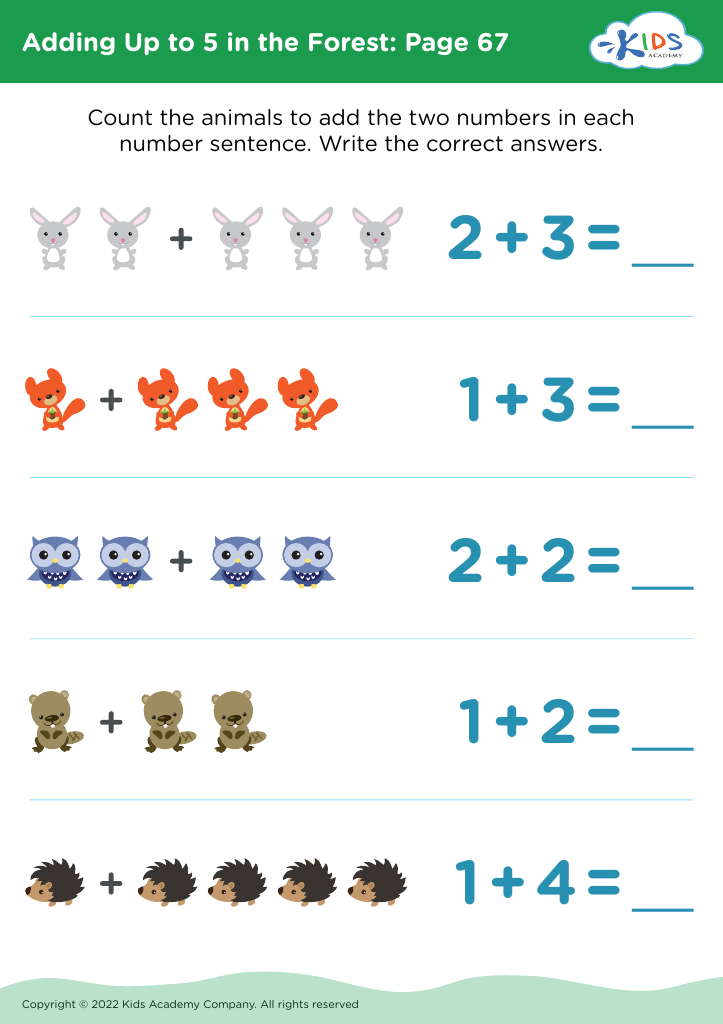
Adding Up to 5 in the Forest: Page 67
Worksheet
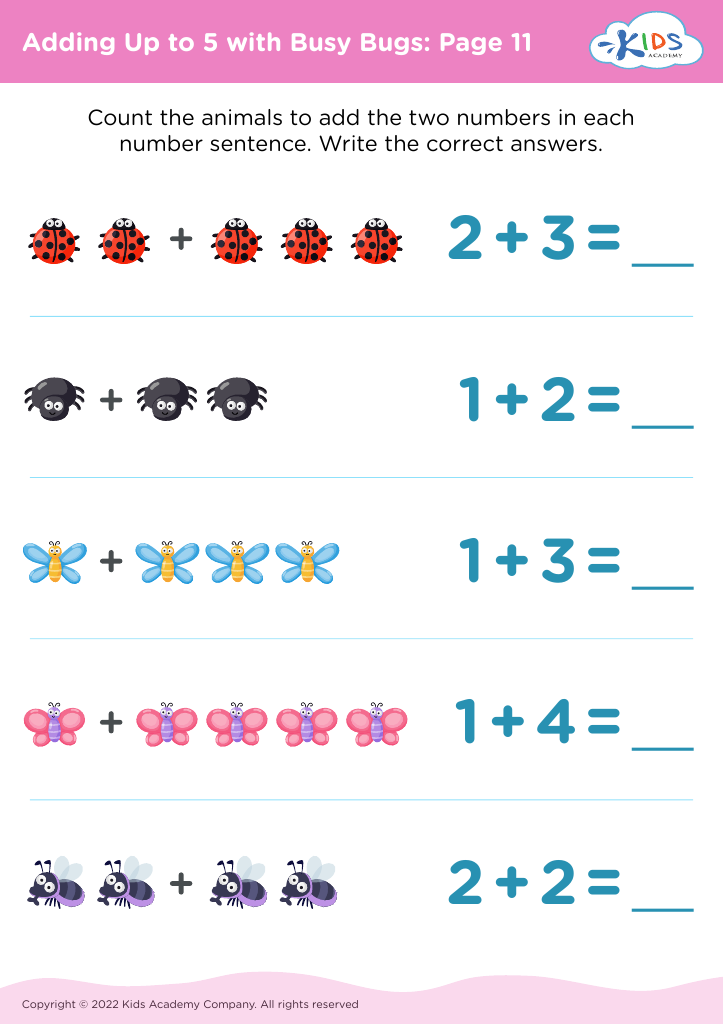
Adding Up to 5 with Busy Bugs: Page 11
Worksheet
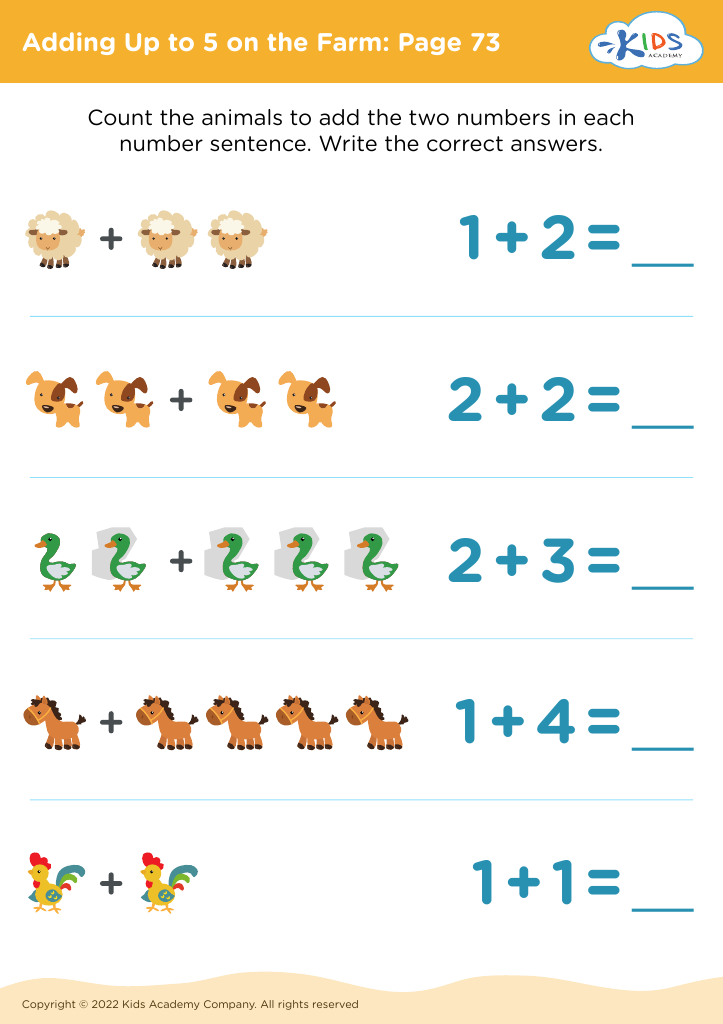
Adding Up to 5 on the Farm: Page 73
Worksheet
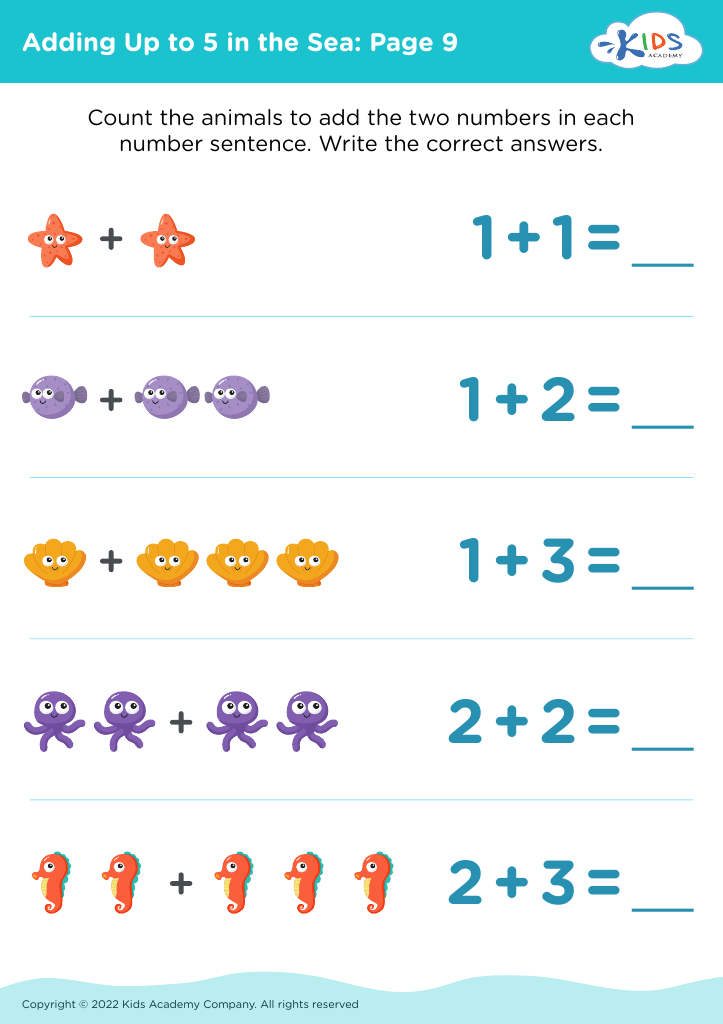
Adding Up to 5 in the Sea: Page 9

Adding Up to 5 in the Sea: Page 9

Adding Up to 5 in the Sea: Page 9
Worksheet
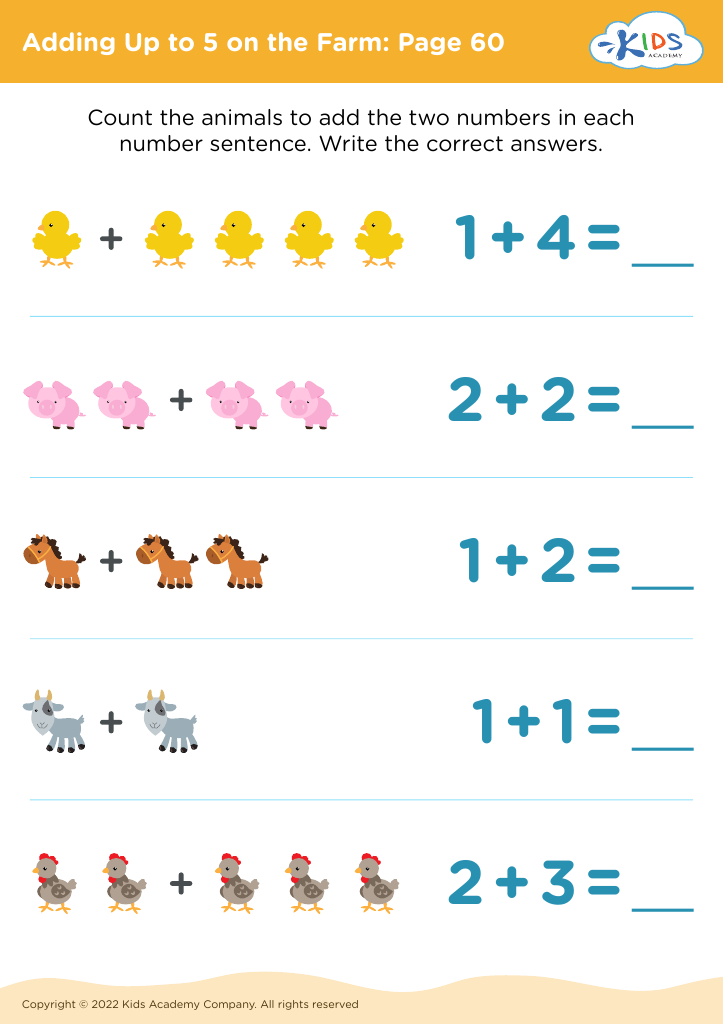
Adding Up to 5 on the Farm: Page 60
Worksheet
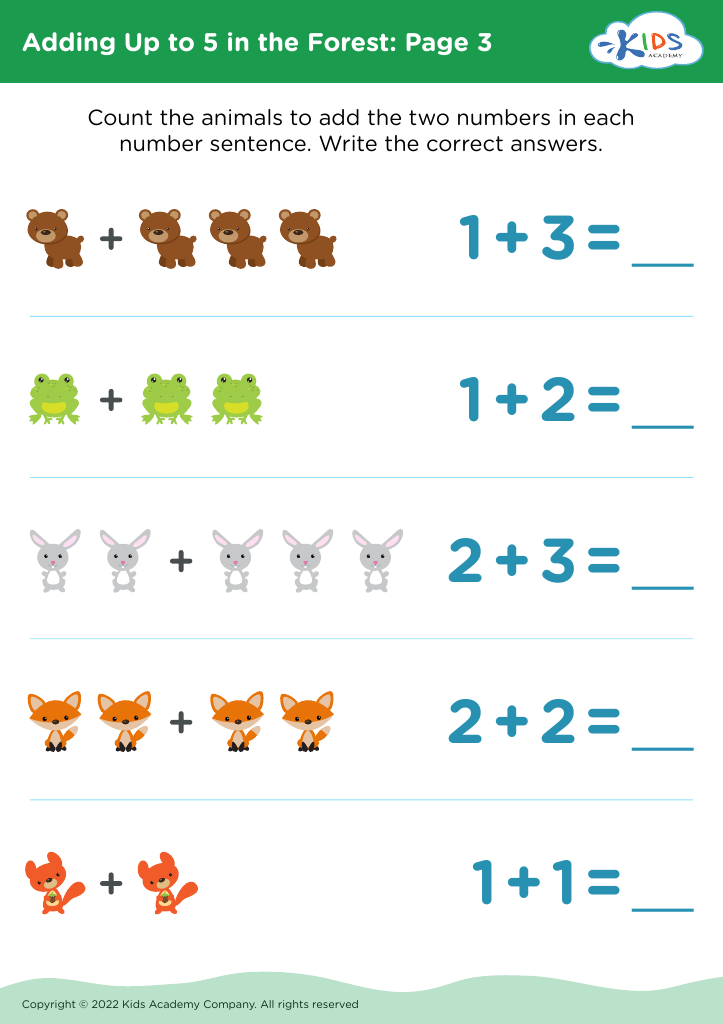
Adding Up to 5 in the Forest: Page 3
Worksheet
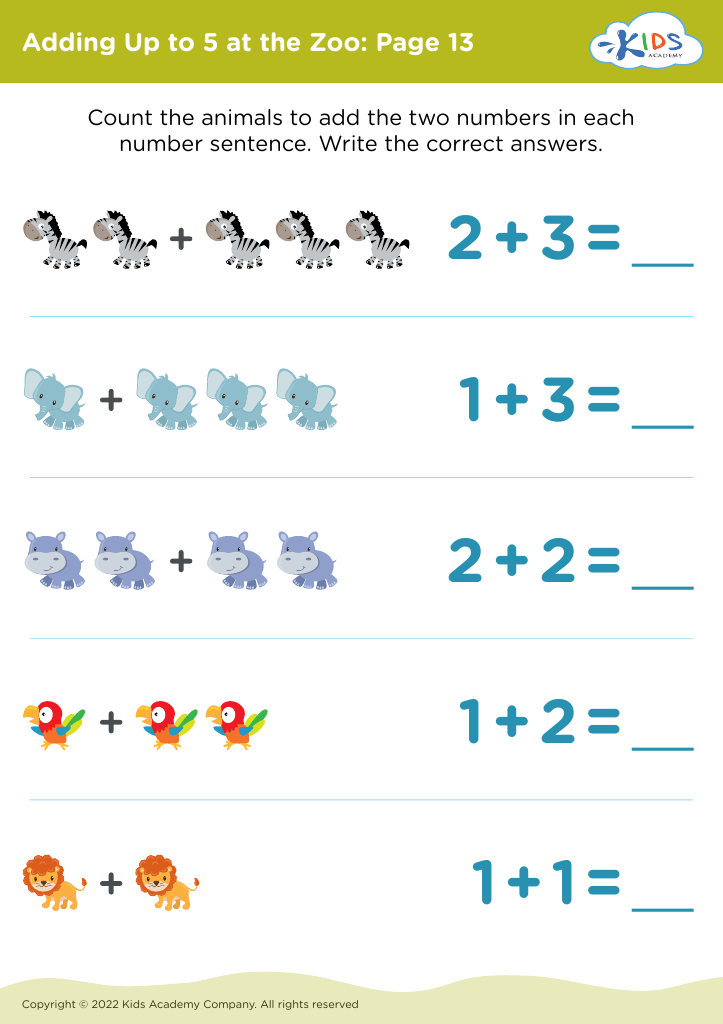
Adding Up to 5 at the Zoo: Page 13
Worksheet
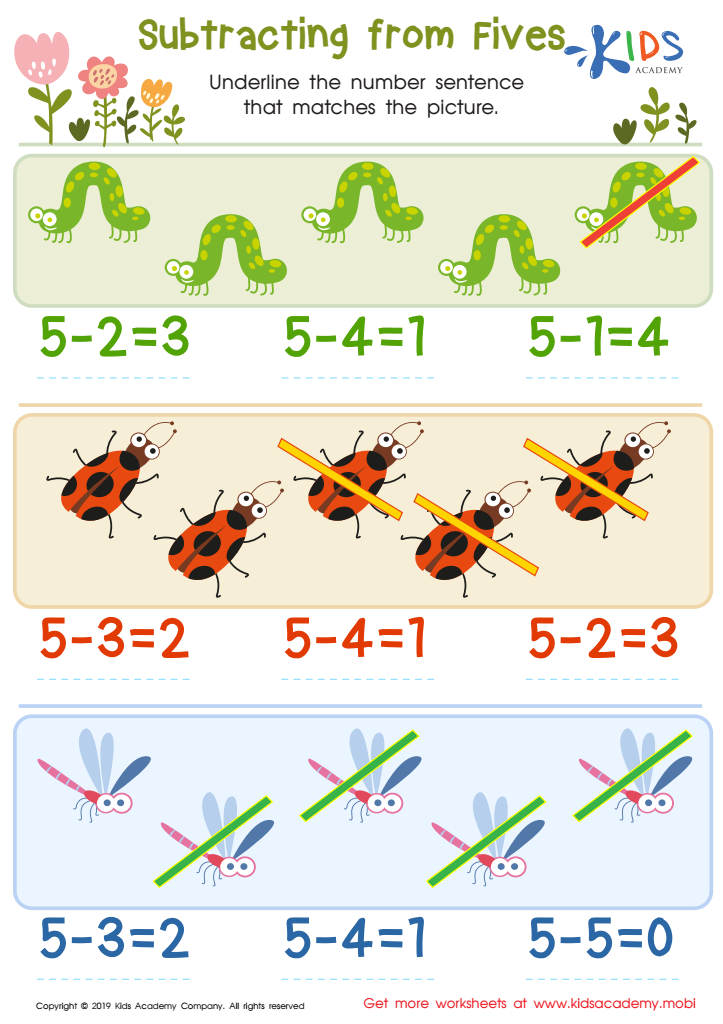
Subtracting From Fives Worksheet
Subtracting From Fives Worksheet
Help your kids practice subtraction with this fun worksheet! Have them identify the insects, then solve the equations and find the matching number sentence. It's a great way to give them an edge in math and enjoy doing it!
Subtracting From Fives Worksheet
Worksheet
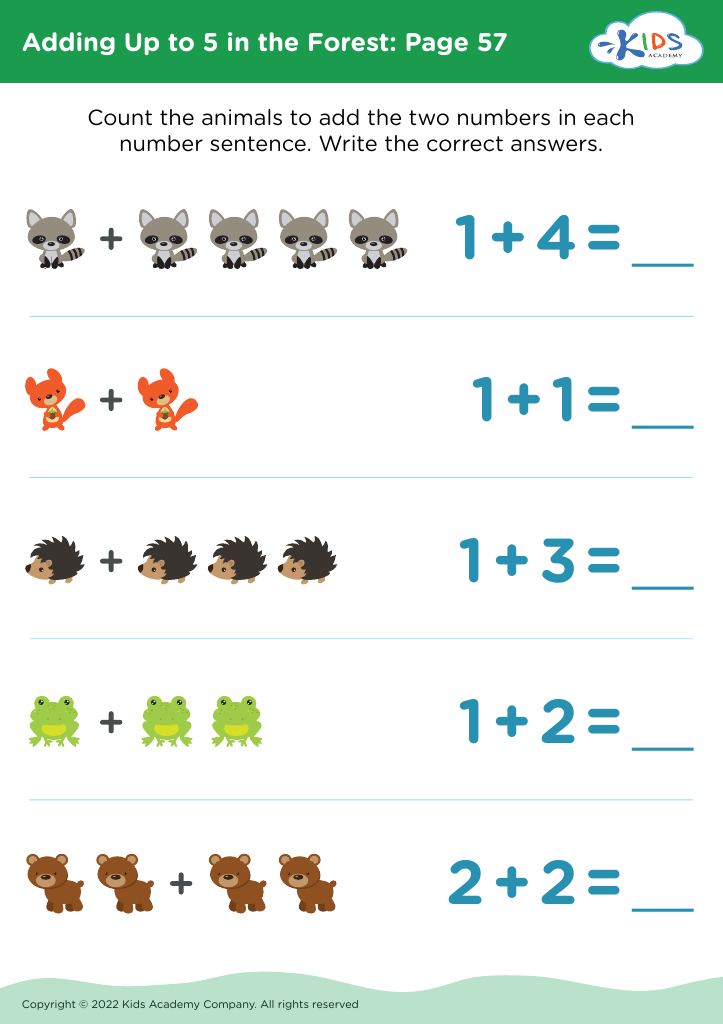
Adding Up to 5 in the Forest: Page 57
Worksheet
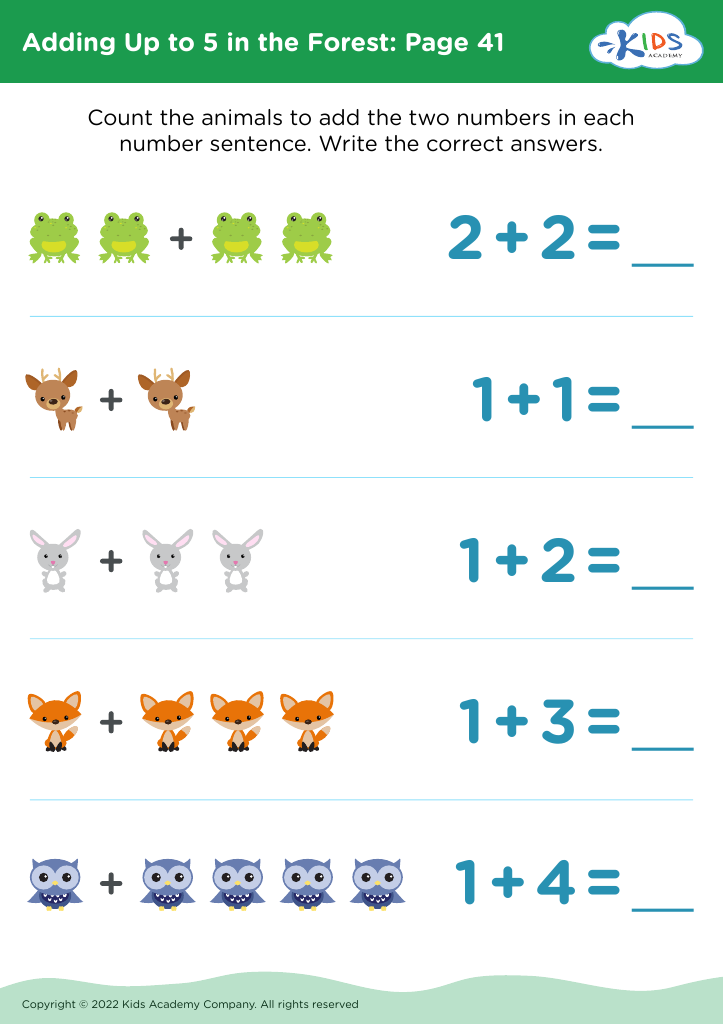
Adding Up to 5 in the Forest: Page 41
Worksheet
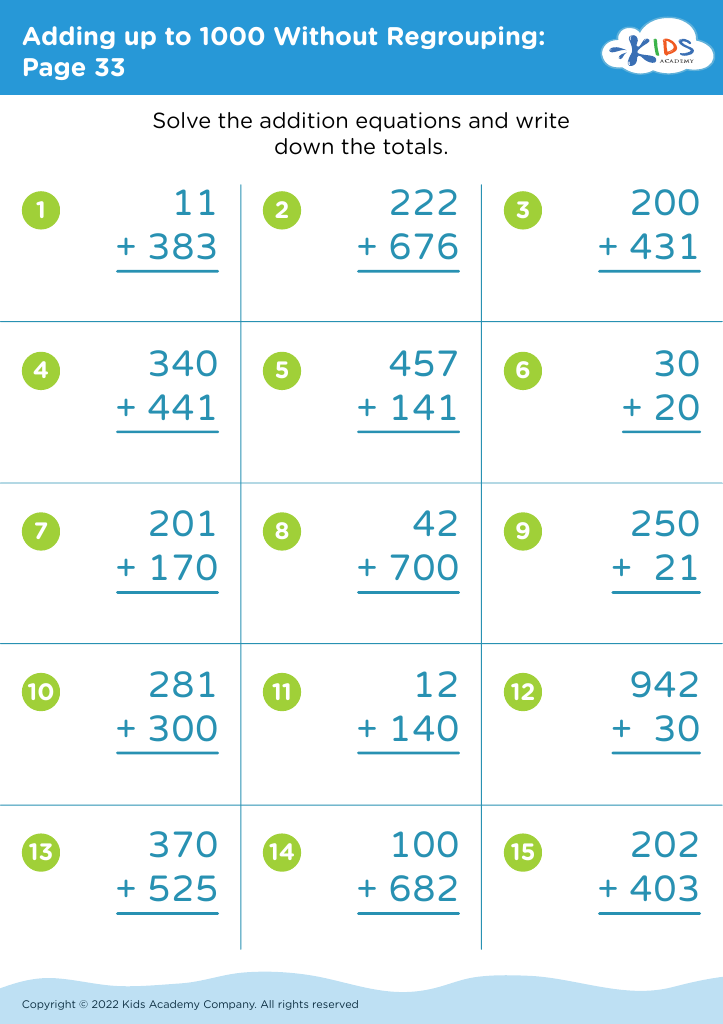
Adding up to 1000 Without Regrouping: Page 33
Worksheet
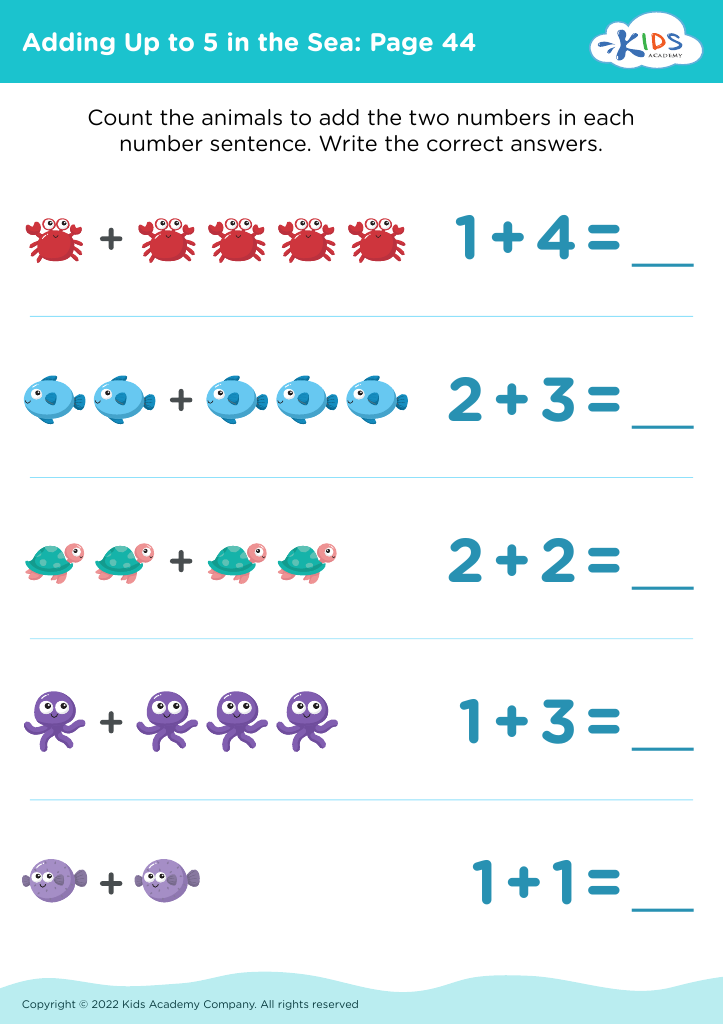
Adding Up to 5 in the Sea: Page 44
Worksheet
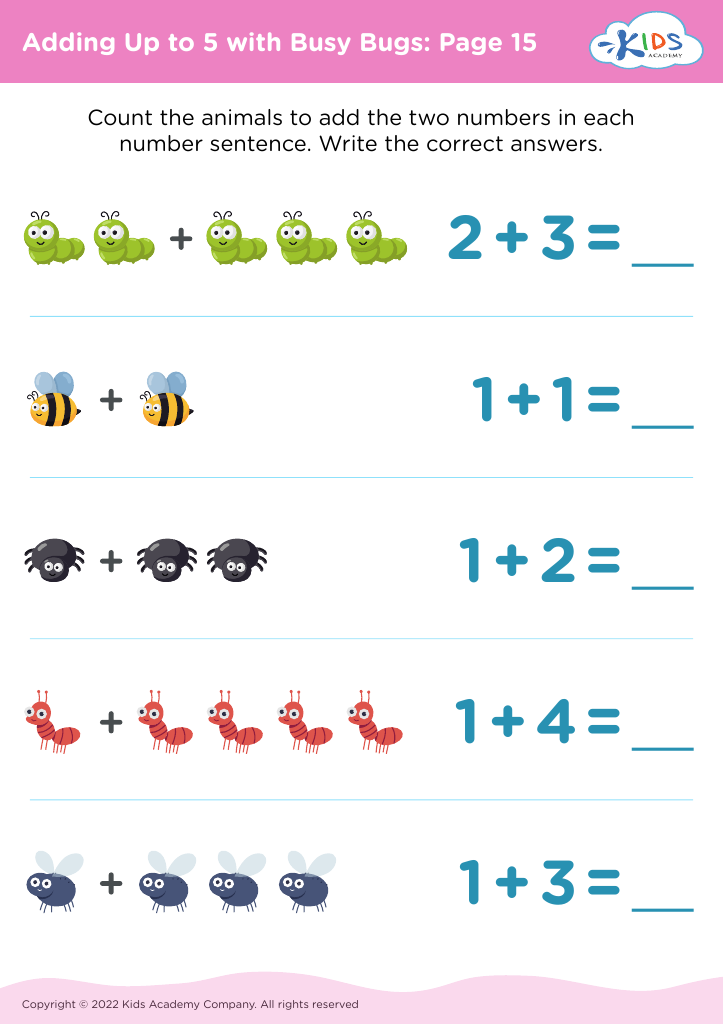
Adding Up to 5 with Busy Bugs: Page 15
Worksheet
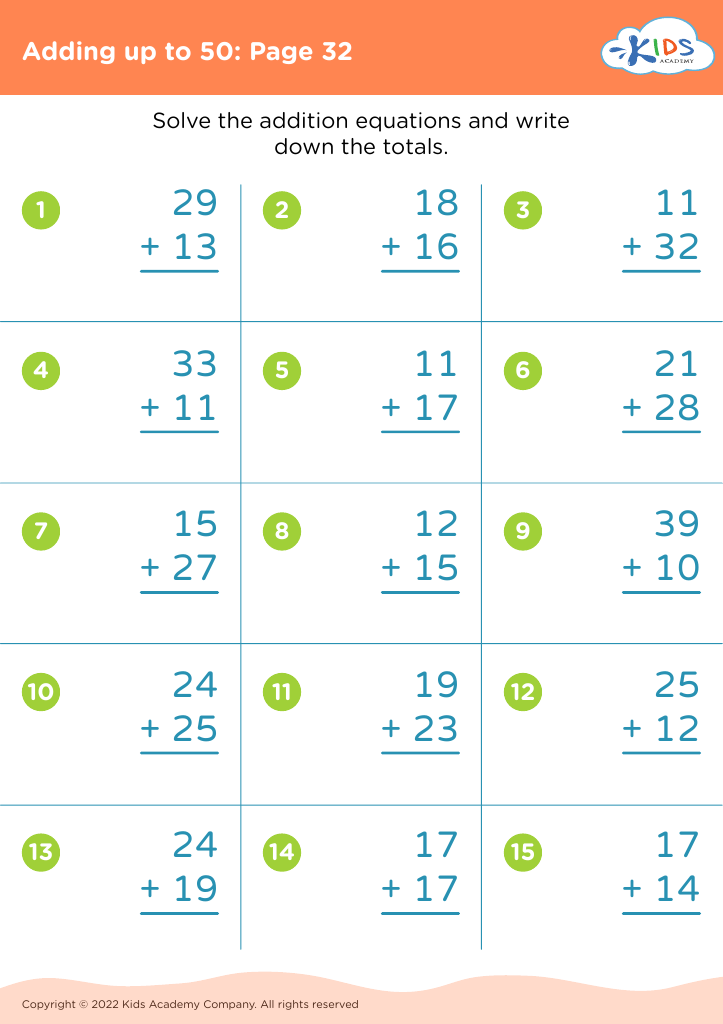
Adding up to 50: Page 32

Adding up to 50: Page 32

Adding up to 50: Page 32
Worksheet


... 23 24

Number recognition, along with basic addition and subtraction skills, forms the cornerstone of early childhood math education. When parents and teachers focus on strengthening these areas, they lay a crucial foundation for a child's future academic success and daily functional skills. Recognizing numbers allows children to understand their meaning, enabling them to engage with the world in a more organized and informed manner. From reading a clock to dialing a phone number, number recognition is involved in countless everyday tasks.

Addition and subtraction, being the simplest forms of arithmetic, are fundamental to higher-level math concepts. Mastery in these basic operations fosters critical thinking and problem-solving skills essential for subjects beyond math, such as science and engineering. Furthermore, early proficiency in numbers and arithmetic often boosts a child's confidence and enthusiasm for learning.

Involvement from parents can provide personalized support, reinforcing concepts taught at school and integrating them into home learning activities. Teachers play a critical role by offering structured, interactive, and varied methods of learning to accommodate different learning styles. Collectively, when parents and teachers prioritize number recognition, addition, and subtraction, they ensure children have the key skills necessary for both academic and lifelong success.