Sea creatures identification Addition & Subtraction Worksheets
3 filtered results
-
From - To
Dive into an engaging math adventure with our "Sea Creatures Identification Addition & Subtraction Worksheets"! Perfectly designed for grades 1-2, these worksheets blend fun and learning by helping kids practice essential math skills while exploring fascinating marine life. Bright visuals of sea creatures paired with addition and subtraction problems keep young learners excited, fostering both their math proficiency and curiosity about underwater wonders. Ideal for homeschooling or classroom use, these worksheets provide a creative blend of education and entertainment, ensuring students develop strong arithmetic foundations in an enjoyable and interactive way. Makes learning a splash-tastic experience!
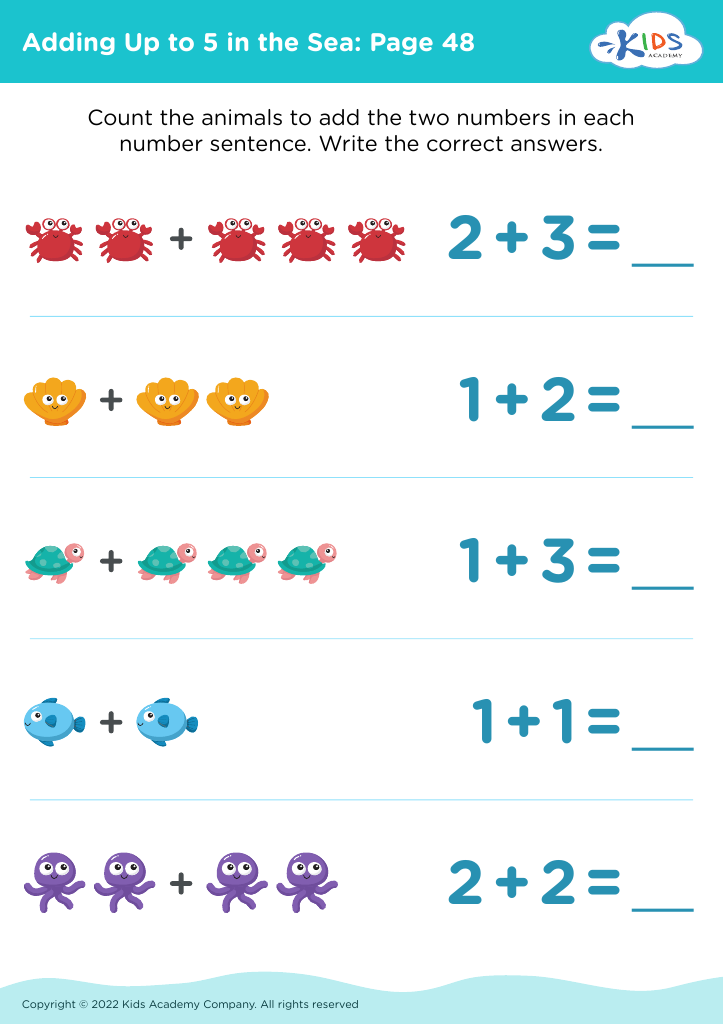
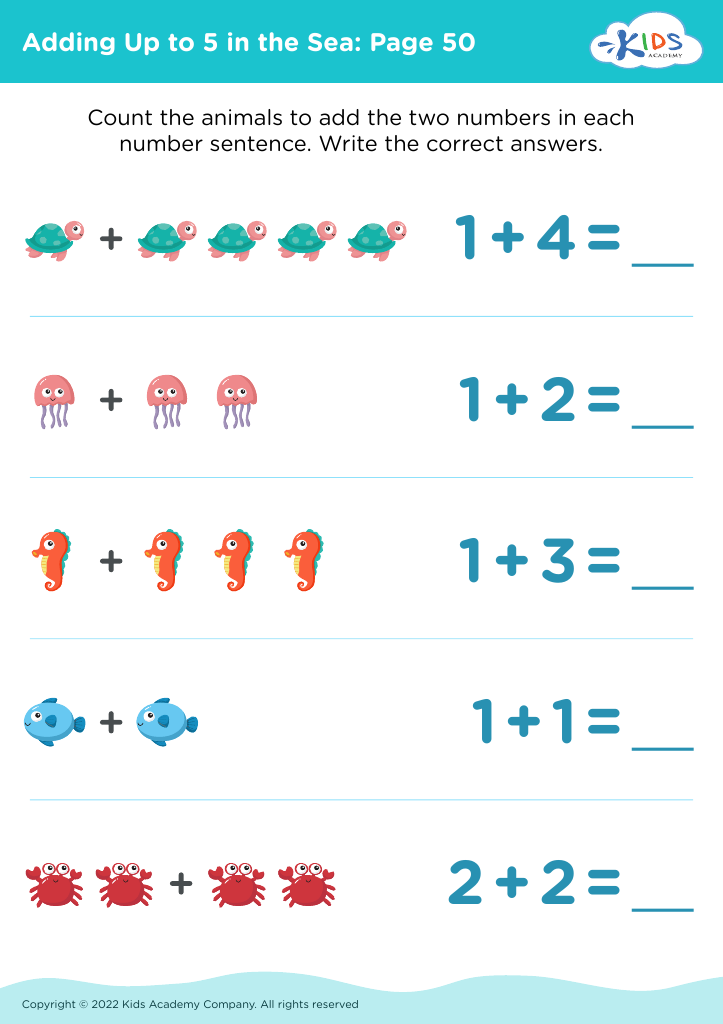
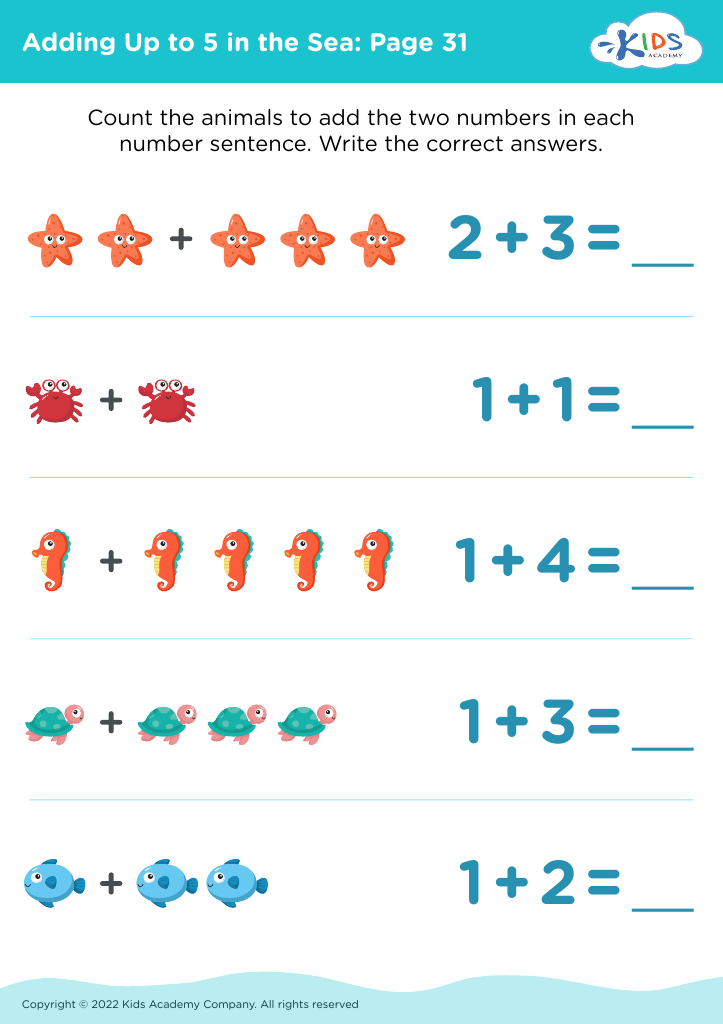








Parents and teachers should care about sea creatures identification, addition, and subtraction for several important reasons. First, integrating sea creature identification with math skills, like addition and subtraction, makes learning more engaging and meaningful for young children. When educational content is connected to real-world interests, such as fascinating marine life, children are more likely to be interested and motivated to learn.
Second, learning to identify sea creatures introduces students to marine biology and fosters environmental stewardship. Understanding different species and their roles in the ecosystem encourages children to develop a sense of responsibility for ocean conservation, which is vital given current environmental challenges.
Combining this knowledge with fundamental math skills like addition and subtraction enhances cognitive development. By solving math problems related to sea creatures, students not only practice numerical skills but also improve their problem-solving abilities and logical thinking.
Lastly, children exposed to interdisciplinary learning experiences—merging science and math—are more likely to develop a love for both subjects. This early exposure can spark curiosity and lead to a lifelong passion for learning, which is crucial for academic and personal growth. Therefore, parents and teachers should wholeheartedly support educational activities that blend identifying sea creatures with basic math skills.








