Visual interpretation Addition & Subtraction Worksheets
5 filtered results
-
From - To
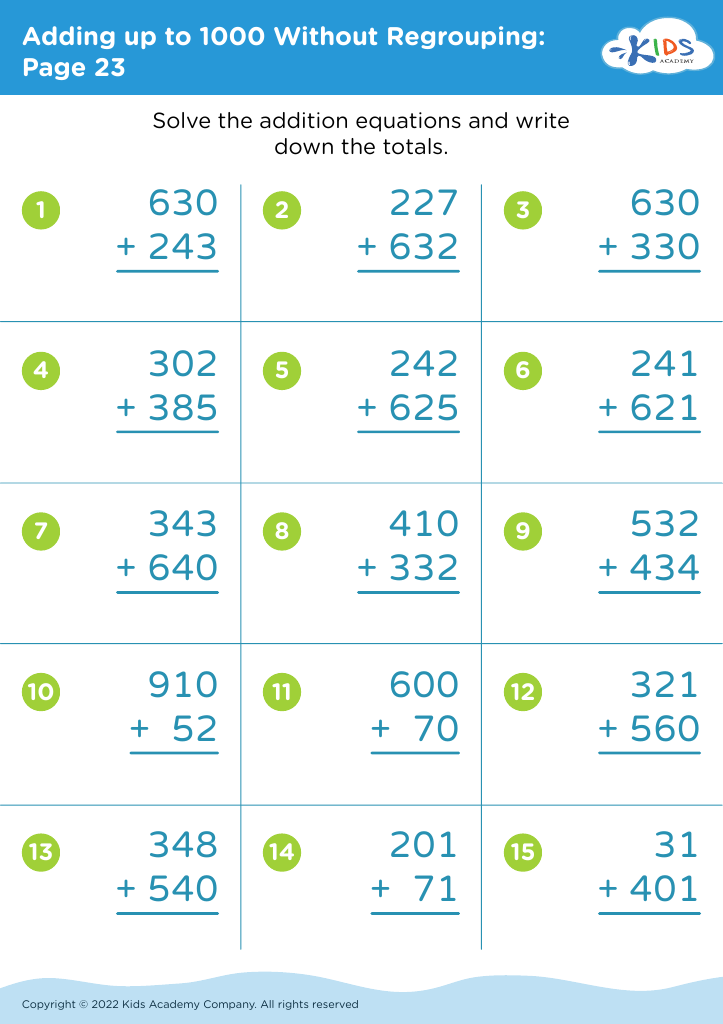
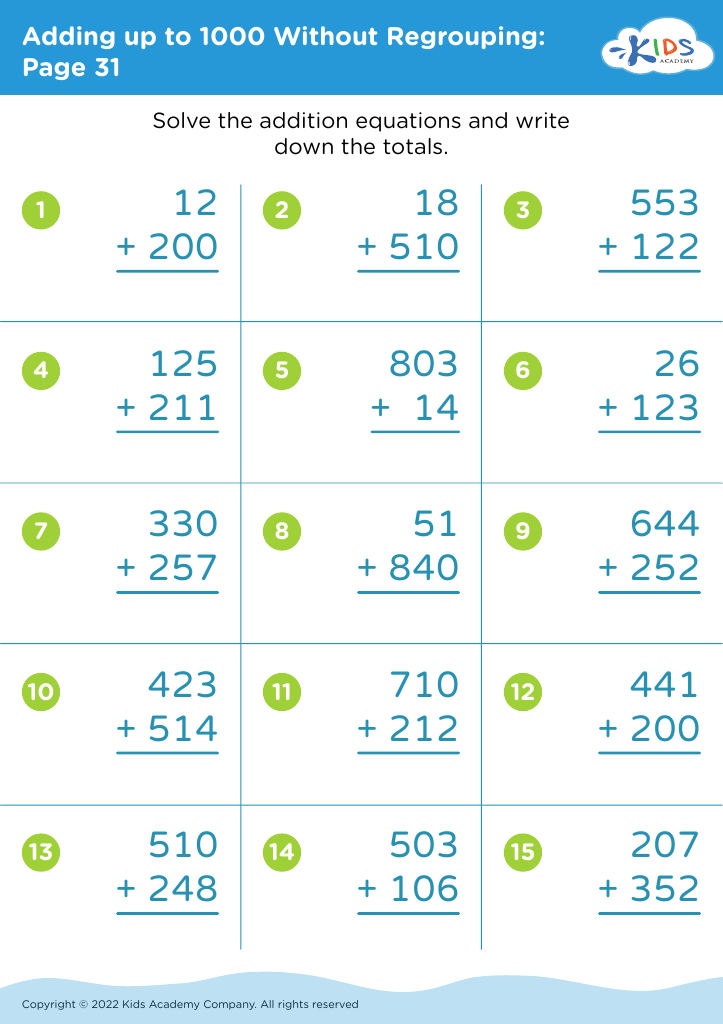
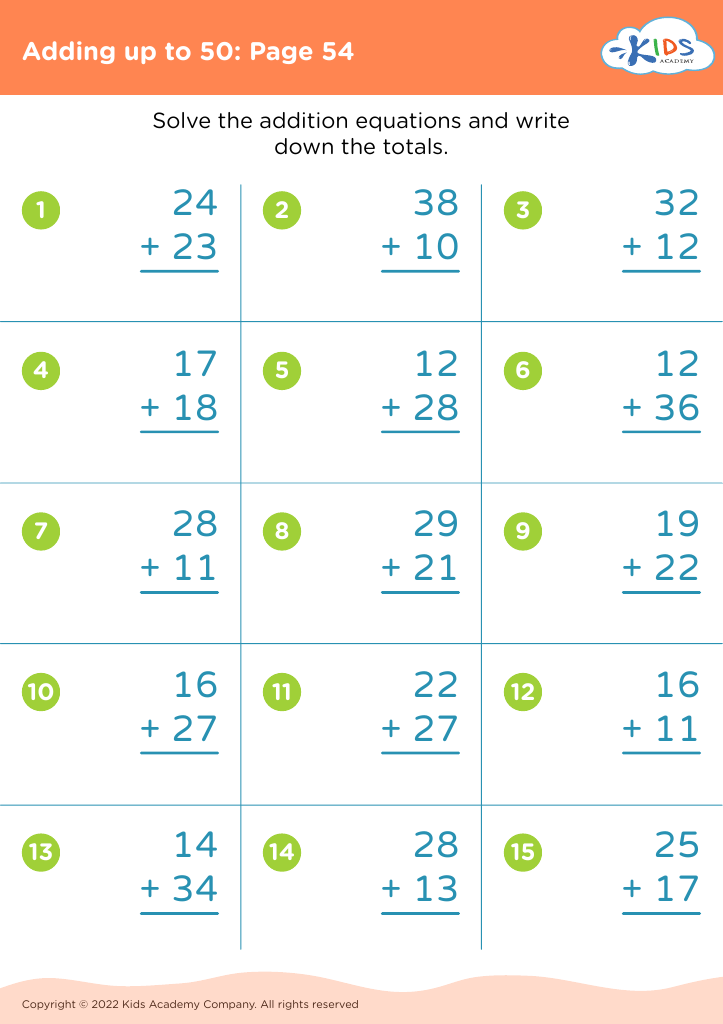
Enhance your child's math skills with our Visual Interpretation Addition & Subtraction Worksheets! Designed for young learners, these engaging resources help students grasp the fundamentals of addition and subtraction through visual aids. Each worksheet features colorful illustrations that simplify concepts, making learning fun and interactive. Kids will connect numbers to real-world scenarios, promoting understanding and retention. Perfect for classroom or home use, these worksheets encourage problem-solving and critical thinking while building essential math skills. Start your child on the path to math success with our thoughtfully designed visual interpretation worksheets today!
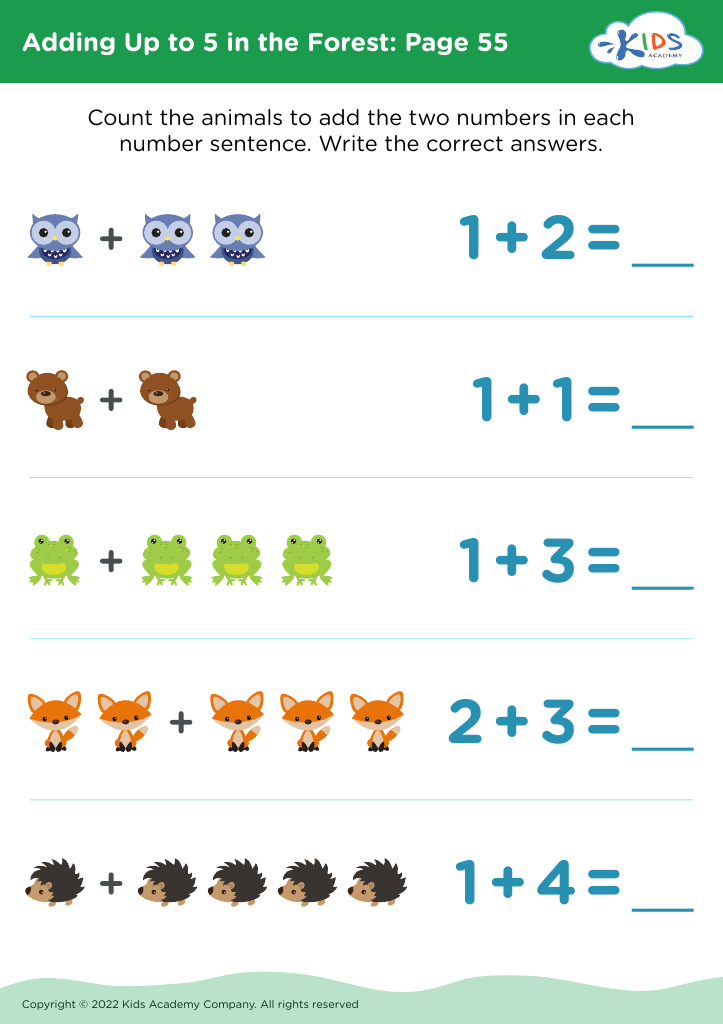
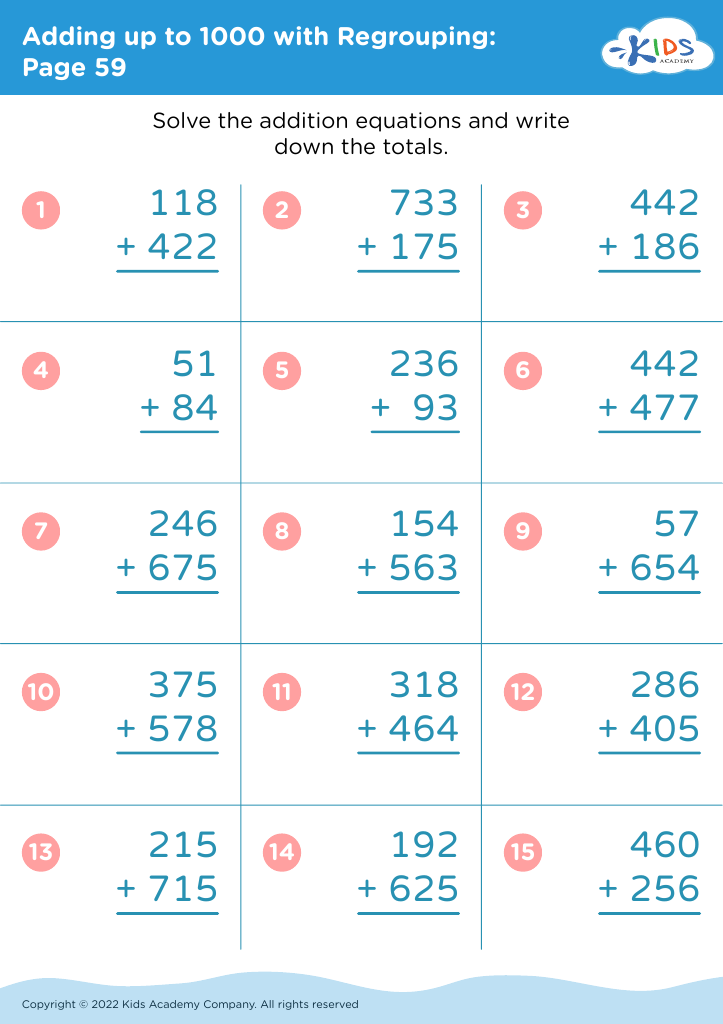








Visual interpretation in addition and subtraction is a crucial aspect of early mathematical learning that parents and teachers must prioritize. Engaging with visual aids—such as number lines, counters, and visual models—helps children grasp abstract concepts by providing concrete representations. This strategy enhances their understanding of numbers and the relationships between them, making math less intimidating and more accessible.
By using visual tools, children can more easily comprehend the processes of addition and subtraction. For instance, seeing quantities physically represented can help learners understand combining (addition) and separating (subtraction) in a more intuitive manner. This also supports differentiated learning; visual aids can be adjusted to cater to the varied needs of students, ensuring everyone can progress.
Furthermore, mastering visual interpretation builds foundational skills for more complex mathematical reasoning in the future. It develops critical thinking, problem-solving, and cognitive skills, laying the groundwork for success in higher-grade mathematics. When parents and teachers consistently integrate visual interpretation into learning, they create an encouraging environment that fosters deeper comprehension, boosting confidence and enthusiasm in young learners. Ultimately, prioritizing these strategies can significantly impact a child's motivation and performance in mathematics as they progress through their education.








