Basic arithmetic understanding Addition Worksheets
4 filtered results
-
From - To
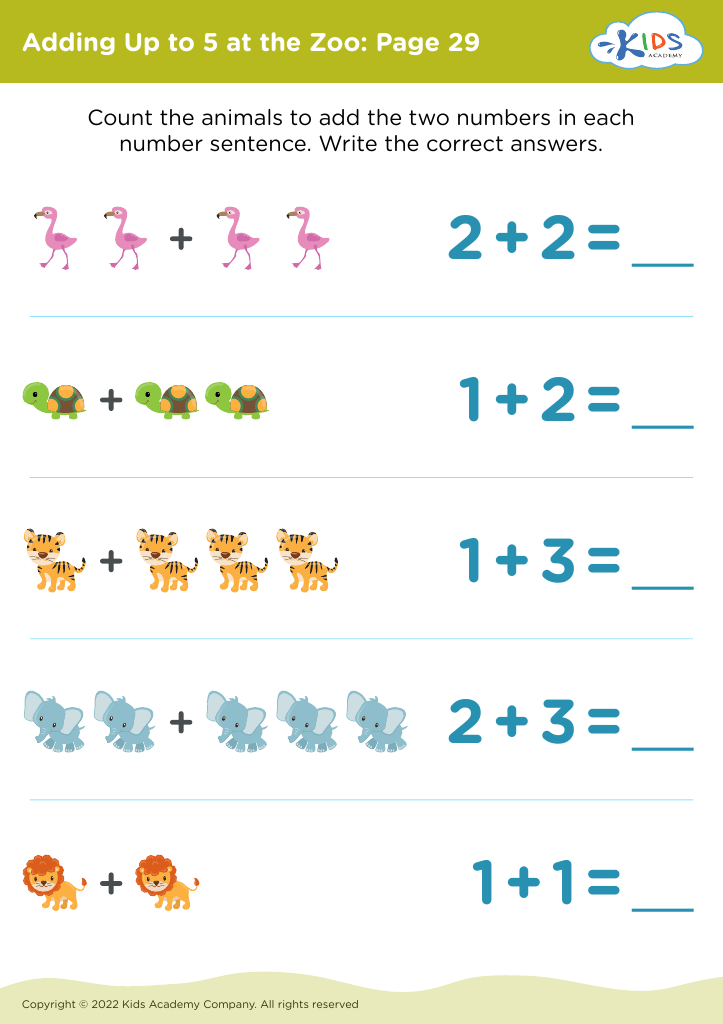
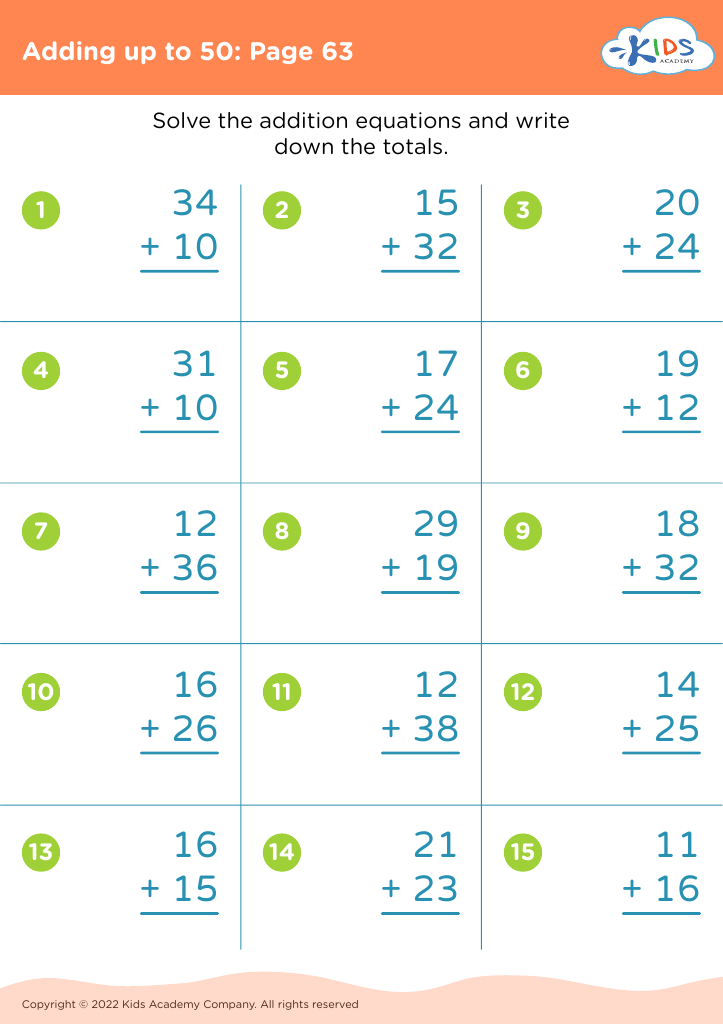
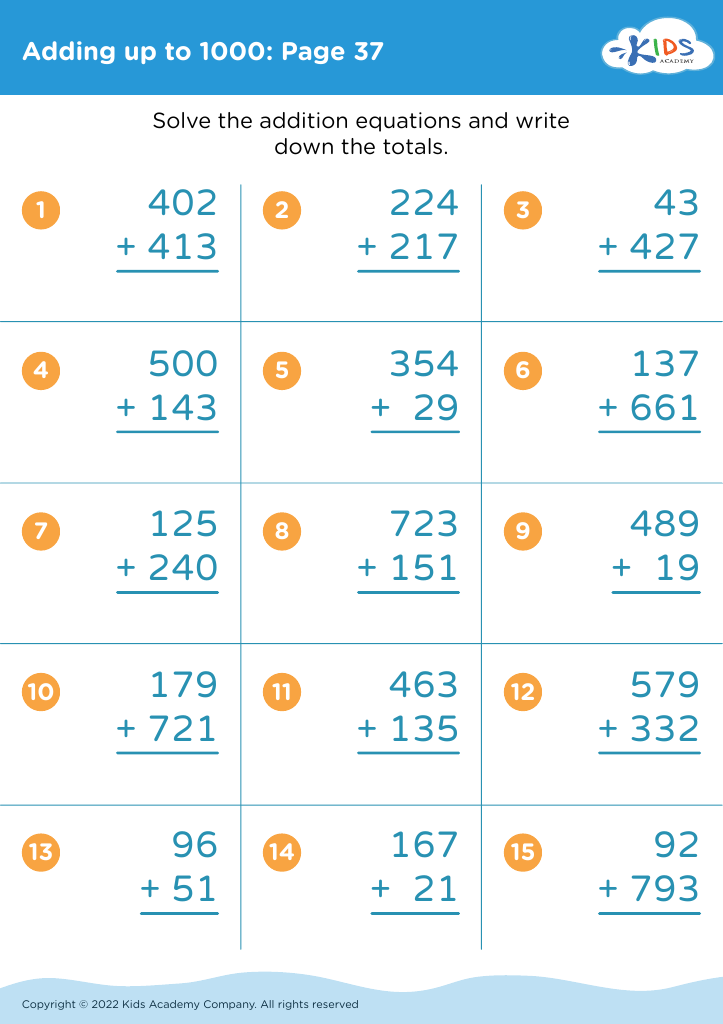
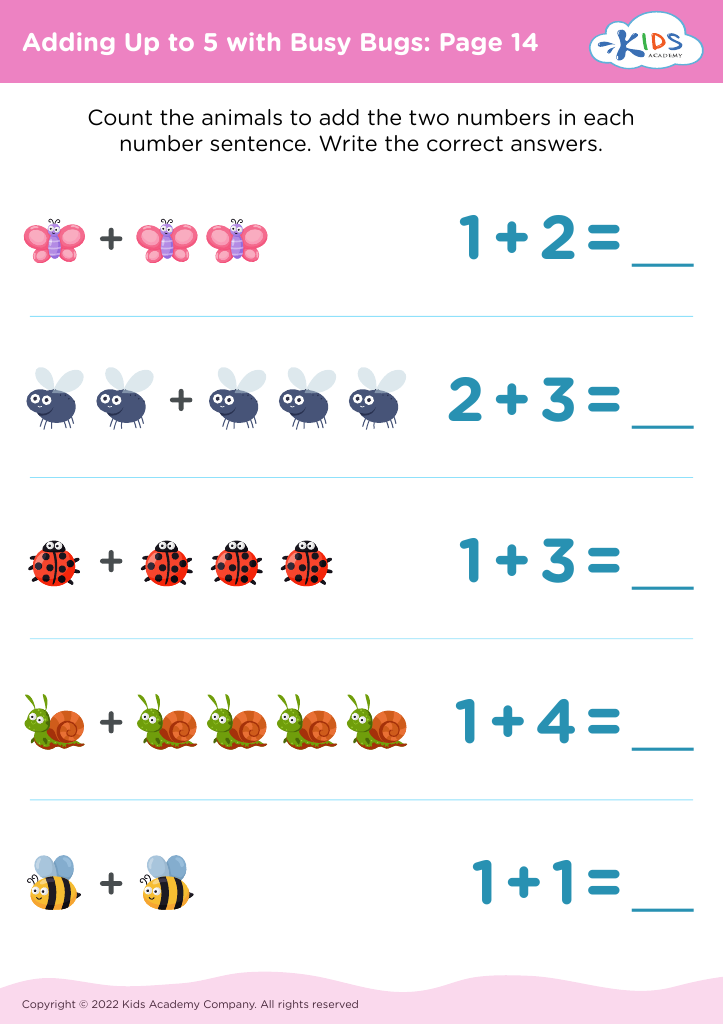
Explore our "Basic Arithmetic Understanding Addition Worksheets" designed to help young learners master the essential concept of addition. These engaging worksheets offer a variety of problems, from simple sums to more complex scenarios, encouraging children to practice their math skills confidently. With vibrant visuals and age-appropriate challenges, our resources make learning fun and interactive. Perfect for classroom use or home practice, these worksheets are tailored to support early grade students in developing a solid foundation in addition. Dive into the world of arithmetic and watch your child flourish as they solve problems and enhance their mathematical understanding today!








Basic arithmetic understanding, particularly in addition, is foundational for a child’s mathematical development and overall cognitive skills. Parents and teachers should prioritize this skill because it serves as a building block for more complex mathematical concepts. Mastery of addition fosters confidence in young learners and encourages a positive attitude towards math, an essential subject that influences future academic success.
Additionally, understanding addition enhances problem-solving skills, allowing children to tackle real-life situations, from counting apples to budgeting their allowances. It nurtures critical thinking as they learn to combine quantities and understand relationships between numbers. This foundational skill also promotes patience and persistence, vital traits as children encounter more challenging mathematical concepts in higher grades.
Furthermore, early competency in addition helps to close achievement gaps; children who grasp these basics early are more likely to excel in later math courses. When parents and teachers work together to ensure children have a robust understanding of addition, they pave the way for a healthy mathematical mindset. In essence, they contribute to a child's holistic development, arming them with skills that transcend academics and prepare them for everyday challenges.








