Critical thinking development Addition Worksheets
3 filtered results
-
From - To
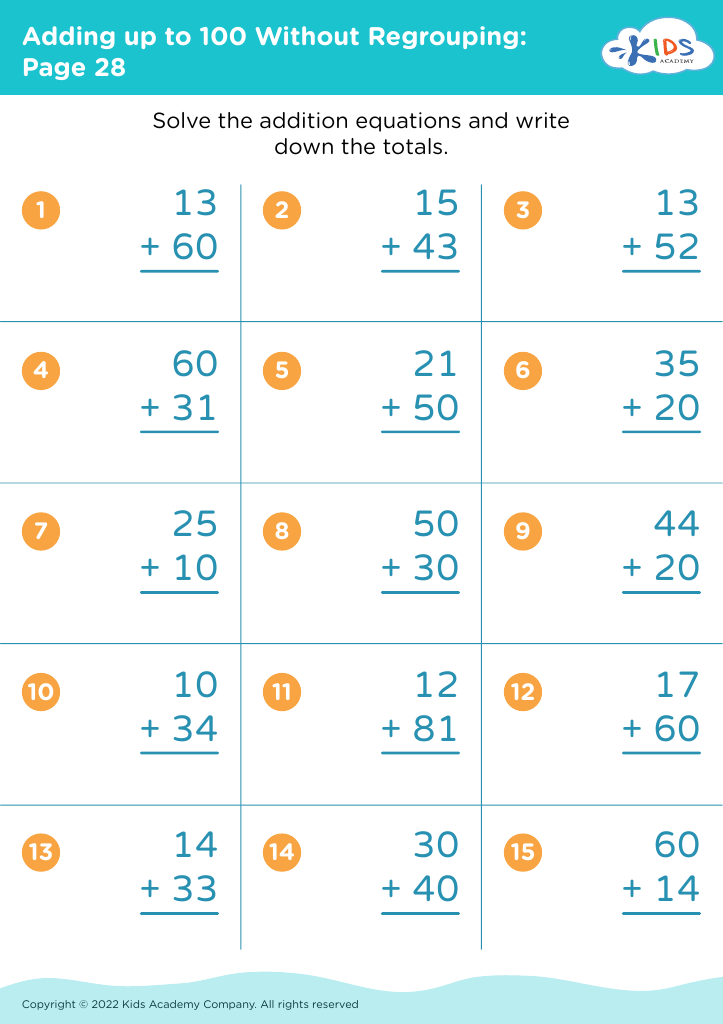
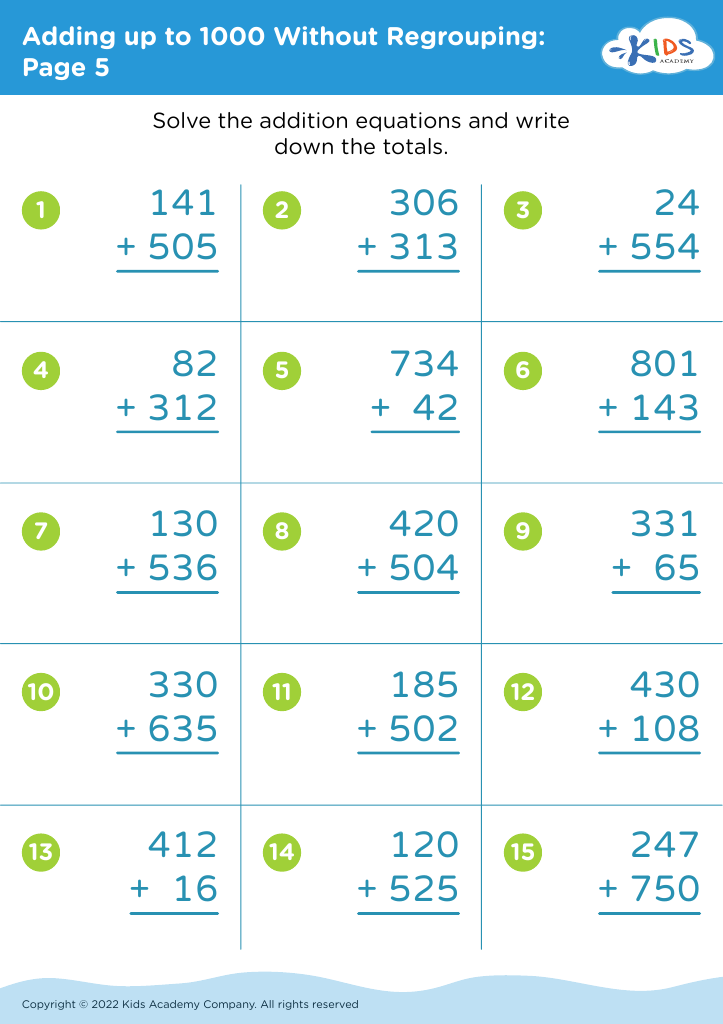
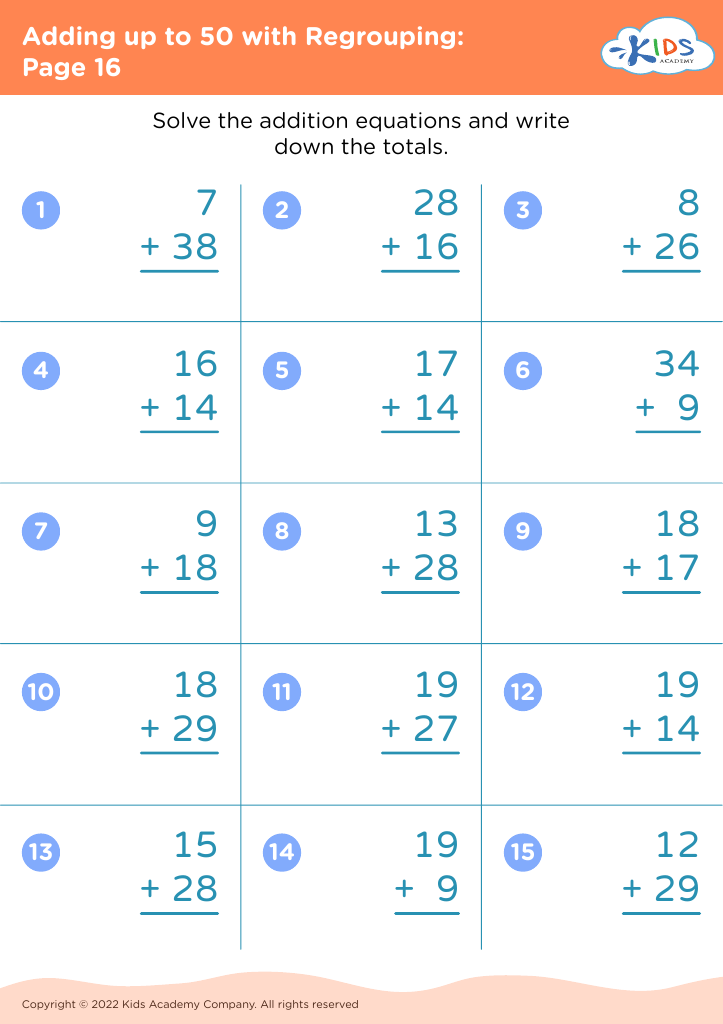
Unlock your child's potential with our Critical Thinking Development Addition Worksheets! Designed for young learners with a focus on enhancing critical thinking skills, these engaging exercises take addition problems to the next level. Kids solve math challenges that encourage them to think logically, reason systematically, and develop problem-solving strategies. Perfect for home or classroom use, our worksheets combine fun, colorful visuals with educational puzzles to make learning enjoyable. By mastering addition through these dynamic activities, your child builds a strong math foundation while sharpening their analytical abilities. Start their journey towards mathematical excellence today!








Critical thinking development is essential for young learners because it lays the foundation for lifelong learning and problem-solving skills. When parents or teachers prioritize this, they empower children to think independently, make informed decisions, and approach challenges with curiosity and resilience.
Encouraging critical thinking in early grades helps children question assumptions, consider multiple perspectives, and develop logical reasoning. These skills are not only fundamental for academic success across subjects like math, science, and language arts but are also crucial for personal growth and understanding the world around them.
Moreover, fostering critical thinking equips children to navigate complex social situations and conflicts they may encounter. It fosters empathy by enabling them to understand and respect diverse opinions and promotes effective communication skills, which are vital in sharing ideas and collaborating with peers.
In today’s rapidly changing world, where information is abundant and easily accessible, the ability to discern credible sources and think analytically is more important than ever. By nurturing these skills from an early age, parents and teachers can help children become adaptable, innovative, and thoughtful individuals, prepared to face future challenges and opportunities with confidence.








