Develop inference skills Addition Worksheets
3 filtered results
-
From - To
Enhance your child's mathematical understanding with our "Develop Inference Skills Addition Worksheets." Designed for early learners, these engaging activities help students build critical thinking and inference abilities through fun addition problems. By interpreting data and making connections, children will not only practice their math skills but also strengthen their analytical thinking. Our worksheets encourage exploration and reasoning, making learning enjoyable and interactive. Perfect for classroom settings or at-home practice, these resources promote confidence in mathematics while fostering essential cognitive skills. Empower your child to become a proficient problem solver today! Explore our collection and watch their abilities soar!
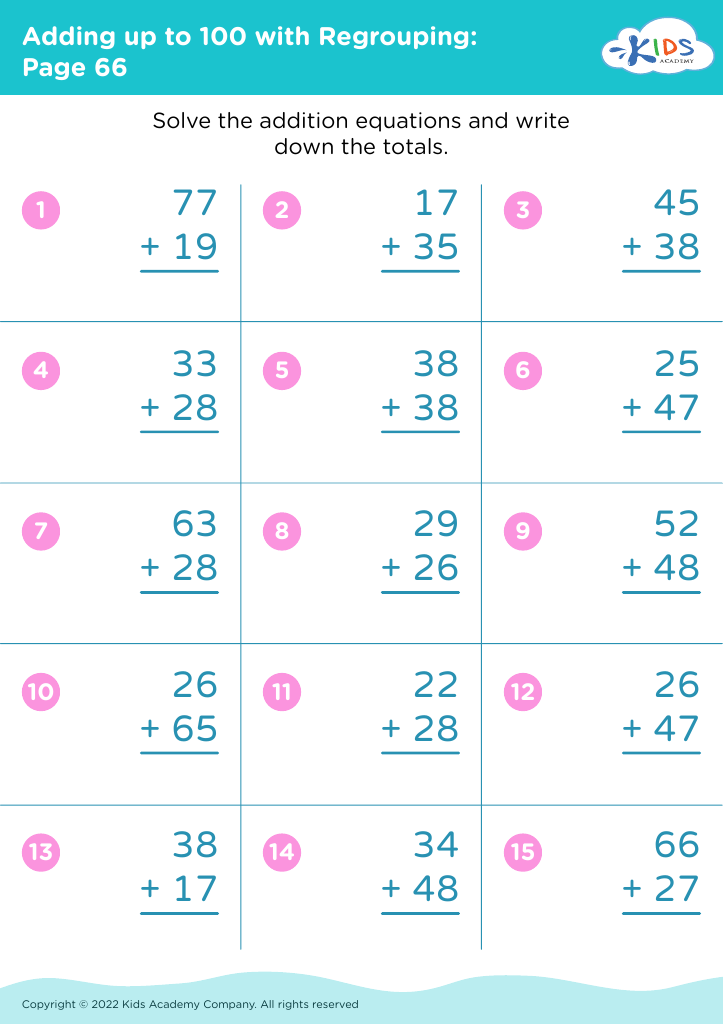
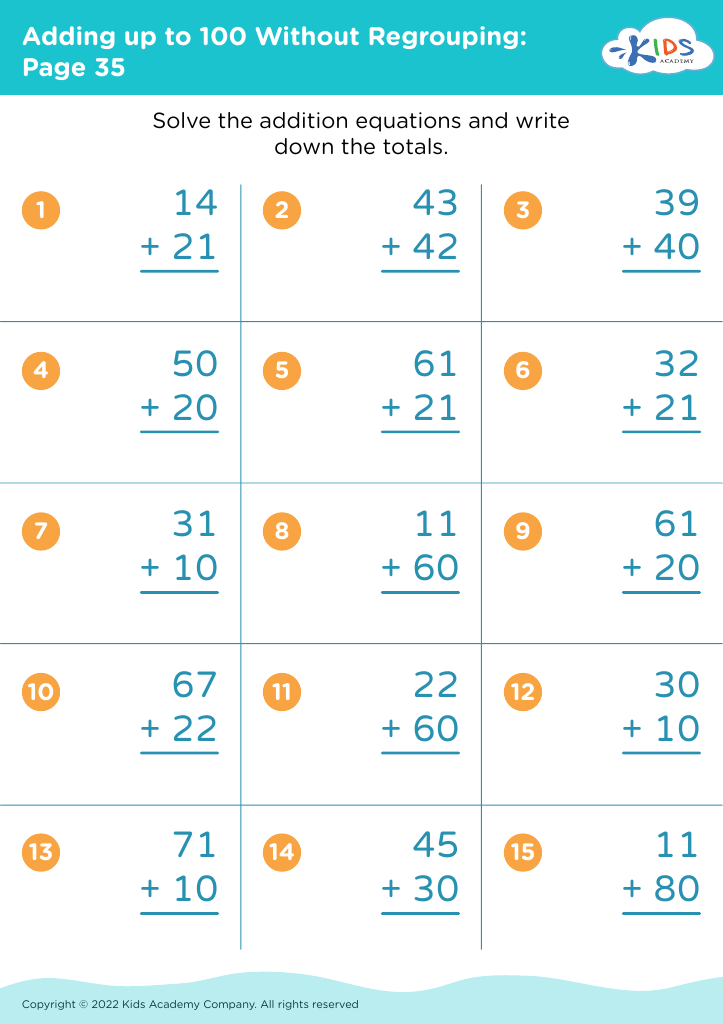
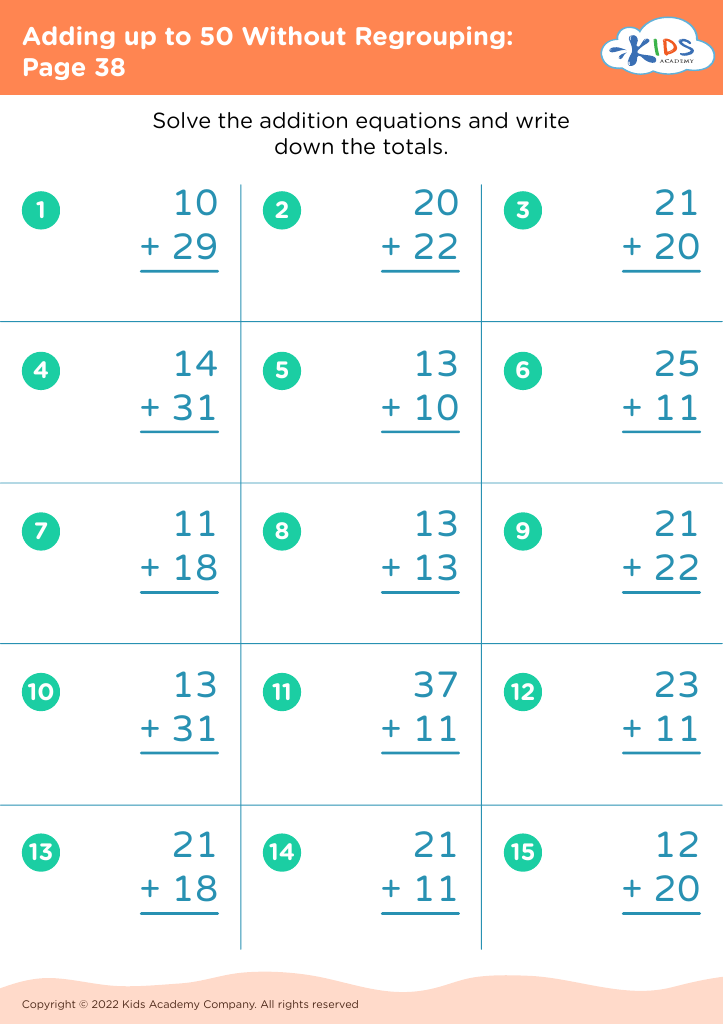


.jpg)





Developing inference skills in young learners is crucial for fostering critical thinking and comprehension abilities. Inference skills help children go beyond the literal meaning of text, enabling them to draw conclusions, make predictions, and understand implied meanings. This capacity is particularly vital in the context of addition and other mathematical concepts. When children can infer relationships between numbers or patterns in problem-solving, they gain a deeper understanding of mathematical principles, enhancing their ability to apply these concepts in varied situations.
Parents and teachers should care about this skill set because it empowers children not just in mathematics but across all areas of learning. Strong inference skills contribute to better reading comprehension, as children learn to read between the lines and understand character motivations or plot developments. Furthermore, inference skills enhance children's ability to communicate ideas more effectively and engage in conversations, promoting social and emotional development.
By encouraging children to develop these skills, parents and teachers can help lay a solid foundation for lifelong learning. Emphasizing inference skills in addition tasks fosters resilience as children tackle more complex problems, ultimately equipping them with the tools necessary for success in academics and beyond. Investing in these skills ensures children become confident, independent learners.








