Developing logical thinking Addition Worksheets
4 filtered results
-
From - To
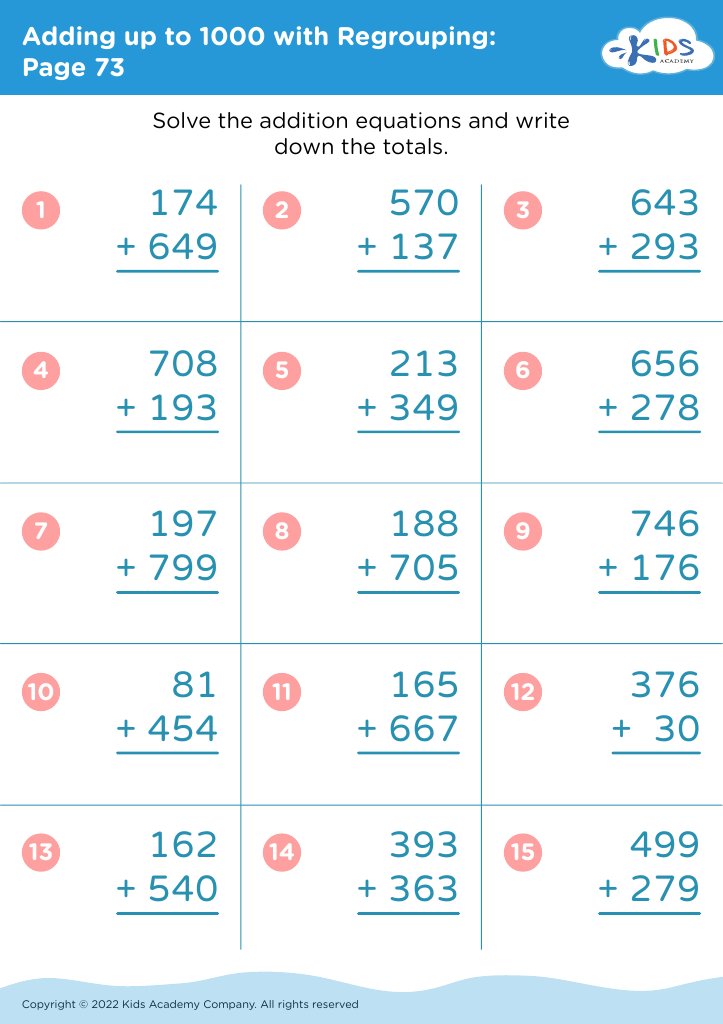
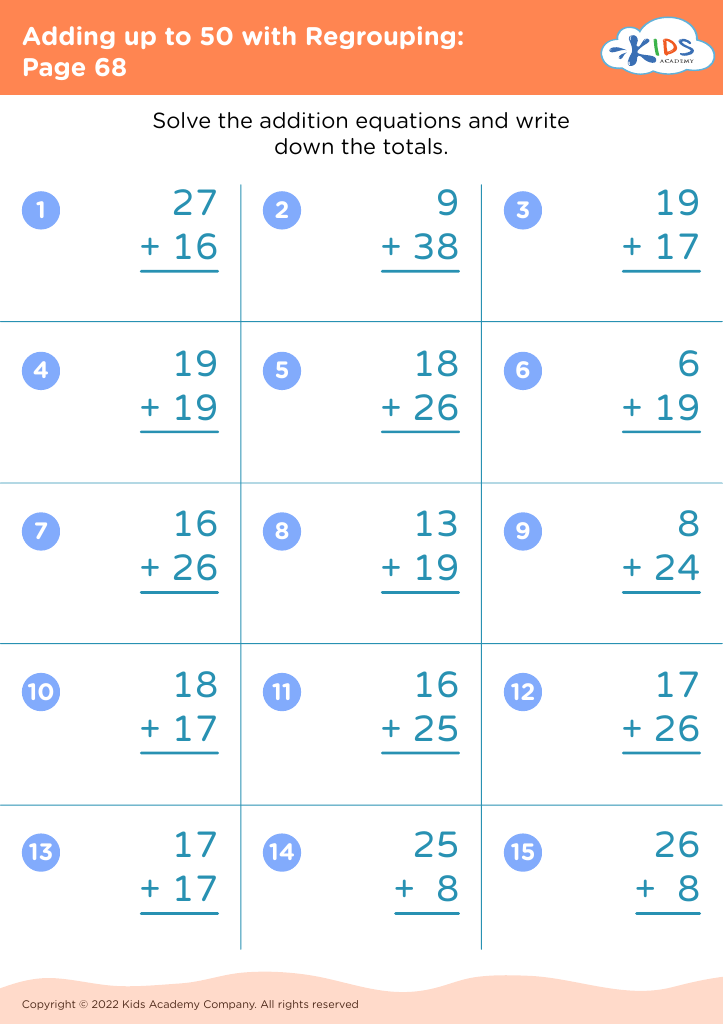
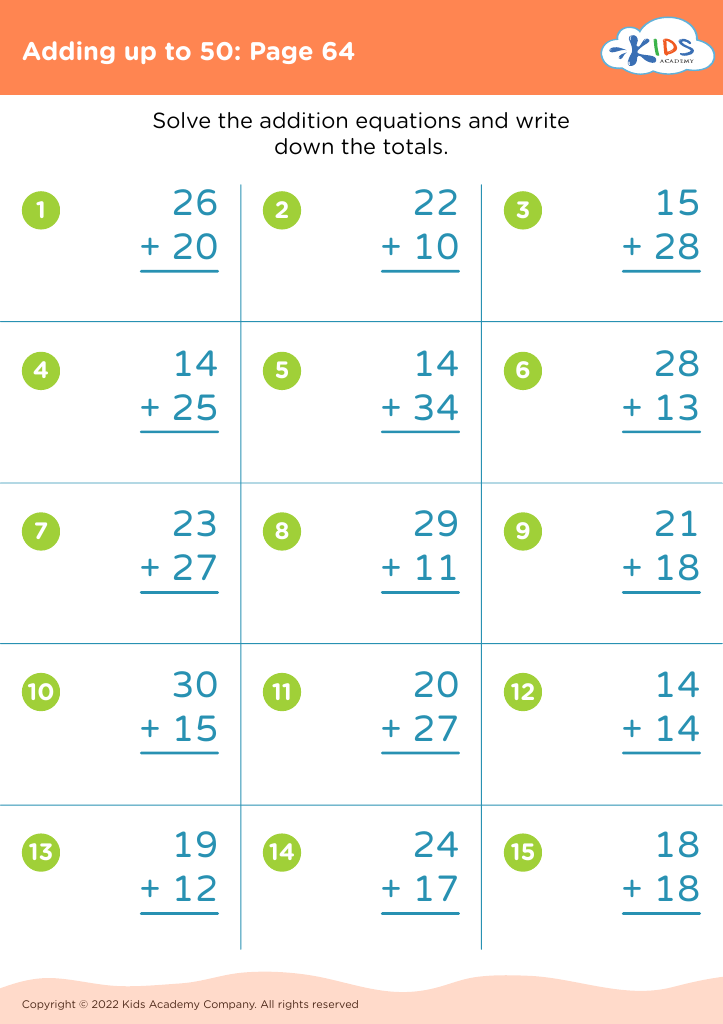
Unlock your child's potential with our Developing Logical Thinking Addition Worksheets! These engaging, printable resources are designed to enhance mathematical understanding while fostering logical reasoning skills. Perfect for early learners, our worksheets challenge students to think critically as they solve addition problems and explore various strategies. Each activity promotes reasoning, pattern recognition, and problem-solving, ensuring a well-rounded approach to math education. Ideal for both classroom settings and home learning, these worksheets make math fun and accessible. Support your child in mastering addition while enhancing their overall cognitive development. Download today and begin their journey to confident mathematical thinking!
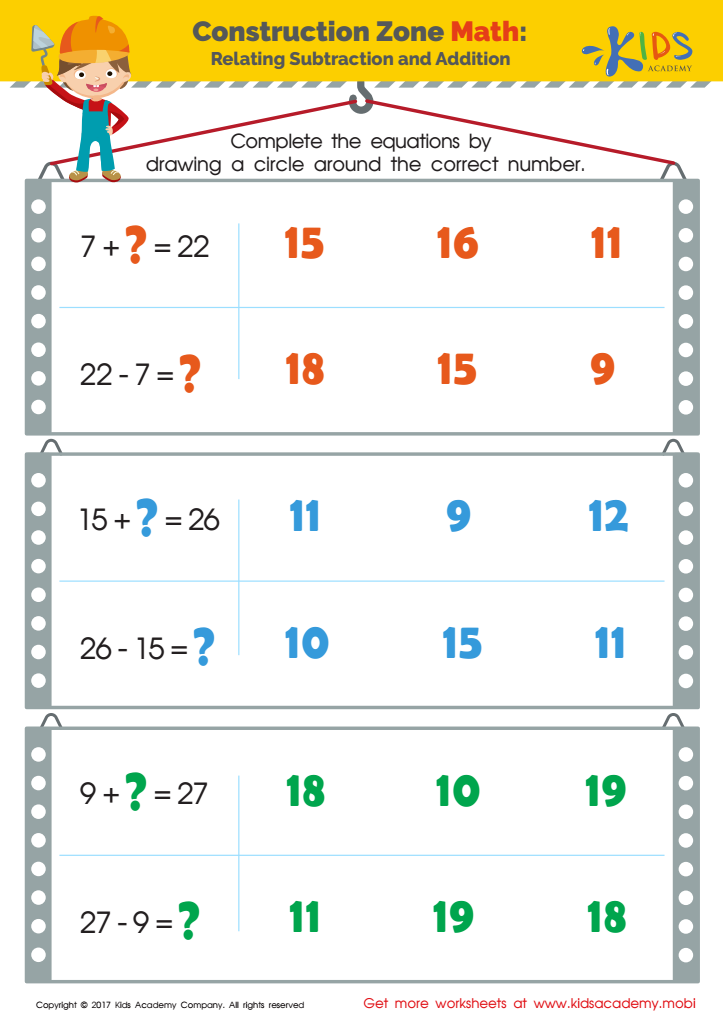
Related Addition and Subtraction Facts Worksheet
 Assign to My Students








Developing logical thinking skills in young learners is crucial for their overall cognitive development and problem-solving abilities. When children engage with mathematical concepts like addition through logical reasoning, they not only memorize numbers but also understand the relationships between them. This foundational skill enhances their ability to approach complex problems in mathematics and other subjects later in life.
Logical thinking teaches children to analyze patterns, make predictions, and draw conclusions based on evidence. It fosters critical thinking and encourages a mindset of inquiry, which is essential in today's information-rich world. By focusing on skills like addition through logical perspectives, educators and parents can help children gain confidence in their abilities, enabling them to tackle real-life situations effectively.
Additionally, strong logical reasoning correlates with success in academic pursuits and future employment. Employers highly value these skills as they are fundamental for teamwork, decision-making, and analytical tasks in various professions. Therefore, parents and teachers should prioritize developing logical thinking in addition, as it lays the groundwork for lifelong learning and adaptability, preparing children not just for school but for the challenges of everyday life. Ultimately, nurturing these skills can lead to a more thoughtful, innovative, and capable generation.








