Fine motor skills (writing) Addition Worksheets - Page 2
38 filtered results
-
From - To
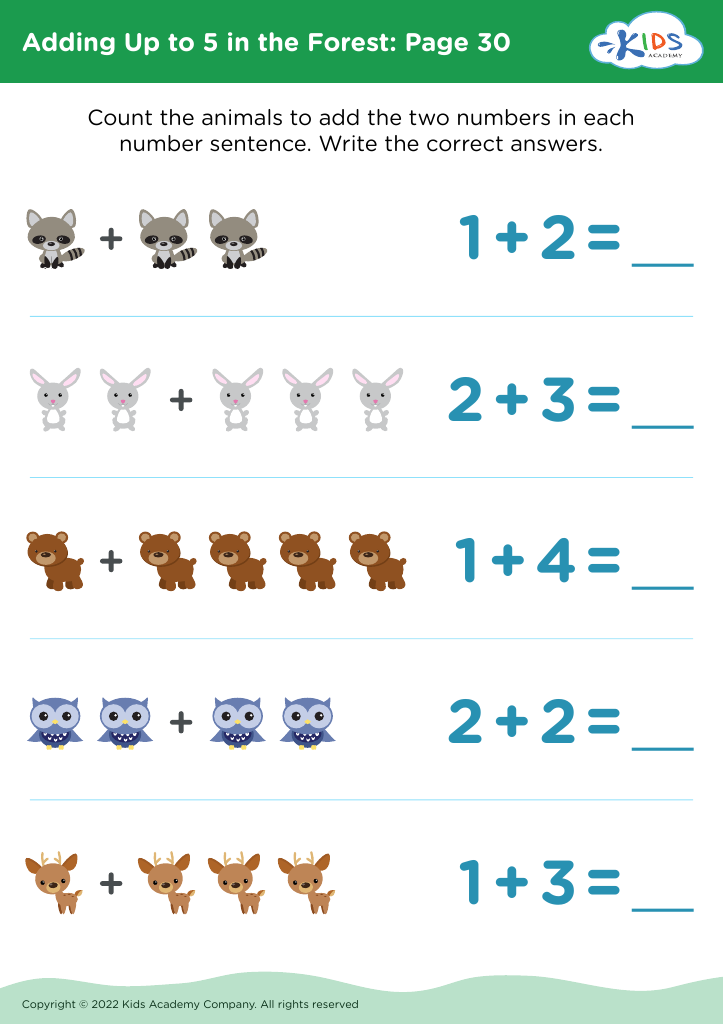
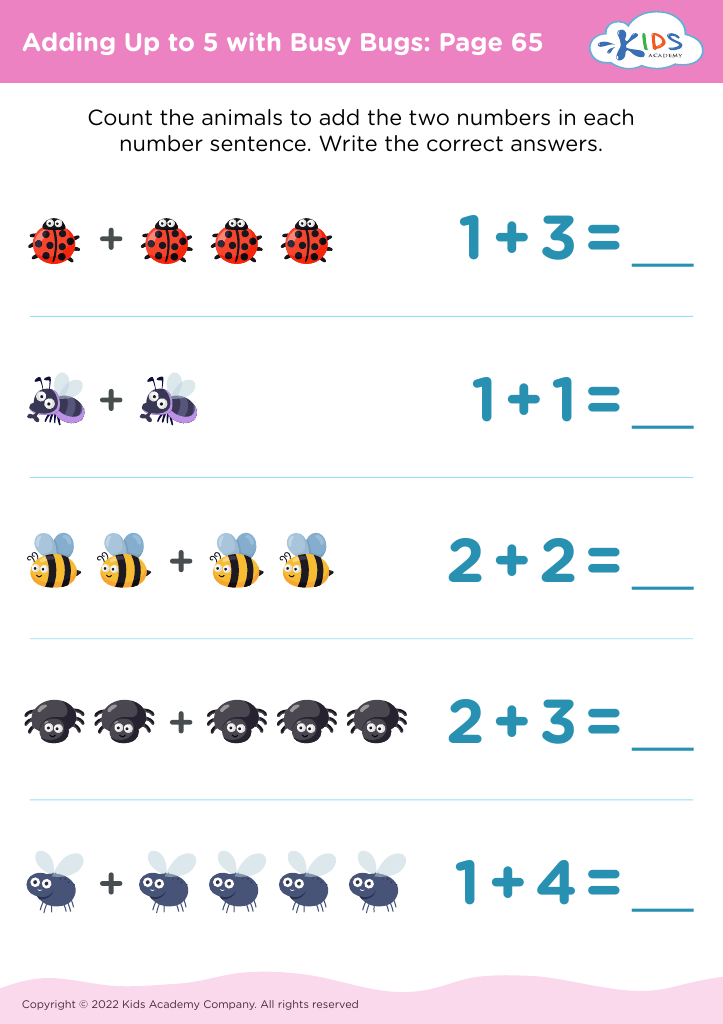




.jpg)
.jpg)


Fine motor skills are essential for young children, as they play a crucial role in their overall development, particularly in writing and other academic tasks. Parents and teachers should care about fine motor skills because they are foundational for daily functioning and a child’s education. Writing, for instance, requires precise hand-eye coordination, dexterity, and control, which all stem from well-developed fine motor skills.
When kids struggle with fine motor tasks, they may experience frustration and anxiety, which can lead to diminished confidence and reluctance to participate in classroom activities. This can adversely affect their learning journey, reducing their engagement in writing assignments and other subjects. Additionally, disciplines like art, math, and STEM often rely on fine motor skills, so a deficiency can impact performance across the board.
Moreover, nurturing fine motor skills in a supportive environment enhances cognitive and fine-tuning capabilities. Activities such as flipping pages, using scissors, or assembling puzzles can bolster these skills. Offering children fun, engaging tasks allows parents and teachers to contribute positively to their growth. Ultimately, strong fine motor skills build a solid foundation that empowers children for academic success and everyday life.








