Identifying Animals Addition Worksheets
5 filtered results
-
From - To
Explore our "Identifying Animals Addition Worksheets" designed for early learners! These exciting and engaging worksheets combine basic addition with animal identification, making math practice fun and educational. Perfect for children in Kindergarten or Grade 1, each worksheet presents colorful images of animals and various addition problems, helping young minds strengthen their math skills while discovering different animals. These activities promote critical thinking, number recognition, and problem-solving abilities in a delightful way. Ideal for classroom use or extra home practice, these worksheets are a fantastic resource for boosting confidence and fostering a love for math in young learners.
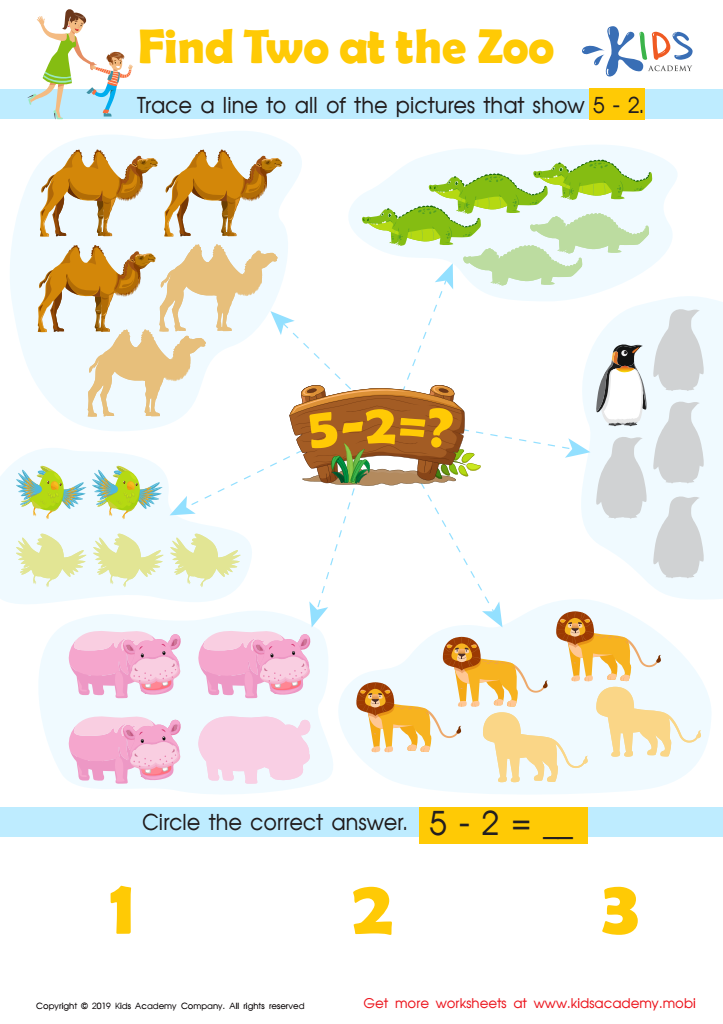
Find Two at the Zoo Worksheet
 Assign to My Students
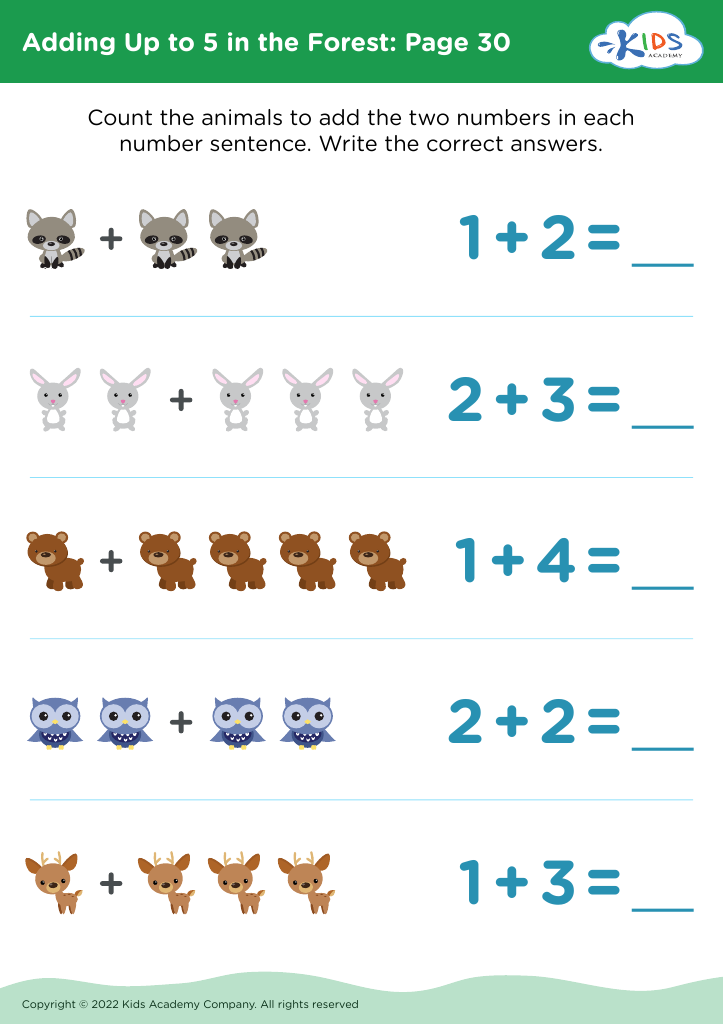








Identifying animals addition—a concept that combines recognizing animals and basic arithmetic—is paramount in early childhood education. For parents and teachers, it's not merely a fun activity; it serves multiple developmental purposes. First, it nurtures cognitive skills by encouraging children to categorize and classify animals, which is foundational for higher-level thinking and organization. The addition component stimulates mathematical understanding, as children begin to grasp basic number concepts and operations in an engaging way.
Incorporating animals into math can also enhance memory and retention. When children link numbers to visual and familiar representations (like animals), they are more likely to remember the information. Language development is another key benefit. Discussing various species enriches vocabulary, encourages descriptive language, and can spur interest in reading and research about the animal kingdom.
Additionally, emotional and social skills come into play. Collaborative activities involving animal addition can teach teamwork and sharing. Likewise, fostering a bond with animals through such exercises can enhance empathy, teaching students to care about other living beings, which translates to better interpersonal skills later in life.
In essence, identifying animals addition is a multifaceted educational tool that interweaves cognitive, linguistic, and socio-emotional development, making it a valuable practice for fostering well-rounded growth in young learners.








