Identifying patterns Addition Worksheets
3 filtered results
-
From - To
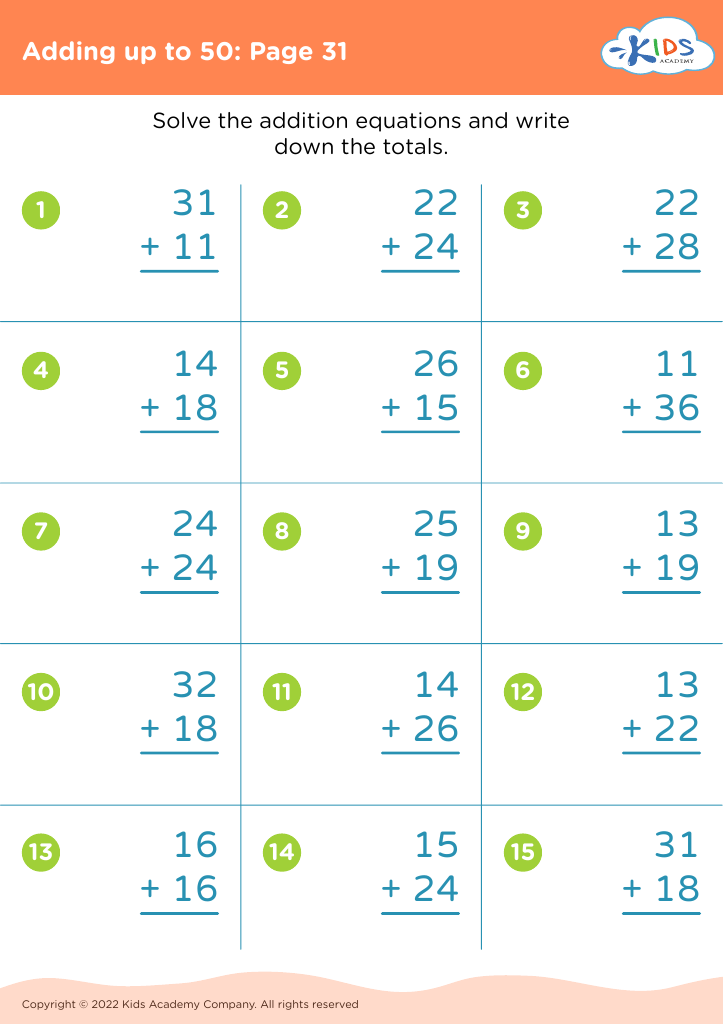
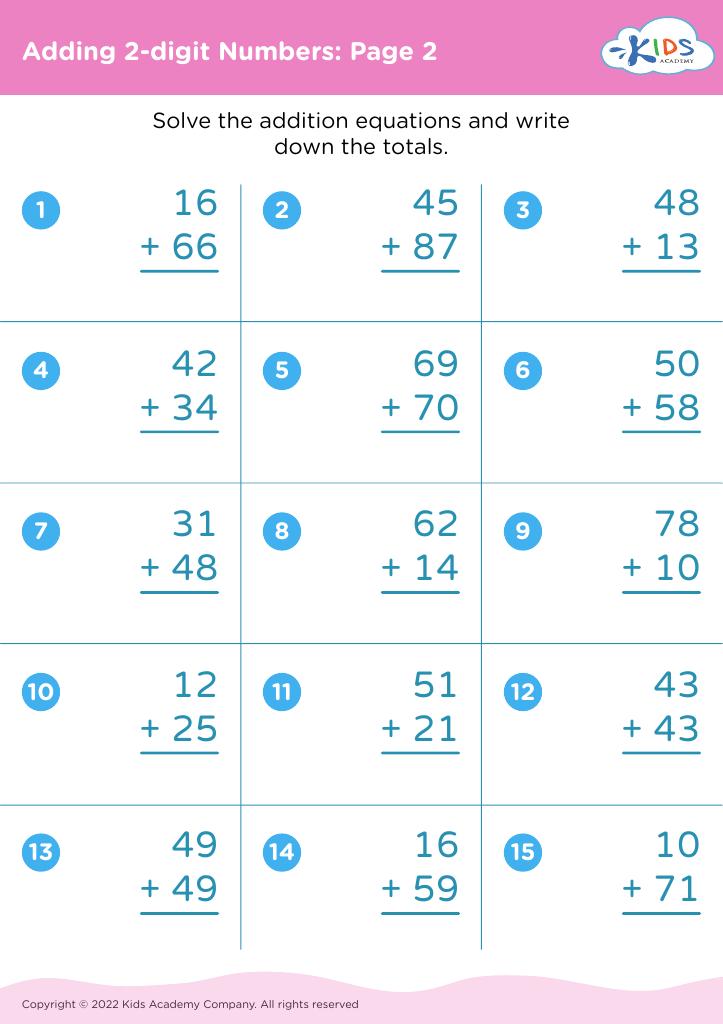
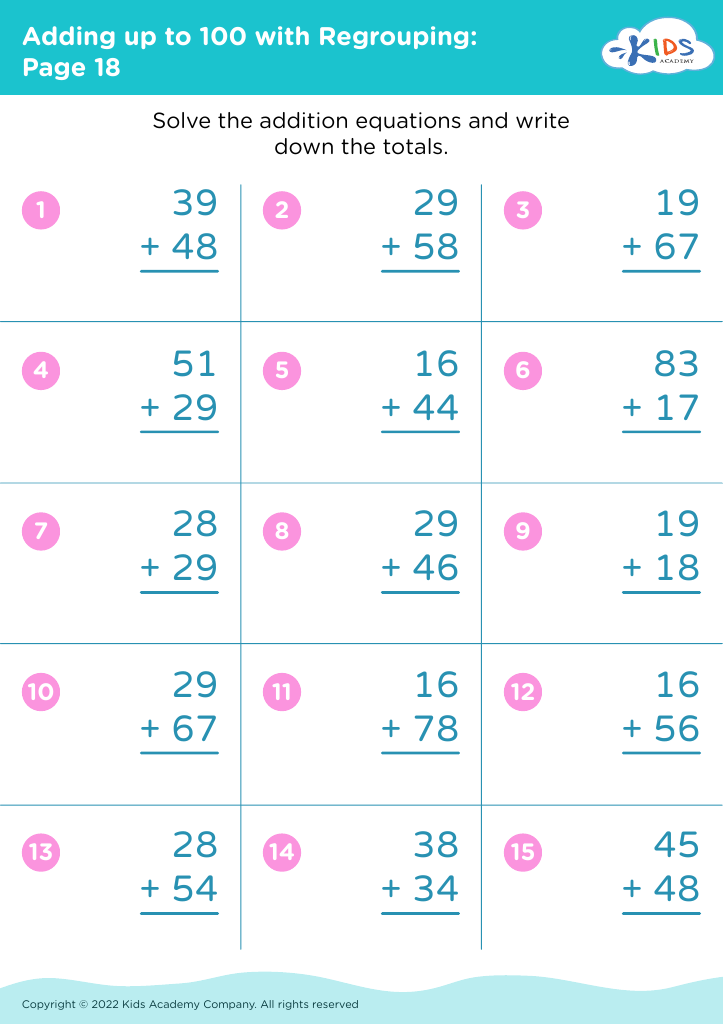
Welcome to our "Identifying Patterns Addition Worksheets" page, designed to enhance young learners' math skills through engaging exercises. These worksheets focus on recognizing and completing patterns while practicing addition, helping students develop critical thinking and problem-solving abilities. With a variety of fun, age-appropriate challenges, children will learn to identify sequences and relationships among numbers, all while reinforcing their addition skills. Perfect for classroom use or at-home learning, our worksheets encourage exploration and mastery of mathematical concepts. Dive into a world of patterns today and watch your child's confidence in math grow through interactive learning experiences!








Identifying patterns in addition is crucial for young learners, as it lays a foundational understanding that extends beyond mere computation. When parents and teachers focus on recognizing patterns, they help children develop critical thinking and problem-solving skills. These patterns—such as consistent behaviors in calculations (like knowing that 2 + 3 will always be 5)—aid in the transfer of knowledge to more complex mathematical concepts, fostering a stronger comprehension of number relationships.
Additionally, recognizing patterns can enhance mental arithmetic abilities, allowing children to solve problems more efficiently. Instead of relying heavily on counters or fingers, they begin to see numerical relationships, which builds their confidence in mathematics.
From a broader educational standpoint, early engagement with pattern recognition supports the development of a growth mindset. When children recognize that mastery comes from understanding underlying patterns, they become more resilient learners. This approach also nurtures a love for learning, as uncovering patterns can turn mathematics into a fun and engaging exploration.
In sum, when parents and teachers emphasize pattern recognition in addition, they empower children with essential skills, boost their confidence, and equip them for future mathematical challenges.








