Learning number patterns Addition Worksheets
3 filtered results
-
From - To
Discover our "Learning Number Patterns Addition Worksheets" designed to build foundational math skills in young learners! These engaging and fun worksheets help kids recognize and understand number patterns through addition, boosting their problem-solving abilities and enhancing their arithmetic fluency. Ideal for classroom use or supplemental practice at home, each worksheet provides a structured approach to learning, making math enjoyable and accessible. With colorful visuals and age-appropriate activities, our worksheets not only make learning addition exciting but also lay the groundwork for future mathematical success. Unlock your child's potential with our expertly crafted number patterns addition worksheets today!
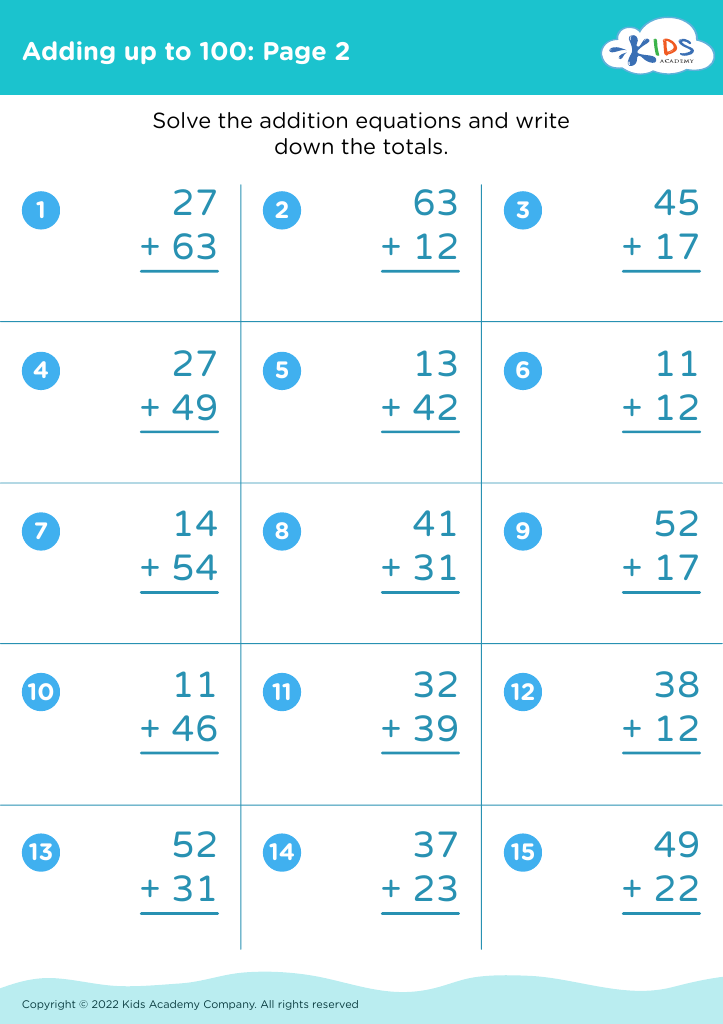
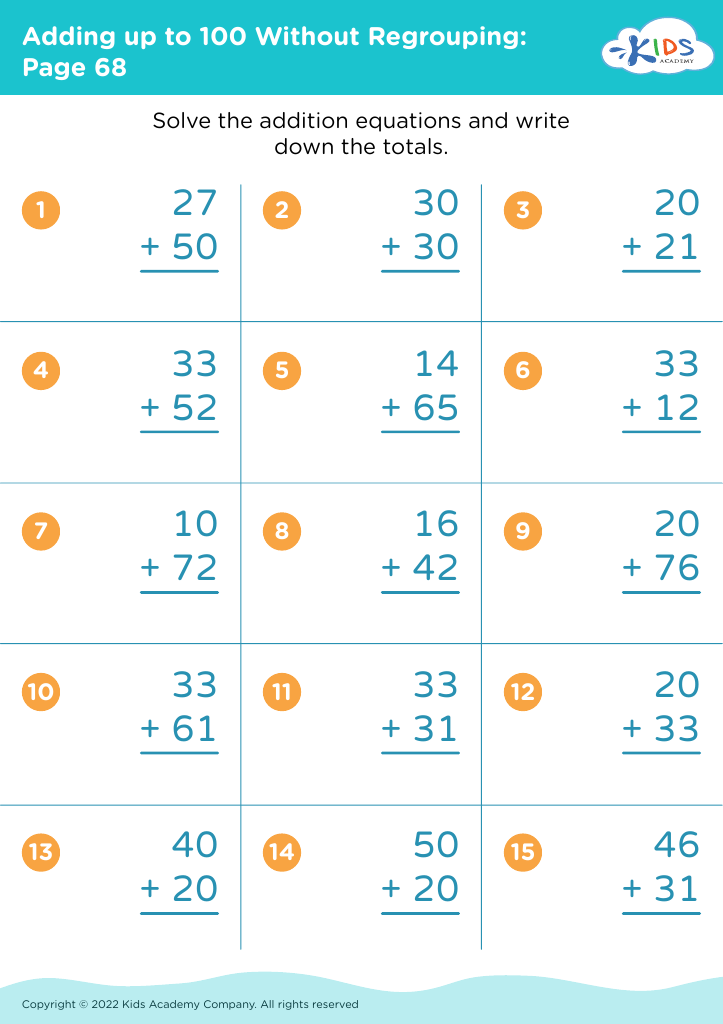
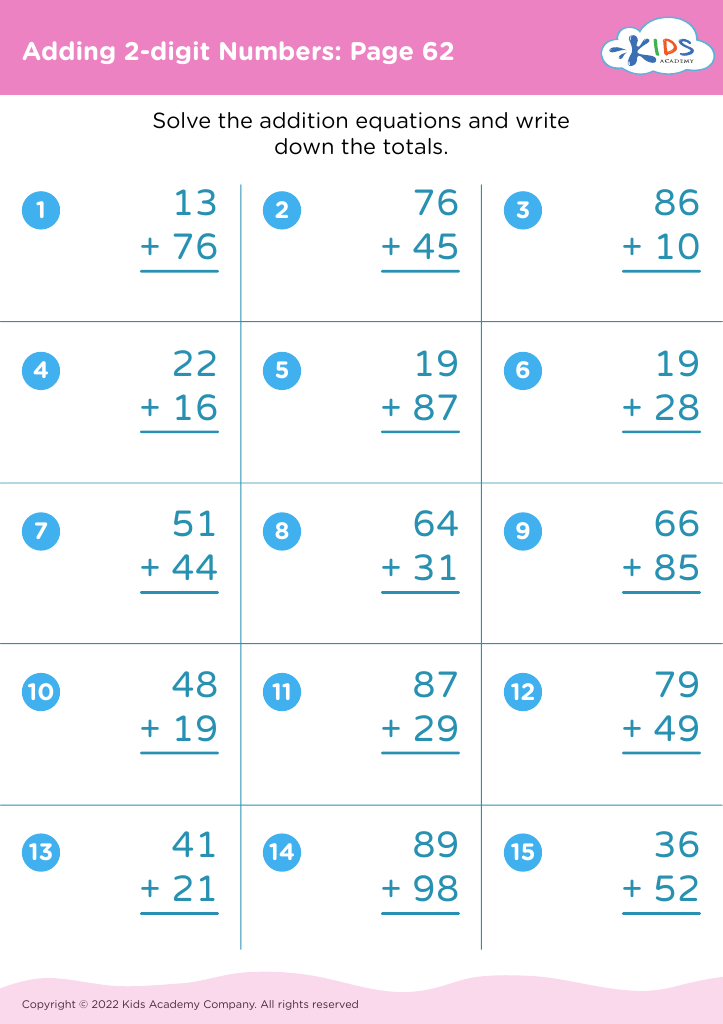



.jpg)




Learning number patterns, particularly in addition, is a crucial foundational skill for early grade students. For parents and teachers, it's essential to understand why fostering this skill is so important. Number patterns help children recognize the consistent properties and relationships between numbers, leading to a deeper understanding of mathematics as a predictable and logical system. This knowledge forms the groundwork for more complex arithmetic and algebraic concepts they will encounter later on.
When children grasp number patterns in addition, they develop problem-solving skills and mental math capabilities. For instance, they learn that adding 2 repeatedly (2, 4, 6, 8...) follows a predictable pattern, thus equipping them to quickly calculate sums and identify sequences without needing to count each time manually. This speeds up their mathematical thinking and efficiency.
Moreover, recognizing these patterns significantly benefits their cognitive development. It enhances their memory, promotes critical thinking, and strengthens their ability to identify and predict logical sequences in various scenarios. Teachers and parents should thus prioritize teaching addition number patterns to build a strong mathematical foundation, which not only boosts academic performance but also instills confidence and a positive attitude towards learning math. Additionally, engaging with patterns in a supportive environment fosters curiosity and a love for learning, vital attributes for lifelong education.








