Number Recognition Addition Worksheets - Page 22
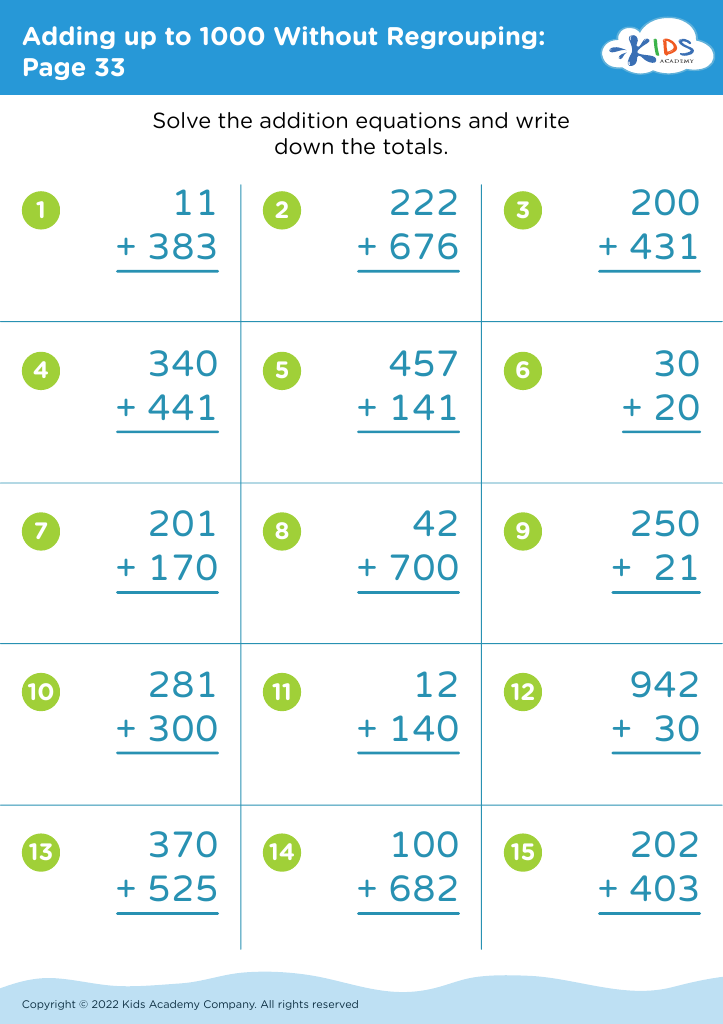
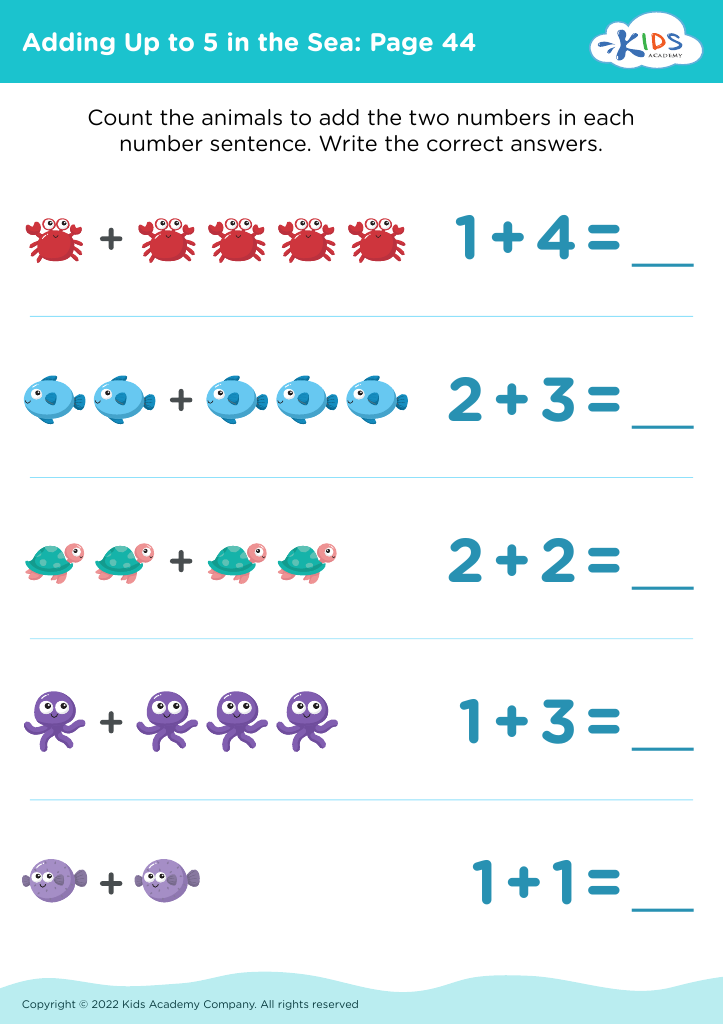
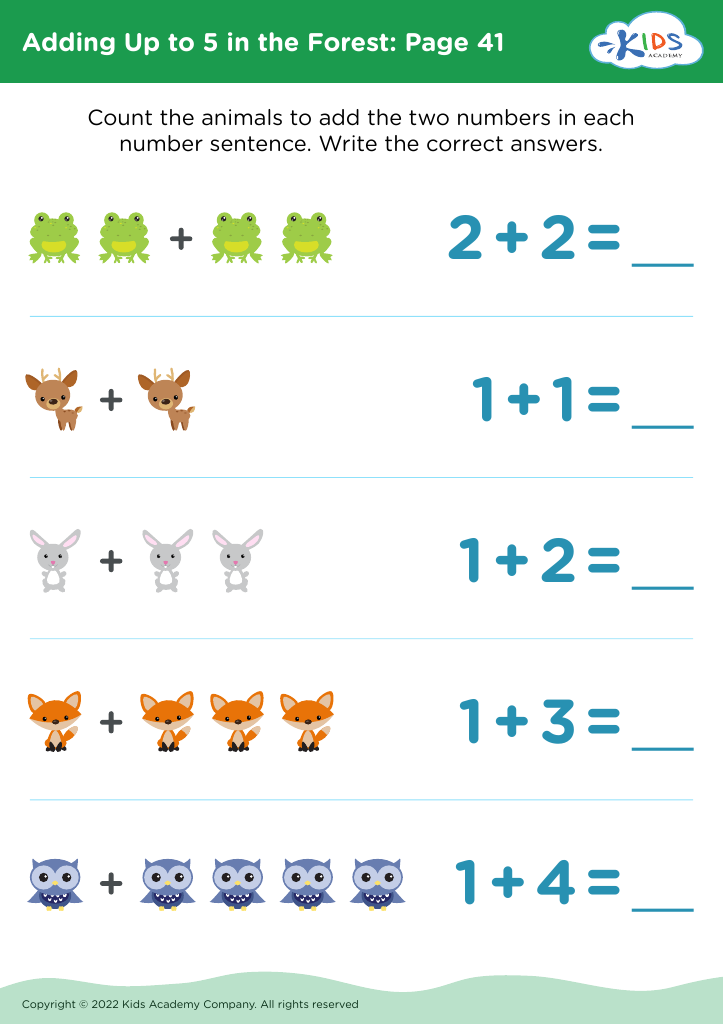
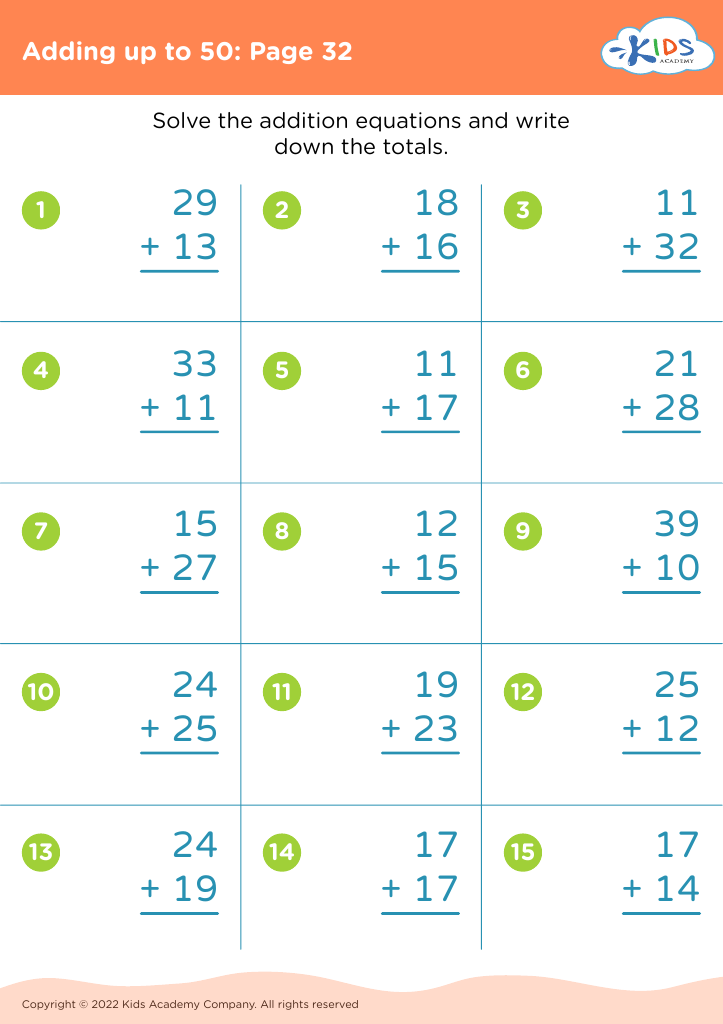
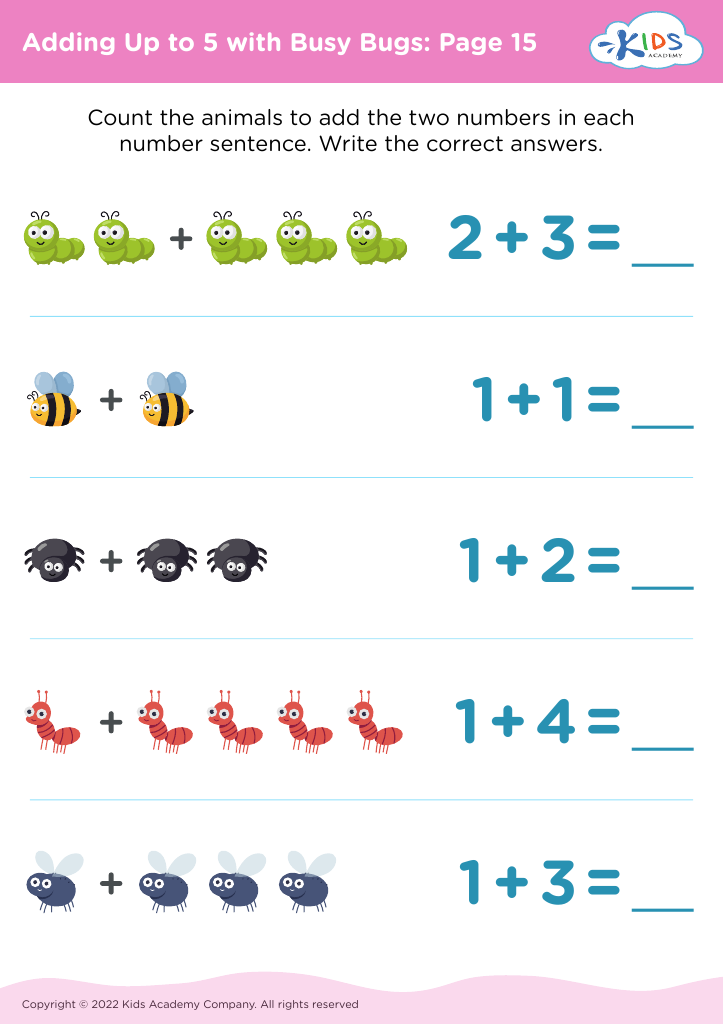








Number recognition and addition are foundational skills in early childhood education that significantly impact a child's mathematical development. Parents and teachers should care about these skills because they provide the basis for more complex mathematical concepts and problem-solving abilities later in life. When children can recognize numbers, they can begin to understand quantity, value, and counting principles, which are essential for everyday activities such as shopping, cooking, and time management.
Moreover, early mastery of addition builds children's confidence and encourages a growth mindset. When children successfully recognize numbers and solve simple addition problems, they experience a sense of accomplishment that fosters a positive attitude towards math. This enthusiasm can translate into a greater willingness to engage with more challenging subjects as they advance in school.
Additionally, number recognition and addition align with key early learning standards, ensuring children are prepared for future academic demands. Educating parents and teachers about these skills empowers them to create engaging learning environments—using games, books, and fun activities—that promote early numeracy. By prioritizing number recognition and addition, parents and teachers play a crucial role in laying a solid foundation for children's future success in all areas of learning.








