Practice subtraction Addition Worksheets
5 filtered results
-
From - To
Welcome to our "Practice Subtraction Addition Worksheets" page, where learning math is fun and engaging! Our collection of printable worksheets is designed to help young learners master essential addition and subtraction skills through a variety of interactive exercises. Each worksheet is tailored to cater to different learning levels, ensuring that every child can practice at their own pace. With colorful visuals and age-appropriate problems, students will build confidence and proficiency in math. Whether in the classroom or at home, our worksheets provide an excellent resource for educators and parents to track progress and reinforce key concepts. Start your math journey today!
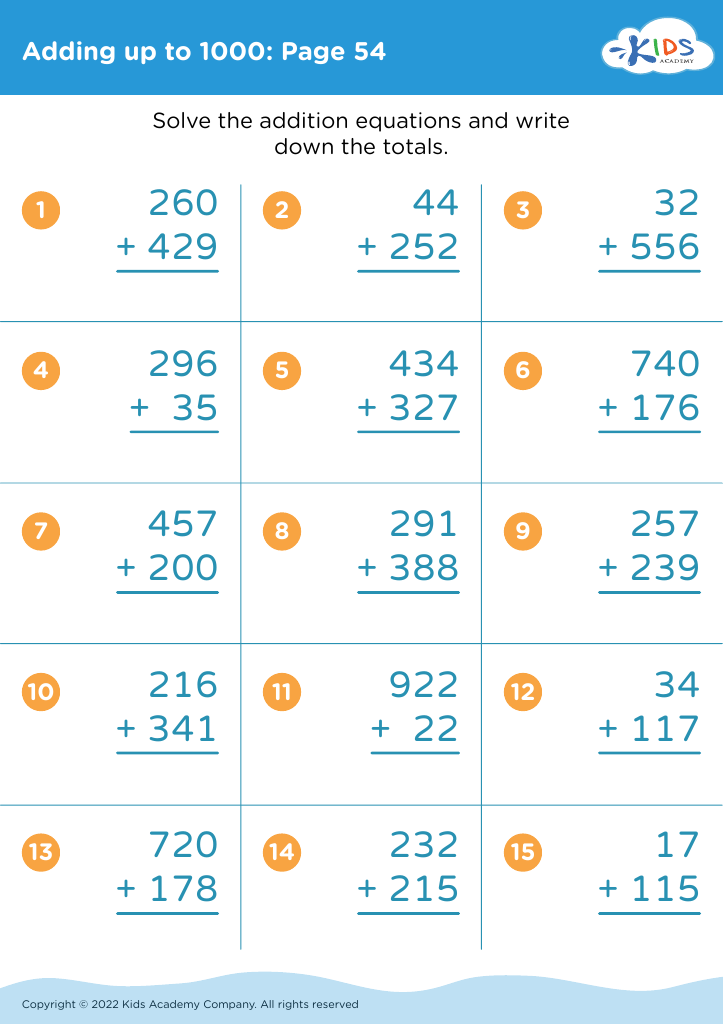
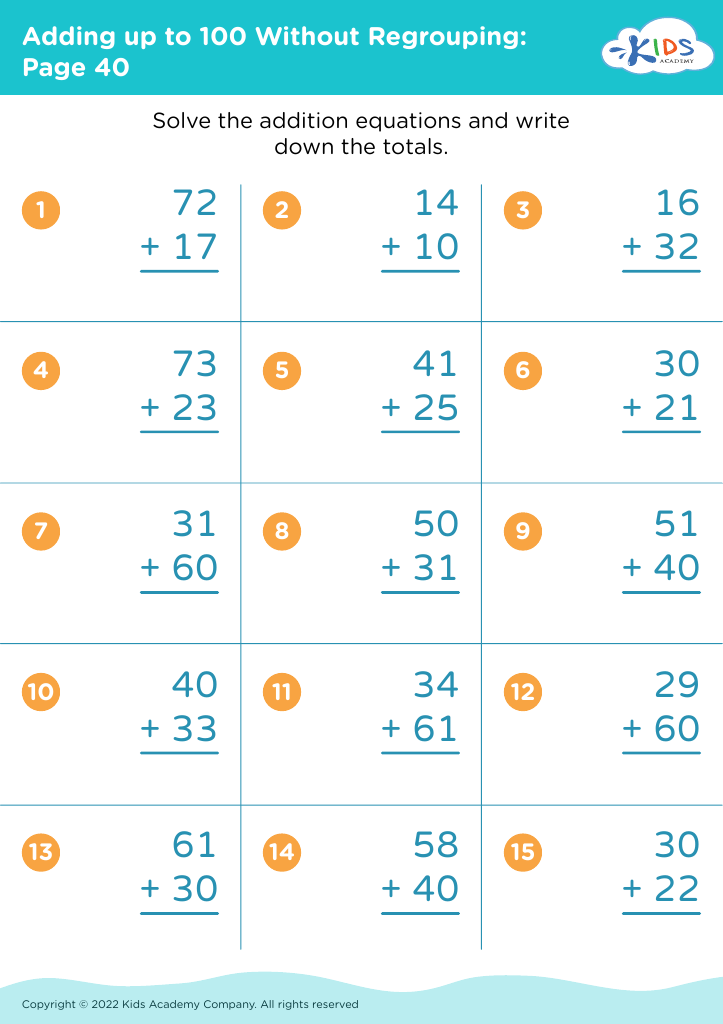
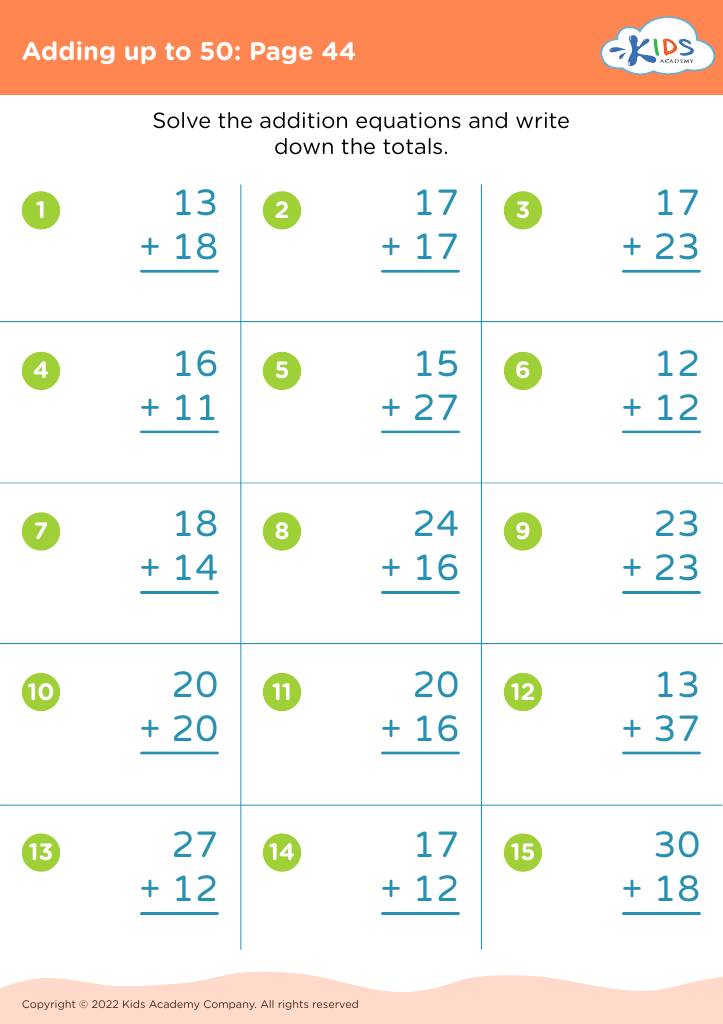
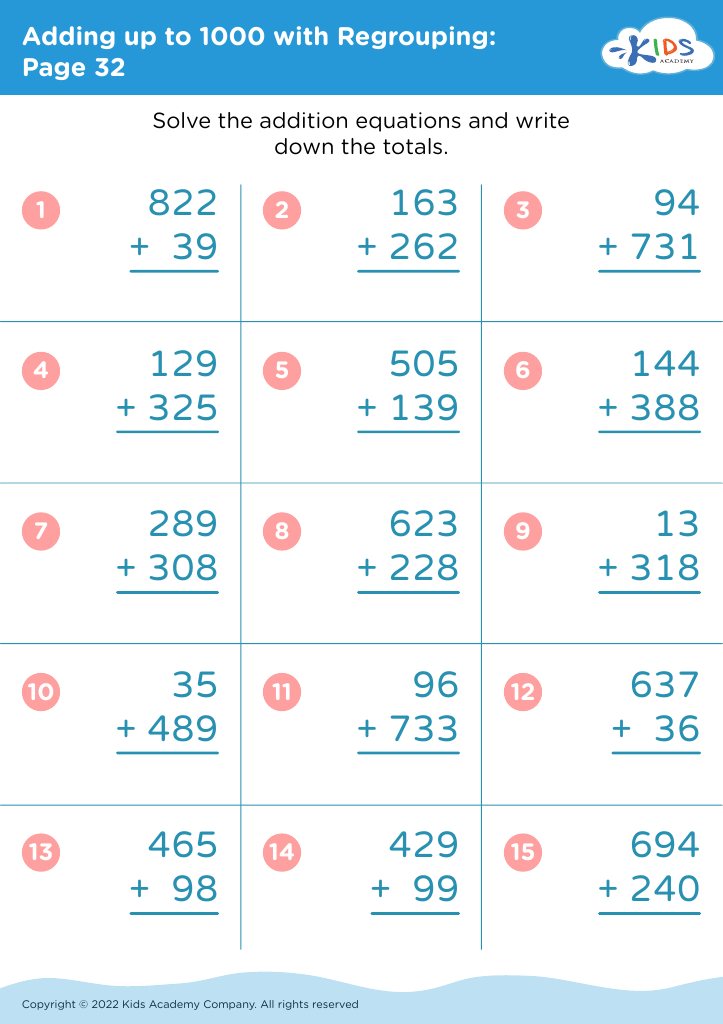
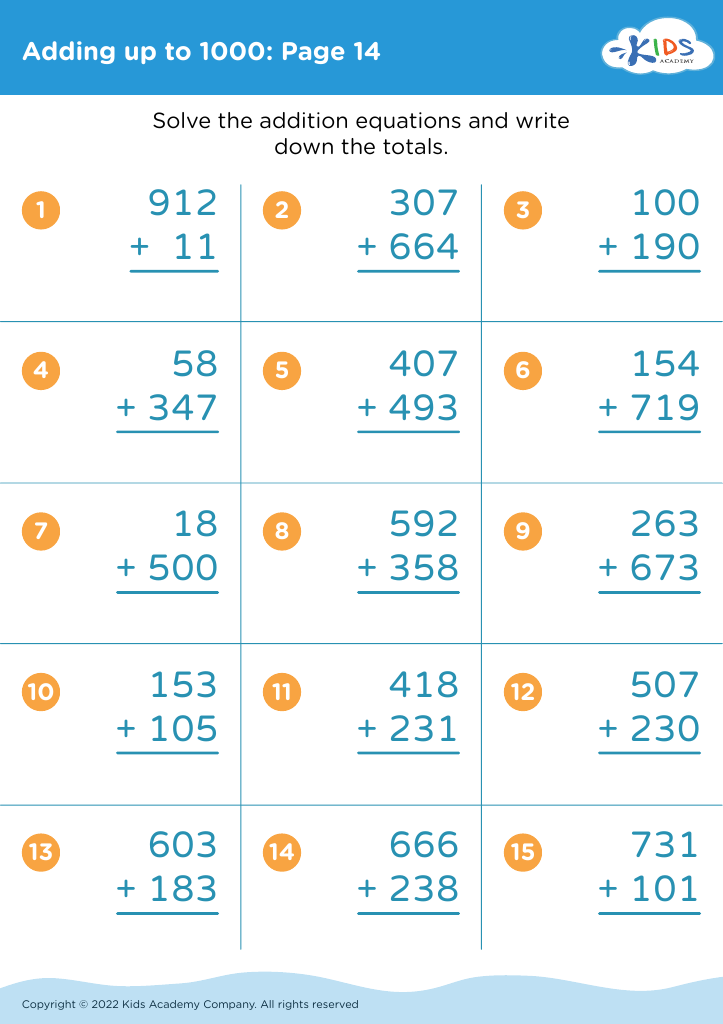








Parents and teachers should prioritize practicing addition and subtraction because these foundational skills are essential for a child's overall mathematical understanding and academic success. Mastery of basic operations enables students to approach more complex concepts with confidence, setting a strong groundwork for their future education.
Regular practice of addition and subtraction helps children develop critical thinking and problem-solving skills through the use of numbers. These operations not only enhance their mathematical fluency but also boost logical reasoning capabilities. Being comfortable with these basic algorithms facilitates better performance in subjects such as science, technology, engineering, and mathematics (STEM), where these skills are often applied.
Moreover, practicing these operations can foster a positive attitude towards math. When children can compute confidently, they are more likely to engage enthusiastically with mathematical concepts and enjoy the learning process.
Additionally, proficiency in addition and subtraction is crucial for daily life activities, including budgeting, measuring, and time management. By creating a solid arithmetic foundation, parents and teachers empower children to navigate their world as informed individuals. Supporting early subtraction and addition not only prepares children for academic challenges but also instills lifelong skills that extend beyond the classroom.








