Visual-motor skills Addition Worksheets
4 filtered results
-
From - To
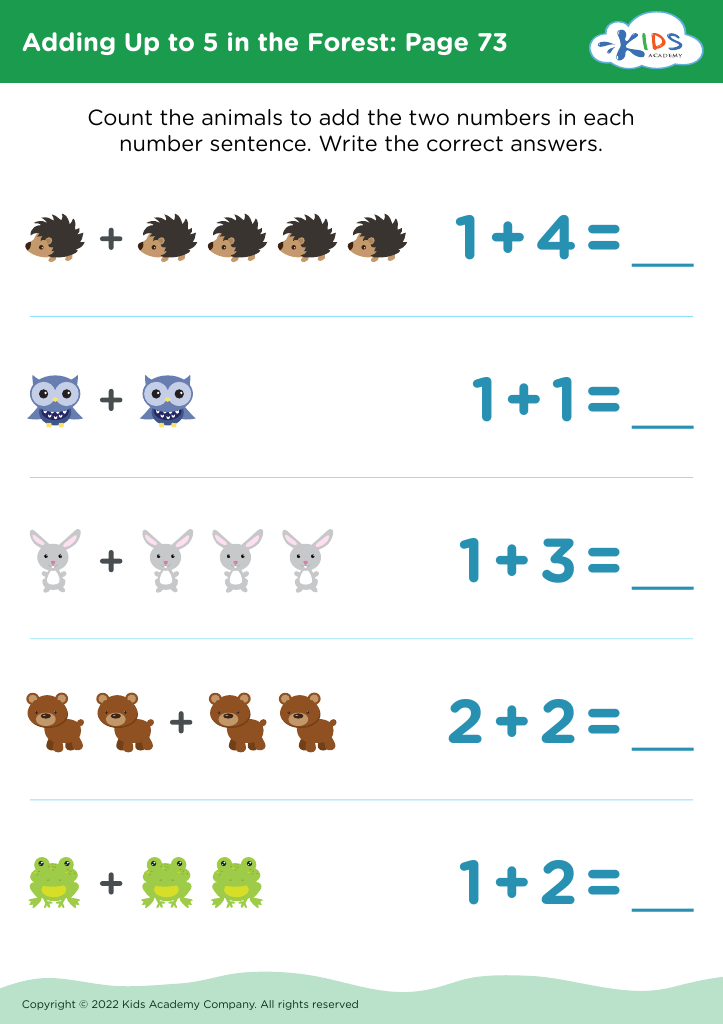
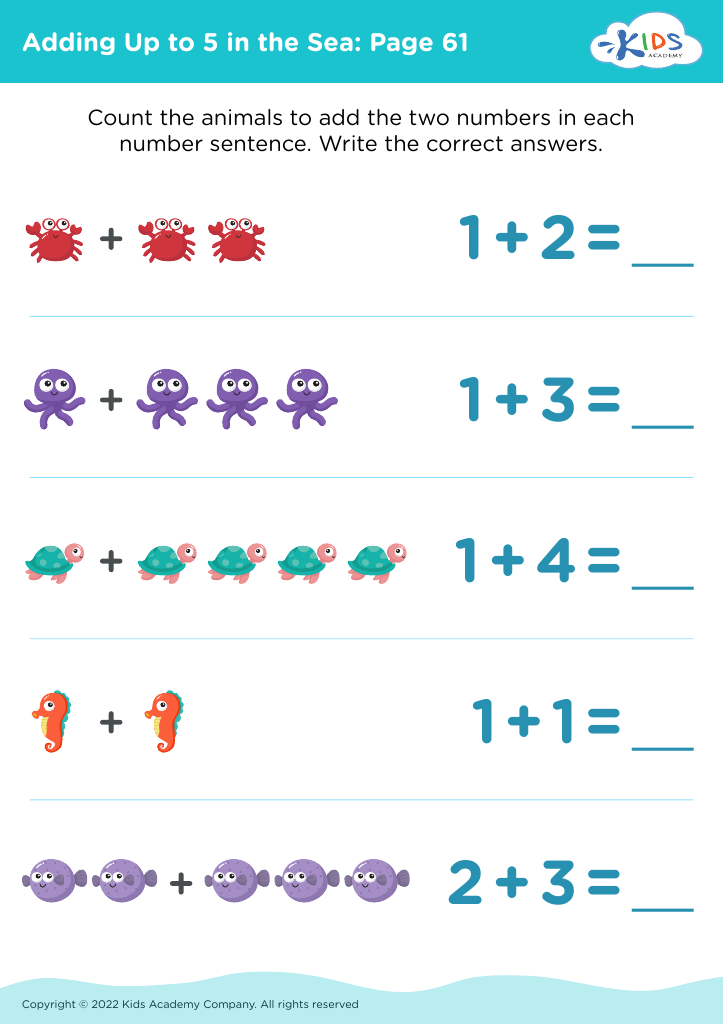
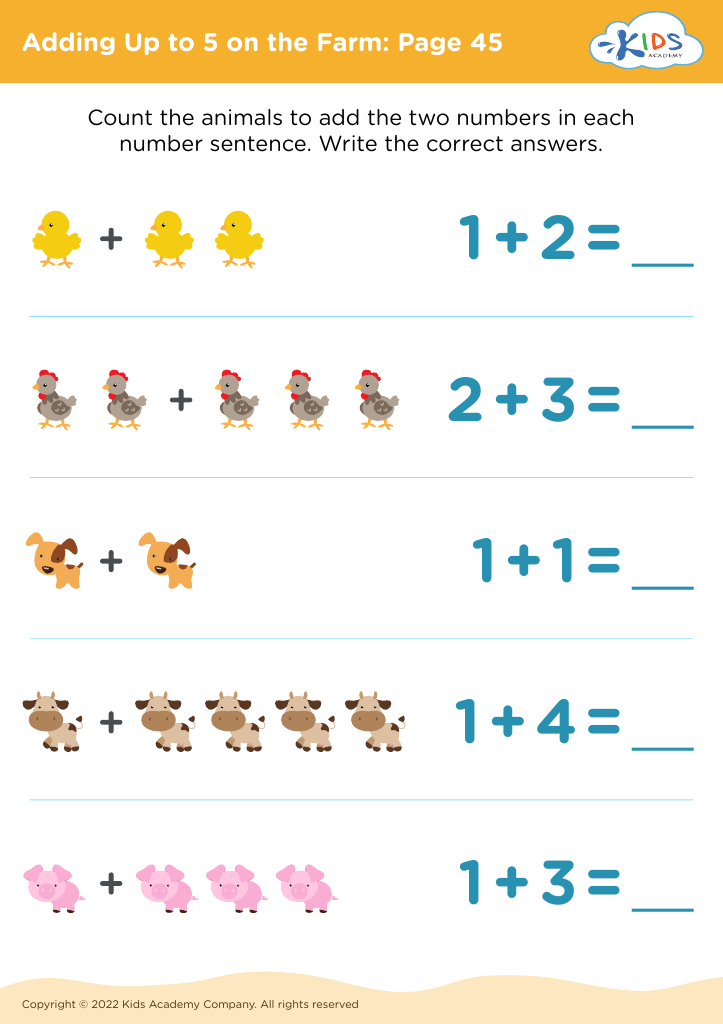
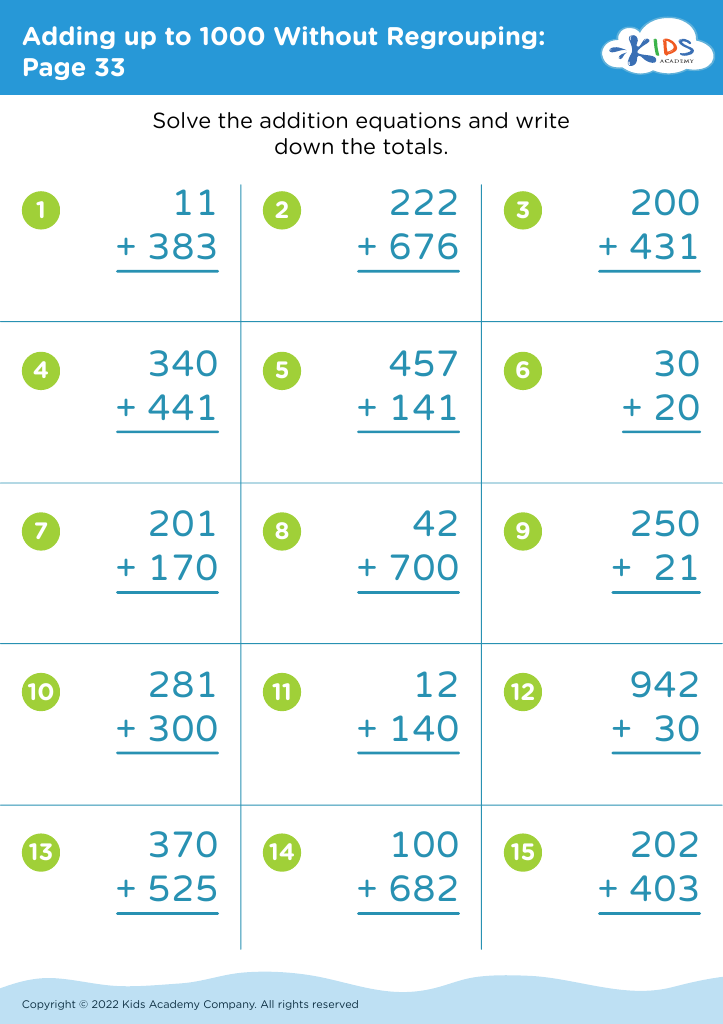
Enhance your child's math proficiency and physical coordination with our Visual-Motor Skills Addition Worksheets! Specially designed for young learners, these worksheets integrate simple addition problems with captivating, visually engaging exercises. Each activity focuses on boosting fine motor skills, hand-eye coordination, and cognitive development, making learning both fun and effective. Ideal for home or classroom use, these printable worksheets aid in reinforcing math concepts through playful challenges and colorful illustrations. Authored by educational experts, our resources promise success for children as they develop essential skills while mastering basic math. Discover the joy of integrated learning today!








Visual-motor skills encompass the coordinated interaction between visual perception and physical movement. These skills are vital for children's everyday tasks and contribute significantly to their overall development. Parents and teachers should prioritize visual-motor skills for several reasons.
Firstly, strong visual-motor skills are foundational for academic success. For instance, handwriting requires precise coordination between the eyes and hand movements. Writing letters, solving arithmetic problems, and even using scissors all depend on well-developed visual-motor coordination. Without these skills, children may struggle academically, potentially impacting their confidence and enthusiasm for learning.
Secondly, visual-motor skills are crucial for daily activities and overall motor development. Buttoning shirts, tying shoelaces, and even playing sports require the precise coordination of visual and motor inputs. Proficiency in these tasks promotes self-reliance and nurtures a sense of competence, which can enhance a child’s self-esteem.
Lastly, fostering visual-motor skills can improve social interactions. Many play activities, like drawing, assembling puzzles, or playing catch, rely on these skills. Engagement in these activities can encourage socialization and teamwork, vital aspects of a child's social development.
By prioritizing visual-motor skills, parents and teachers can support the holistic development of children, setting them up for success in various life aspects.








