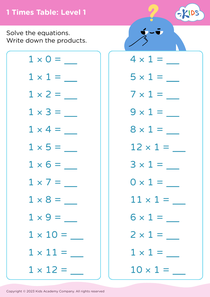
Understanding times tables Advanced Times Tables up to 12 Worksheets
3 filtered results
-
From - To
Explore our "Understanding Times Tables: Advanced Times Tables up to 12 Worksheets" designed to enhance your child's multiplication skills. These engaging worksheets offer a step-by-step approach to mastering times tables up to 12, aligning with curriculum standards for early math education. Through interactive activities and clear examples, kids will build confidence in their multiplying abilities, laying a strong foundation for more advanced math concepts. Ideal for both classroom and home use, these resources make learning fun and effective. Empower your young learners to tackle math challenges with ease—download our worksheets today and watch their skills soar!
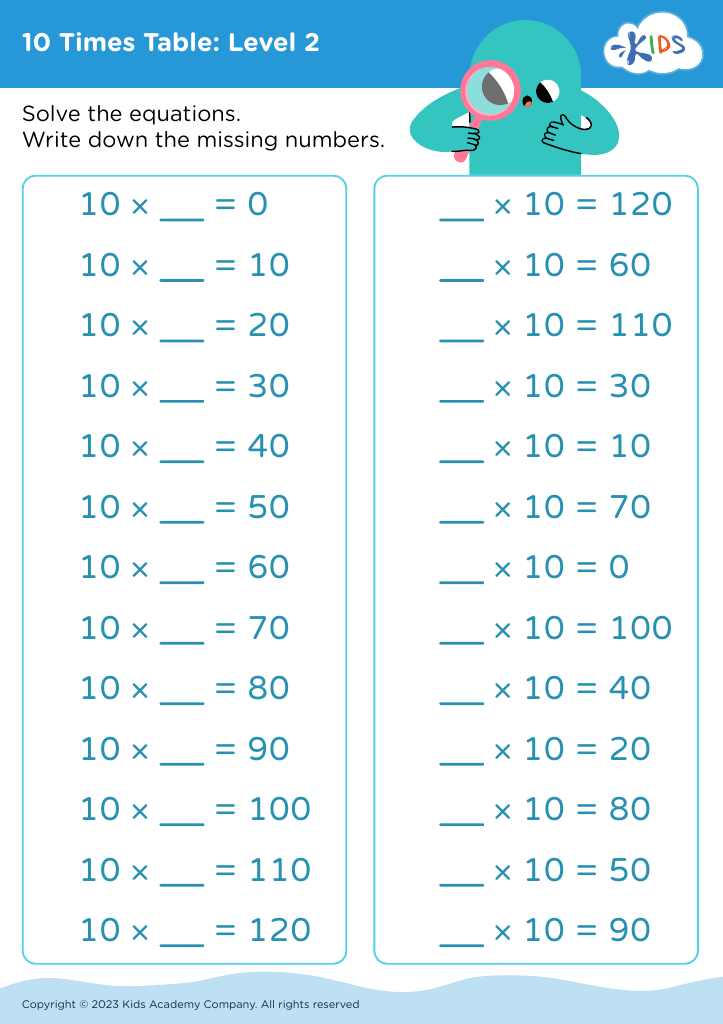
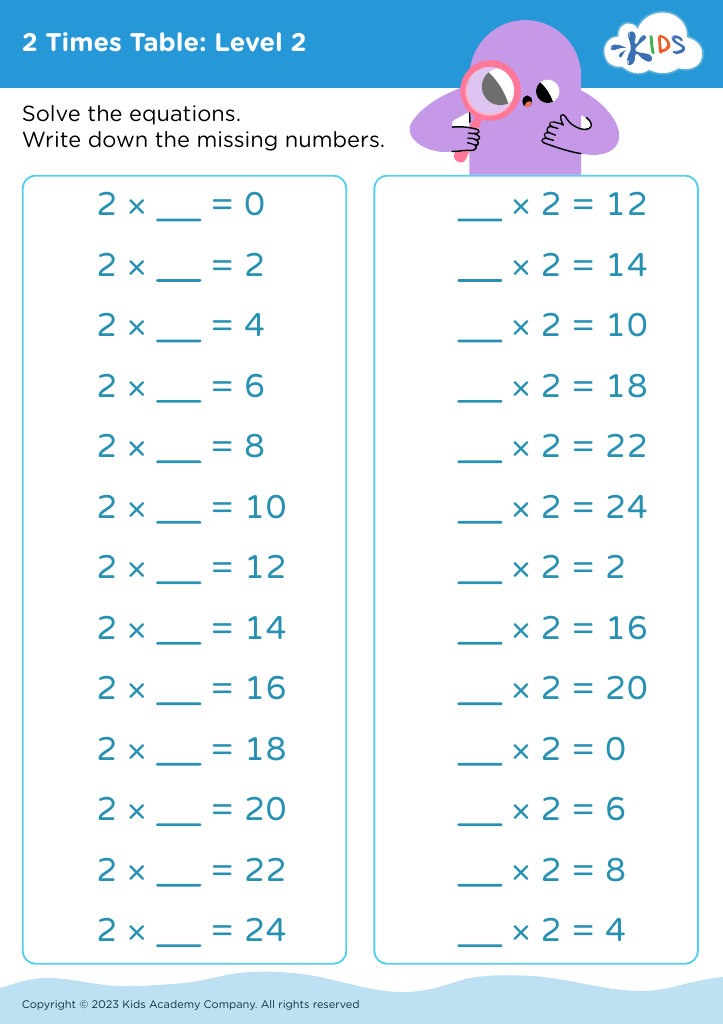
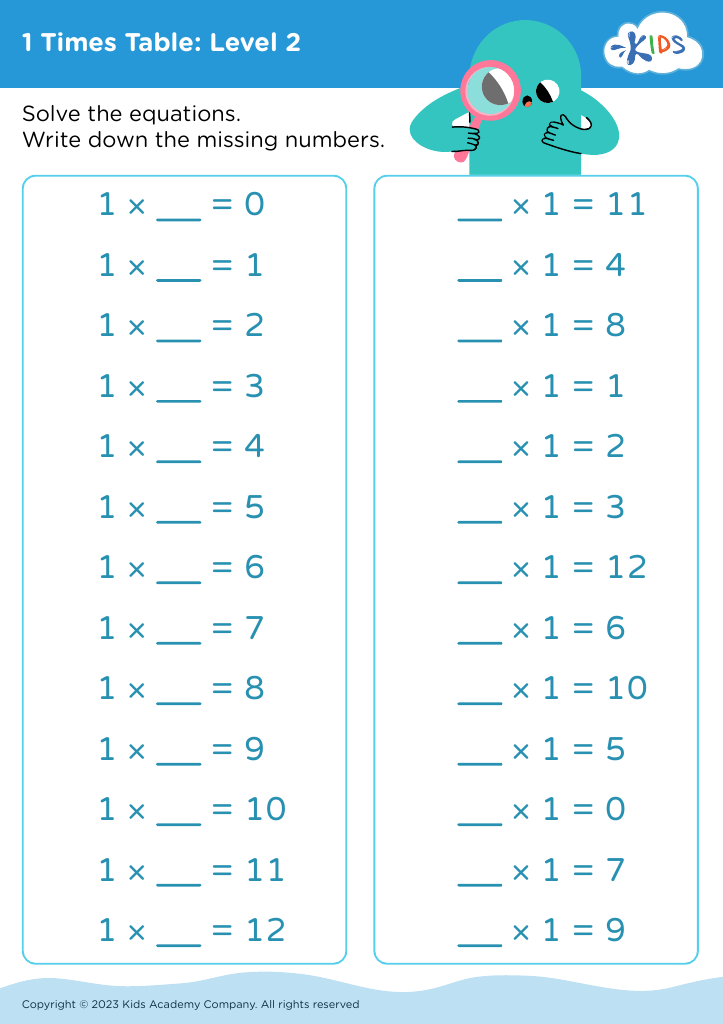



Understanding advanced times tables, especially up to 12, is crucial for both parents and teachers to prioritize in early education. Mastering multiplication facts fosters a strong mathematical foundation, which is essential for not only performing basic calculations but also solving more complex mathematical problems later on. Times tables provide the building blocks for various concepts, from division to fractions and algebra, making it vital for overall mathematical fluency.
For young learners, grasping these facts builds confidence and reduces anxiety associated with math, paving the way for a positive learning experience. Moreover, early mastery helps children recognize patterns and sequences, enhancing their problem-solving skills.
Parents and teachers caring about this foundational skill corresponds directly to a child's engagement with mathematics throughout their education. Emphasizing the importance of learning these tables can encourage strong study habits and a growth mindset towards math. Resources and practice at home accelerate progress, while teachers can create collaborative and dynamic activities in class to reinforce this knowledge.
In essence, nurturing a solid understanding of advanced times tables equips children with critical thinking skills and equips them better for future academic challenges, making it a pivotal focus in early education strategies.