
Understanding graphs Graphs Worksheets
5 filtered results
Difficulty Level
Grade
Age
-
From - To
Subject
Activity
Standards
Explore our "Understanding Graphs" worksheets, designed to help young learners grasp the fundamentals of graph interpretation. These engaging and interactive worksheets introduce students to various graph types, including bar graphs, line graphs, and pictographs. With step-by-step exercises, children will develop essential skills in reading and analyzing data, fostering critical thinking and problem-solving abilities. Our resources are tailored for early grade students, making learning both fun and effective. Dive into the world of graphs and empower your child to confidently interpret information visually. Download these printable worksheets today and make mathematics exciting and accessible!
Favorites
With answer key
Interactive
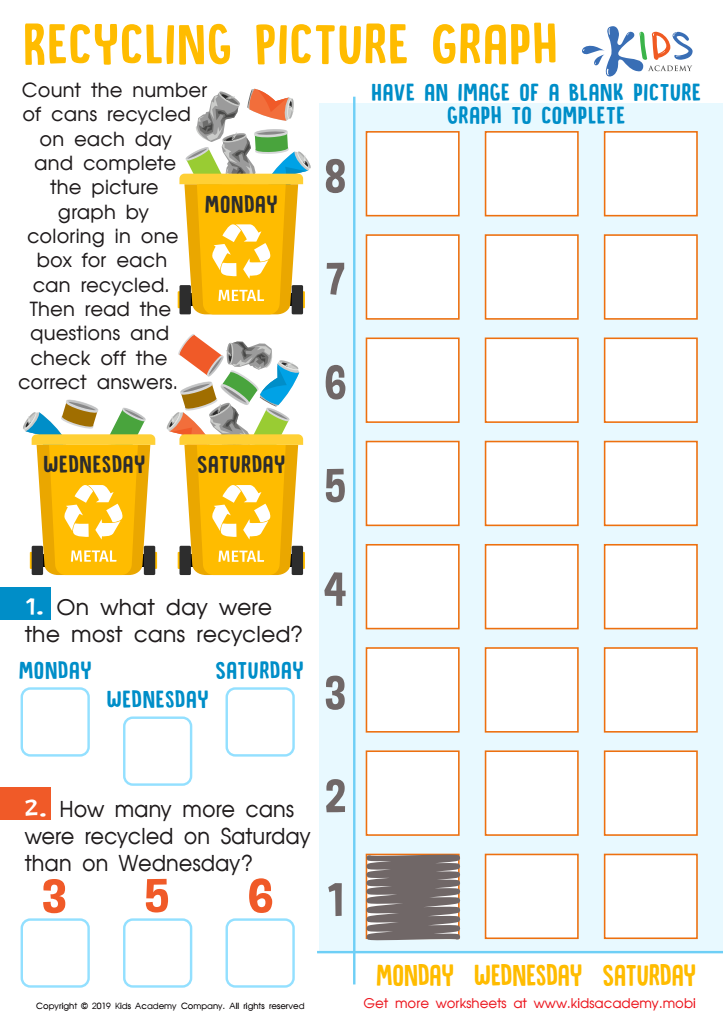
Recycling Picture Graph Worksheet
This worksheet can help kindergartners learn numbers and why recycling is important. After using items and materials, they can turn them into new materials instead of throwing them away. Guide your students to follow the instructions and answer the questions at the end. Help them understand how recycling benefits our environment.
 Assign to My Students
Recycling Picture Graph Worksheet
Worksheet
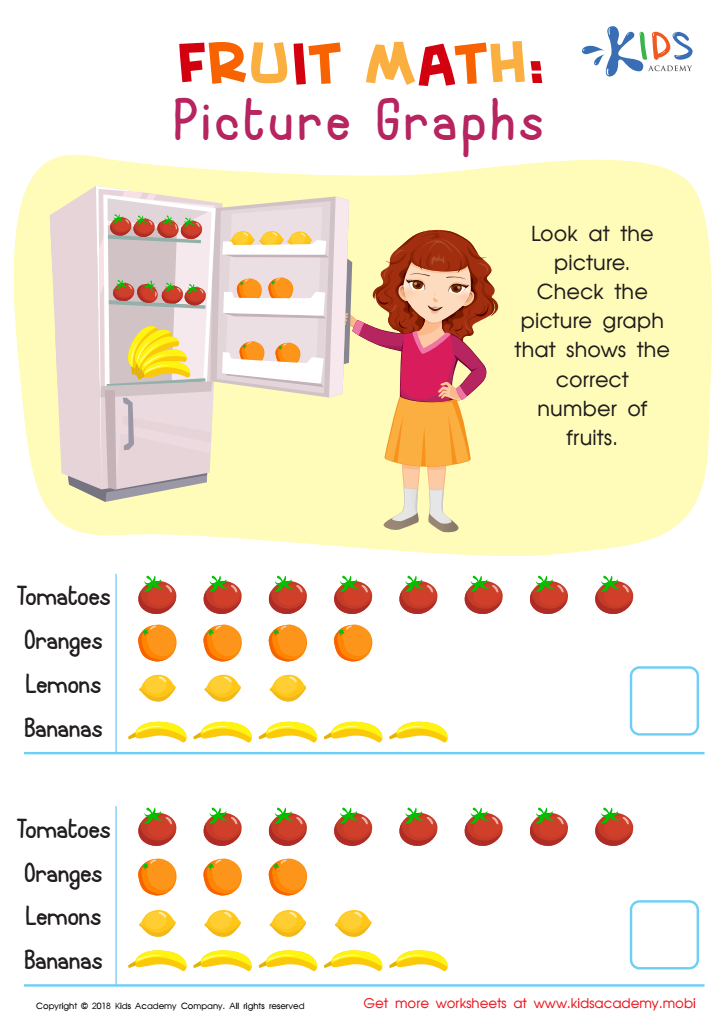
Fruit Math: Picture Graphs Worksheet
Help your child learn to draw graphs by having them look at pictures. Ask them to identify a graph that accurately portrays the data and have them explain why. This will prepare them to easily draw more complex graphs in the future. For example, have them look at the picture with the number of fruits in the colorful worksheet and explain why the graph is accurate.
Fruit Math: Picture Graphs Worksheet
Worksheet
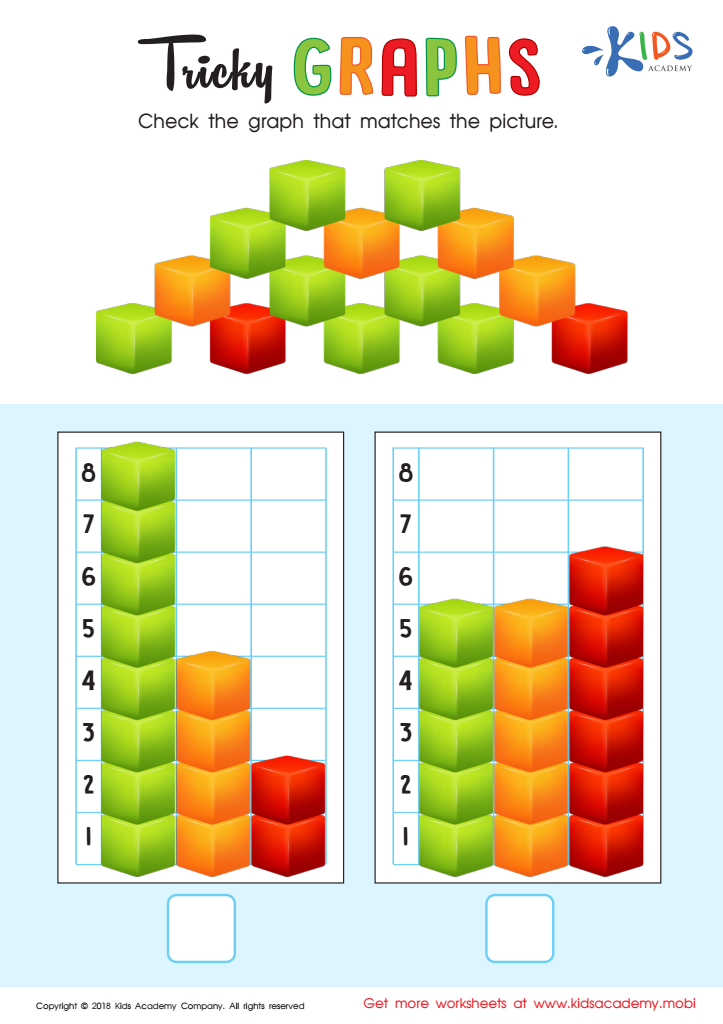
Tricky Graphs Worksheet
Looking for a fun way to sharpen your kid's graphing skills? Get this colorful PDF worksheet! They'll get to practice visual discrimination, counting, and creating bar graphs. Plus, graphing and reading graphs are essential for problem-solving in math.
Tricky Graphs Worksheet
Worksheet
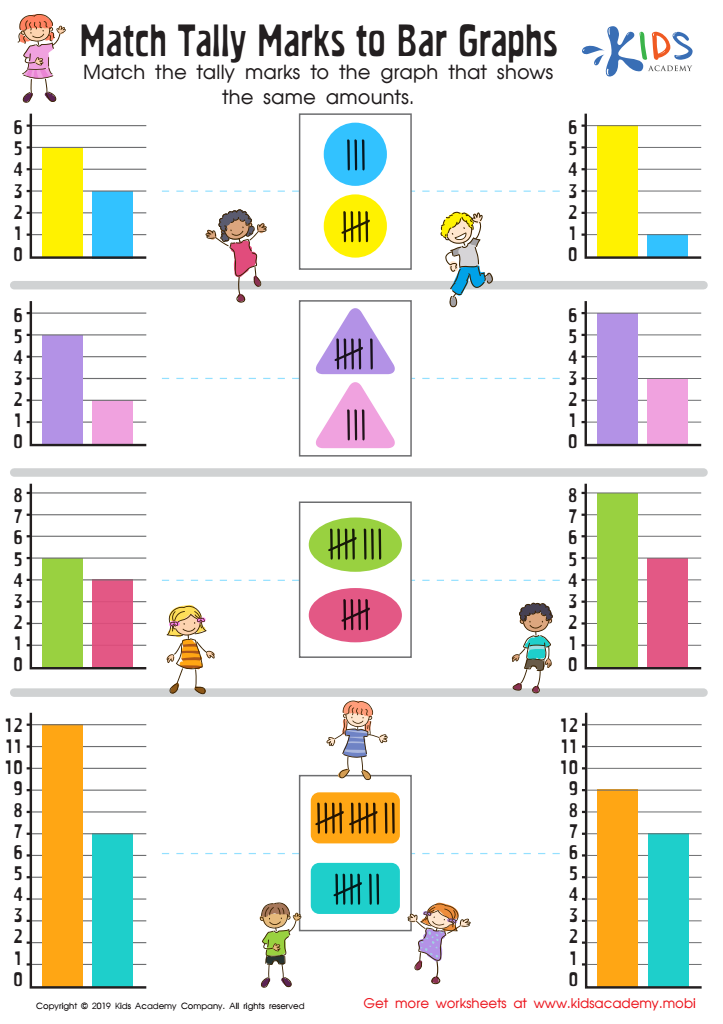
Match Tally Marks to Bar Graphs Worksheet
Learning math can be tough for kids. Rules and formulas can be confusing. Don't worry, this worksheet can help them understand graphs better. Show them how to match the tally marks with the graph that shows the same amount. It will help them grasp the basics and prepare them for more complex equations.
Match Tally Marks to Bar Graphs Worksheet
Worksheet
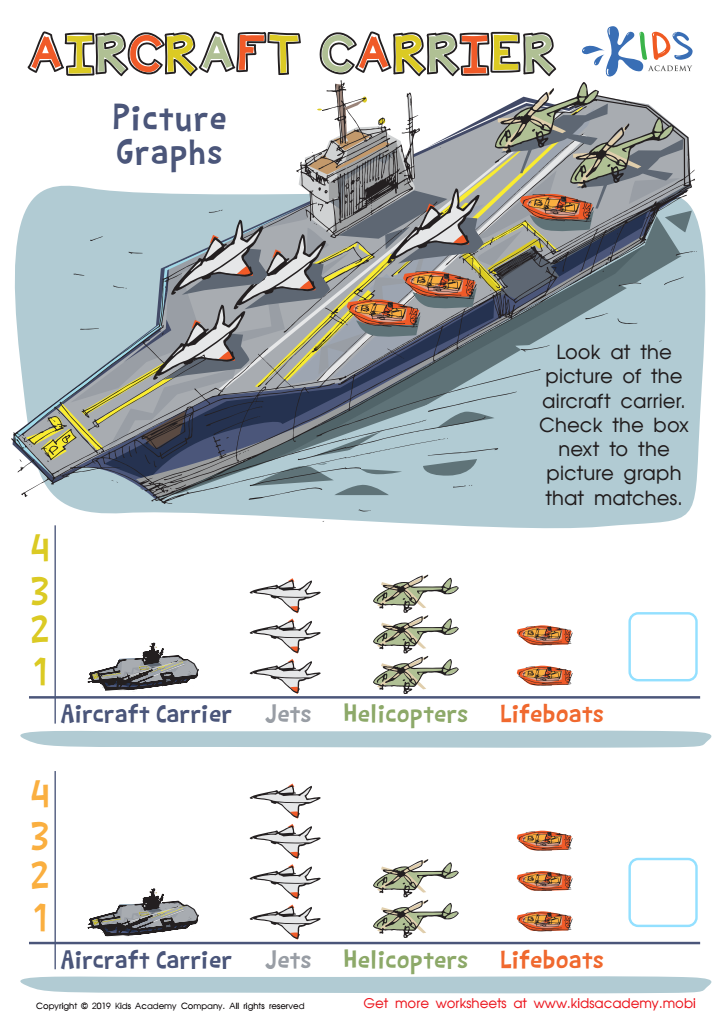
Aircraft Carrier Picture Graphs Worksheet
Kids love learning about jets and boats with this awesome worksheet! It's a great way to engage them as they work on picture graphs. Representing numerical values with pictures, this free PDF requires them to choose which picture graph and representation best match the carrier in the picture. It's also great practice for visual discrimination!
Aircraft Carrier Picture Graphs Worksheet
Worksheet
Join Kids Academy for Free
Who is primarily going to use this learning content?







Understanding graphs is crucial for both parents and teachers as they form a foundational skill for analyzing and interpreting data in various contexts. Graphs visually represent information, allowing individuals to quickly grasp complex ideas and trends, which enhances comprehension across subjects. In an age driven by data, children must learn to read and interpret graphs to engage meaningfully with the world around them—whether in science, economics, or everyday activities like budgeting or interpreting survey results.
For parents, fostering graph literacy encourages critical thinking and supports their children's educational growth. They can engage in conversations about graphs at home, helping to reinforce what is learned in school and promoting a culture of curiosity.
Teachers who prioritize graph understanding equip students with tools to visualize their learnings, paving the way for deeper analytical skills. Courses utilizing graphs encourage collaborative discussions and problem-solving among students, preparing them for advanced topics in higher education. Statistics is becoming increasingly prevalent in daily life; therefore, imparting graph literacy ensures that students can make informed decisions based on data, which is essential for success in an information-rich society. In essence, grasping graphs is not just a skill but a vital part of developing informed citizens.








