Comparing quantities Math Worksheets
13 filtered results
-
From - To
"Comparing Quantities Math Worksheets" are designed to enhance young learners' skills in differentiating between numbers and quantities. Aimed at early grade students, these engaging and educational worksheets help kids understand concepts such as greater than, less than, and equal to, through fun exercises and colorful illustrations. By practicing with these printable resources, children will improve their number sense, analytical thinking, and problem-solving abilities. Perfect for classroom use or at-home learning, these worksheets provide a strong foundation for mastering essential math skills, ensuring kids gain confidence and proficiency in comparing quantities from an early age. Explore and download now for free at Kids Academy!
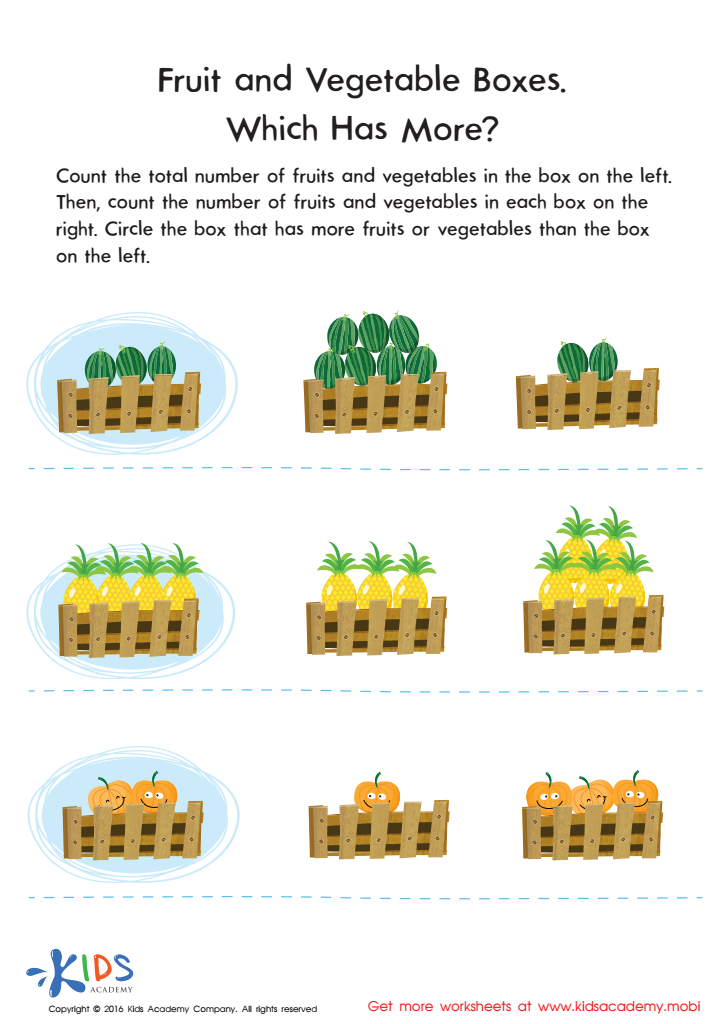
Which Has More? Size Worksheet
 Assign to My Students
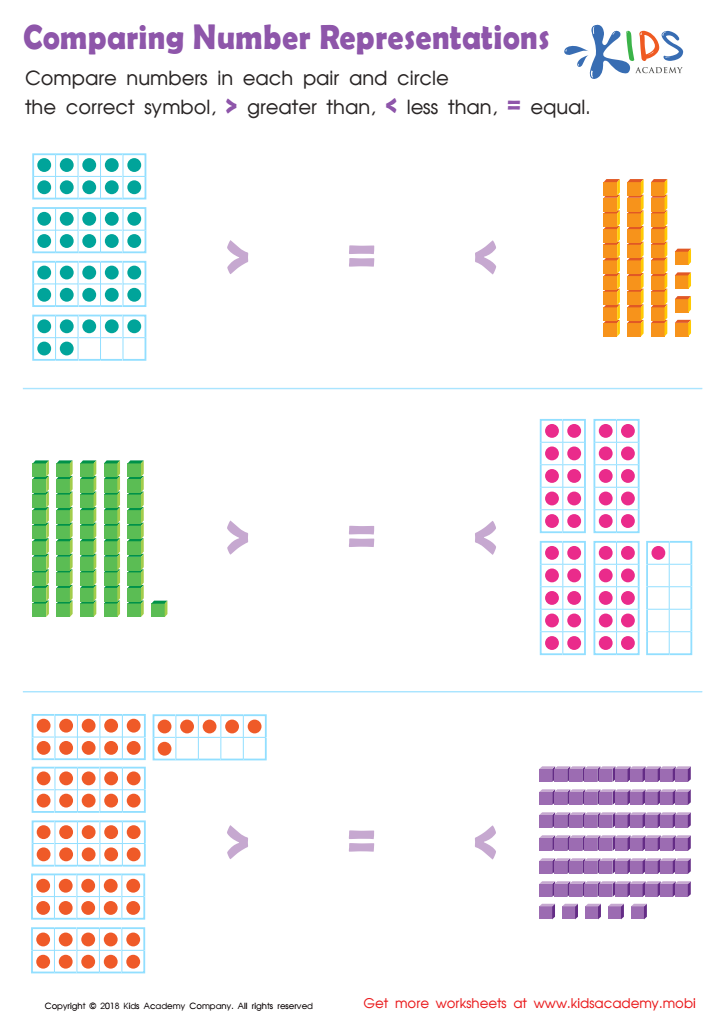
Comparing Number Representations Worksheet
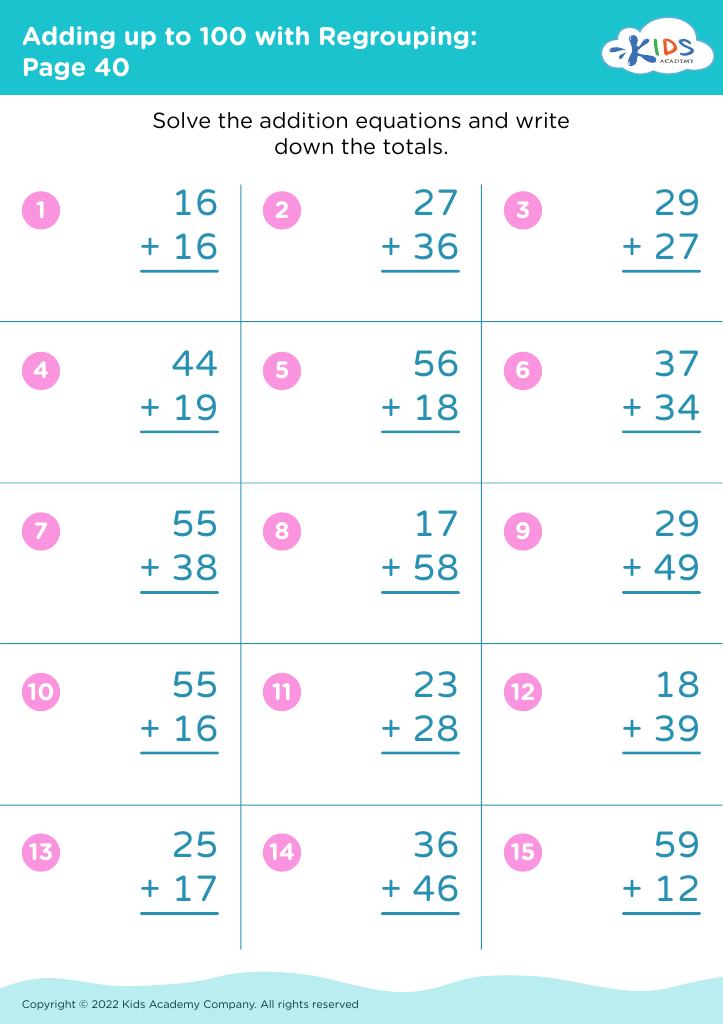
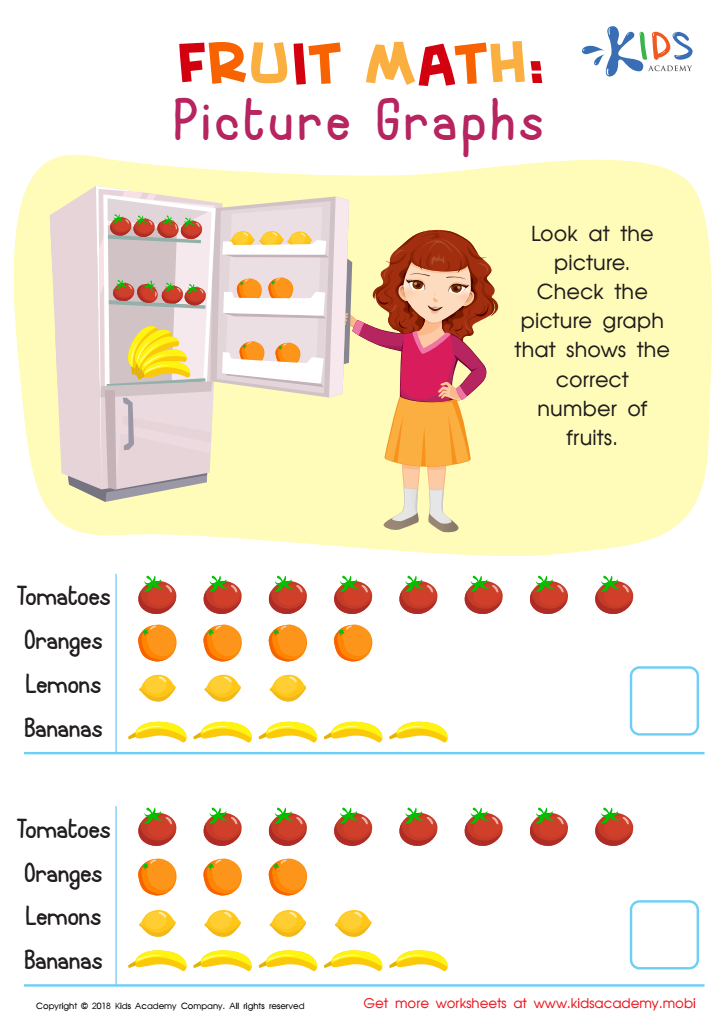
Fruit Math: Picture Graphs Worksheet
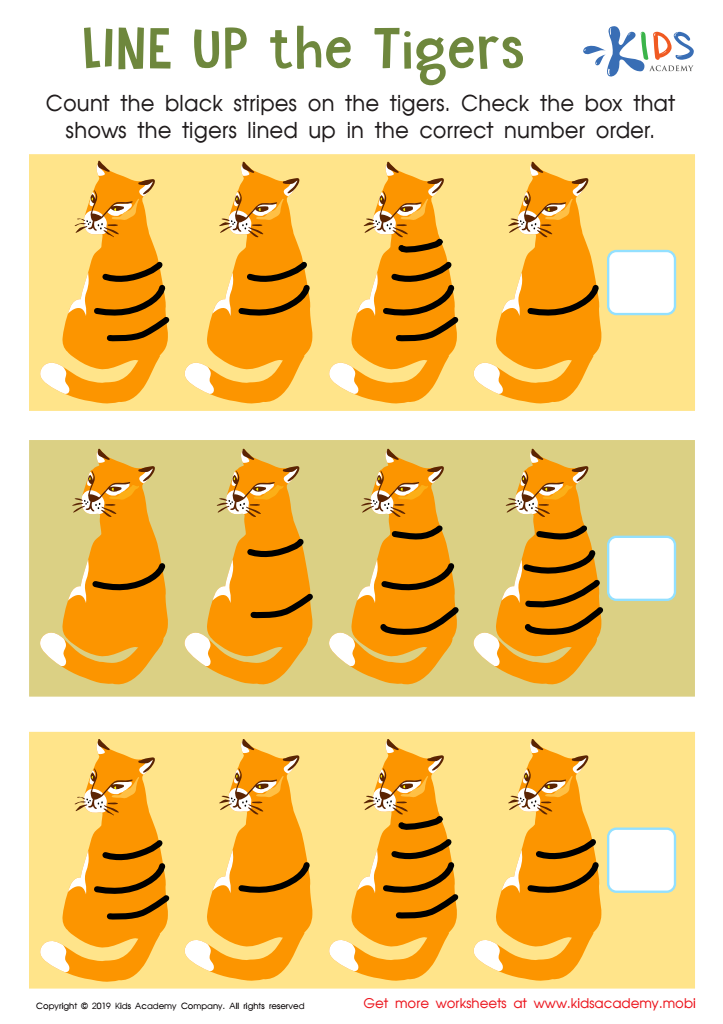
Line up the Tigers Worksheet
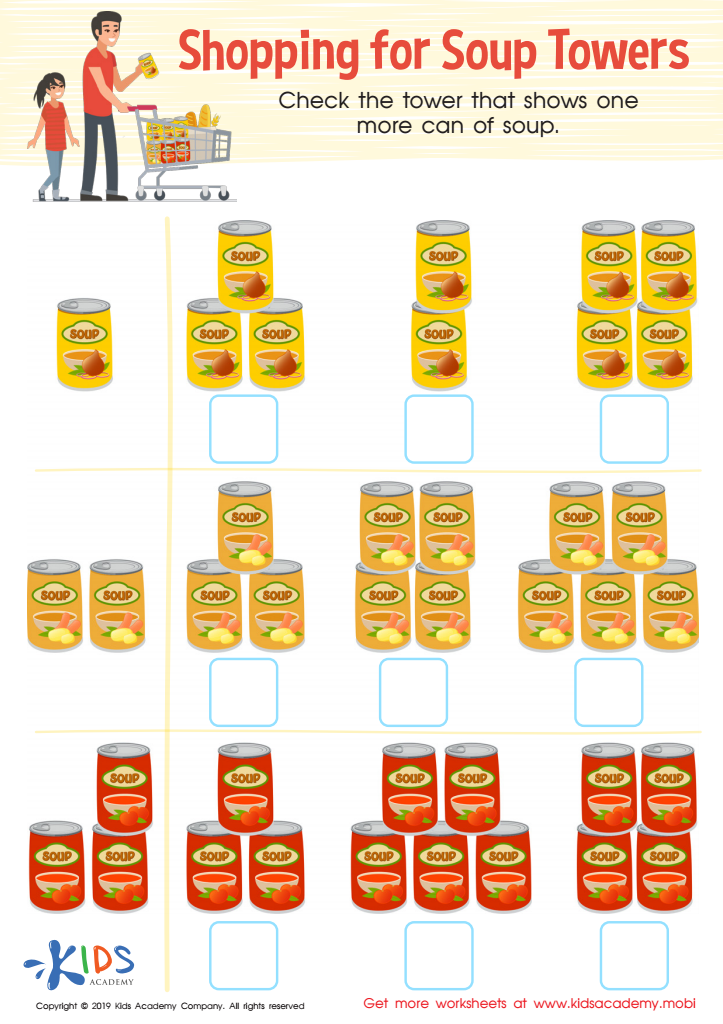
Soup Towers Worksheet
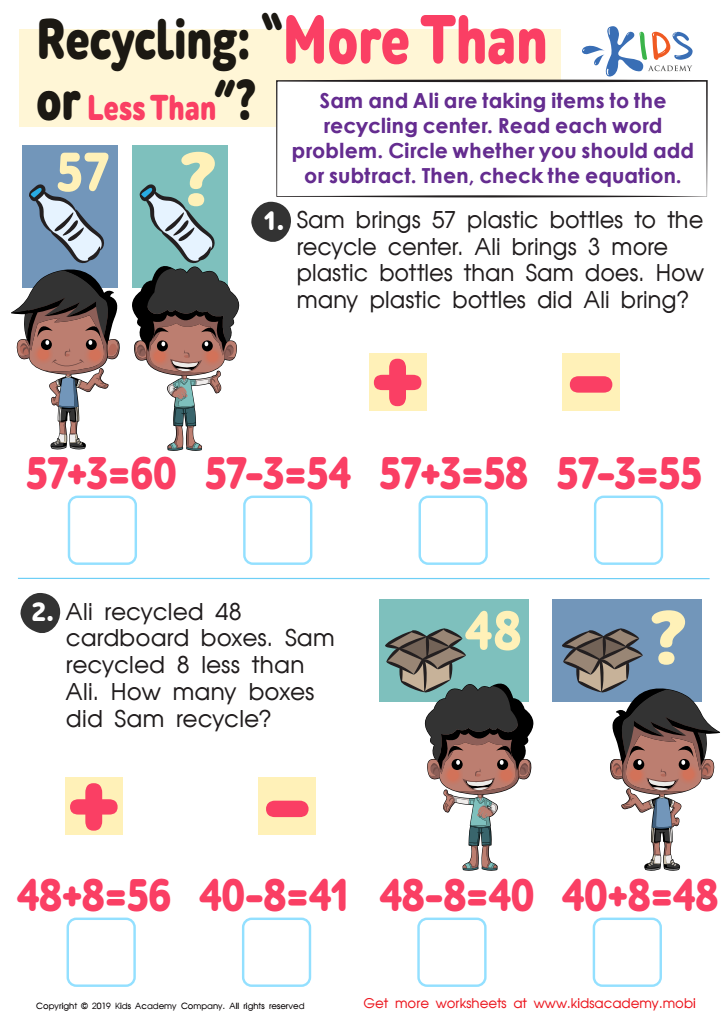
Recycling - More or Less Worksheet
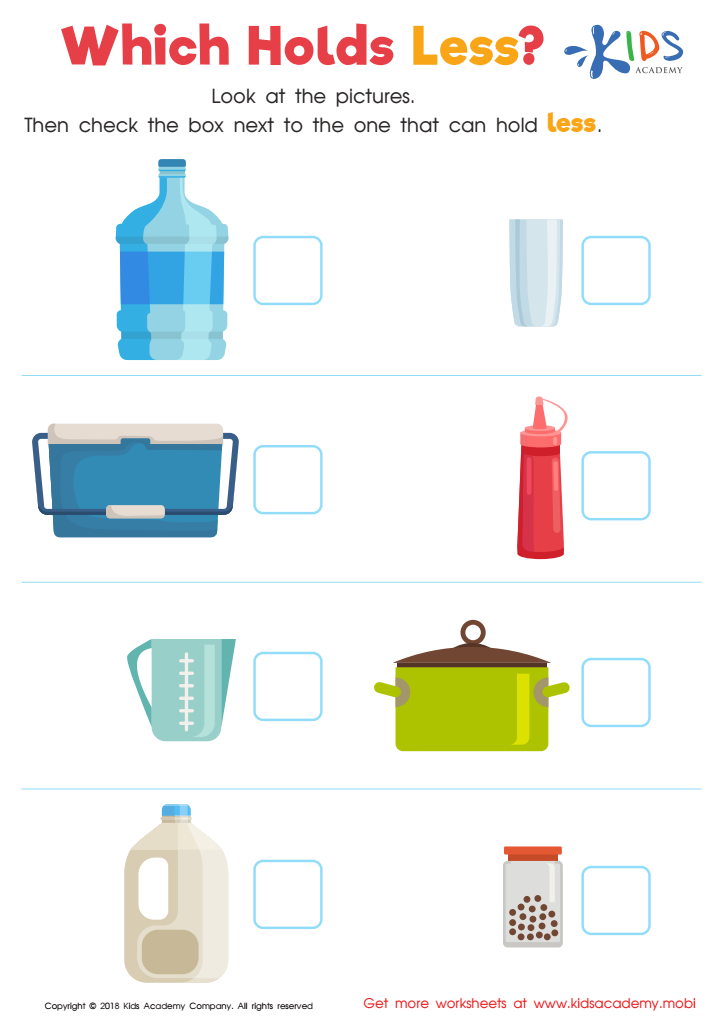
Which Holds Less? Worksheet
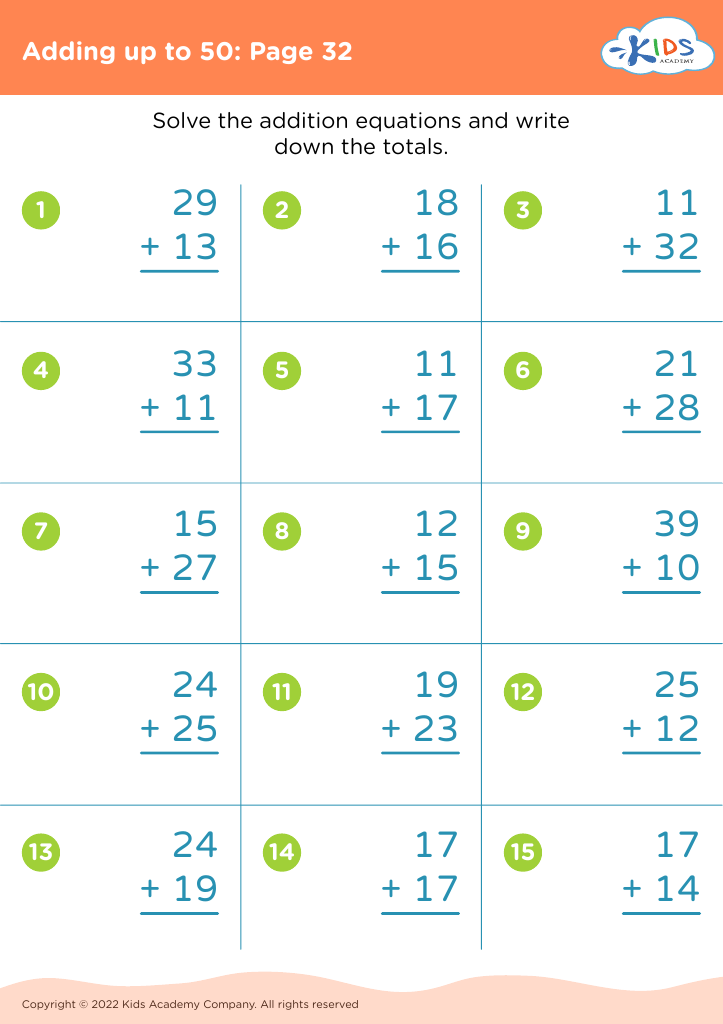







Understanding how to compare quantities is a fundamental skill that lays the groundwork for a child's entire mathematical development and daily life competency. When parents and teachers focus on this aspect of math, they are essentially helping children grasp concepts such as greater than, less than, and equal to, which are pivotal in arithmetic operations and problem-solving.
From a practical standpoint, comparing quantities helps children make informed decisions in everyday contexts. For instance, they learn to understand which of two containers holds more juice or which pile of toys is larger. This skill enriches their reasoning and critical thinking abilities, contributing not only to their academic success but also to their functional numeracy.
Furthermore, early numeracy skills, including the comparison of quantities, are closely linked with later successes in more complex mathematical endeavors like algebra, geometry, and finance. For teachers, integrating these concepts through interactive lessons and real-life examples can create an engaging learning environment that enthuses students to explore math beyond textbook constraints. For parents, nurturing this skill through playful activities at home, like sorting objects or comparing snacks, ensures a supportive learning continuity, reinforcing what is taught in classrooms. Ultimately, focusing on comparing quantities fosters a solid foundation in mathematics, supporting children's cognitive development and equipping them with essential life skills.








