Eye-hand coordination Math Worksheets
3 filtered results
-
From - To
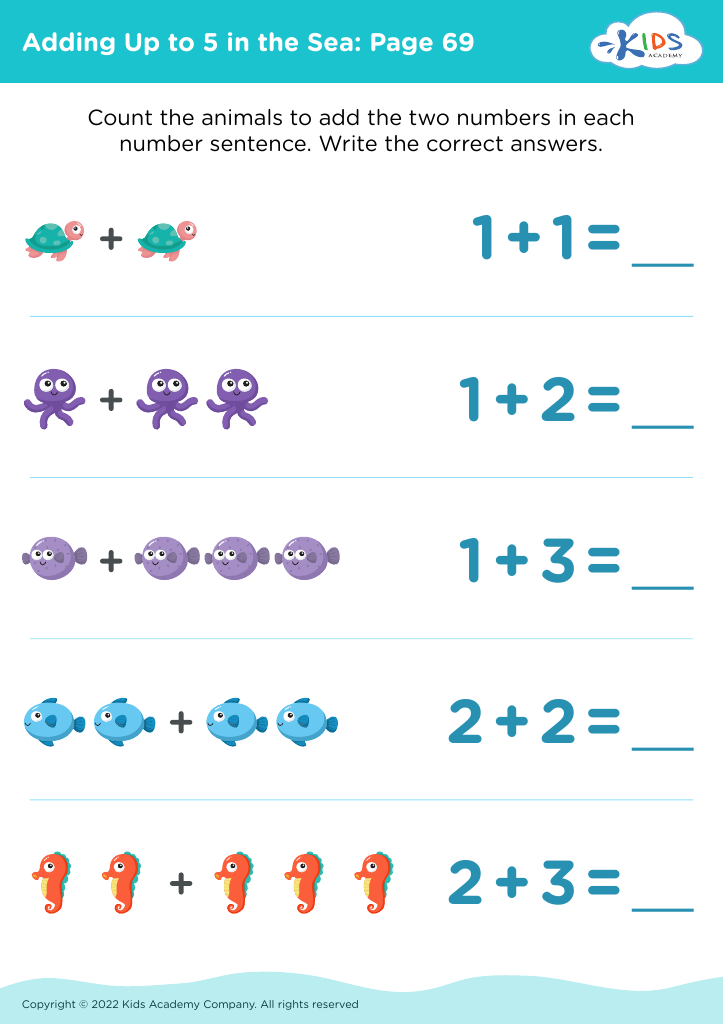
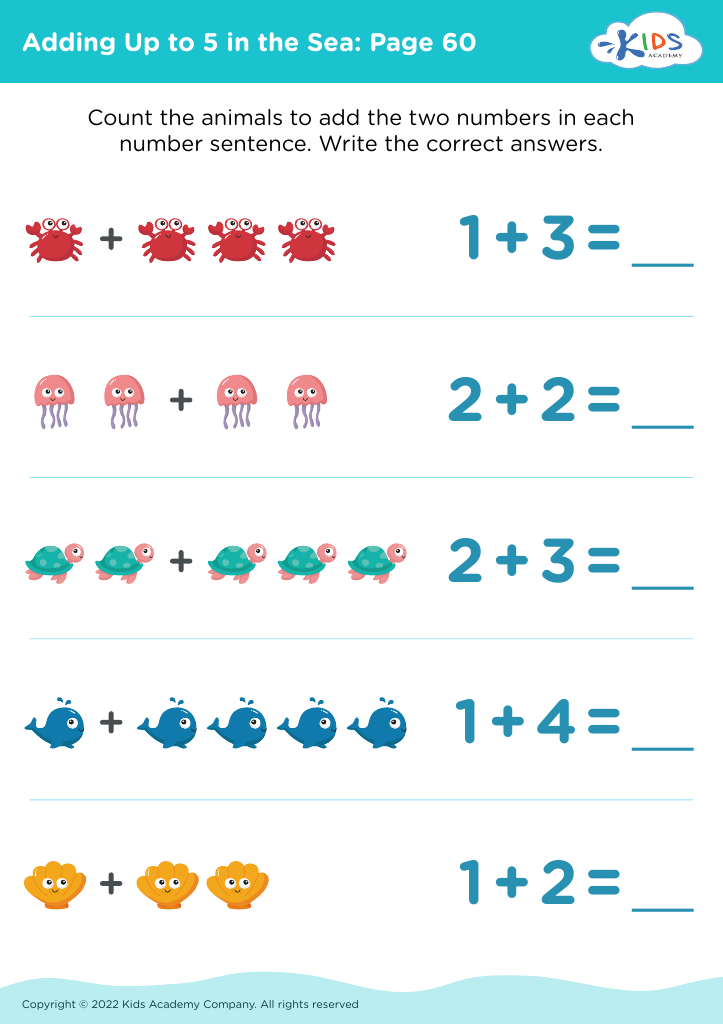
Enhance your child's learning experience with our Eye-Hand Coordination Math Worksheets! Designed for early learners, these engaging worksheets combine essential math skills with fun activities that promote fine motor development. Each worksheet encourages children to practice counting, addition, and simple problem-solving tasks while honing their hand-eye coordination through tracing, coloring, and interactive exercises. Perfect for homeschooling or classroom use, our materials help build confidence in young mathematicians while fostering essential skills for future learning. Explore a variety of themed worksheets that make math fun and effective—download and start your educational journey today!
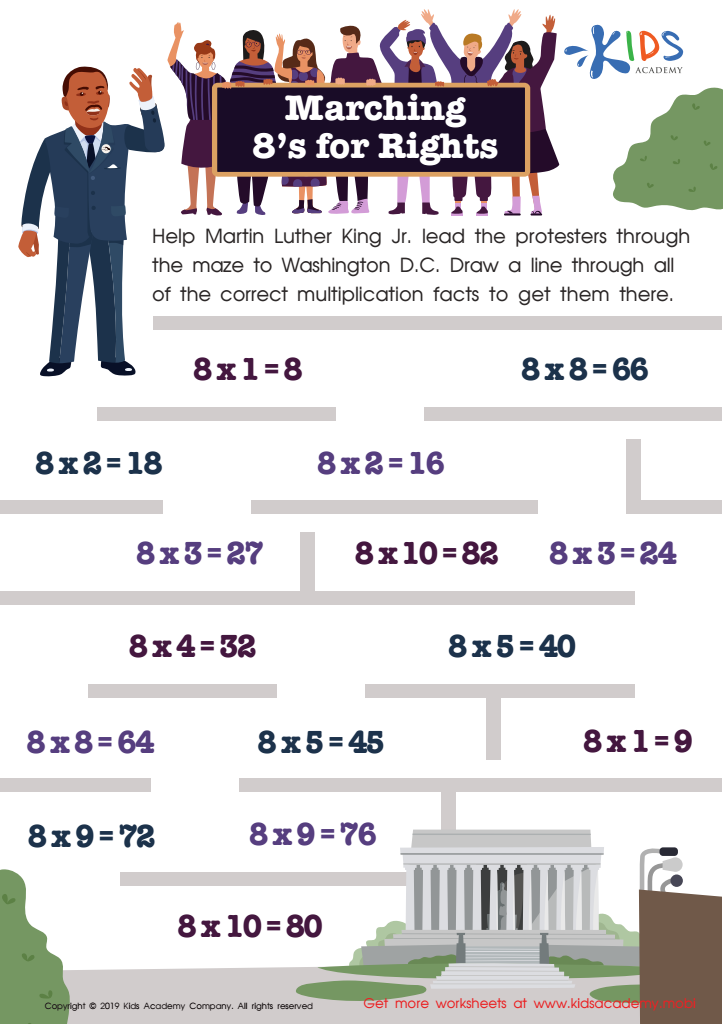
Marching 8’s for Rights Worksheet
 Assign to My Students





Eye-hand coordination is a critical skill that profoundly influences a child’s development and academic success, particularly in subjects like math. This coordination allows children to effectively translate visual information into physical response, which is essential for tasks such as writing, drawing, and manipulating objects. In math, these skills come into play during activities like measuring, forming shapes, or organizing materials for problem-solving.
When parents and teachers foster eye-hand coordination skills, they enhance children's fine motor skills, leading to improved accuracy and confidence in writing down numbers and solving equations. Well-developed coordination can also positively impact children's ability to engage with tactile learning experiences, such as using manipulatives to visualize mathematical concepts, making learning more interactive and engaging.
Moreover, good eye-hand coordination helps reduce frustration and anxiety that can arise from difficulties with task completion, allowing students to focus more on problem-solving rather than physical challenges. By supporting the development of this skill, parents and teachers create a foundation that enhances children's overall learning experiences in math and beyond, fostering a more comprehensive approach to their education. Ultimately, prioritizing eye-hand coordination empowers children for future academic pursuits and everyday tasks, promoting holistic development.








