Improve writing skills Math Worksheets
3 filtered results
-
From - To
Enhance your child's writing skills with our engaging "Improve Writing Skills Math Worksheets." Designed for young learners, these interactive worksheets combine both math and writing to promote critical thinking and creativity. Kids will practice their writing by solving math problems, crafting sentences, and expressing their understanding in written form. Perfect for reinforcing math concepts while developing essential literacy skills, these worksheets help children build confidence in their writing abilities. With colorful and fun designs, learning becomes an enjoyable experience. Discover the perfect resources to inspire your child's writing journey and help them excel in both math and communication!
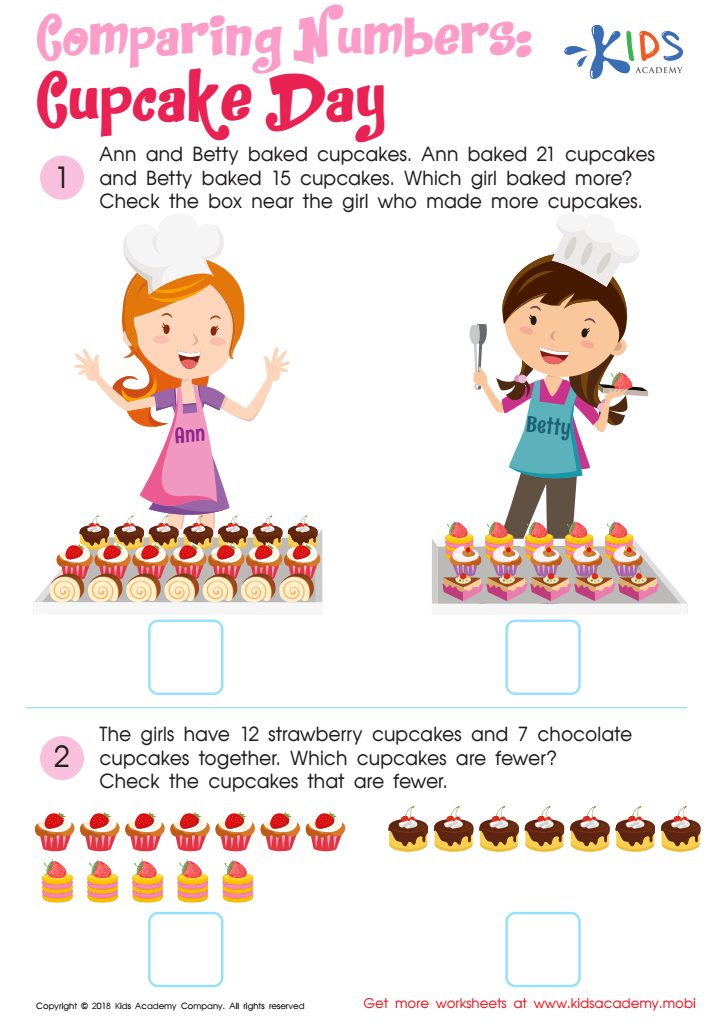
Cupcake Day Worksheet
 Assign to My Students








Improving writing skills in mathematics is essential for both students and teachers for several reasons. Firstly, effective communication in math enables students to articulate their thought processes clearly. This not only aids in their understanding of complex concepts but also fosters deeper thinking and problem-solving skills. When students write about their mathematical reasoning, they engage in metacognition, allowing them to evaluate their approaches and discover areas for improvement.
Moreover, strong writing skills in math encourage students to express their understanding and reasoning in a structured manner. This becomes vital in standardized testing where written explanations or justifications are often requisite. For teachers, fostering writing skills aids in assessing student understanding and identifying misconceptions. It allows for tailored instruction that meets each student’s needs.
Furthermore, integrating writing into math promotes interdisciplinary learning, showing students the connections between subjects. This can spark interest and engagement, as they see the relevance of writing outside language arts. Ultimately, both parents and teachers should prioritize improving writing skills in math to equip students with the necessary tools for academic success, critical thinking, and effective communication, all essential skills for lifelong learning in any field.








