Number comparison skills Math Worksheets
3 filtered results
-
From - To
Our "Number Comparison Skills Math Worksheets" are specially designed to help young learners enhance their understanding of numbers and their relationships. Ideal for early grade students, these engaging worksheets include activities that focus on comparing numbers using terms like "greater than," "less than," and "equal to." Through colorful illustrations and practical exercises, kids develop essential math skills, gain confidence in number comparison, and hone their problem-solving abilities. Perfect for both classroom and at-home learning, these worksheets make mastering math fun and effective. Download today to guide your child's journey to math success.
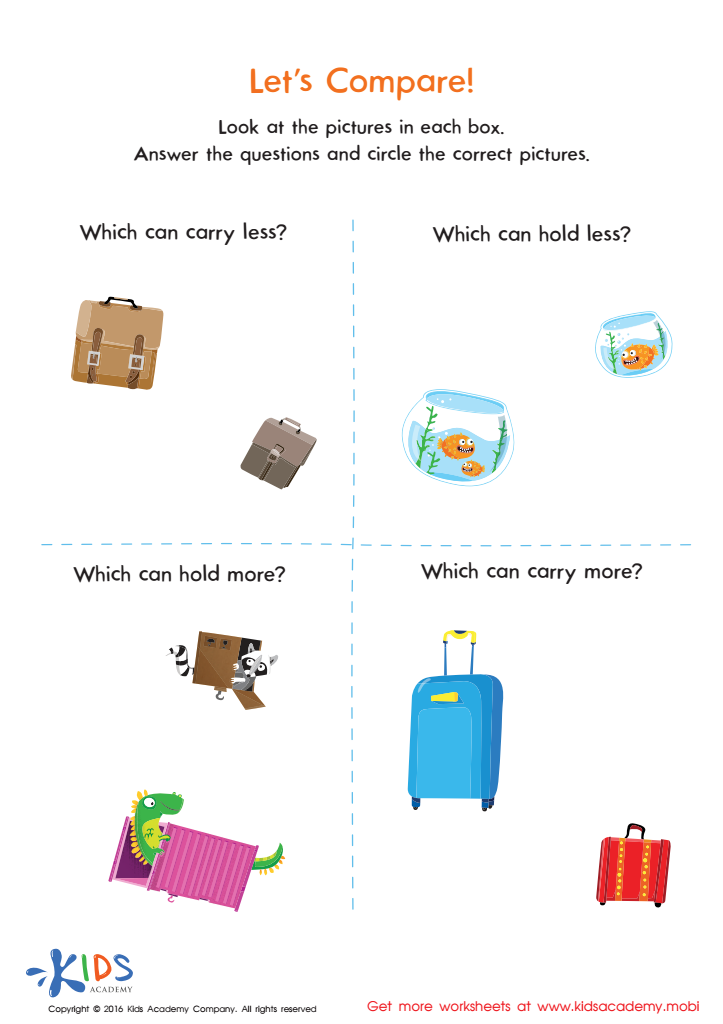
Let's Compare Worksheet: Big or Small
 Assign to My Students
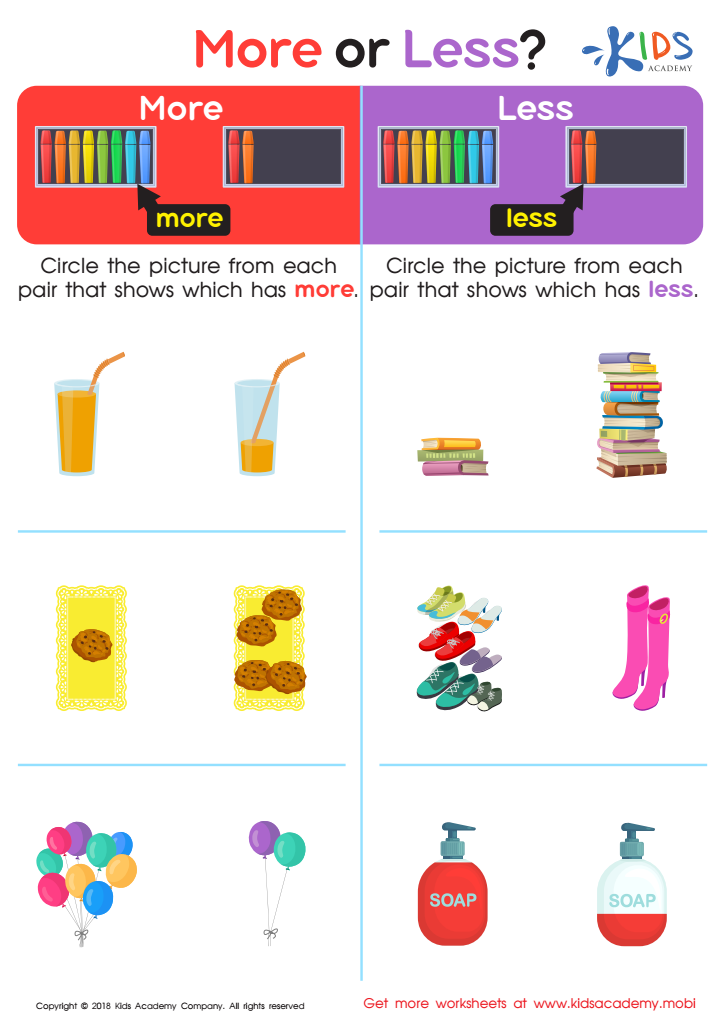
More or Less? Worksheet
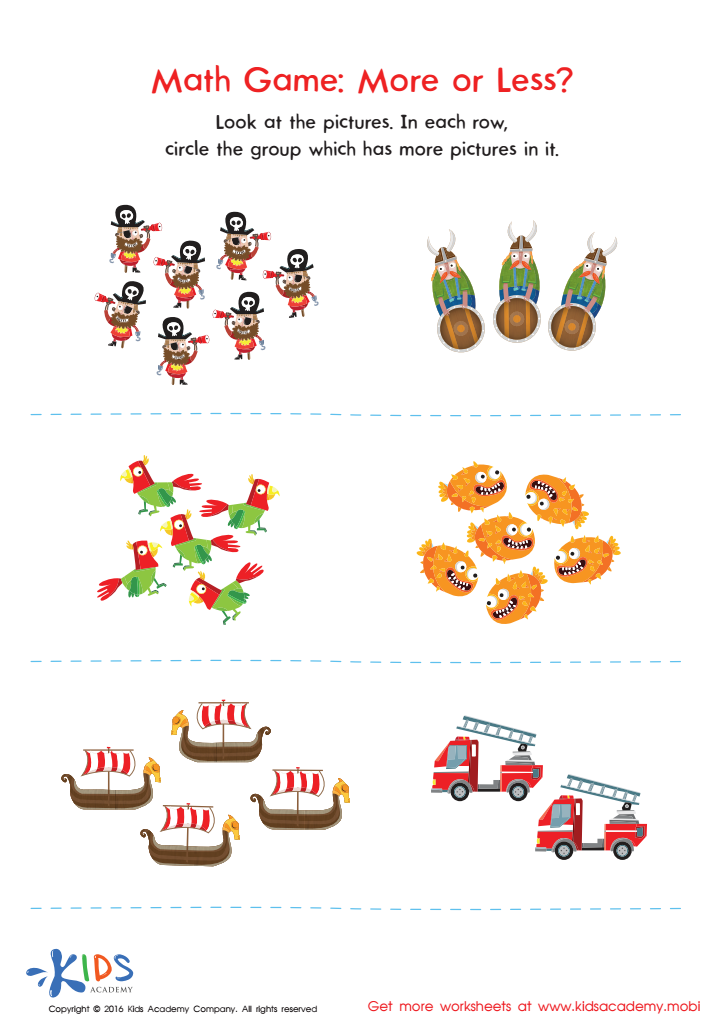
More or Less Worksheet





.jpg)


Number comparison skills are fundamental building blocks in mathematics, essential for young learners' cognitive development and practical life skills. Parents and teachers should prioritize these skills because they cultivate a strong mathematical foundation critical for understanding more advanced concepts such as addition, subtraction, multiplication, and division.
When children compare numbers, they learn to recognize numerical relationships, which deepen their understanding of quantity, order, and the number line. This ability is crucial not only in math class but also in daily decision-making, such as identifying which group of items has more or estimating costs while shopping.
Developing number comparison skills also enhances children's logical reasoning and problem-solving abilities. By understanding the relative value of different numbers, students are better prepared to tackle more complex math problems with confidence.
Moreover, early proficiency in these skills helps prevent math anxiety. Children who struggle with basic number comparisons might feel less confident and face difficulties as they progress to higher-level math. Early intervention and practice in this area can foster a positive attitude towards math, encouraging persistence and resilience.
In summary, mastering number comparison skills equips children with essential knowledge to navigate both academic and real-world situations effectively. Therefore, fostering these skills through engaging and supportive activities is crucial for parents and teachers aiming to support holistic educational growth.








