Understanding habitats Math Worksheets
3 filtered results
-
From - To
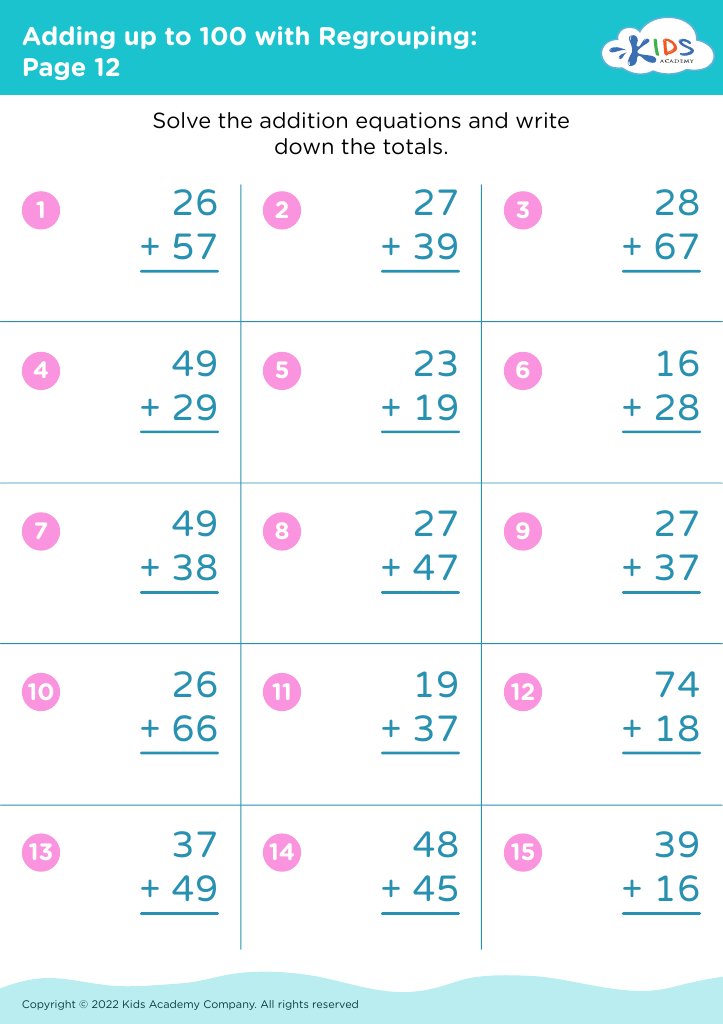
Discover our engaging "Understanding Habitats Math Worksheets," designed to enrich young learners' math skills while exploring the fascinating world of habitats. These worksheets seamlessly blend math practice with themes of nature, helping students grasp essential mathematical concepts such as counting, addition, and patterns. Featuring vibrant illustrations and relatable examples from various ecosystems, these resources make learning enjoyable and interactive. Perfect for teachers and parents, our worksheets encourage students to apply math in real-world contexts related to plants and animals. Enhance your child's understanding and appreciation of habitats while reinforcing their math abilities today with our creative and educational materials!
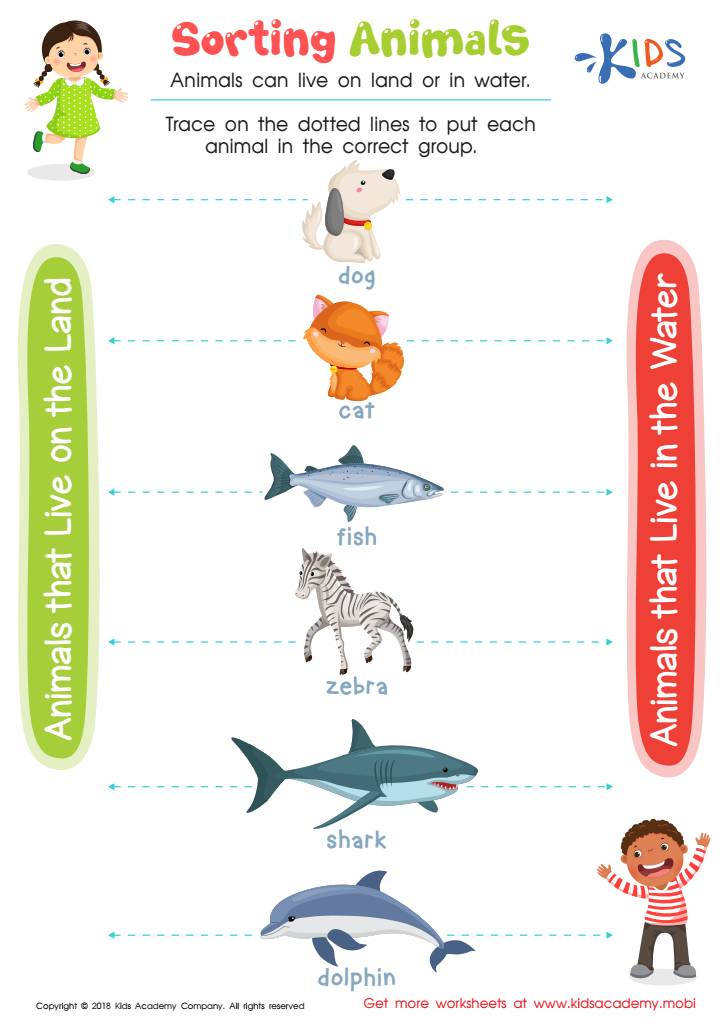
Sorting Animals Worksheet
 Assign to My Students
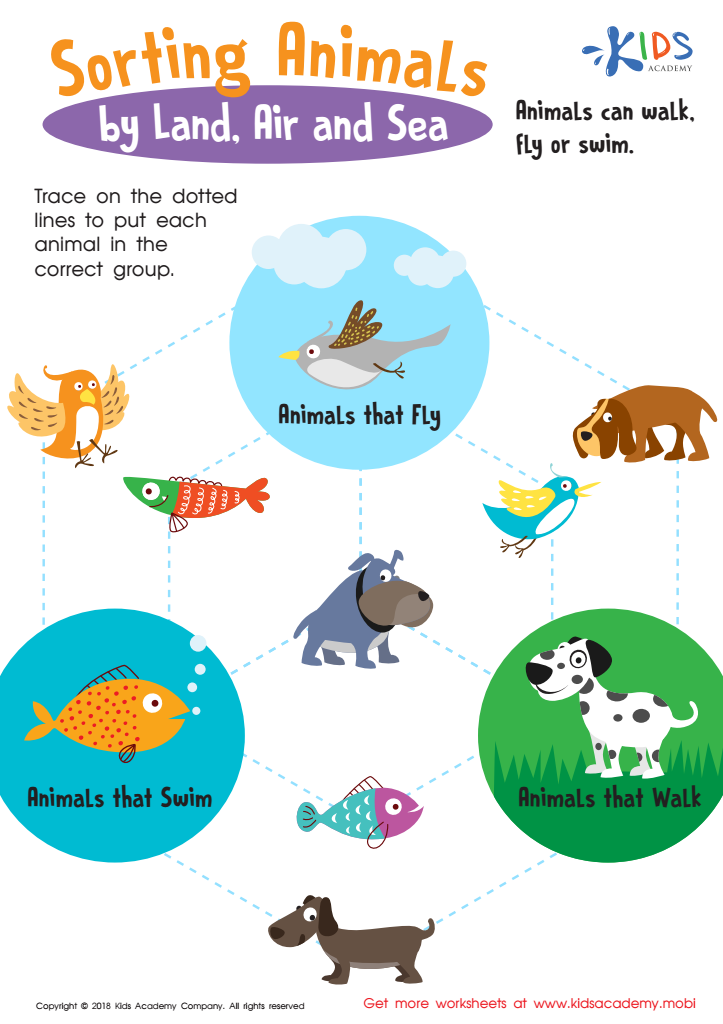
Sorting Animals by Land, Air and Sea Worksheet








Understanding habitats in math is essential for parents and teachers as it bridges the gap between environmental education and mathematical concepts. By incorporating habitat studies into math lessons, educators can create a rich interdisciplinary experience that engages students with real-world applications. For example, analyzing the sizes and populations of different animal habitats can introduce students to concepts like area, measurement, and data analysis.
Parents and teachers should care because such an approach fosters critical thinking and problem-solving skills. Interaction with natural habitats allows children to apply math in context, making it significant and relatable. This understanding encourages a sense of stewardship for the environment, emphasizing the importance of biodiversity and ecosystems in the world.
Additionally, when students engage in projects that examine local habitats—collecting data on plants and animals—math becomes a tool for inquiry. This hands-on learning is especially beneficial for early grade students, who thrive in dynamic environments filled with exploration and curiosity. By caring about understanding habitats through math, parents and educators can support holistic, meaningful learning experiences that not only enhance mathematical skills but also promote environmental awareness and appreciation from a young age.








