Weather identification Math Worksheets
4 filtered results
-
From - To
Enhance your child's learning experience with our "Weather Identification Math Worksheets"! Designed for early learners, these engaging worksheets combine the concepts of weather observation and basic mathematical skills. Students will explore various weather conditions while practicing addition, subtraction, and more. Each activity encourages critical thinking and promotes understanding of weather patterns in a fun way. Ideal for classrooms or home schooling, our worksheets make abstract math concepts tangible. Foster curiosity about the environment while solidifying essential math skills. Download and print these versatile resources today to make learning about weather both educational and entertaining! Perfect for young explorers and budding mathematicians!
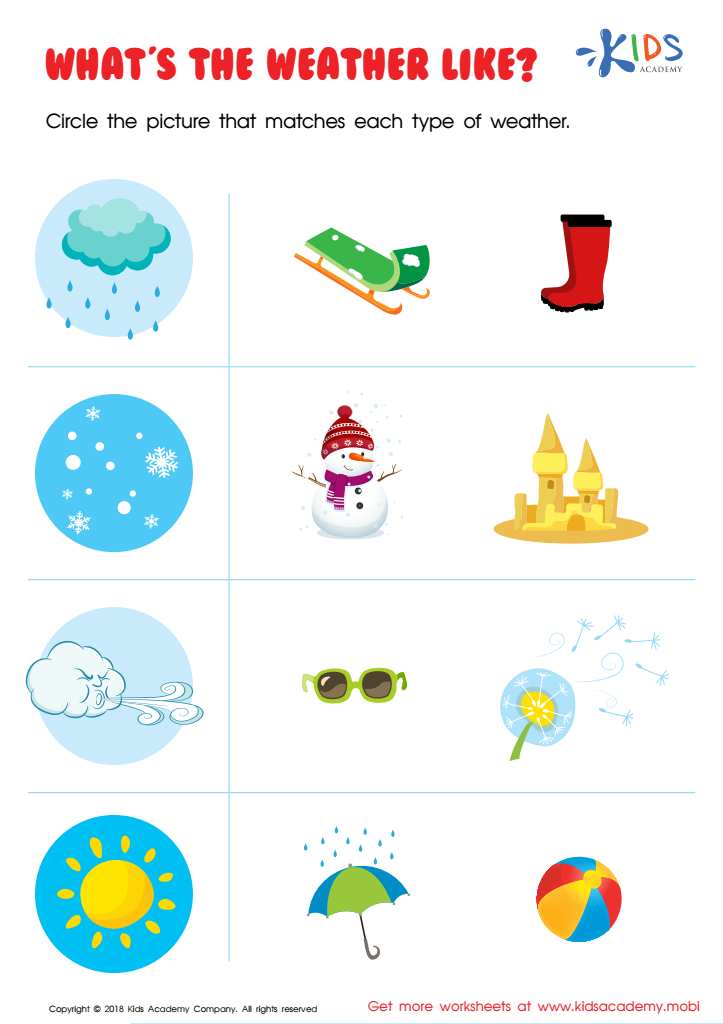
What's the Weather Like? Worksheet
 Assign to My Students
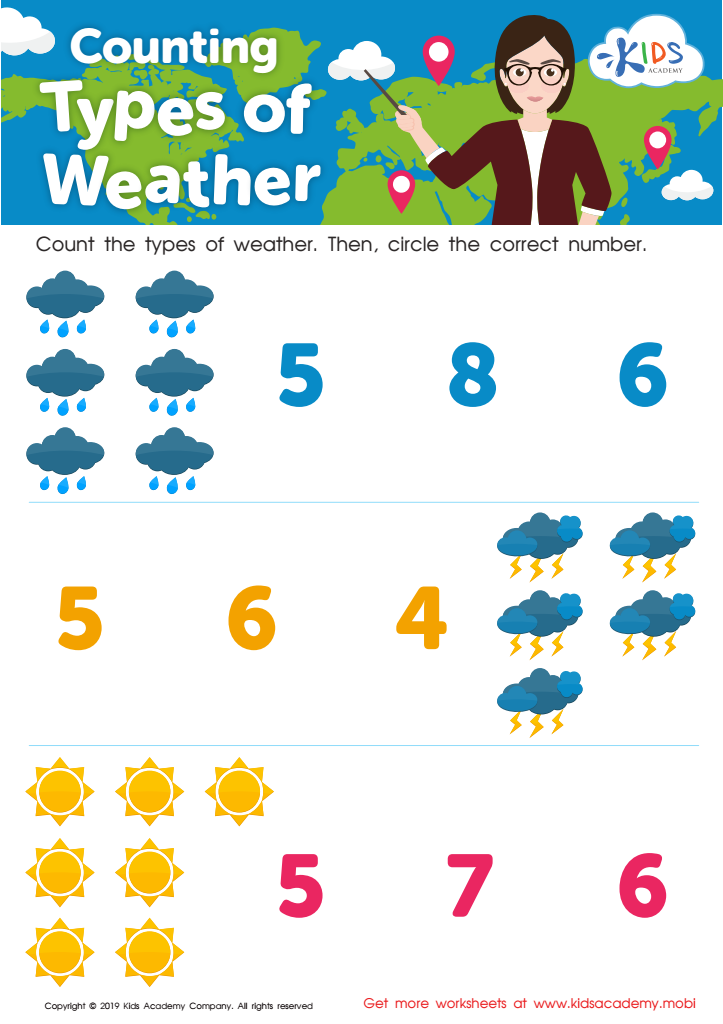
Counting Types of Weather Worksheet
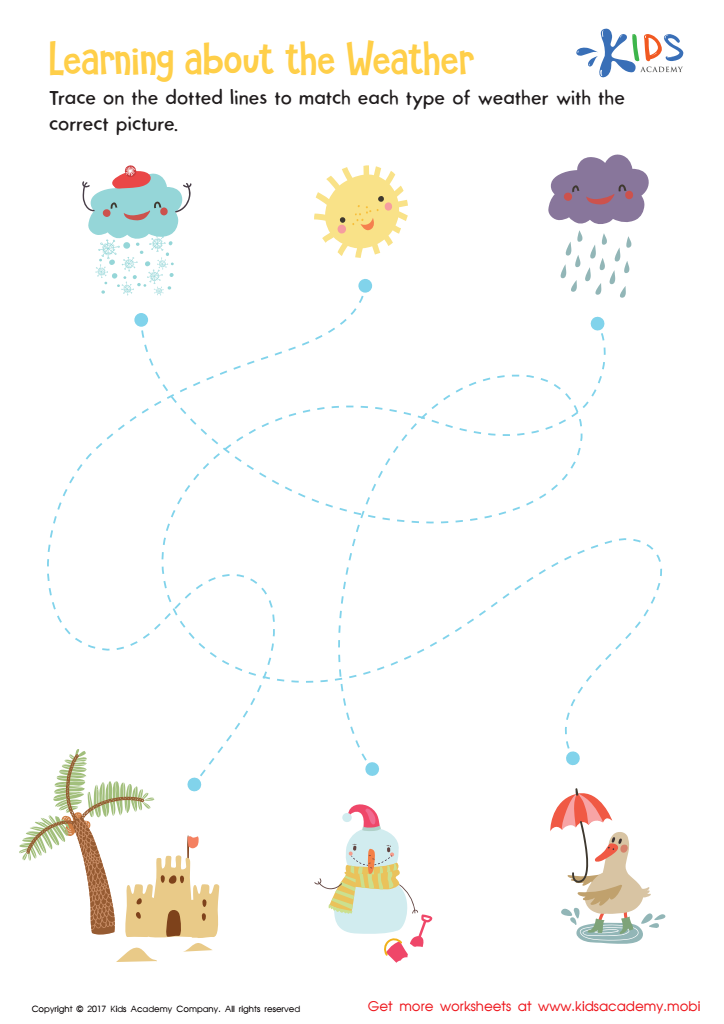







Weather identification math is a valuable tool for parents and teachers because it enhances children's understanding of their environment while integrating vital math skills. By learning to identify and measure various weather phenomena—such as temperature, precipitation, and wind speed—children develop scientific reasoning and critical thinking.
Incorporating weather into math lessons fosters a real-world context for students. For instance, they can learn to tally daily temperatures or calculate rainfall amounts, making abstract math concepts more tangible and relevant. This hands-on approach not only helps to solidify mathematical understanding but also promotes curiosity about the natural world.
Moreover, understanding weather patterns plays a crucial role in teaching children about responsibility and planning. By recognizing weather changes, kids can make informed choices about clothing, outdoor activities, and safety measures during extreme weather conditions.
As climate change becomes increasingly relevant, formal weather education equips the younger generation with the knowledge needed to engage in discussions about sustainability and environmental stewardship. Ultimately, integrating weather identification math in the curriculum nurtures not only students' academic growth but also their awareness of the interconnectedness between mathematics, science, and real-life experiences, thereby preparing them to navigate their world effectively.








