
Mental arithmetic skills Times Tables Worksheets
3 filtered results
Difficulty Level
Grade
Age
-
From - To
Subject
Activity
Standards
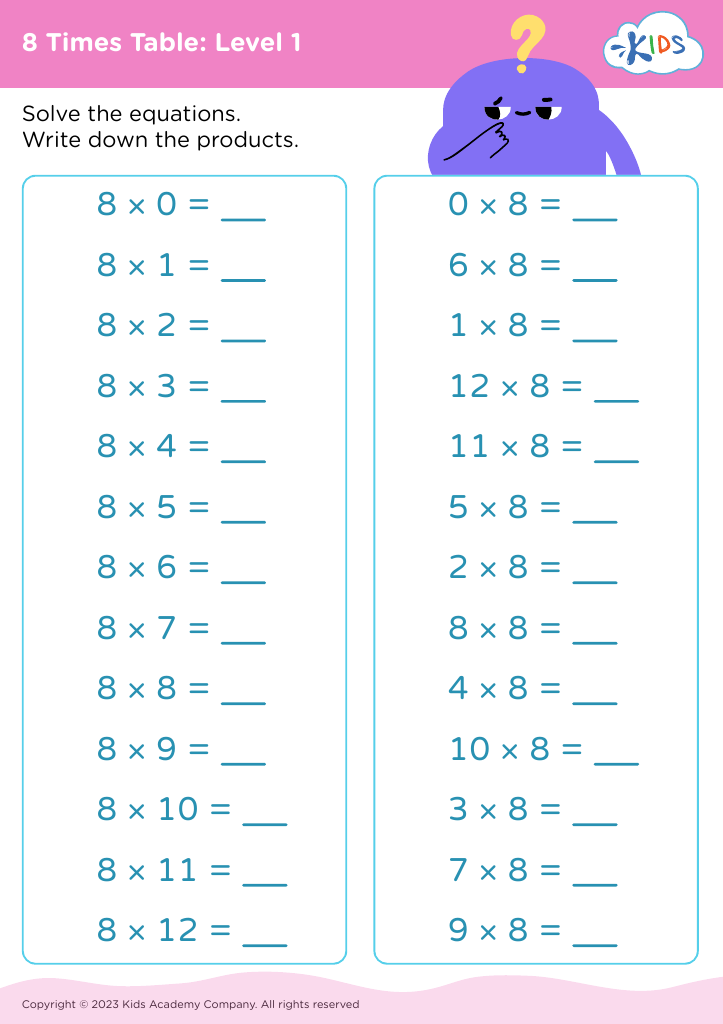
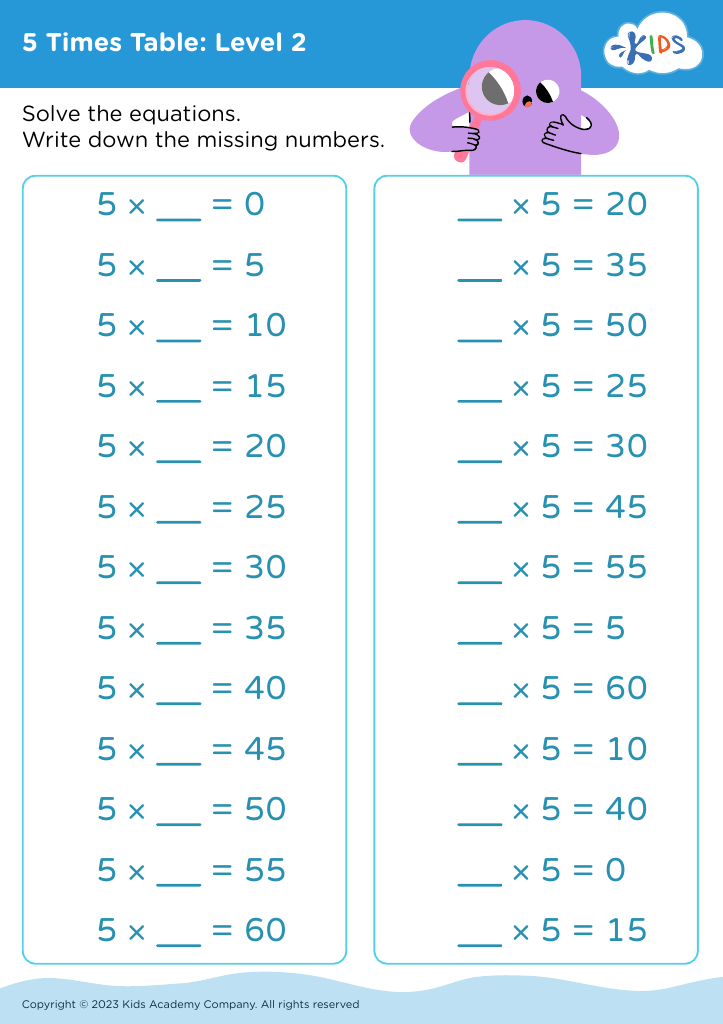
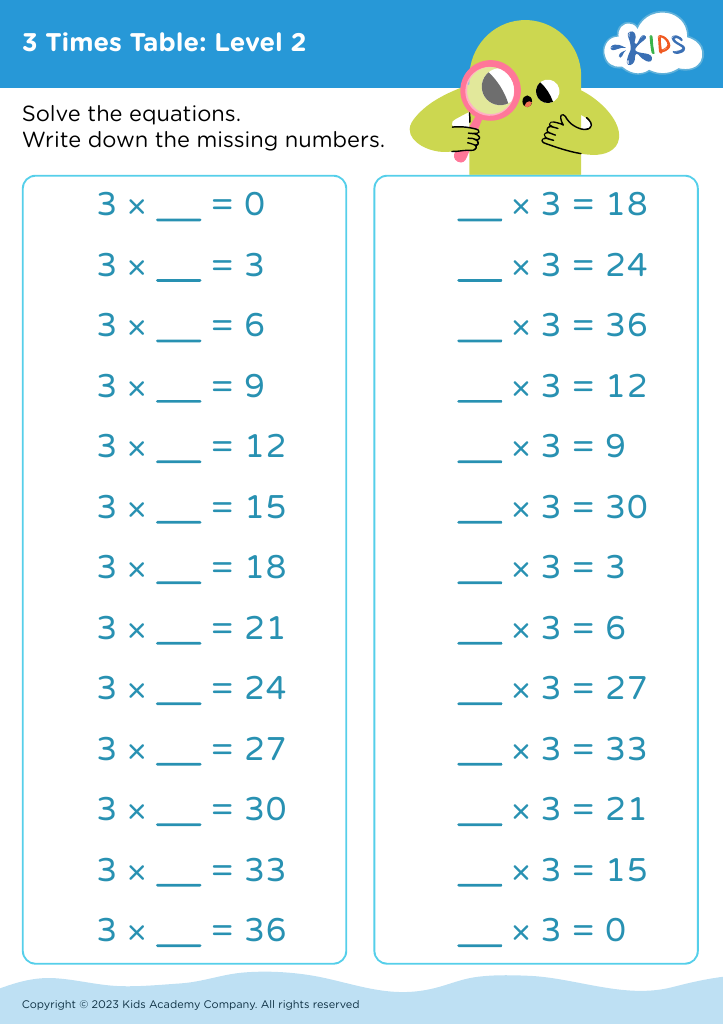
Unlock your child's potential in math with our expertly designed Times Tables Worksheets. Our engaging and interactive worksheets are tailored to enhance mental arithmetic skills, ensuring kids grasp multiplication effortlessly. Ideal for young learners, these worksheets build confidence and accuracy through varied and enjoyable exercises. Each worksheet is crafted to reinforce learning, promote problem-solving, and support school curriculum standards. Whether used in the classroom or at home, our Times Tables Worksheets provide the perfect practice to master times tables and develop a solid foundation in mathematics. Explore our collection today and watch your child's math skills flourish!
Favorites
With answer key
Interactive
Join Kids Academy for Free
Who is primarily going to use this learning content?




Mental arithmetic skills, specifically mastery of the times tables, play a crucial role in a child's academic success and overall cognitive development. Parents and teachers should prioritize these skills for several reasons.
First, proficiency in times tables fosters foundational understanding in mathematics. It enhances a child's ability to perform more complex calculations, such as division, fractions, and algebra, with ease. This foundational competence supports stronger performance in math-related subjects, boosting academic confidence and achievement.
Second, mental arithmetic encourages cognitive development beyond mathematics. It requires memorization, pattern recognition, and problem-solving, all of which strengthen general cognitive abilities like memory retention, logical thinking, and mental agility. These skills are transferable to various learning domains, supporting overall intellectual growth.
Third, rote learning of times tables promotes discipline and focus. Practice and repetition cultivate perseverance and attention to detail, essential traits for academic success and life challenges.
Finally, mental arithmetic improves practical life skills. Quick, accurate calculations are invaluable in everyday situations, such as cooking, shopping, and budgeting, fostering independence and efficiency.
In essence, prioritizing mental arithmetic skills like times tables equips children with essential tools for academic and real-world success, ensuring they are better prepared for future challenges.








