
Handwriting improvement Normal Alphabet Worksheets for Ages 3-4
6 filtered results
Difficulty Level
Grade
Age
-
From - To
Subject
Activity
Standards
Enhance your child's handwriting skills with our "Handwriting Improvement Normal Alphabet Worksheets" designed specifically for ages 3-4. These engaging worksheets provide a fun and interactive way for young learners to practice letter formation, improving fine motor skills and building confidence in writing. Each worksheet features clear, dotted letters for tracing, helping kids learn how to write uppercase and lowercase letters correctly. With a focus on handwriting improvement, these resources ensure your little one develops strong foundational skills while enjoying the learning process. Perfect for home or classroom use, these worksheets are a valuable tool for instilling a love of writing early on.
Favorites
With answer key
Interactive
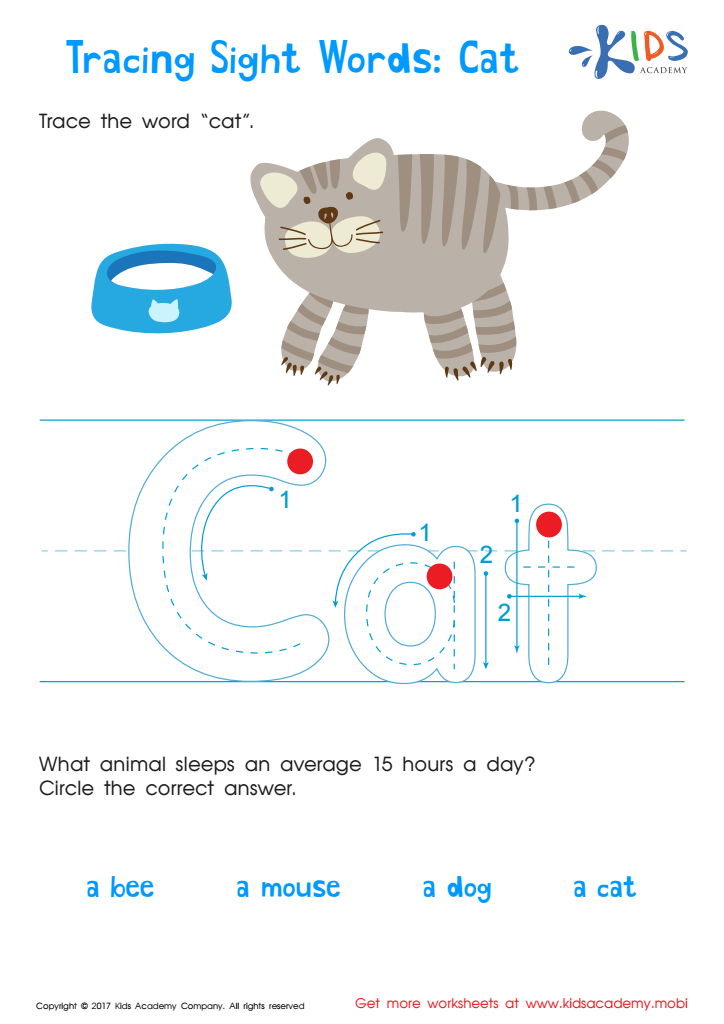
Cat Printable Sight Words Worksheet
Encourage your child's literacy with this fun sight words worksheet: cat PDF! It helps build a solid foundation for reading, featuring activities such as reading and tracing the word cat, and finding it amongst other sight words. With its cute cat, Kids Academy makes learning to read a delight!
 Assign to My Students
Cat Printable Sight Words Worksheet
Worksheet
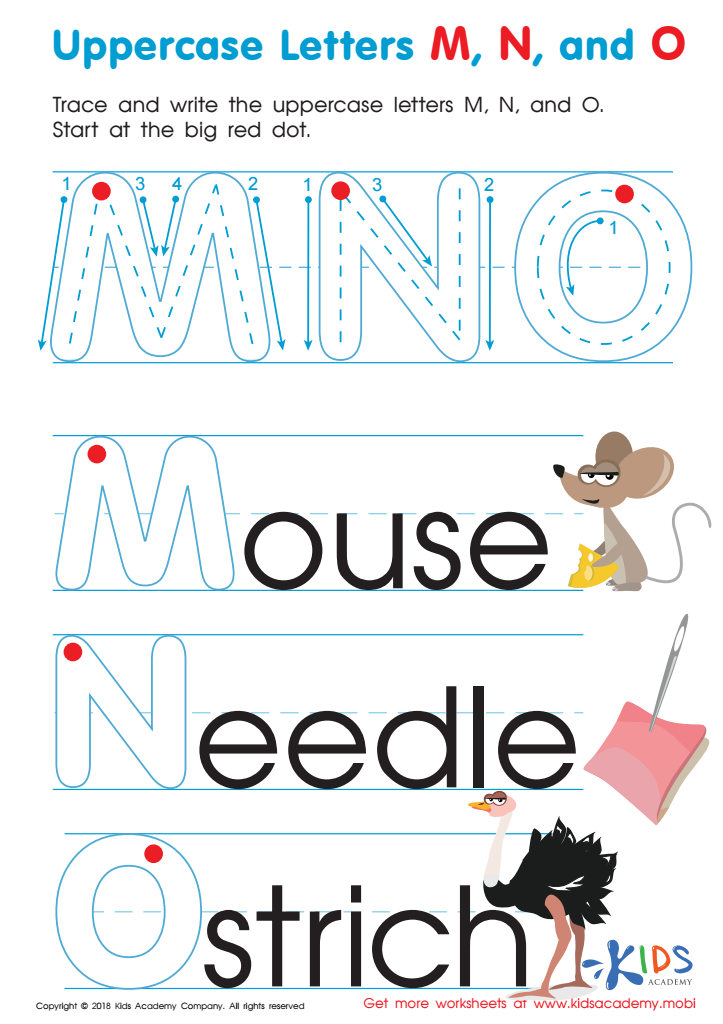
Uppercase Letters M, N, and O Worksheet
Download our easy-to-understand worksheet to help kids write M and N with ease! They'll trace dotted lines and follow arrows as they fill in the letters using a big red dot as a guide. The cute graphics will help them remember sounds too! Get your child writing quickly and confidently with this fun activity.
Uppercase Letters M, N, and O Worksheet
Worksheet
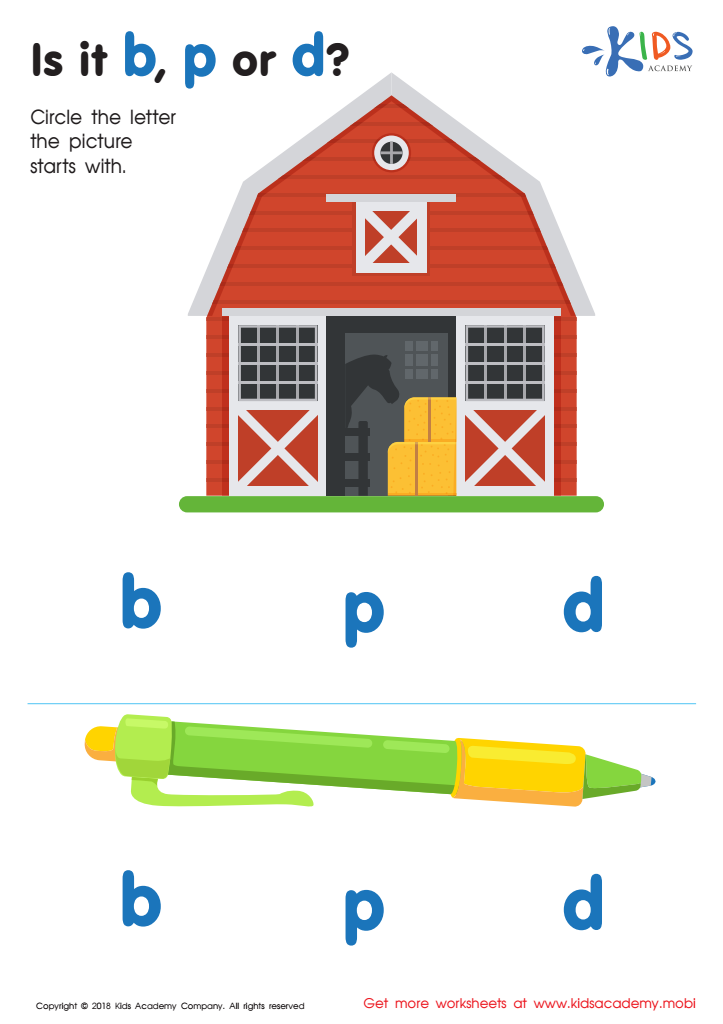
Is it b, p or d? Worksheet
Test your child's identification skills with this worksheet. They must identify the image and then circle the letter it begins with: 'b', 'p', or 'd' (e.g. an image of the sun would mean they circle 's').
Is it b, p or d? Worksheet
Worksheet
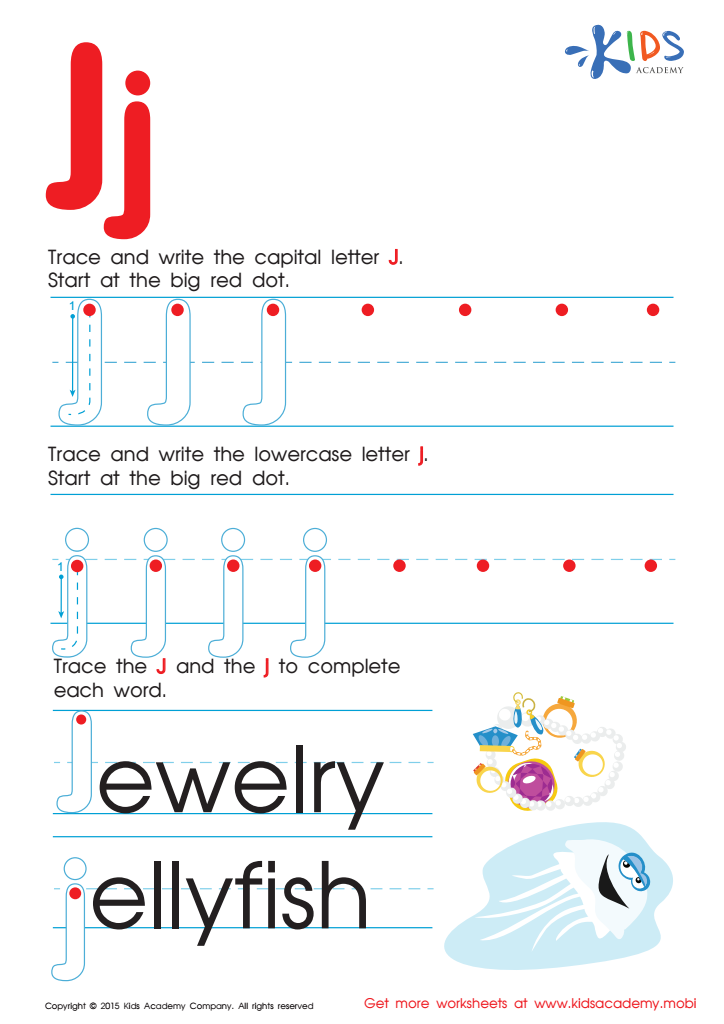
Letter J Tracing Page
Trace and write the letter "J" with our ABC worksheet - start at the big red dot! Have fun completing words like jewelry, jellyfish and more. Check out our kindergarten activities for more alphabet practice.
Letter J Tracing Page
Worksheet
Letter B Tracing Page
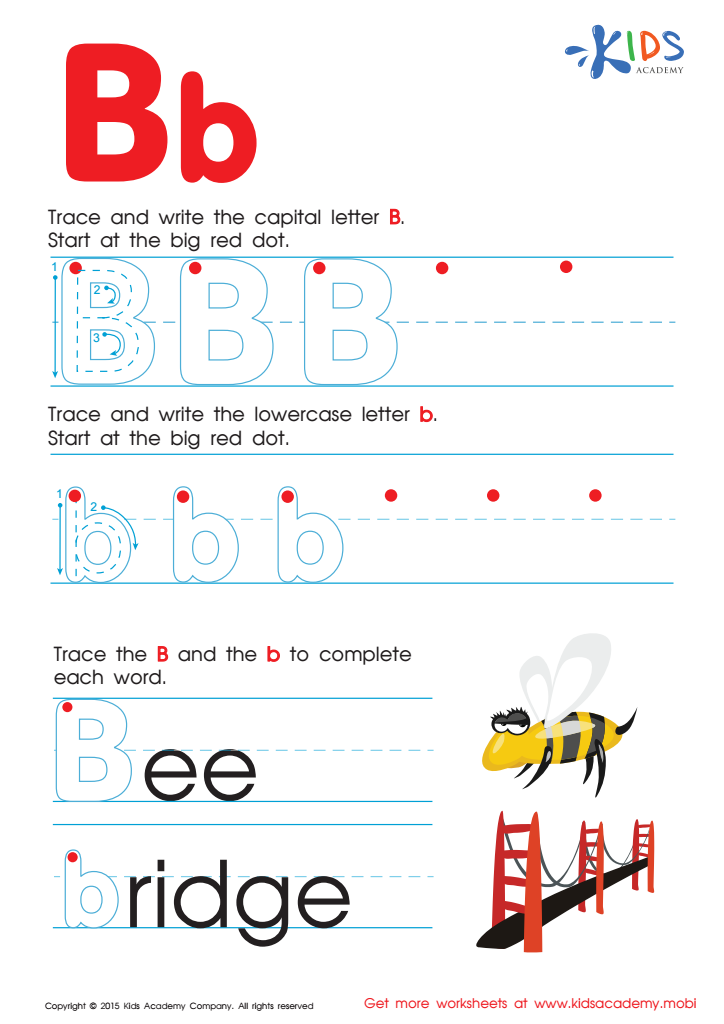
Ready to learn the Alphabet? Put your pencil on the red dot and trace & write both capital & lowercase "B". Then have a look at the pictures. Catch the bee, cross the bridge & write the letters to complete the words. More ABC worksheets for kindergarten available!
Letter B Tracing Page
Worksheet
Uppercase Letters P, Q, and R Worksheet
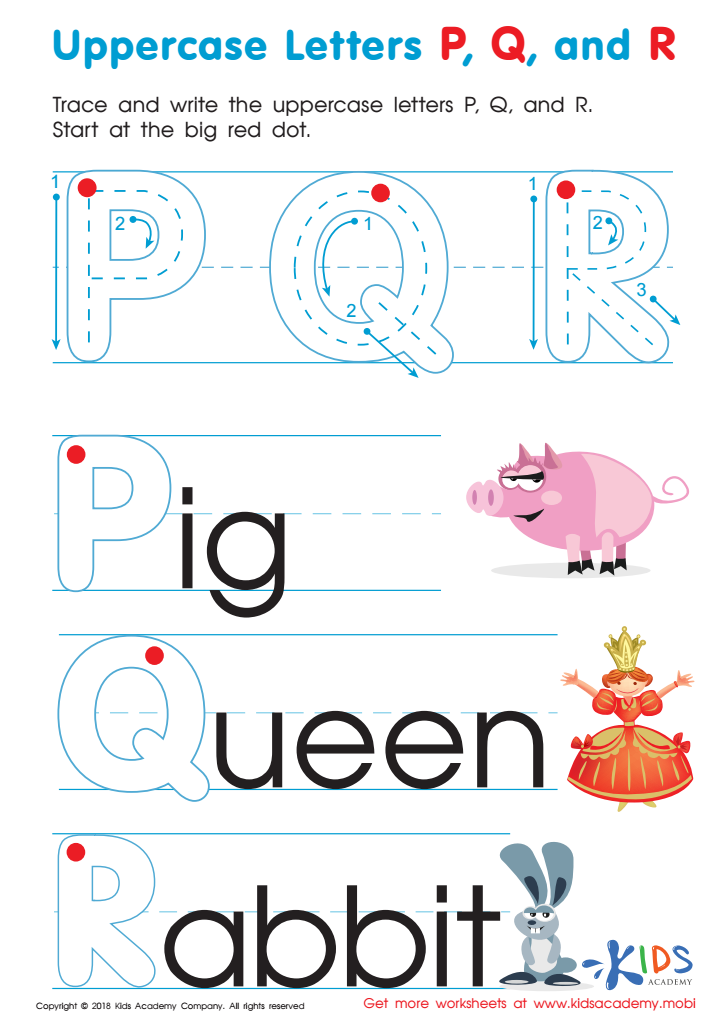
Cute images of a pig, queen and rabbit make it fun to learn letter sounds. Follow the arrows to learn the strokes, then trace each letter from the big red dot. Perfect for kids to learn how to read and write P, Q, and R!
Uppercase Letters P, Q, and R Worksheet
Worksheet
Join Kids Academy for Free
Who is primarily going to use this learning content?







Handwriting improvement for children aged 3 to 4 is crucial for several reasons. Firstly, developing fine motor skills at this early age is foundational for children’s overall cognitive and physical development. During this stage, using tools like crayons and pencils helps strengthen hand-eye coordination, which is vital for later academic tasks.
Secondly, legible handwriting fosters clear communication. As children begin to learn letter recognition and formation, they build confidence in expressing their thoughts and feelings, paving the way for effective verbal skills. This process ignites a passion for writing, which can lead to a love for reading.
Additionally, early handwriting development supports literacy. Children who practice writing letters often display better understanding and retention of letter sounds and their meanings. This connection is key in building the groundwork for lifelong learning habits.
Moreover, handwriting improvement can enhance classroom readiness. When children develop strong writing skills early on, they are better prepared for a structured educational environment, leading to increased classroom participation and engagement.
In essence, parents and teachers should prioritize handwriting improvement as it nurtures creativity, boosts self-esteem, and lays the groundwork for academic success. By fostering these skills early on, we empower children for a brighter future.







