Lowercase letter writing Normal Alphabet Worksheets for Ages 3-4
3 filtered results
-
From - To
Discover our engaging Lowercase Letter Writing Normal Alphabet Worksheets, specially crafted for children ages 3-4. These fun, educational resources are designed to help little learners master the alphabet step-by-step. The worksheets incorporate tracing and freehand writing exercises that focus on each lowercase letter, promoting fine motor skills and letter recognition. With colorful illustrations and clear instructions, your child will enjoy learning at their own pace. Ideal for both classroom and home use, these worksheets provide a strong foundation for future reading and writing success. Give your child a head start with our Lowercase Letter Writing worksheets today!
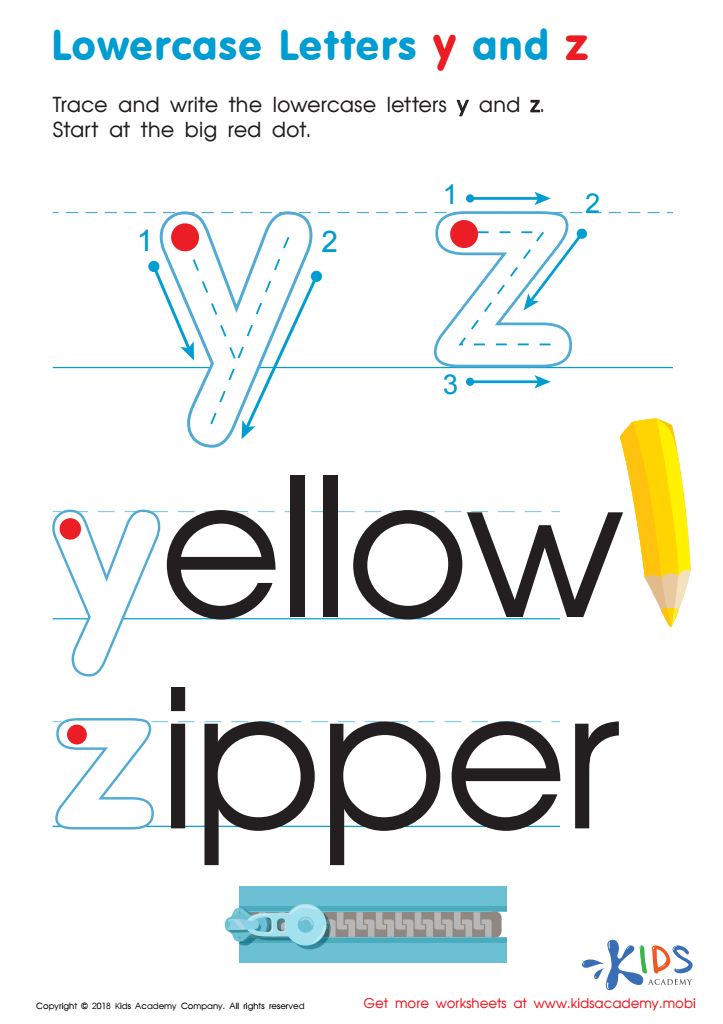
Lowercase Letters y z Worksheet
 Assign to My Students
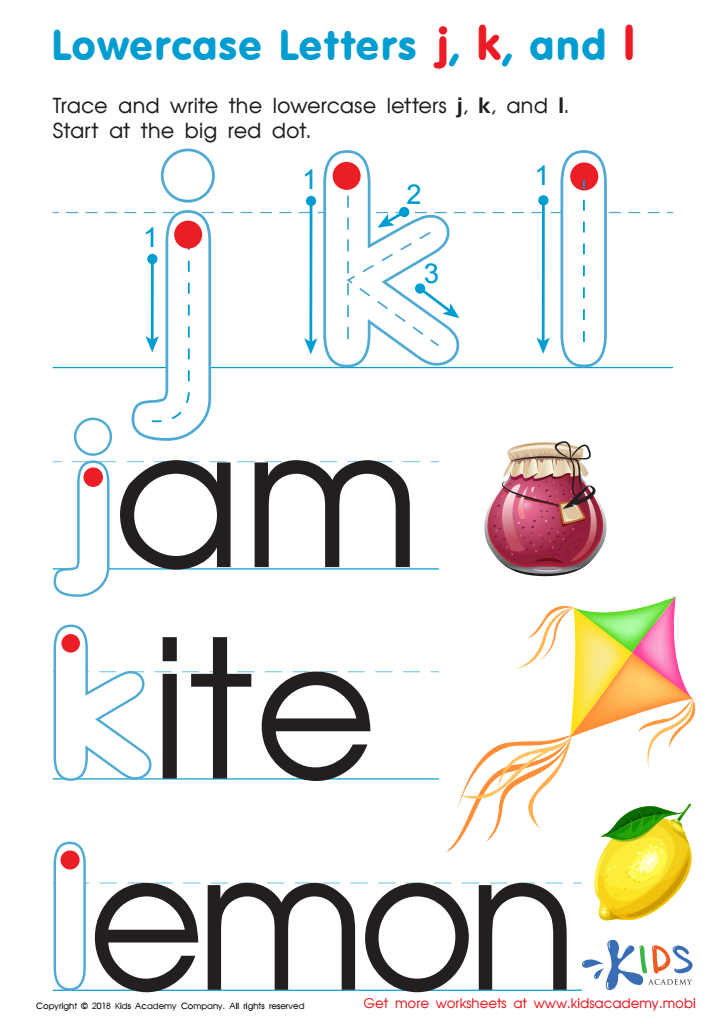
Lowercase Letters j k l Worksheet
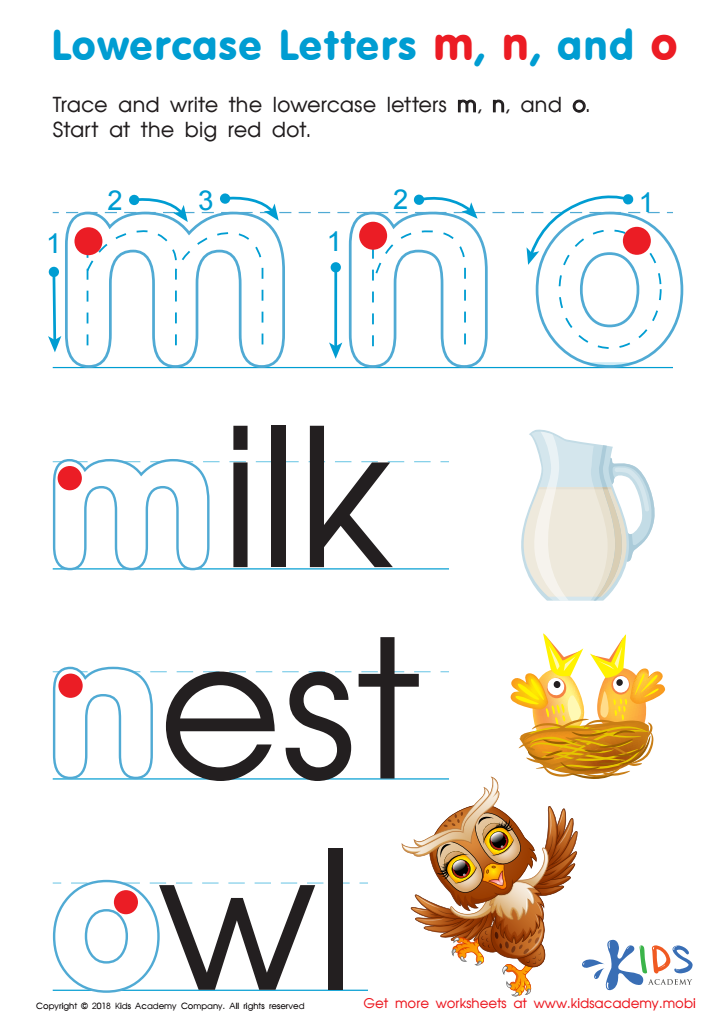
Lowercase Letters m n o Worksheet







Parents and teachers should care about teaching lowercase letters to children aged 3-4 because it forms the foundation for early literacy. At this crucial developmental stage, young minds are especially receptive to learning new skills. Introducing lowercase letters helps them recognize the full spectrum of the alphabet, thereby enhancing reading readiness. Most written text, including storybooks and classroom materials, is predominantly in lowercase. Familiarity with these letters, therefore, builds a child's confidence as they encounter words in everyday life.
Lowercase letters are also generally easier for small hands to write due to simpler strokes in many cases compared to uppercase letters. This makes the learning process less frustrating for young children. Beginning with lowercase alphabets supports fine motor skill development, which is essential for writing.
Moreover, early mastery of lowercase letters facilitates smoother transitions into more complex reading and writing skills as children progress in their education. It nurtures phonemic awareness by allowing children to connect sounds to letters more naturally. Children who are adept at lowercase letters are often better prepared for kindergarten, setting a positive trajectory for their academic journey. Ultimately, early attention to lowercase letter writing provides children with critical tools for communication and imagination.







