Phonics development Normal Alphabet Worksheets for Ages 3-4
3 filtered results
-
From - To
Discover engaging Phonics Development Normal Alphabet Worksheets designed specifically for children aged 3-4. These worksheets provide an enjoyable way for young learners to familiarize themselves with letters and sounds, laying a strong foundation for reading skills. Each activity promotes letter recognition, sound pairing, and phonemic awareness through colorful illustrations and fun exercises. Our carefully crafted resources cater to different learning styles, ensuring that every child can engage and thrive. Ideal for both home and classroom use, these worksheets make learning phonics accessible and enjoyable, setting the stage for successful early literacy development. Start your child’s phonics journey today!
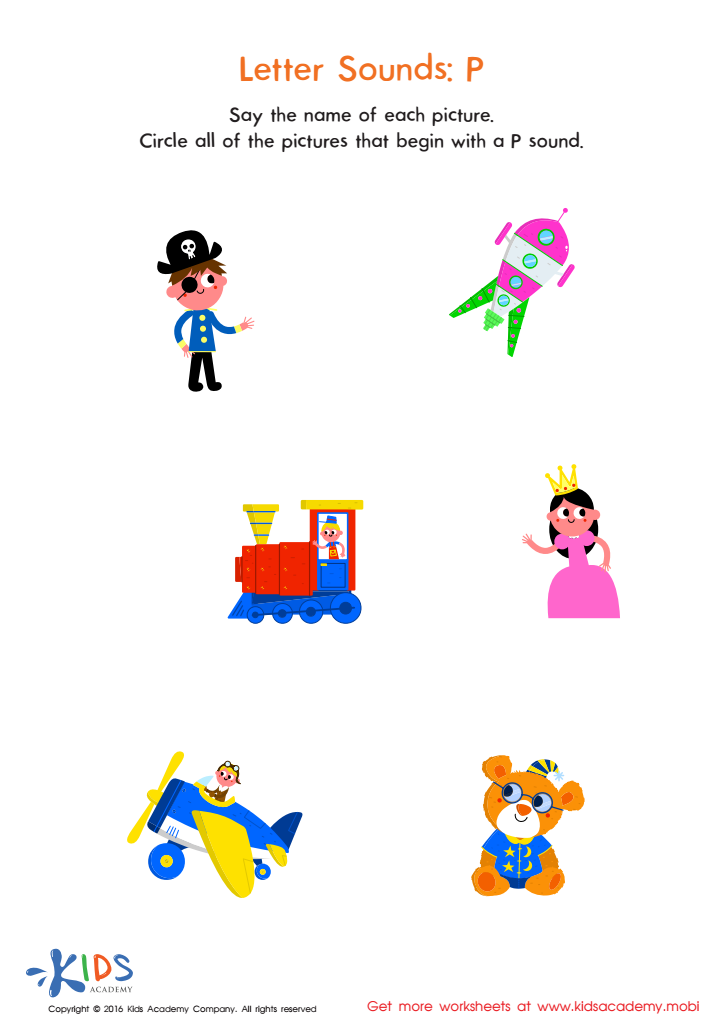
Letter P Sound Worksheet
 Assign to My Students
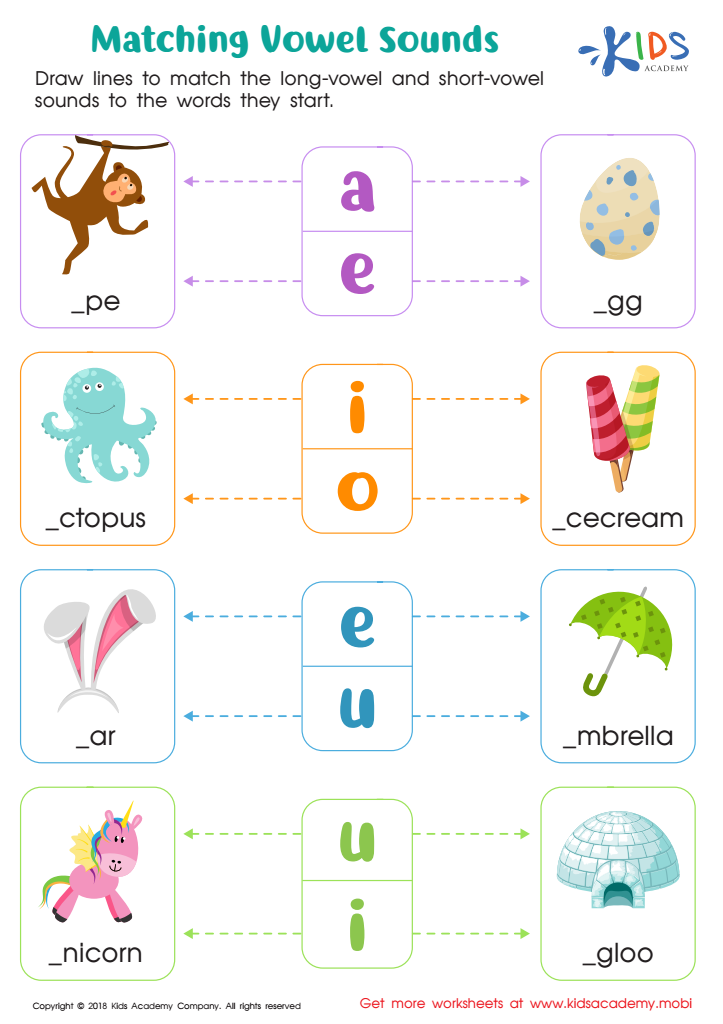
Matching Vowel Sounds Worksheet
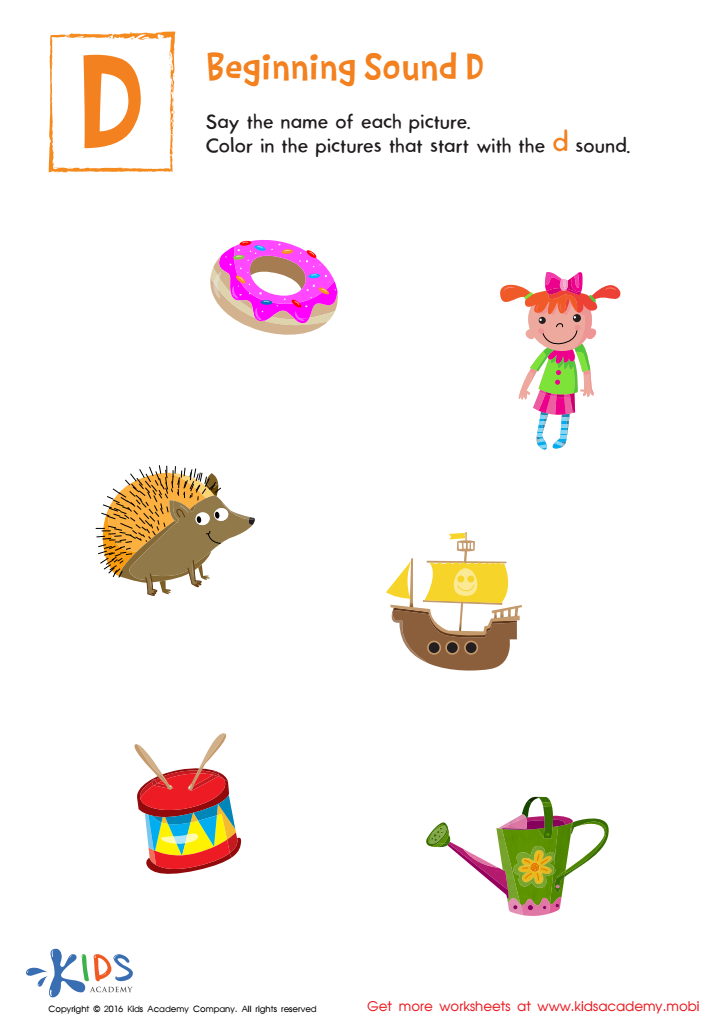
Beginning Sound D Worksheet








Phonics development is a crucial part of early literacy skills for children ages 3-4. At this age, children are beginning to understand the relationship between letters and sounds, a skill that forms the foundation for reading and writing. Parents and teachers should prioritize phonics development to equip young learners with essential skills that enhance their language acquisition and literacy.
First, phonics helps children decode words, making it easier for them to read and respond to texts. As they learn to associate sounds with specific letters, they become more confident in their reading abilities. Additionally, this skill nurtures vocabulary development and allows children to express themselves more effectively.
Furthermore, phonics development encourages critical thinking. When children learn how to segment sounds in words, they enhance their problem-solving skills, which can be transferred to other academic areas. Engaging in phonics activities—through songs, games, and storytelling—can also make learning enjoyable, keeping children motivated.
Lastly, supporting phonics development prepares children for formal education. A solid foundation in phonics can ease the transition into more advanced reading and writing tasks, setting the stage for lifelong learning and academic success. For these reasons, it is essential for parents and teachers to be actively involved in promoting phonics skills.







