
Reading Skills Normal Alphabet Worksheets for Ages 3-4
8 filtered results
Difficulty Level
Grade
Age
-
From - To
Subject
Activity
Standards
Boost your child’s early literacy with our expertly crafted Reading Skills Normal Alphabet Worksheets for ages 3-4. Designed to foster a love for reading, these engaging printables introduce young learners to the fundamentals of the alphabet. Each worksheet is filled with fun activities that enhance letter recognition, phonics, and early reading skills, providing a solid foundation for your child’s educational journey. Perfect for preschoolers, these worksheets ensure that learning feels like play, igniting curiosity and building confidence. Download now to give your little ones a head start in their reading adventure with our age-appropriate, skill-enhancing activities.
Favorites
With answer key
Interactive
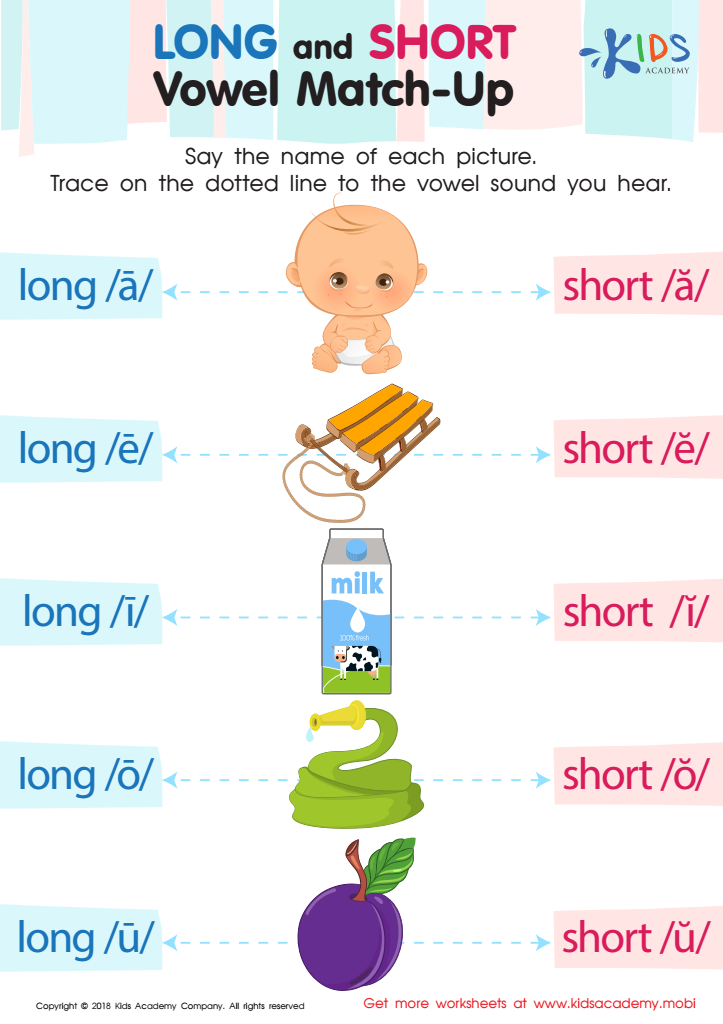
Long and Short Vowel Match up Reading Worksheet
Help your reader build confidence and refine their decoding skills! This worksheet combines long and short vowel recognition with a traceable component to improve fine motor skills. Your learner will name each picture and trace the dotted lines to get to the correct vowel sounds.
 Assign to My Students
Long and Short Vowel Match up Reading Worksheet
Worksheet
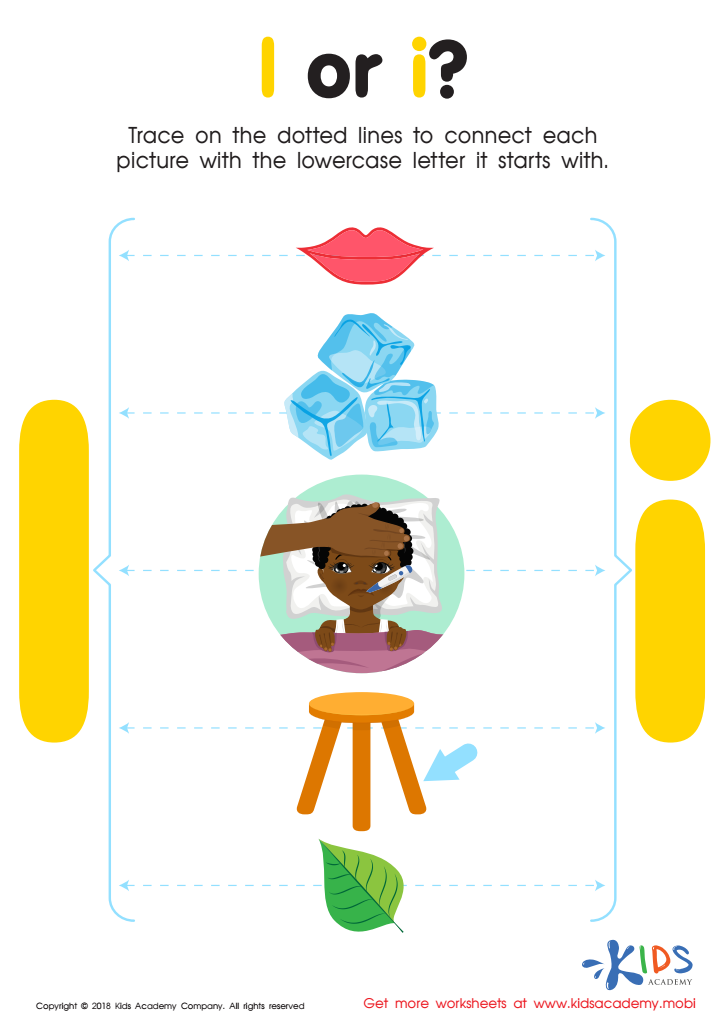
l or i? Worksheet
Trace the dotted lines on this worksheet to connect pictures with their lowercase letter. Ask your child what each picture is and the first letter of the word. Guide them to trace the letter with the dotted lines.
l or i? Worksheet
Worksheet
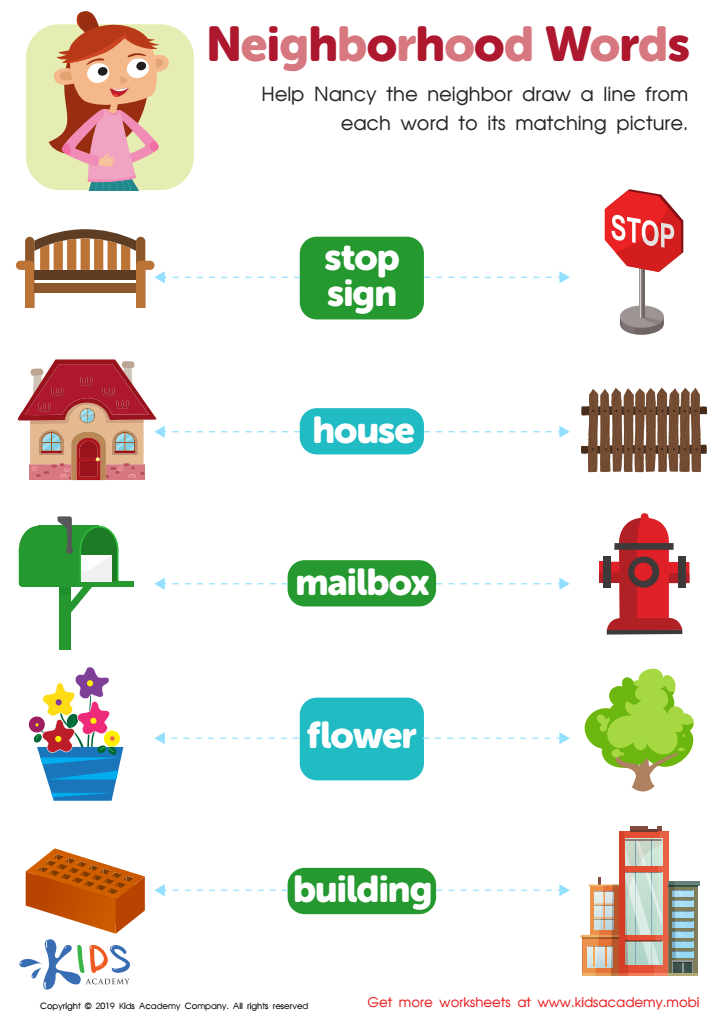
Neighborhood Words Worksheet
Help preschoolers develop life skills and familiarize them with words and concepts with this worksheet! It'll also boost their fine motor skills as they trace lines to match pictures with the words. They'll learn new words and feel more confident in their reading.
Neighborhood Words Worksheet
Worksheet
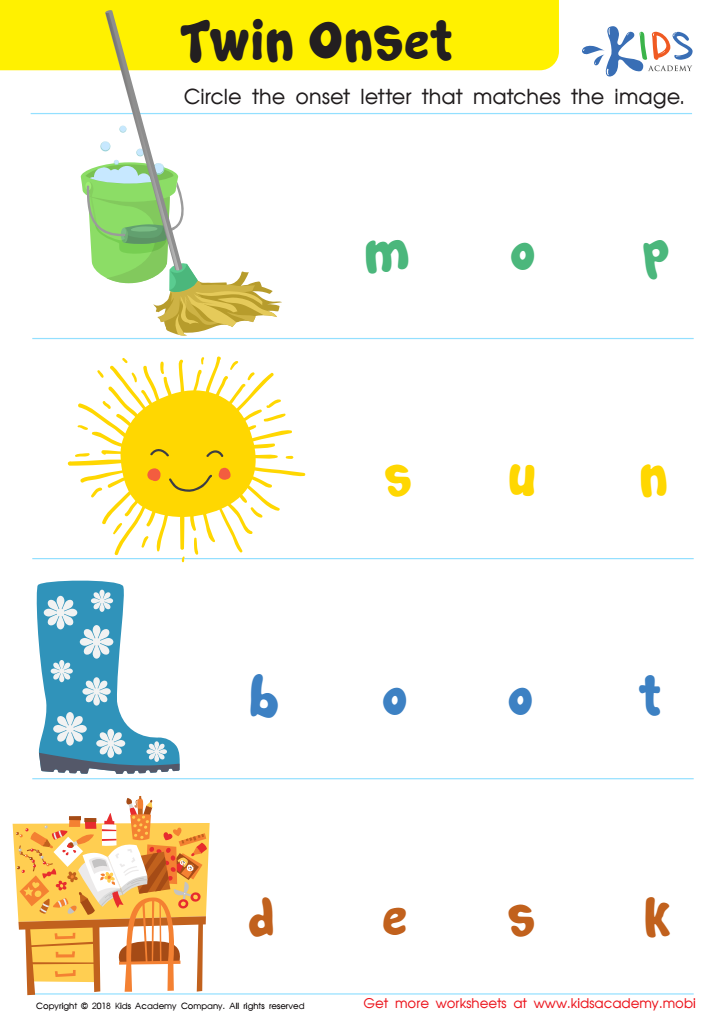
Twin Onset Worksheet
Children's phonological skills and reading/spelling strategies are strengthened by isolating initial consonants. This fun PDF worksheet encourages kids to trace the correct onset letter and hone fine motor skills. It's a great way to introduce early reading and spelling.
Twin Onset Worksheet
Worksheet
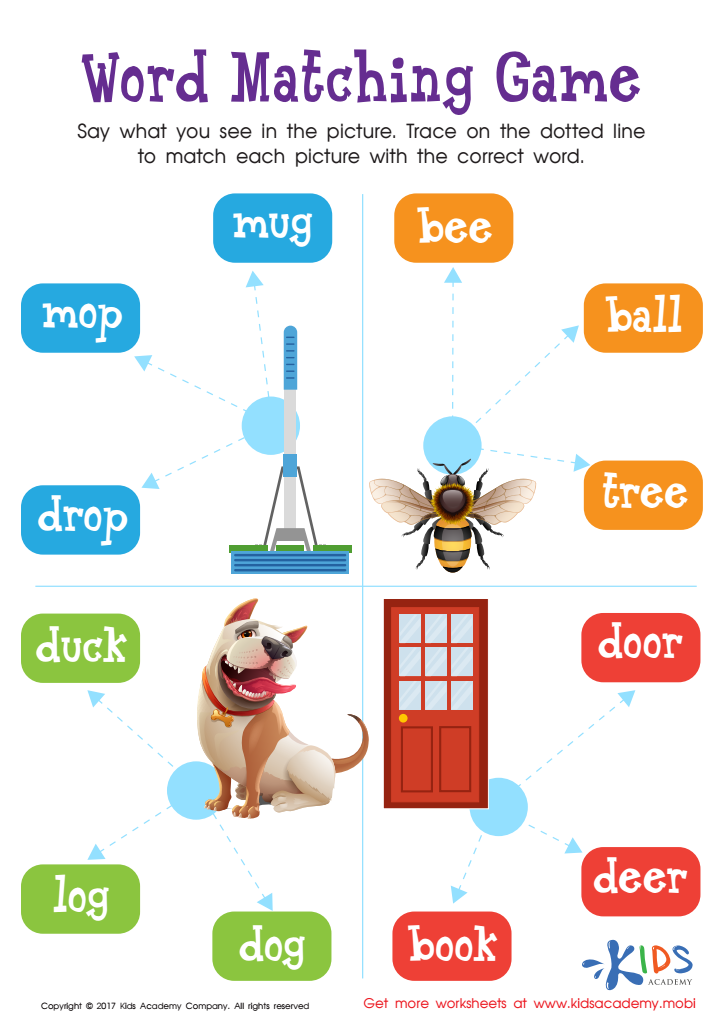
Word Matching Game Worksheet
Help your early reader develop prereading skills with this fun matching worksheet! Visual cues help them learn sight words, decode words in word families, and identify phonetic patterns. They'll practice discerning sounds past initial consonants while saying the name of the picture and finding the matching word - and reading at the same time!
Word Matching Game Worksheet
Worksheet
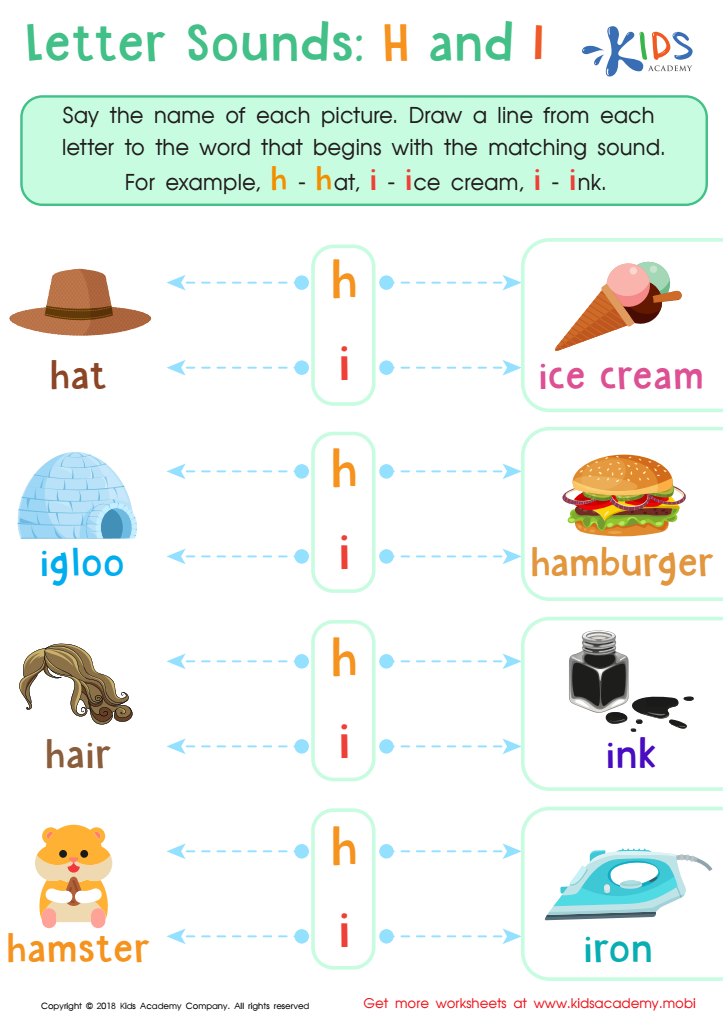
Letter H and I Sounds Worksheet
Preschoolers will have fun and develop reading and writing skills at the same time! They'll use pictures to recognize familiar words and differentiate between 'H' and 'I' sounds. Then they'll trace lines to connect each sound to the picture, improving their fine-motor skills. Bright and cheerful visuals make learning a breeze!
Letter H and I Sounds Worksheet
Worksheet
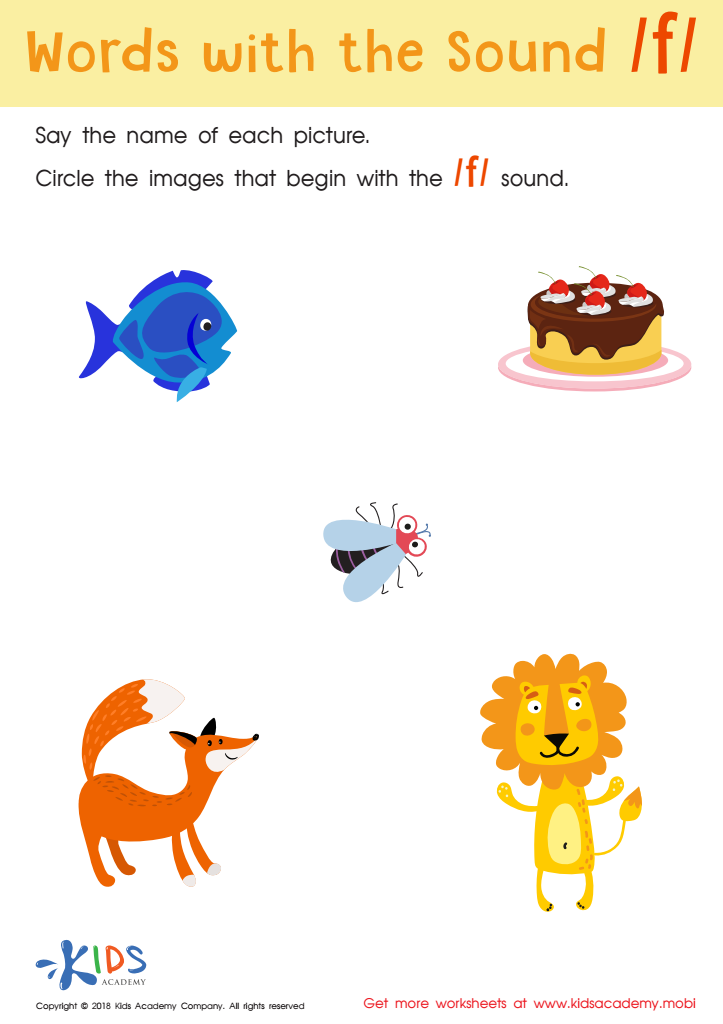
Words with sound f Reading Worksheet
This illustrated phonics worksheet is ideal for preschool or kindergarten. It helps boost learners' literacy skills with a focus on the letter "f". Ask your child to name all the pictures, listening for that sound. Examples are fish, fox, lion, bug. When they can identify which words start with "f", have them circle the images. Congratulate them on a job well done!
Words with sound f Reading Worksheet
Worksheet
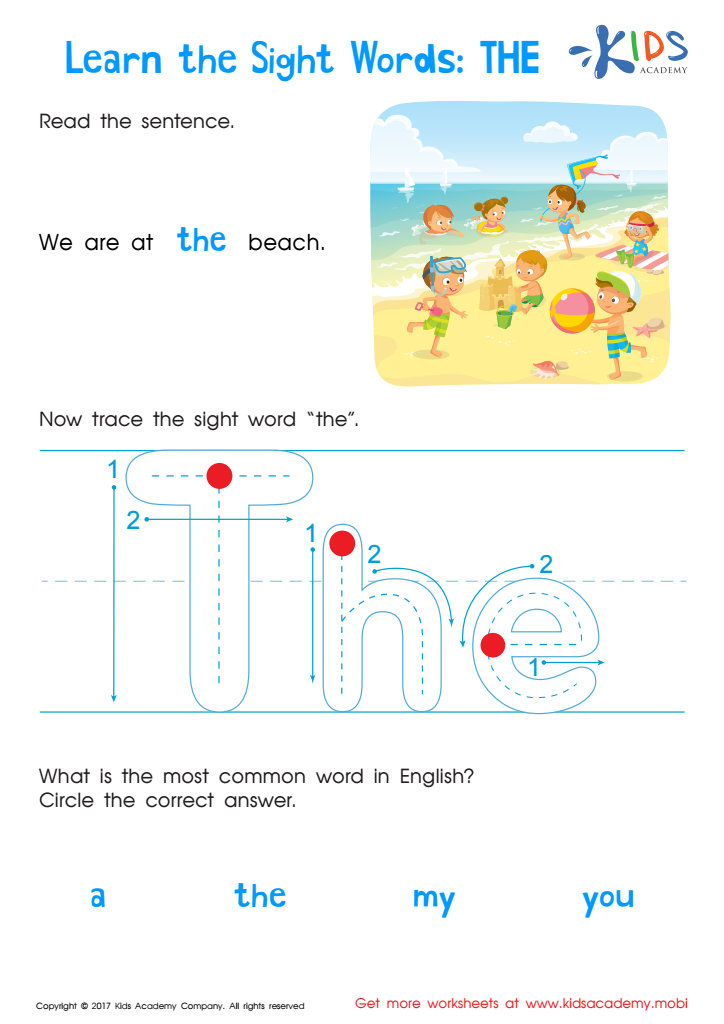
Sight Words: The Worksheet
Get the worksheet and start now.
The word "the" is an essential part of English. Teaching your child to read and write it is easy with this sight words worksheet. They'll practice reading the word, tracing it, and using it in sentences. It's the perfect way to take your child's language skills to the next level! Get the worksheet today.
Sight Words: The Worksheet
Worksheet
Join Kids Academy for Free
Who is primarily going to use this learning content?








Parents and teachers should care about reading skills for children ages 3-4 because it's a critical period for foundational language and literacy development. During this early stage, children are like sponges, absorbing new information rapidly. By focusing on reading skills and exposure to the alphabet, we help them develop essential cognitive and language abilities that are necessary for future academic success.
Introducing children to the normal alphabet not only fosters letter recognition but also enhances their understanding of sounds associated with each letter, an important precursor to phonemic awareness. This, in turn, assists in the development of early reading skills. When children recognize letters and understand their associated sounds, they can start stringing these sounds together to form words, fundamentally preparing them for reading readiness.
Additionally, reading and language development are directly linked to better brain development, enhanced imagination, and stronger vocabulary. Early literacy skills are predictors of how well children will perform in school, making primary interventions crucial. Engaging with books and reading activities also promotes parent-child bonding, creates positive learning environments, and instills a love of reading from a young age. Therefore, prioritizing reading skills when children are 3-4 years old sets a strong foundation for lifelong literacy and learning.







