
Vocabulary Building Normal Alphabet Worksheets for Ages 3-4
5 filtered results
Difficulty Level
Grade
Age
-
From - To
Subject
Activity
Standards
Enhance your child's language skills with our "Vocabulary Building Normal Alphabet Worksheets for Ages 3-4." These engaging, expertly designed worksheets help young learners master the alphabet while expanding their vocabulary. Each worksheet incorporates fun and interactive activities tailored to 3-4-year-olds, making learning both exciting and effective. By integrating visually appealing illustrations with simple word examples, these resources support children's cognitive development and early literacy skills. Perfect for parents and educators aiming to give their little ones a head start in language development, our worksheets make foundational learning an enjoyable and rewarding experience.
Favorites
With answer key
Interactive
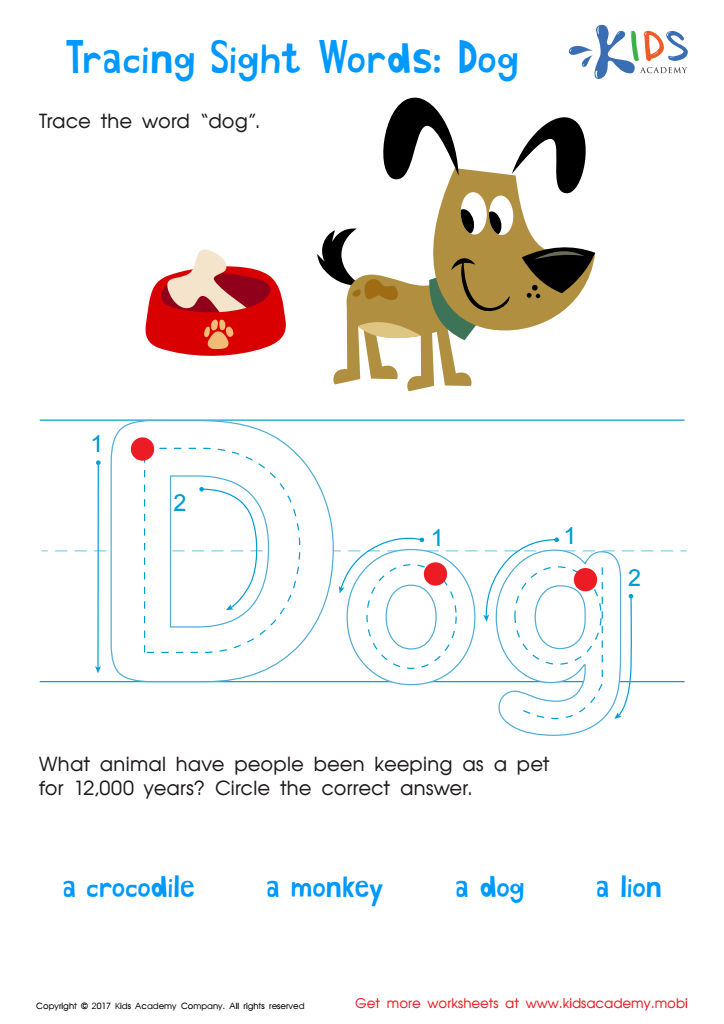
Dog Worksheet Sight Words Worksheet
Get your kids excited to read with our dog-themed sight words worksheet!
Excite your child to read with our sight words worksheet: dog edition! Featuring a lovable dog character to put a smile on any kid's face, this worksheet helps kids practice reading and writing the word "dog". Build a library of words they can read quickly and promote increasing literacy skills with early fluency! Get them ready for reading with our dog-themed sight words worksheet!
Dog Worksheet Sight Words Worksheet
Worksheet
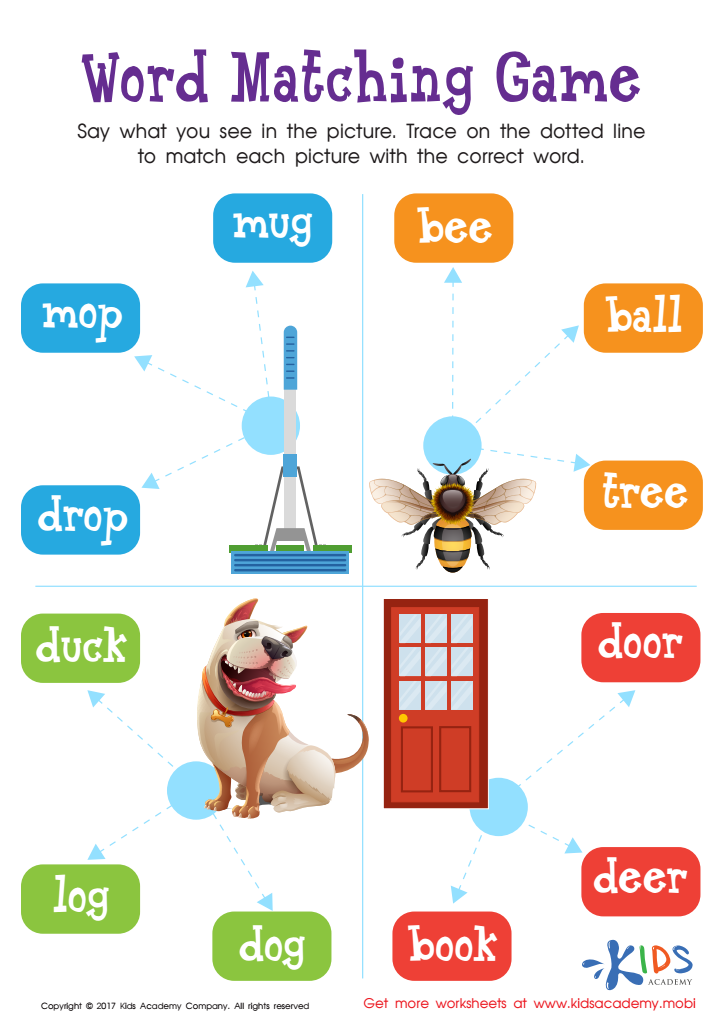
Word Matching Game Worksheet
Help your early reader develop prereading skills with this fun matching worksheet! Visual cues help them learn sight words, decode words in word families, and identify phonetic patterns. They'll practice discerning sounds past initial consonants while saying the name of the picture and finding the matching word - and reading at the same time!
Word Matching Game Worksheet
Worksheet
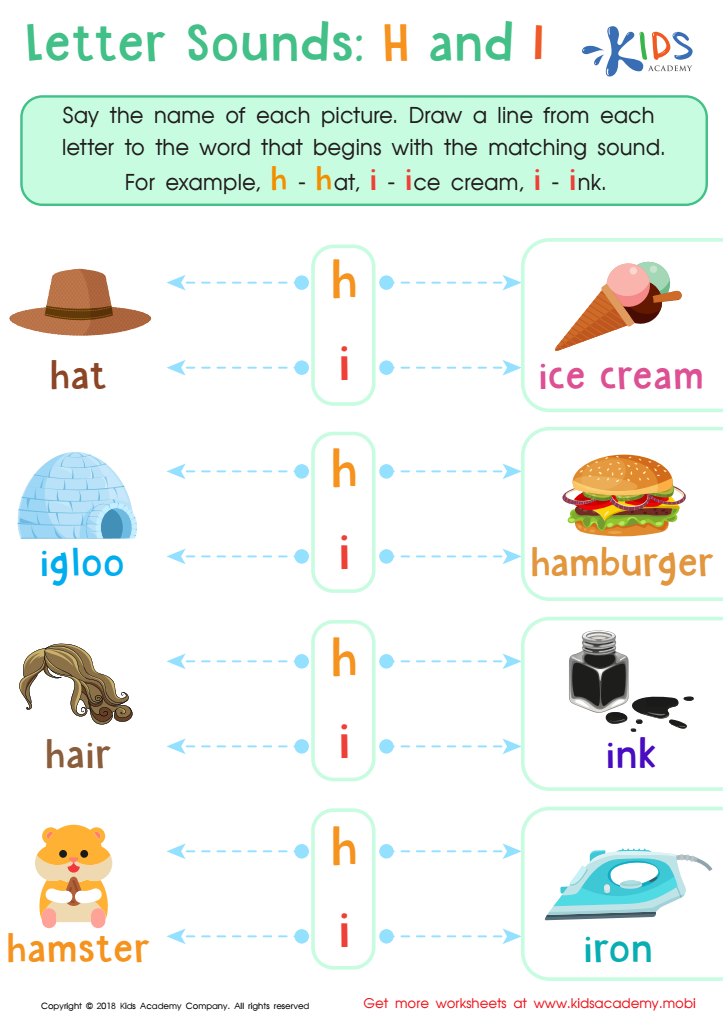
Letter H and I Sounds Worksheet
Preschoolers will have fun and develop reading and writing skills at the same time! They'll use pictures to recognize familiar words and differentiate between 'H' and 'I' sounds. Then they'll trace lines to connect each sound to the picture, improving their fine-motor skills. Bright and cheerful visuals make learning a breeze!
Letter H and I Sounds Worksheet
Worksheet
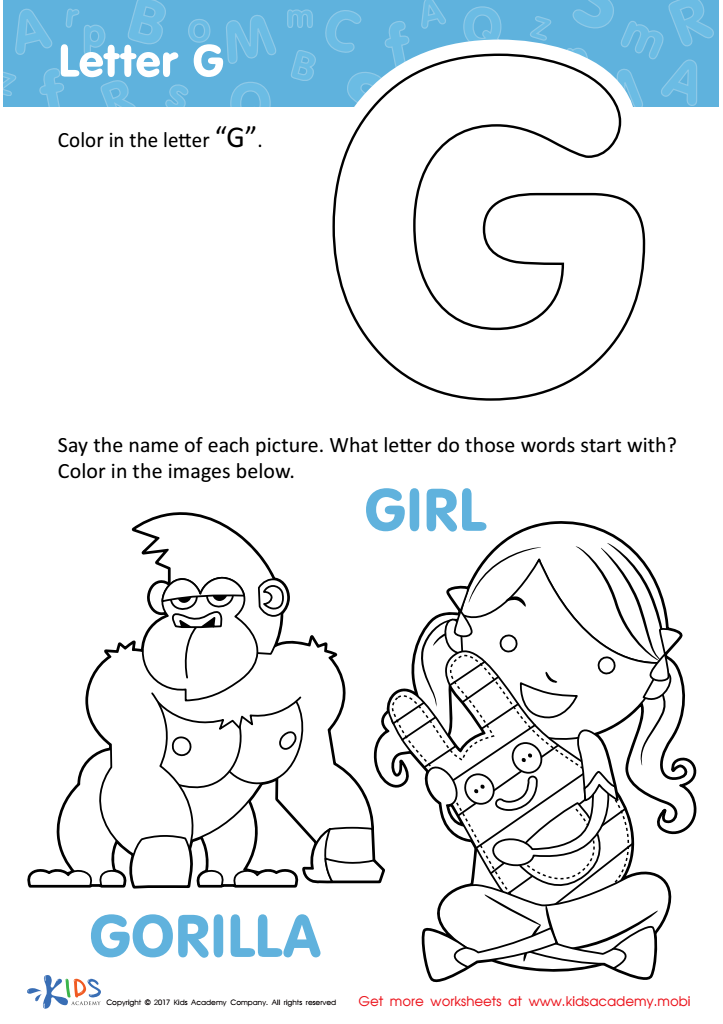
Letter G Coloring Sheet
This "G" coloring page encourages creativity and teaches kids the letter "G" sound. With its fun visuals and familiar words, it's sure to excite your child. Plus, you can talk about the letter’s sound with the pictures given.
Download (PDF)
 Assign to My Students
Assign to My Students
Letter G Coloring Sheet
Worksheet
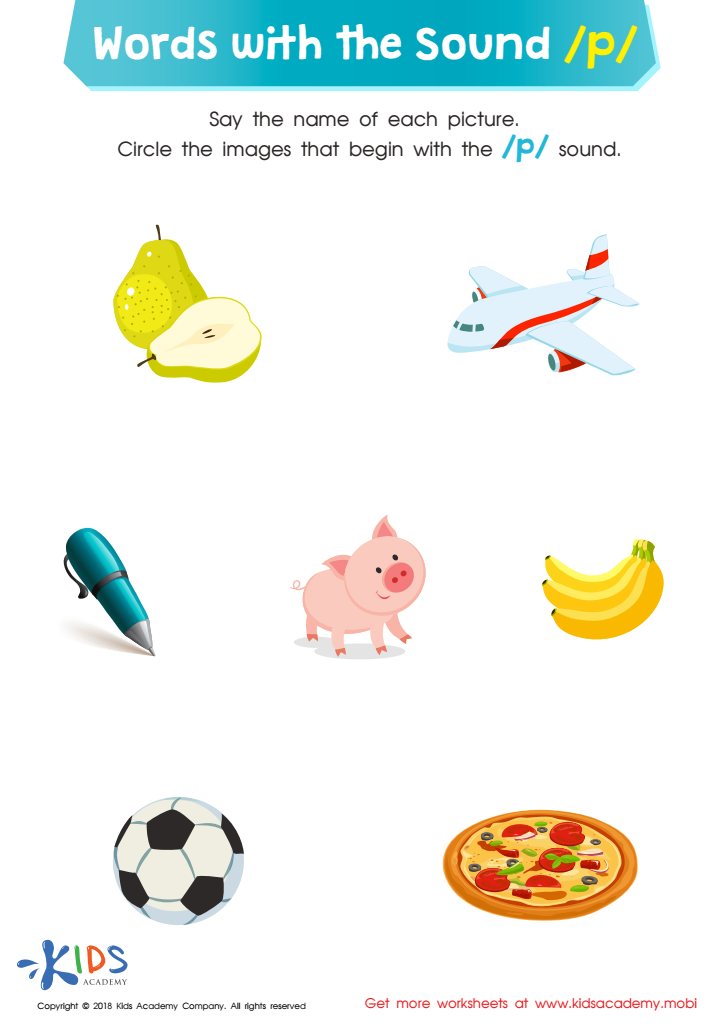
Words with sound p Reading Worksheet
Working on this fun worksheet? Name each picture aloud and listen carefully before circling those that start with the letter «p»! Pizza, pig, plane, or banana - practice phonics to help your child recognize the letter «p» sound for successful early reading and decoding!
Words with sound p Reading Worksheet
Worksheet
Join Kids Academy for Free
Who is primarily going to use this learning content?







Vocabulary building using the normal alphabet is crucial for children ages 3-4 because this developmental stage is foundational for language acquisition and cognitive growth. At this age, children's brains are highly receptive to new information, and introducing a diverse vocabulary helps to stimulate their curiosity and cognitive development.
A robust vocabulary lays the groundwork for effective communication, enabling children to express their thoughts, emotions, and needs more clearly. This early stage of learning also enhances children's comprehension skills, which are vital as they begin to engage with more complex ideas and narratives in preschool and beyond.
Moreover, a strong vocabulary boosts confidence. Children who can articulate themselves well are more likely to participate in classroom discussions, asking questions and sharing ideas. This early engagement supports social development, helping them to build relationships with their peers and teachers.
For parents and teachers, taking an active role in vocabulary building involves reading books, engaging in conversations, and playing educational games incorporating alphabet and word recognition. Such interactive activities make learning fun and interactive, fostering a love for language from an early age.
In summary, prioritizing vocabulary building for young children sets a strong educational foundation, enhances communication skills, and fosters social and cognitive growth, ultimately benefiting their lifelong learning journey.







