
Handwriting Skills Normal Letter Recognition Worksheets for Ages 3-4
5 filtered results
Difficulty Level
Grade
Age
-
From - To
Subject
Activity
Standards
Boost your child's handwriting skills and letter recognition with our engaging Normal Letter Recognition Worksheets designed specifically for ages 3-4. These worksheets feature fun and interactive activities that make learning the alphabet both enjoyable and effective. Each page helps develop fine motor skills and encourages kids to practice letter formation while recognizing uppercase and lowercase letters. With colorful illustrations and easy-to-follow instructions, children will stay motivated as they enhance their writing abilities. Ideal for preschoolers or as supplementary activities at home, these resources lay a strong foundation for early literacy. Start your child's journey to effective handwriting today!
Favorites
With answer key
Interactive
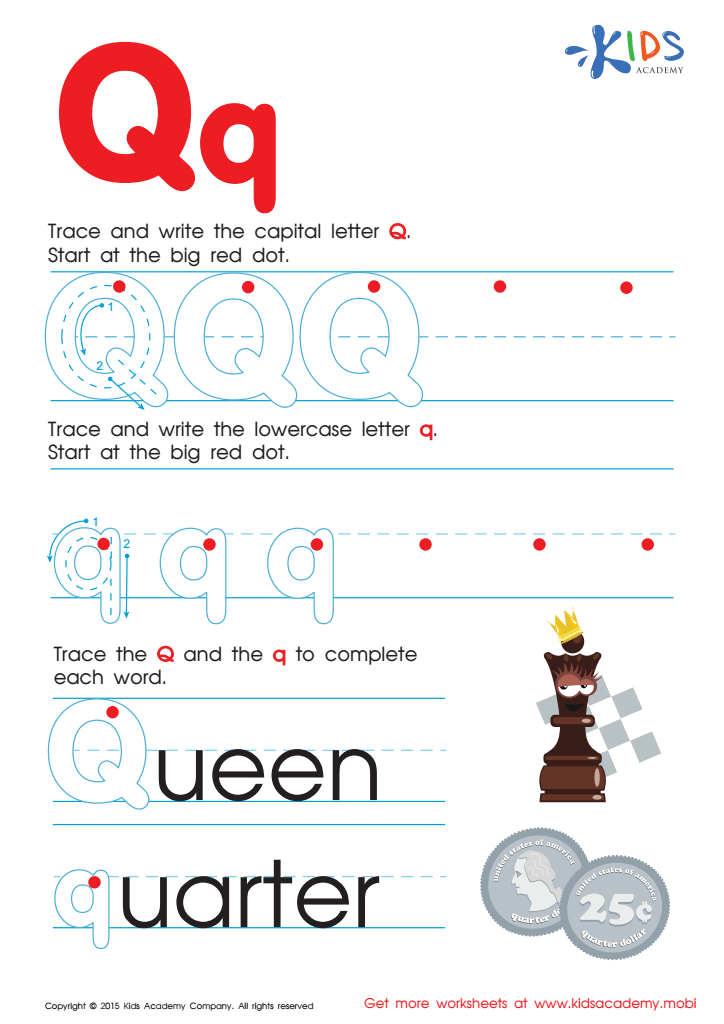
Letter Q Tracing Page
Learn the letter "Q"! Trace and write it a few times in upper and lowercase. Then help the Queen by writing her initial letter. Finally, write "quarters" and practice with more alphabet worksheets.
 Assign to My Students
Letter Q Tracing Page
Worksheet
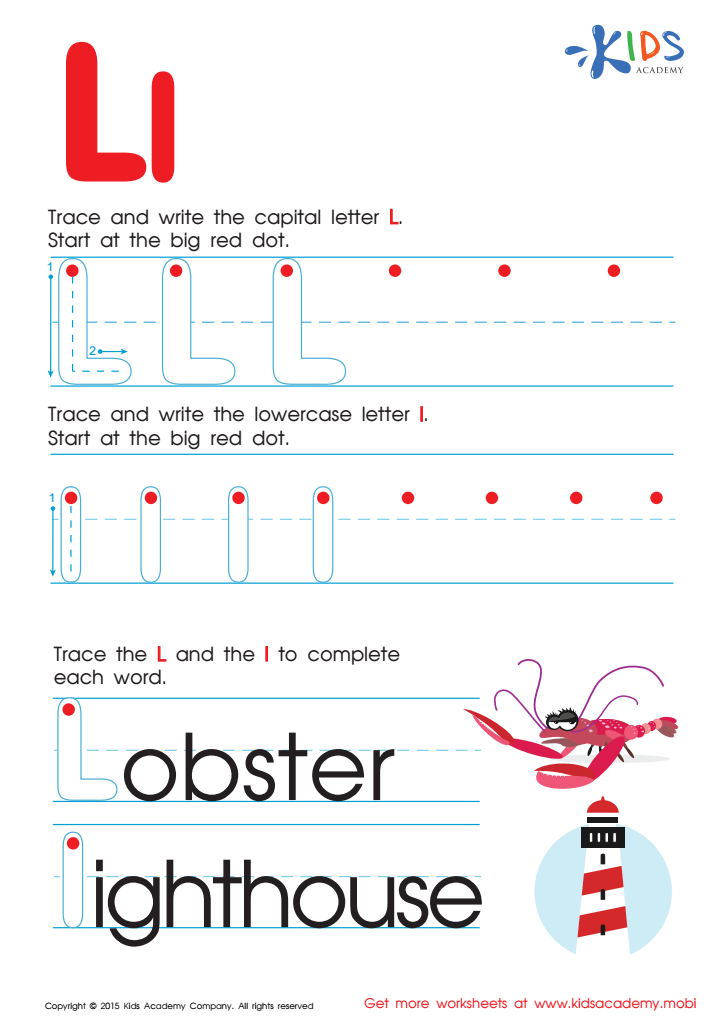
Letter L Tracing Page
Trace uppercase and lowercase letters to practice writing. Pay attention to the lowercase letters, like the "L", that are not as tall as an uppercase "I" or as short as a lowercase "i". Words like "lobster" and "lighthouse" are waiting to be completed. Enjoy!
Letter L Tracing Page
Worksheet
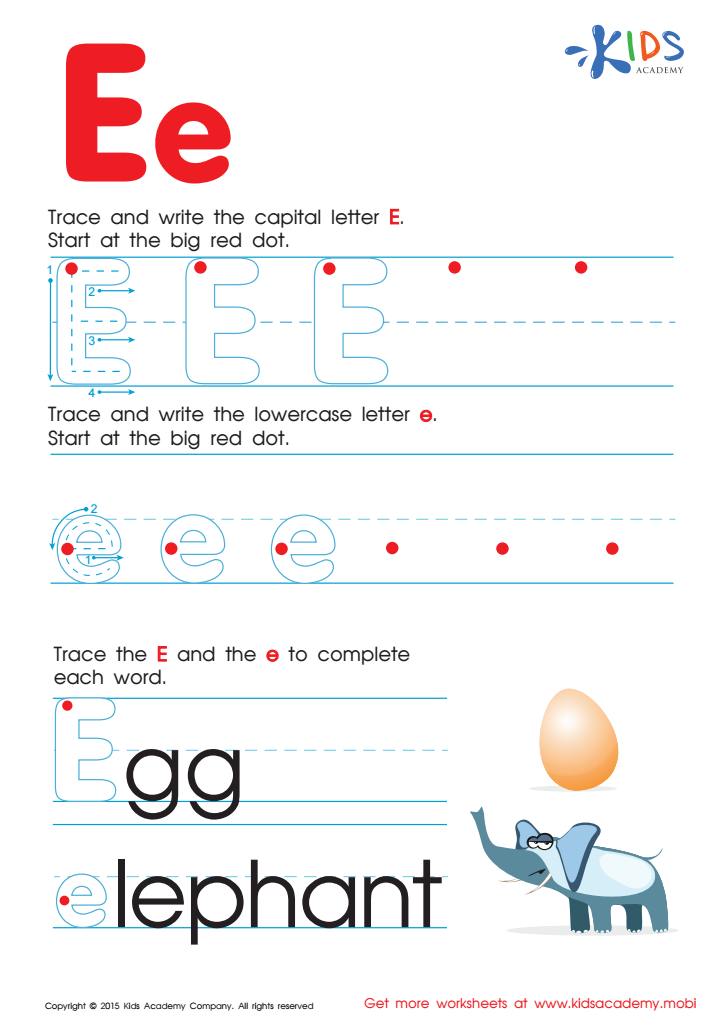
Letter E Tracing Page
Trace and write the uppercase and lowercase "E" starting at the big red dot. Complete words to perfect letter writing. Egg and Elephant must be written carefully. More alphabet worksheets for kindergarten are available for download to spend more time with your children learning.
Letter E Tracing Page
Worksheet
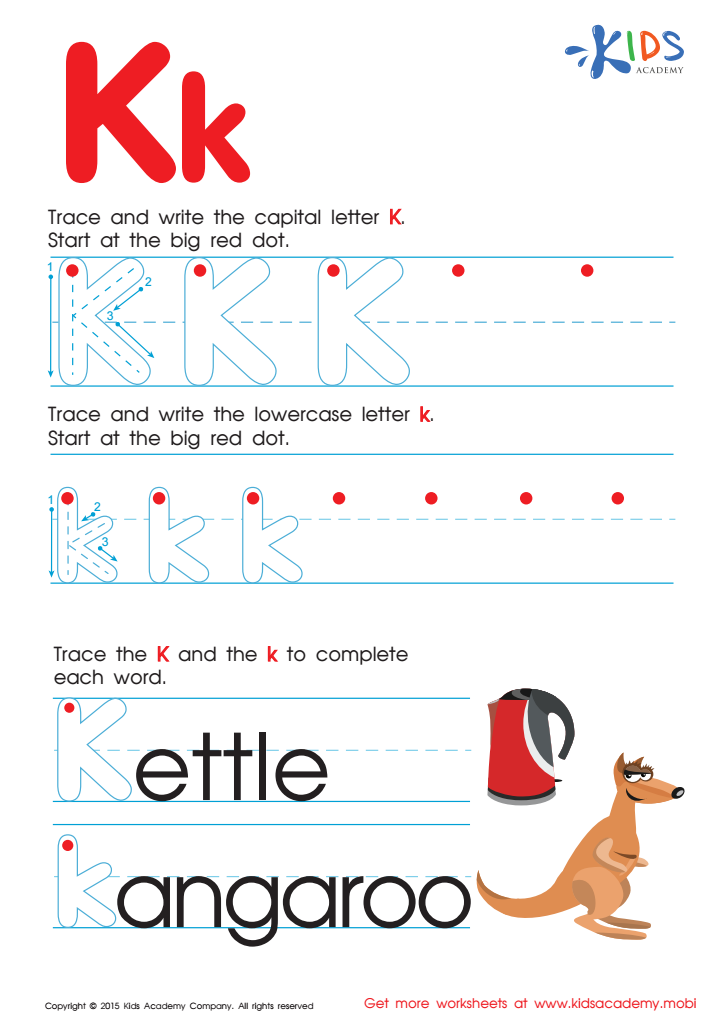
Letter K Tracing Page
Trace and write the letter K; start at the big red dot. Use it to complete words like "Kettle" and "Kangaroo". Visit Kids Academy for more free alphabet worksheets for kindergarten.
Letter K Tracing Page
Worksheet
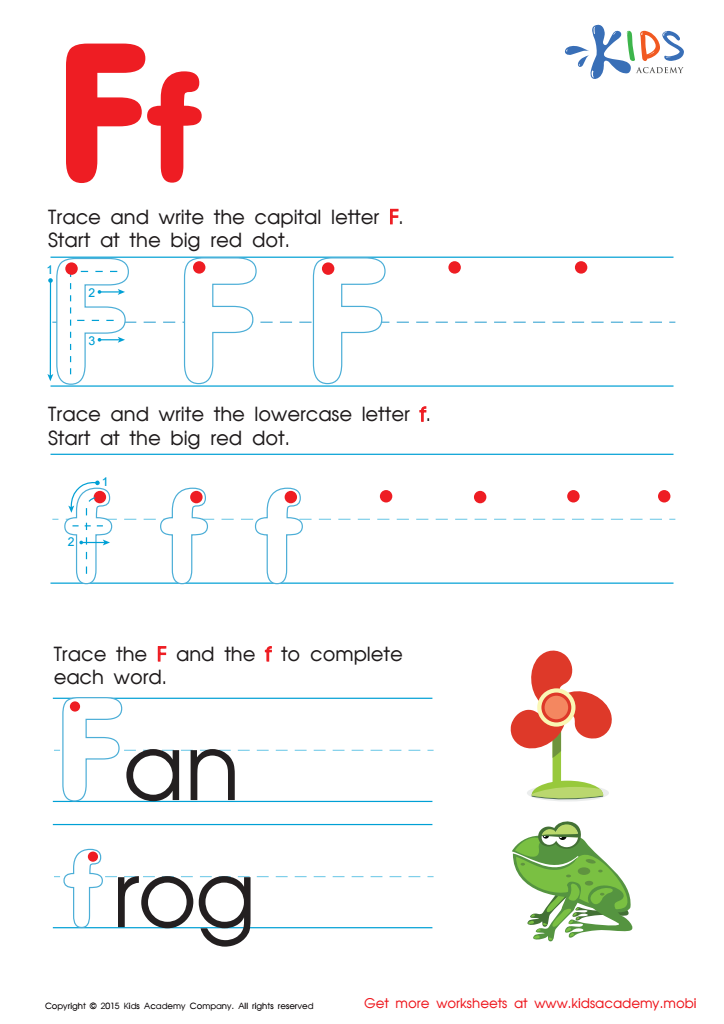
Letter F Tracing Page
Trace "F" with your pencil! Start at the red dot and draw lines — it's fun! Check it out — it looks great! Keep practicing to make it even better. Then, try completing words. Help out the broken fan and funny frog! Get free alphabet worksheets and activities for your kids. Come see our new tracing pages!
Letter F Tracing Page
Worksheet
Join Kids Academy for Free
Who is primarily going to use this learning content?








Handwriting skills and letter recognition are crucial developmental milestones for children aged 3-4. At this stage, children are beginning to develop fine motor skills, crucial for writing. Engaging in activities like tracing letters, using crayons or markers, and playing with playdough helps strengthen hand muscles and improve coordination. These skills facilitate not only handwriting but also everyday activities like zipping a jacket or tying shoelaces.
Moreover, letter recognition lays the foundation for literacy. Recognizing letters equips children with the skills to decode sounds and form words, setting them on a path towards reading and writing proficiency. Early exposure to letters through songs, books, and games fosters enthusiasm for learning and reduces future learning challenges.
Additionally, these skills support cognitive development, helping children understand their environment and communicate effectively. By encouraging handwriting and letter recognition, parents and teachers can provide children with the confidence they need to participate in educational activities and contribute meaningfully in class.
Ultimately, promoting handwriting skills and letter recognition ensures a strong start in a child's educational journey, influencing their academic success and love for learning in the long run. Therefore, both parents and teachers play a pivotal role in nurturing these essential skills.








