Visual discrimination skills Normal Letter Recognition Worksheets for Ages 3-4
5 filtered results
-
From - To
Enhance your child's visual discrimination skills with our engaging Letter Recognition Worksheets for ages 3-4. These printable worksheets are designed to help young learners distinguish between different letters, sharpening their ability to identify and differentiate alphabet shapes and forms. Each activity includes colorful images and fun exercises tailored to maintain your child's attention while practicing essential pre-reading skills. Ideal for preschoolers, our worksheets foster early literacy development in an enjoyable way, setting a strong foundation for future learning. Discover the joy of learning with Kids Academy and watch as your little one masters the alphabet with confidence!
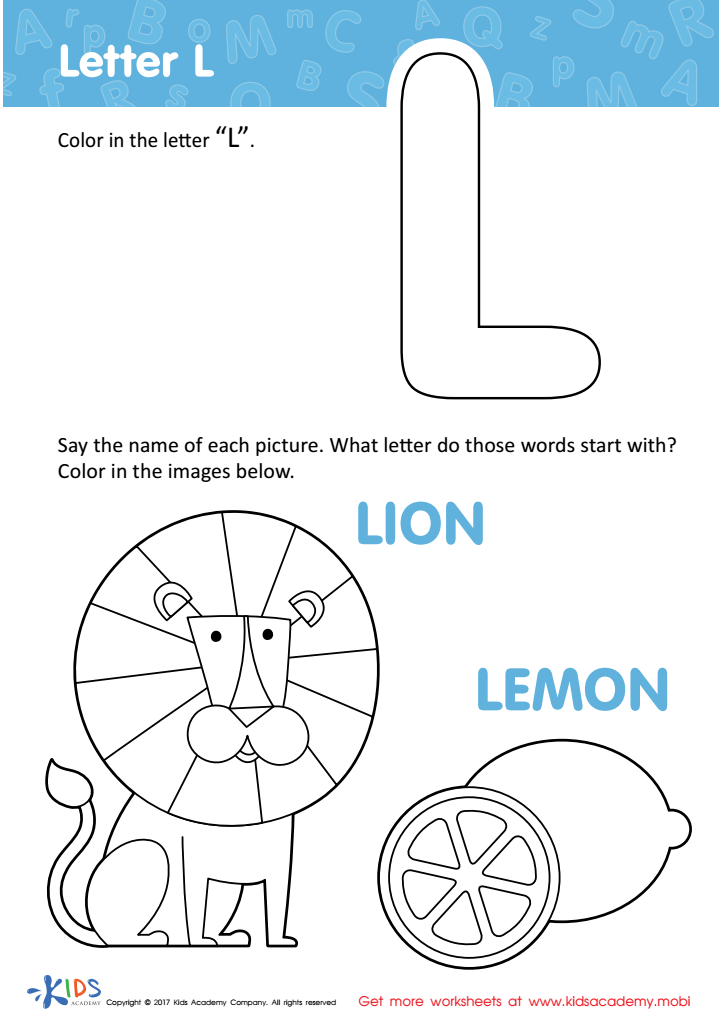
Letter L Coloring Sheet
 Assign to My Students
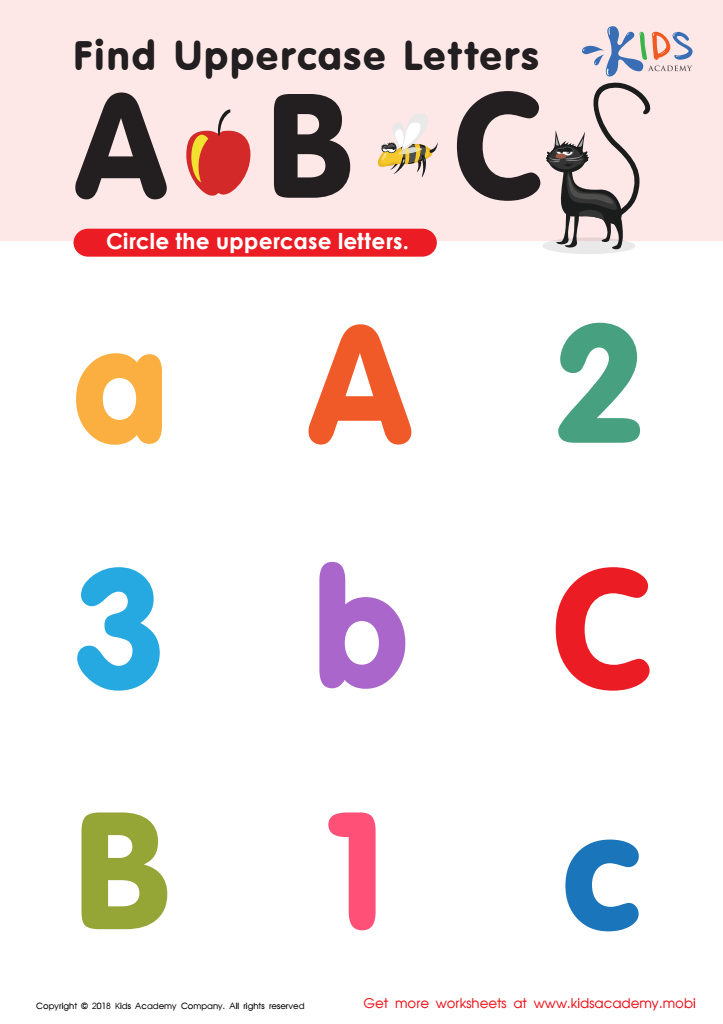
Find Uppercase Letters A, B, and C Worksheet
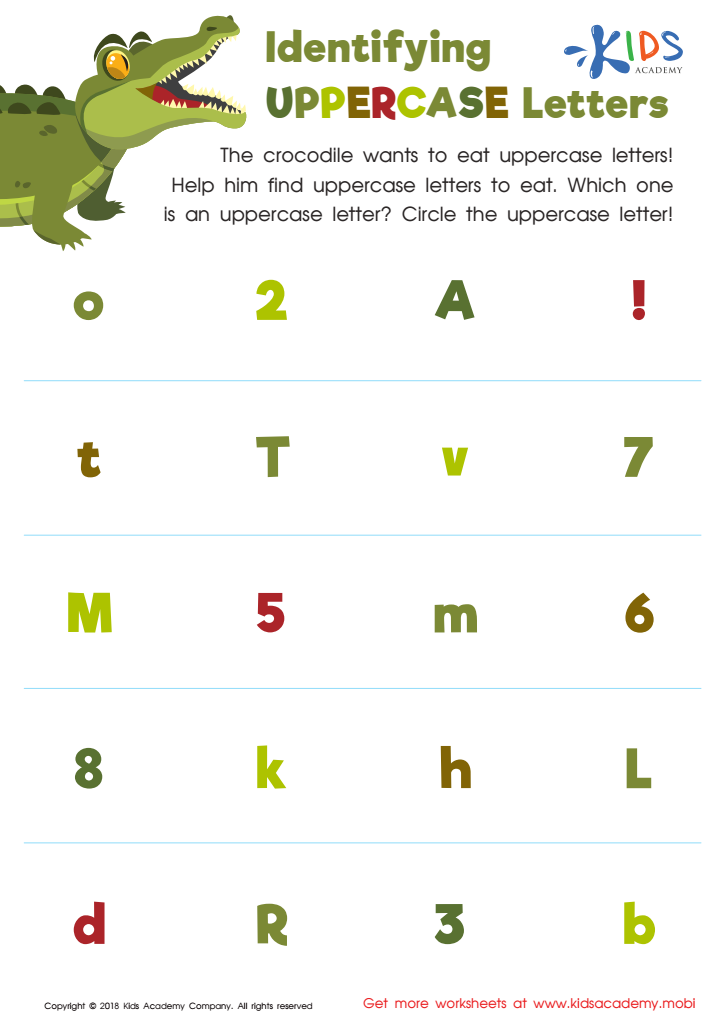
Identifying Uppercase Letters Worksheet
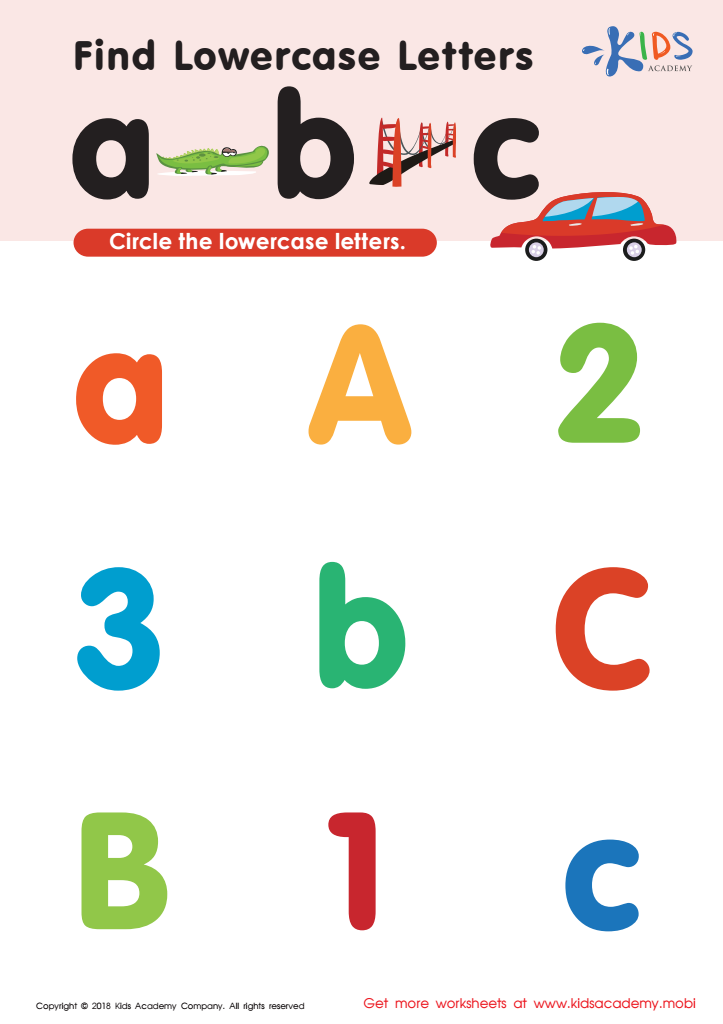
Find lowercase letters a b c Worksheet
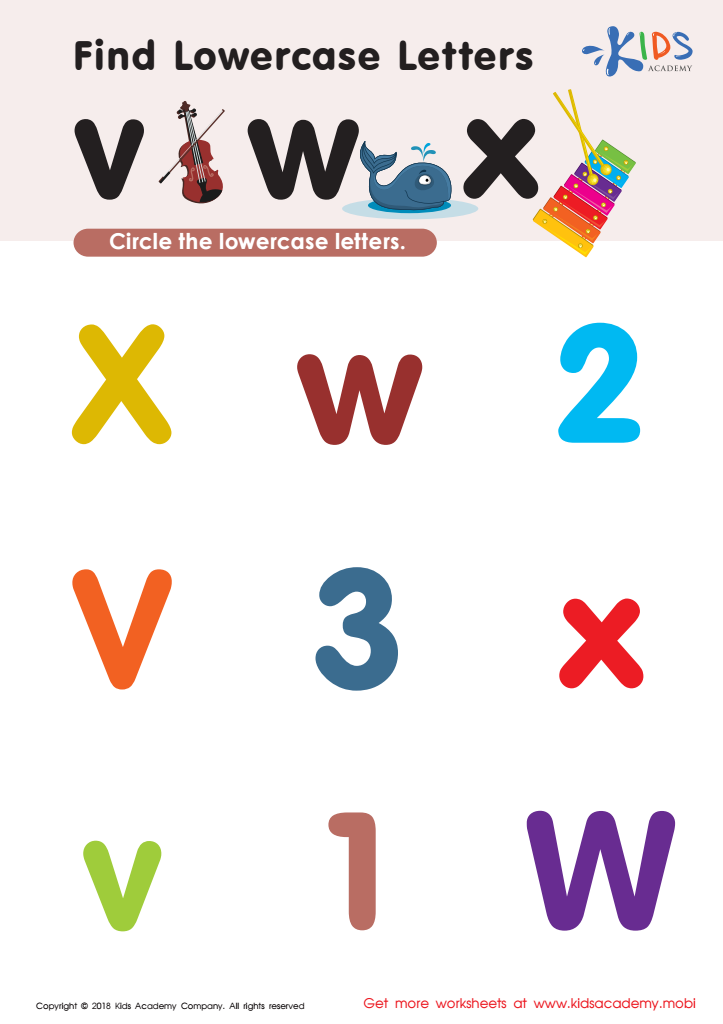
Find Lowercase Letters v w x Worksheet








Visual discrimination skills are crucial in the early development of children aged 3-4 as they are foundational for later academic achievement, particularly in reading and writing. At this age, children are just starting to become acquainted with the alphabet and the way letters function together to create words. Developing normal letter recognition skills allows them to distinguish between different letters and understand that each letter has a unique shape, name, and sound associated with it.
Visual discrimination skills enable children to notice the minute differences and similarities between shapes, sizes, and orientations of letters. This is essential not only for letter recognition but also for the development of handwriting skills. Without strong visual discrimination, children might confuse similar-looking letters such as 'b' and 'd' or 'p' and 'q', leading to challenges in reading proficiency.
Parents and teachers should care about strengthening these skills because early interventions can prevent future learning difficulties. Practicing visual discrimination activities, like matching games, puzzles, or letter tracing, can support cognitive development and bolster early literacy skills. By paying attention to visual discrimination abilities and letter recognition milestones in preschool-aged children, educators and parents can provide a strong educational foundation, setting the stage for future academic success.








