Vocabulary development Normal Letter Sounds Worksheets for Ages 3-4
5 filtered results
-
From - To
Discover our engaging "Vocabulary Development Normal Letter Sounds Worksheets" designed specifically for children ages 3-4. These worksheets provide a fun and interactive way to enhance early literacy skills through targeted letter sound activities. By encouraging phonemic awareness, children strengthen their understanding of how letters correlate with sounds, which is essential for reading readiness. Each worksheet features vibrant illustrations and relatable vocabulary to captivate young learners. Ideal for parents and educators, these resources support skill development in a playful manner, making learning enjoyable. Explore our collection to help your child build a strong foundation in vocabulary and language skills from an early age!
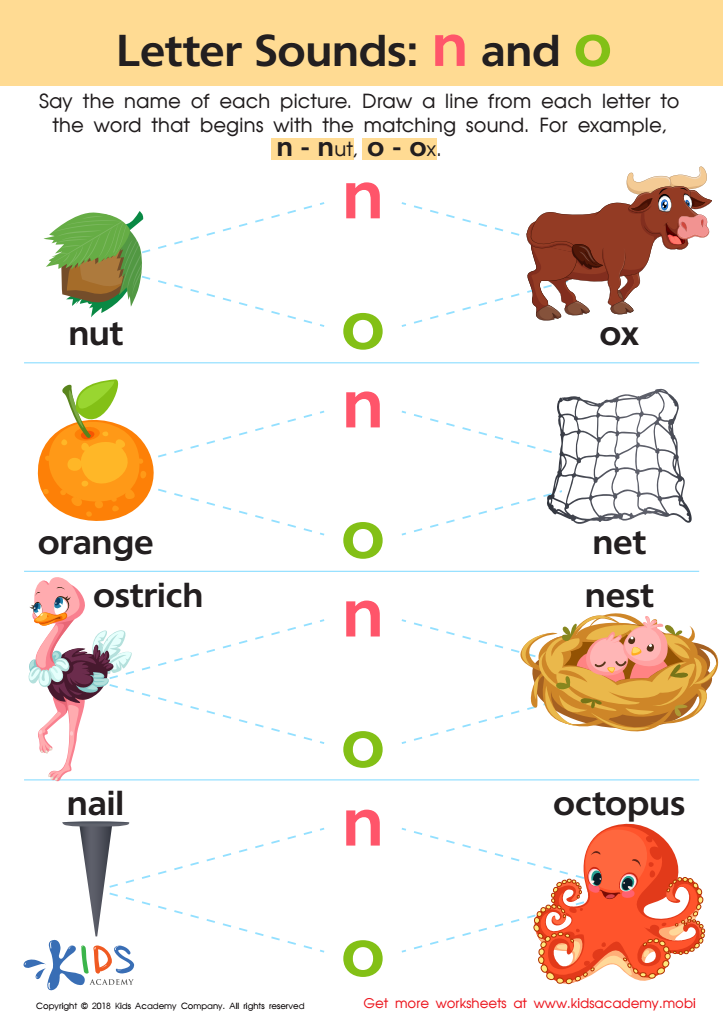
Letter N and O Sounds Worksheet
 Assign to My Students
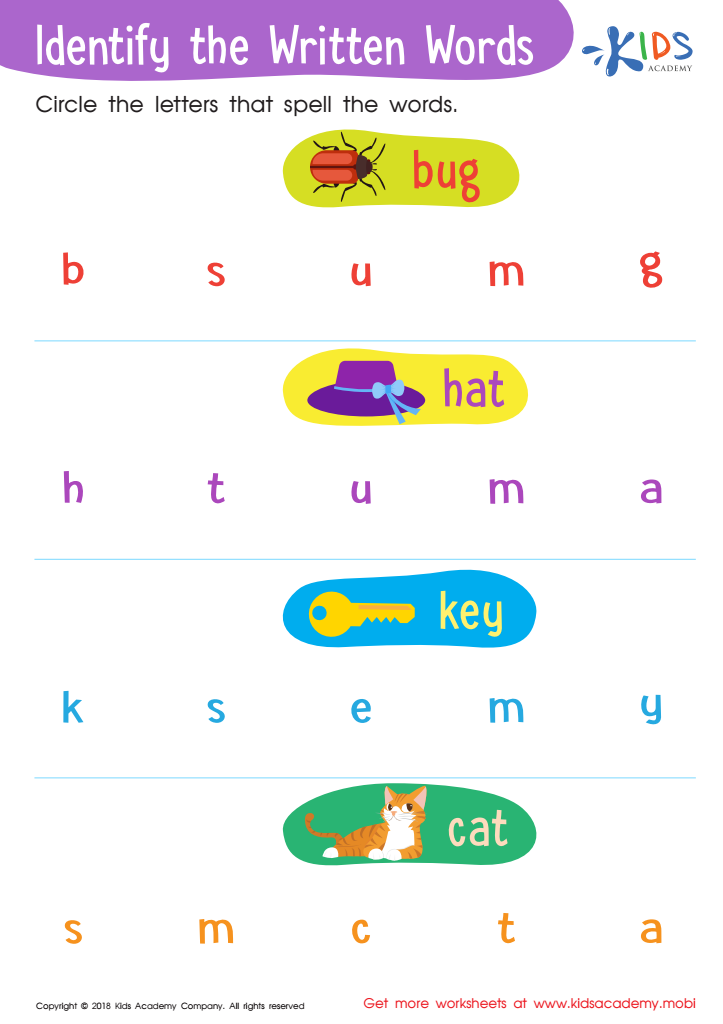
Identify the Written Words Worksheet
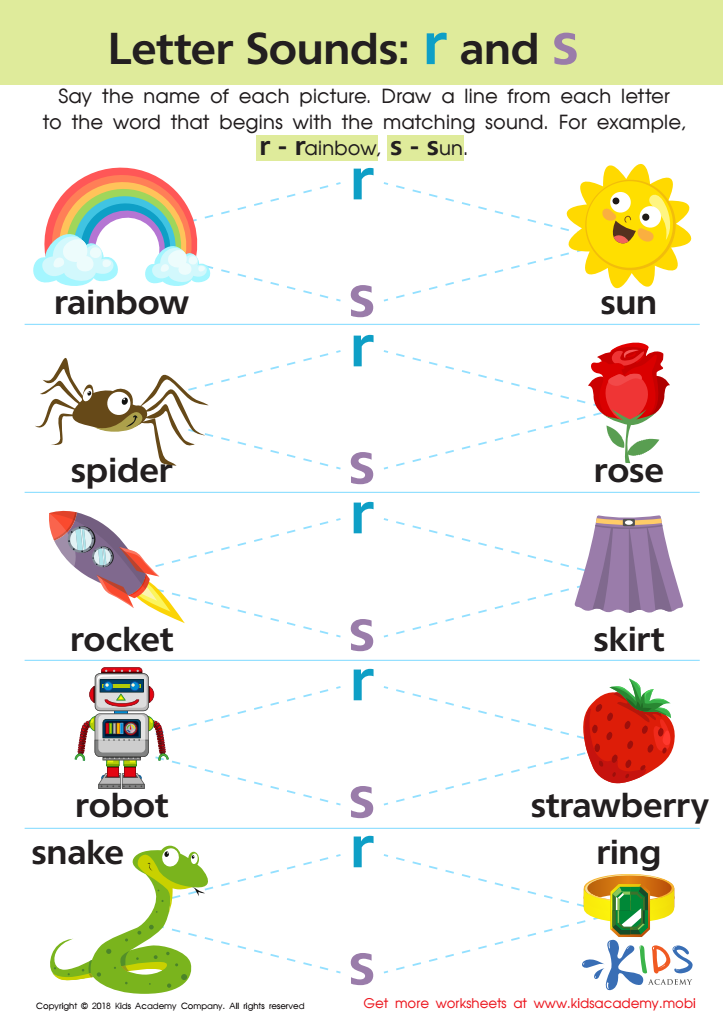
Letter R and S Sounds Worksheet
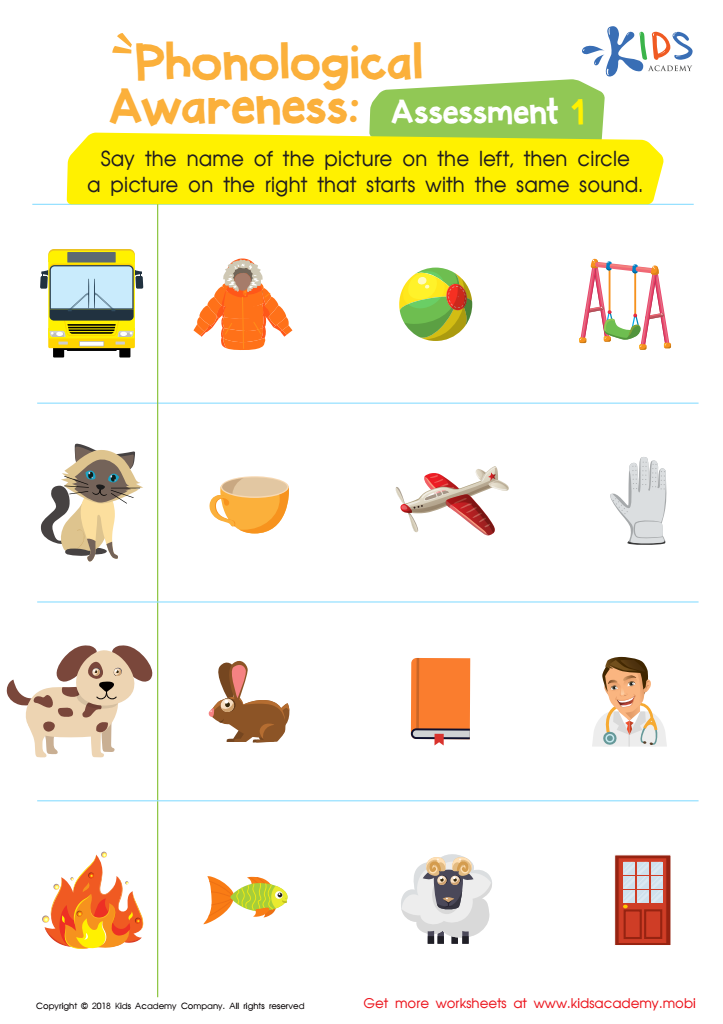
Phonological Awareness: Assessment 1 Worksheet
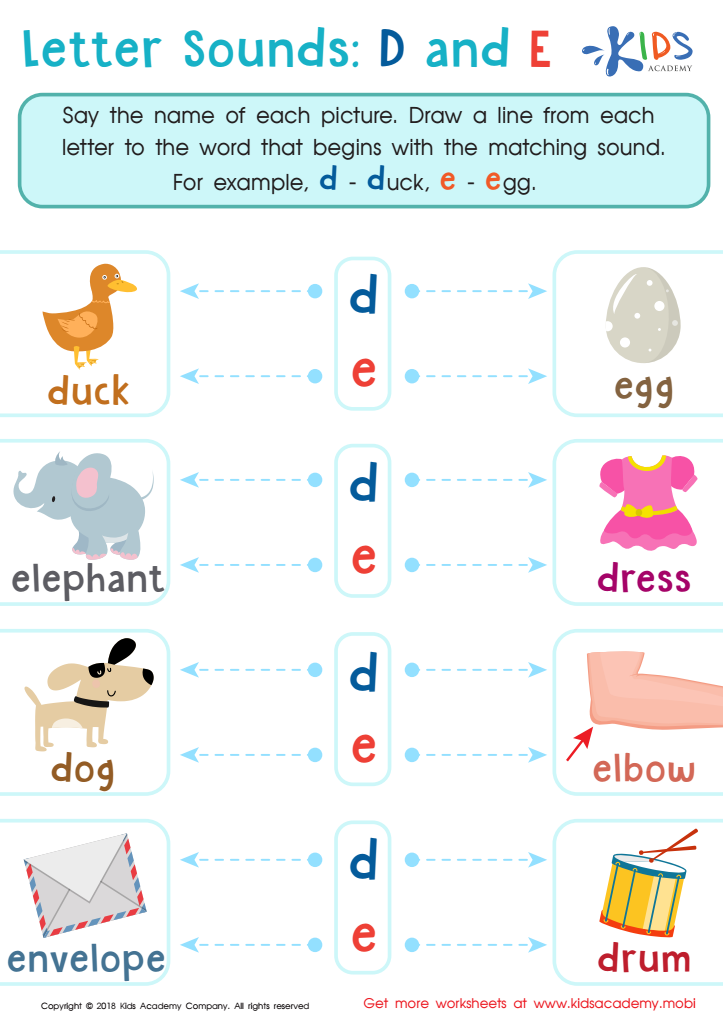
Letter D and E Sounds Worksheet








Vocabulary development and phonemic awareness, particularly regarding normal letter sounds, are critical for children aged 3-4 as they form the foundation for future literacy skills. During these formative years, toddlers and preschoolers are rapidly acquiring language, learning to communicate, and developing cognitive skills. Exposure to a rich vocabulary enhances their ability to express thoughts, share emotions, and engage in conversations, laying the groundwork for effective verbal communication later in life.
Teaching normal letter sounds is equally important as it introduces the basics of reading and writing. When children understand the connection between letters and their sounds, they become more proficient in word recognition, which is essential for reading fluency. Engaging in activities like rhymes, songs, and playful phonetics helps solidify these concepts while making learning enjoyable.
Parents and teachers play a vital role in this developmental stage by creating a language-rich environment filled with interactive storytelling, singing, and letter games. Encouraging children to explore and experiment with sounds not only cultivates curiosity but also boosts their self-confidence as they begin to decode words independently. Ultimately, fostering vocabulary and sound recognition paves the way for academic success in reading and beyond, emphasizing why it is crucial for caregivers to prioritize this aspect of early education.






