Reading comprehension Normal Long Vowels Worksheets for Ages 3-4
4 filtered results
Difficulty Level
Grade
Age
-
From - To
Subject
Activity
Standards
Enhance your child's early literacy skills with our Reading Comprehension Normal Long Vowels Worksheets designed for ages 3-4. These engaging worksheets introduce young learners to long vowel sounds through fun activities that build foundational reading skills. Each worksheet is crafted to improve reading comprehension while making learning enjoyable. With vibrant illustrations and appealing exercises, children will easily grasp vowel concepts, aiding in the development of confident readers. Perfect for preschool and early kindergarten, these worksheets offer a combination of educational content and entertainment to foster a love for reading and learning. Explore now and watch your child’s reading skills flourish!
Favorites
With answer key
Interactive
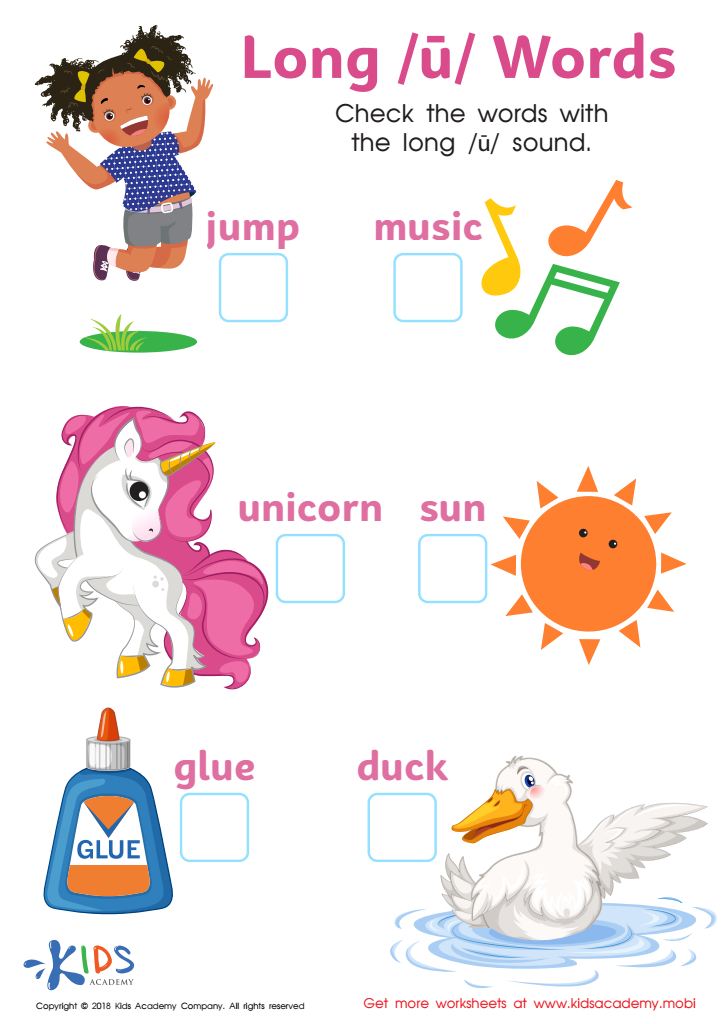
Long U Words Reading Worksheet
Emerging readers will love this free worksheet! It's a great way to practice distinguising between long and short vowel sounds, while identifying high-frequency words. They'll also get to develop fine motor skills and gain confidence in decoding and reading skills.
Long U Words Reading Worksheet
Worksheet
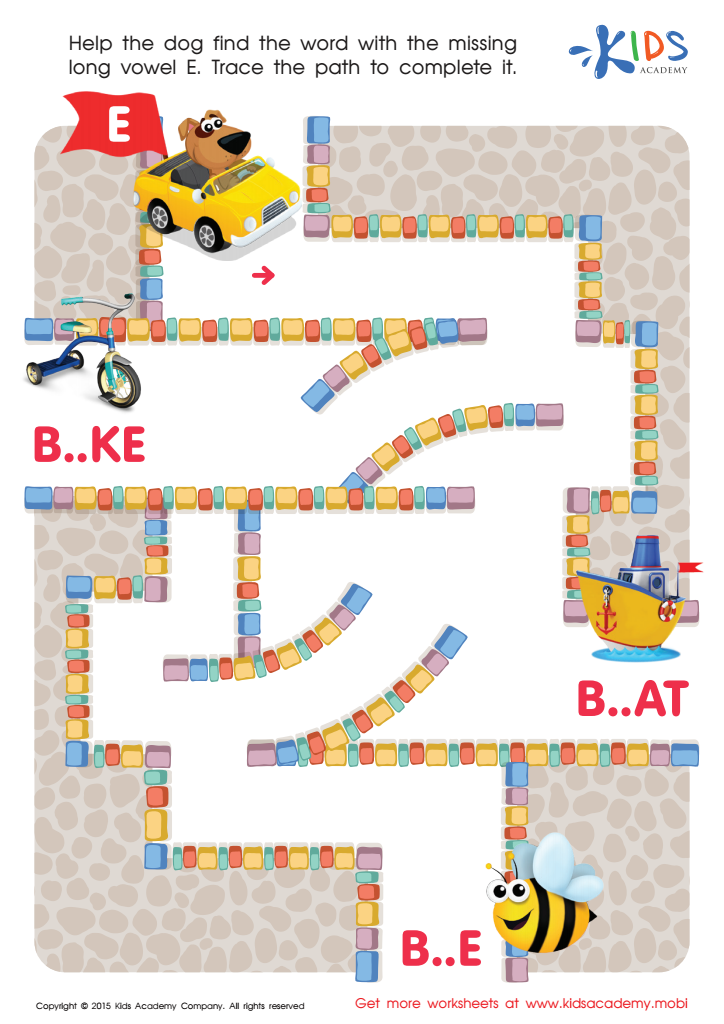
Long Vowel Sound E Worksheet
Practice distinguishing long and short vowel sound E with this free printable! Kids must complete the word “bee” by tracing the maze and adding the missing letter E. Remind them to say the word aloud to help sharpen their phonics ear. Get more phonics fun with the vowel sound E here.
Long Vowel Sound E Worksheet
Worksheet
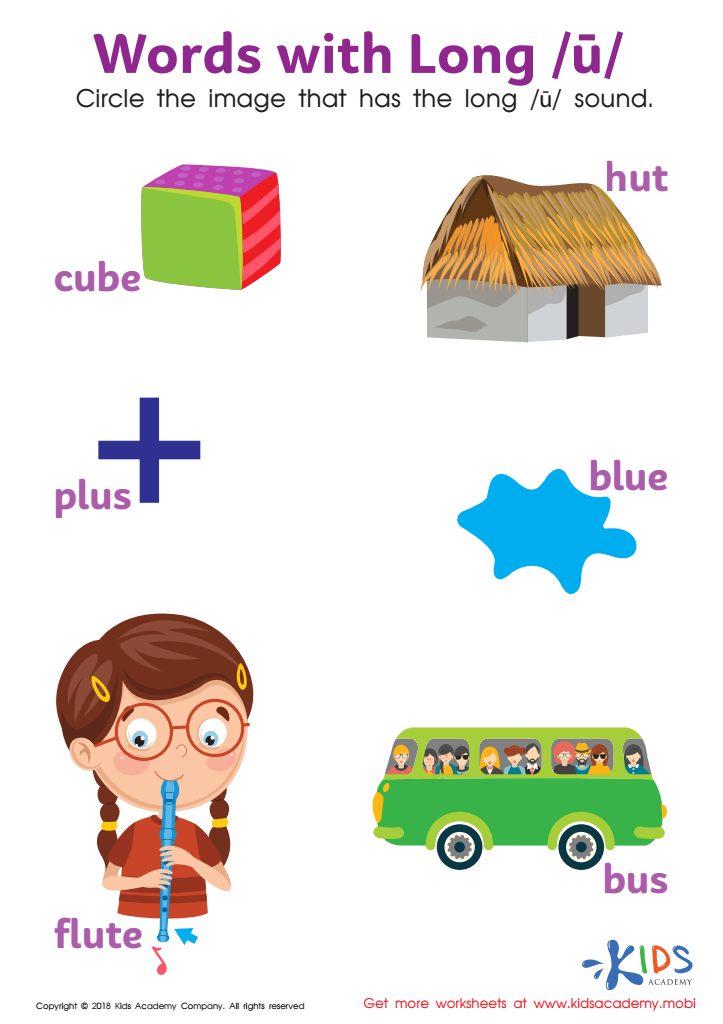
Words with Long U Reading Worksheet
Help your new reader master vowel recognition with this fun worksheet. By using picture clues and practicing fine motor skills, they'll learn to differentiate between words with the long and short «u» sound. Your learner will also get to practice vowel discrimination in high-frequency words. It's a great way to learn the importance of vowels in reading!
Words with Long U Reading Worksheet
Worksheet
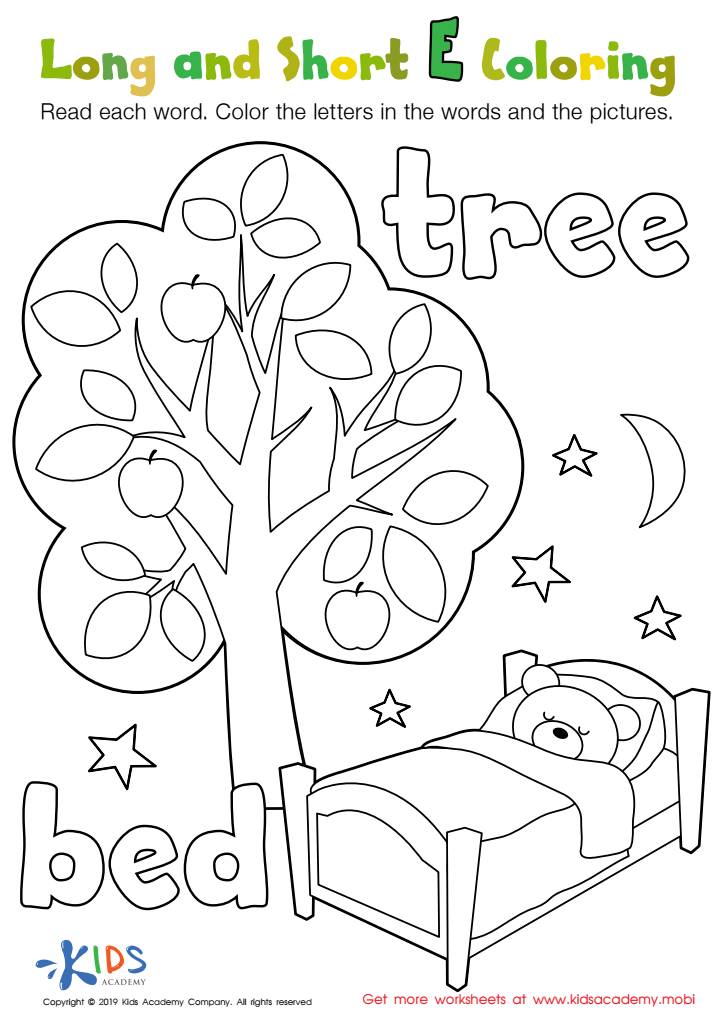
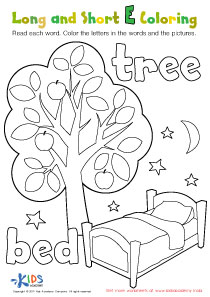
Long and Short E Worksheet
This fun printout makes learning phonics enjoyable for Grade 3 students. Get them to read the words “tree” and “bed” to recognize the different sounds of the letter “E”. After hearing the words they can color the words and the pictures to understand differences between long and short vowels.
Download (PDF)
 Assign to My Students
Assign to My Students
Long and Short E Worksheet
Worksheet
Join Kids Academy for Free
Who is primarily going to use this learning content?



Reading comprehension and normal long vowel recognition are critical components of early literacy for children aged 3-4. At this tender age, children's brains are highly receptive to new information, and establishing a strong foundation in reading skills can set the stage for future academic success. Long vowels, such as the "a" in "cake" or the "o" in "cone," are fundamental building blocks of the English language. Understanding them early on helps children differentiate between similar words and aids in developing accurate pronunciation.
Being able to recognize and pronounce long vowels correctly improves children’s reading fluency and comprehension. When kids grasp these concepts, they are better equipped to decode new words independently, which fosters a sense of accomplishment and encourages a love for reading. Moreover, comprehension isn’t just about reading words; it also involves understanding their meanings and context. Exposure to various vowel sounds helps young learners grasp nuances in language and bolsters their cognitive development.
Parents and teachers play a crucial role in this learning process by providing a rich, supportive environment that includes phonics games, engaging stories, and interactive reading sessions. Investing time in these activities ensures children are not just learning to read but developing a lifelong appreciation for literature, enabling them to succeed academically and beyond.