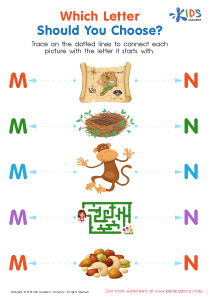
Alphabet sequencing Normal Lowercase/Small Letters Worksheets for Ages 3-4
3 filtered results
-
From - To
Discover our engaging Alphabet Sequencing Normal Lowercase/Small Letters Worksheets designed specifically for children aged 3-4. These interactive resources help young learners to comfortably recognize and master the sequence of the English alphabet in lowercase letters. Featuring vibrant illustrations and simple activities, each worksheet encourages preschoolers to practice writing, tracing, and identifying letters. As they complete these fun exercises, children develop essential language skills, enhance their fine motor abilities, and boost their confidence. Perfect for parents and educators, our worksheets provide a seamless learning experience, making it easy to integrate alphabet sequencing into your child’s early education curriculum. Start their learning journey today!
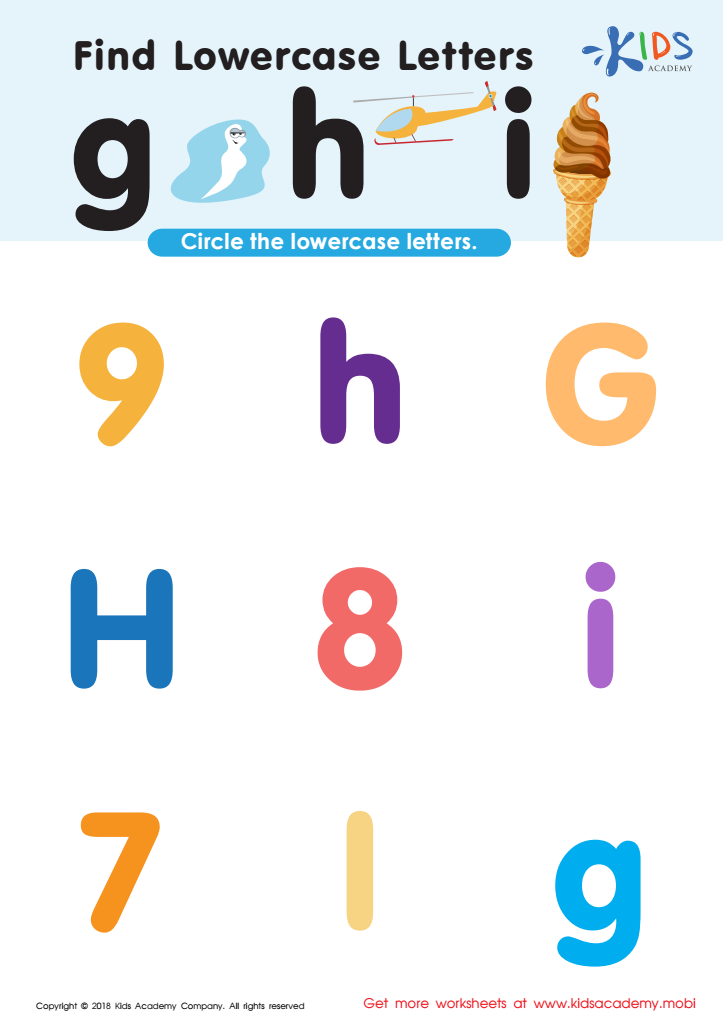
Find Lowercase Letters g h i Worksheet
 Assign to My Students
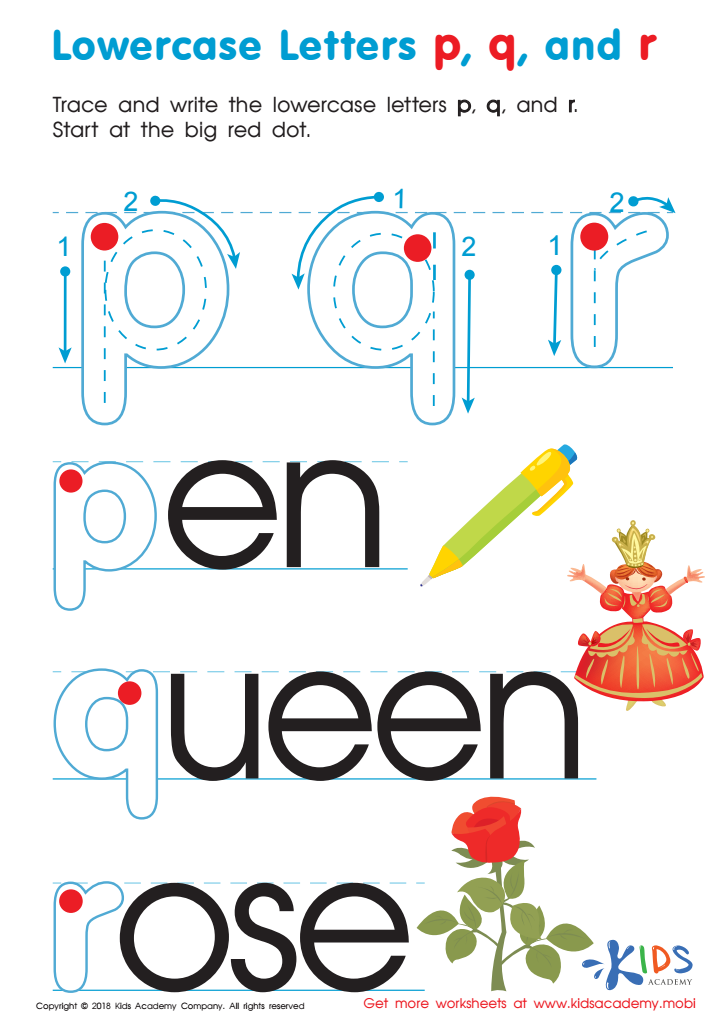
Lowercase Letters p q r Worksheet
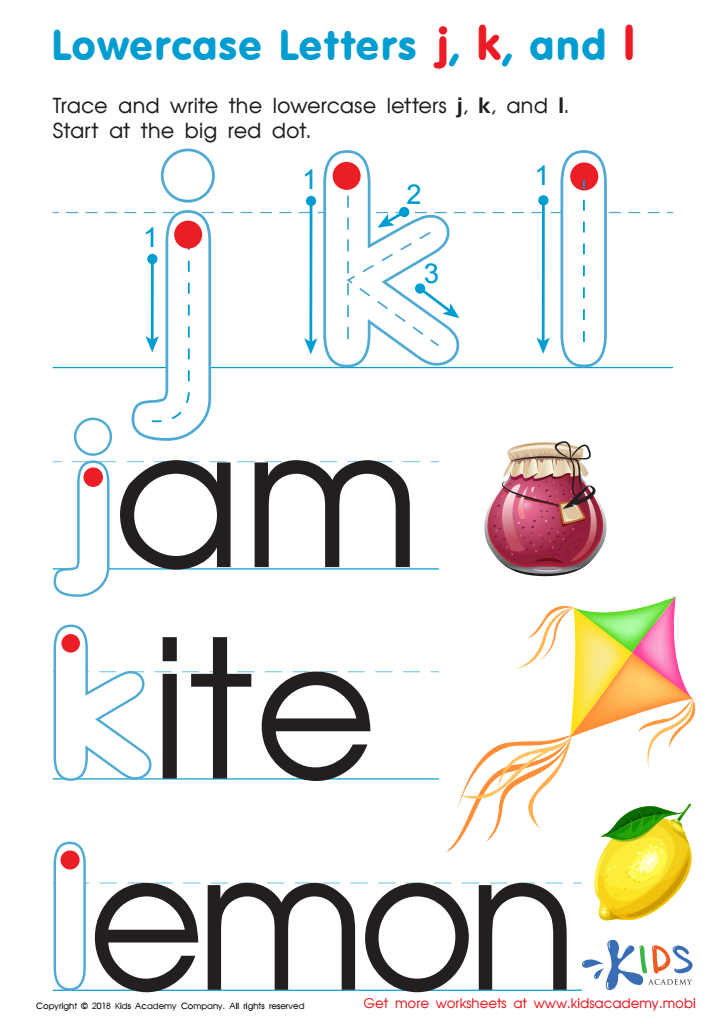
Lowercase Letters j k l Worksheet


Alphabet sequencing of normal lowercase letters is crucial for children aged 3-4 as it lays the foundational skills for literacy and communication. At this age, children are developing their language skills and beginning to understand that written language carries meaning. Teaching them the correct sequence of lowercase letters enables them to recognize letters more intuitively, which is vital for reading and writing.
Moreover, learning lowercase letters helps children with phonemic awareness, enabling them to associate sounds with letters. As they begin to form words, recognizing the lowercase format, which is predominant in written text, supports their reading fluency.
Additionally, early exposure to lowercase alphabetical sequencing can improve fine motor skills through activities such as tracing and writing letters. It sparks curiosity and encourages participation in learning activities, fostering a positive attitude toward education.
Furthermore, this knowledge aids future academic success, as children who master letter sequencing are generally better prepared for phonics and spelling lessons. In summary, parents and teachers should prioritize lowercase letter sequencing in early education as it paves the way for confident communicators and engaged learners in reading and writing.