Phonics development Normal Phonics Worksheets for Ages 3-4
3 filtered results
-
From - To
Our "Phonics Development Normal Phonics Worksheets for Ages 3-4" are thoughtfully designed to foster early reading skills, ensuring children experience a fun and engaging introduction to phonics. These worksheets offer a variety of activities that help young learners recognize letters, match sounds to pictures, and begin constructing simple words. By focusing on essential phonics skills, our materials aim to build a strong foundation for literacy, capturing the curious minds of preschoolers while providing parents and educators effective tools for early education. Start your child’s phonics journey and cultivate a lifelong love for reading with us!
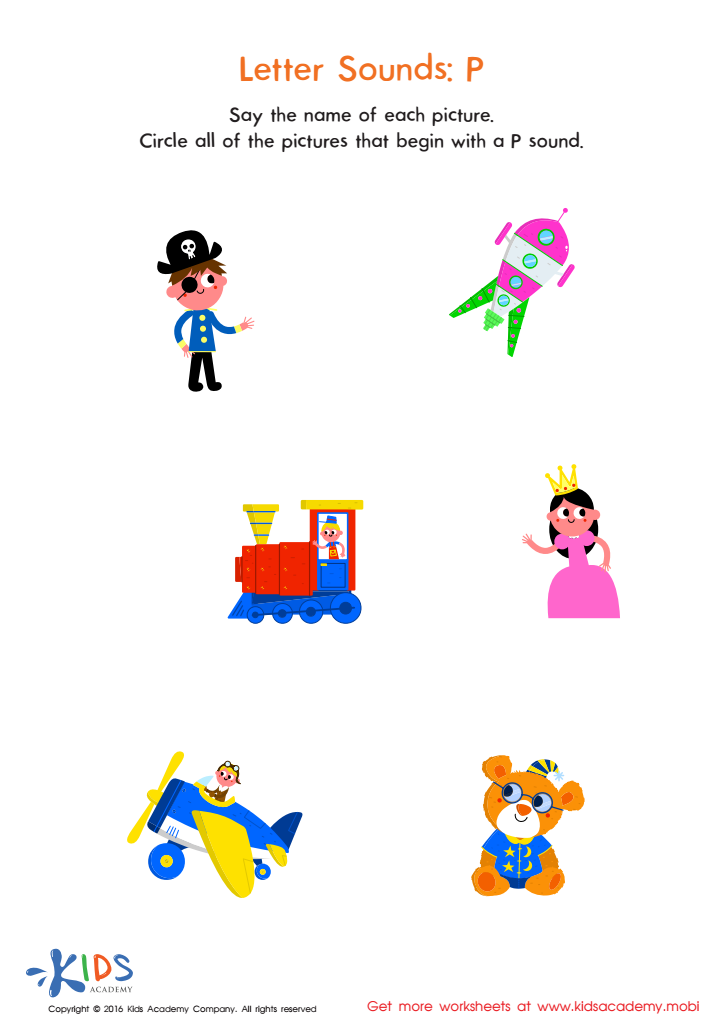
Letter P Sound Worksheet
 Assign to My Students
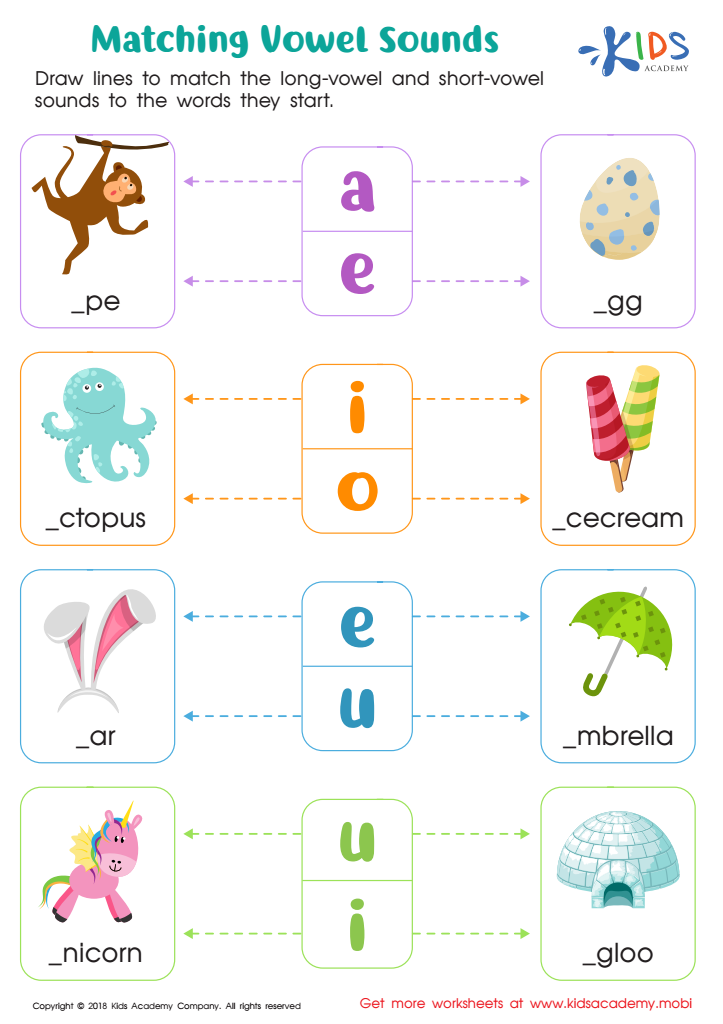
Matching Vowel Sounds Worksheet
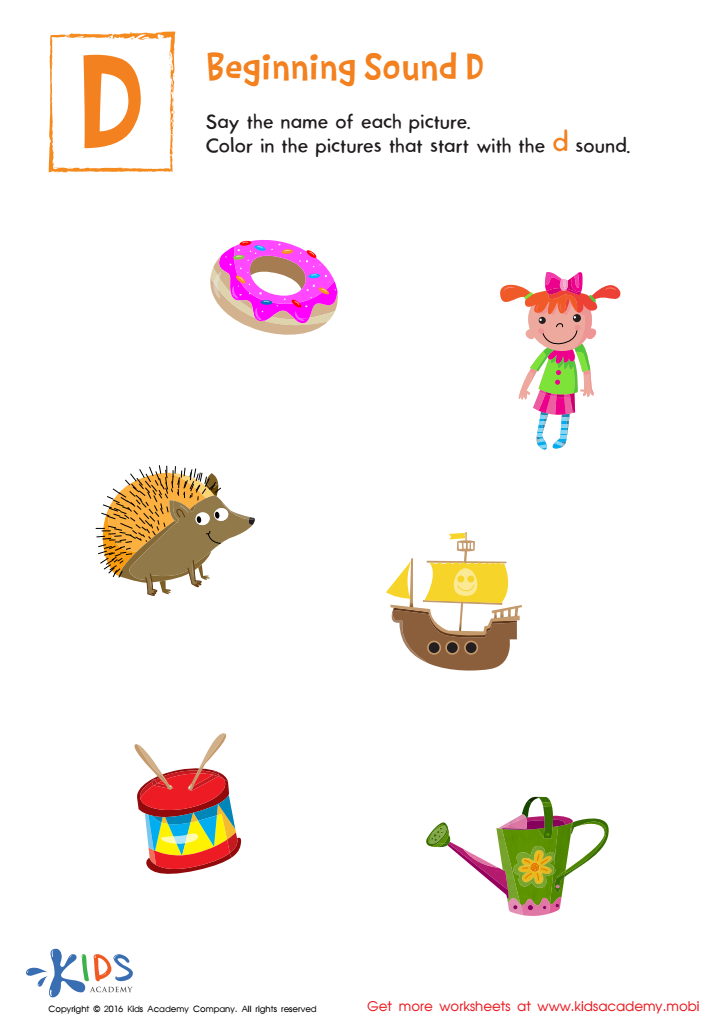
Beginning Sound D Worksheet








Phonics development is crucial for young children, particularly those aged 3-4, as it lays the foundational skills needed for reading and writing. Phonics involves understanding the relationship between letters and sounds, a key component in enabling children to decode words, both in print and writing. For parents and teachers, prioritizing phonics at this stage ensures children develop strong literacy skills early on, which is essential for their academic success and confidence.
One significant reason to focus on phonics is that it helps children recognize patterns in words, making it easier for them to read fluently and with comprehension. Early mastery of phonics can lead to smoother learning experiences as the child progresses to more complex texts. Additionally, phonics enhances children's ability to spell, by linking sounds to corresponding letters, enabling them to construct words accurately.
Moreover, early phonics education helps children develop better listening skills, attention to detail, and critical thinking, as they learn to distinguish between different sounds and their associated letters. These skills not only contribute to literacy but also to overall cognitive development.
Implementing phonics development in early education is not just an academic necessity; it fosters a love for reading and learning, encouraging a lifelong engagement with books and knowledge. This early literacy boost ultimately supports children in becoming successful, confident learners ready to tackle future educational challenges.







