Phonics Skills Normal Short Vowels Worksheets for Ages 3-4
3 filtered results
-
From - To
Explore our engaging Phonics Skills Normal Short Vowels Worksheets designed specifically for children ages 3-4! These worksheets help young learners develop essential reading skills by focusing on short vowel sounds crucial for phonics mastery. Each activity encourages children to identify, match, and practice short vowels through interactive exercises that spark their curiosity and boost confidence. With colorful illustrations and age-appropriate content, these worksheets make learning fun and effective. Promote literacy skills early on and set the foundation for future reading success. Ideal for parents and teachers alike, our worksheets provide a great way to enhance learning through play!
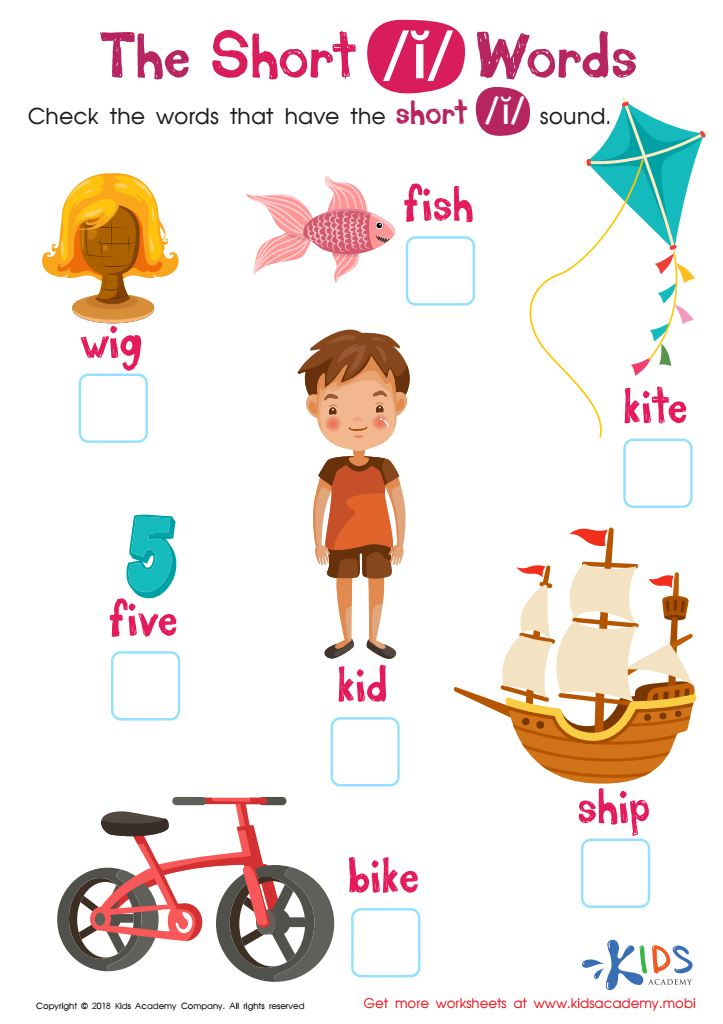
The Short I Words Reading Worksheet
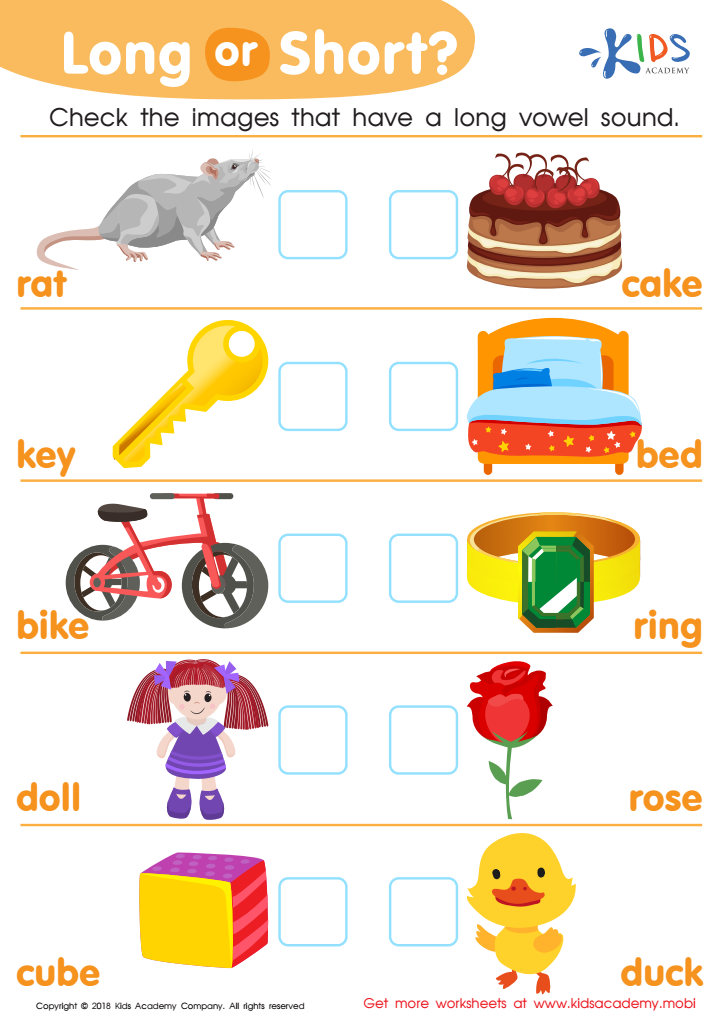
Long or Short Reading Worksheet

Long and Short E Worksheet
 Assign to My Students



Parents and teachers should care about phonics skills, specifically normal short vowels, for children aged 3-4 because these foundational skills are crucial for early literacy development. During this critical age, children are developing the ability to hear, identify, and manipulate the sounds in words. Short vowels—like those in "cat," "bed," "pig," "dot," and "sun"—are among the first phonetic sounds children encounter and are essential for constructing simple words.
A strong understanding of short vowels enhances children's reading and spelling abilities as they progress. Early mastery of these skills contributes to greater confidence in reading, leading to better comprehension and enjoyment of books. Children who grasp phonics quickly gain the ability to decode words independently, fostering a love for reading that can last a lifetime.
Additionally, phonics skills support cognitive development. Activities focusing on short vowels promote listening and differentiation skills, helping expand vocabulary and language comprehension. Engaging with these concepts through playful learning strategies, like songs and games, also fosters a positive learning environment. Encouraging phonics skills at this young age lays a solid foundation for future academic success and literacy, making it vital for caregivers to prioritize and incorporate phonics into everyday learning experiences.