Vocabulary enhancement Normal Short Vowels Worksheets for Ages 3-4
3 filtered results
-
From - To
Enhance your child's vocabulary with our engaging Short Vowels Worksheets tailored for ages 3-4. Designed to introduce young learners to the fundamentals of short vowel sounds, these worksheets foster early literacy skills. Featuring colorful illustrations, simple words, and fun activities, they make learning enjoyable and effective. Perfect for preschool and kindergarten students, these exercises build a strong foundation for reading and writing. Unlock your child’s potential and make learning to read a delightful journey with our expertly crafted resources that blend education with excitement. Start today and observe your little learner’s vocabulary grow effortlessly.
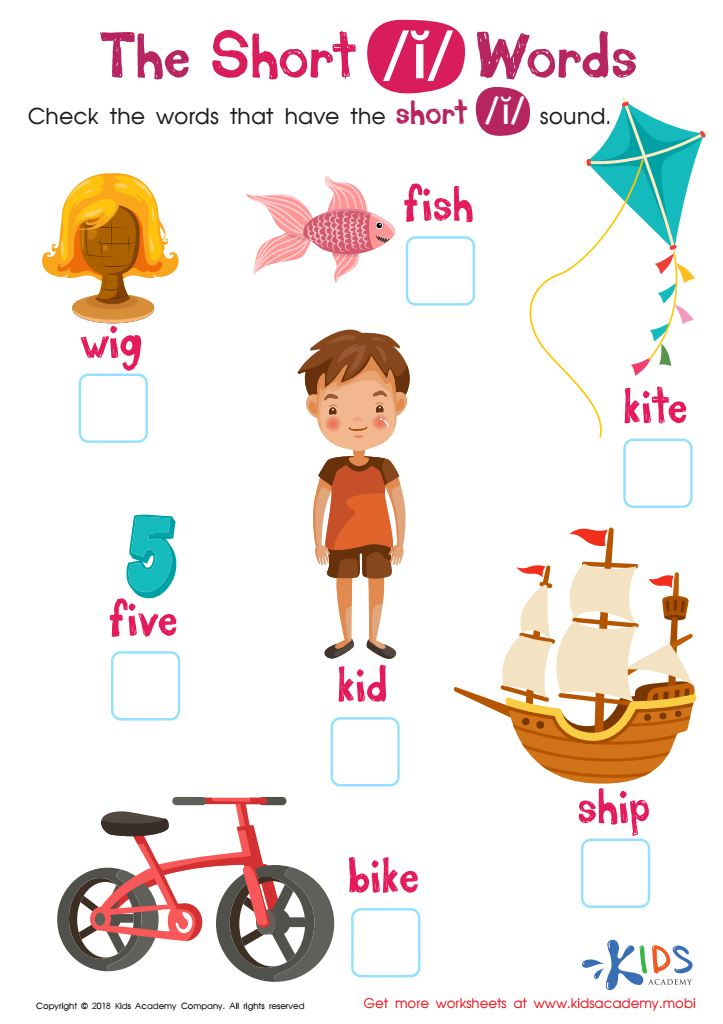
The Short I Words Reading Worksheet
 Assign to My Students
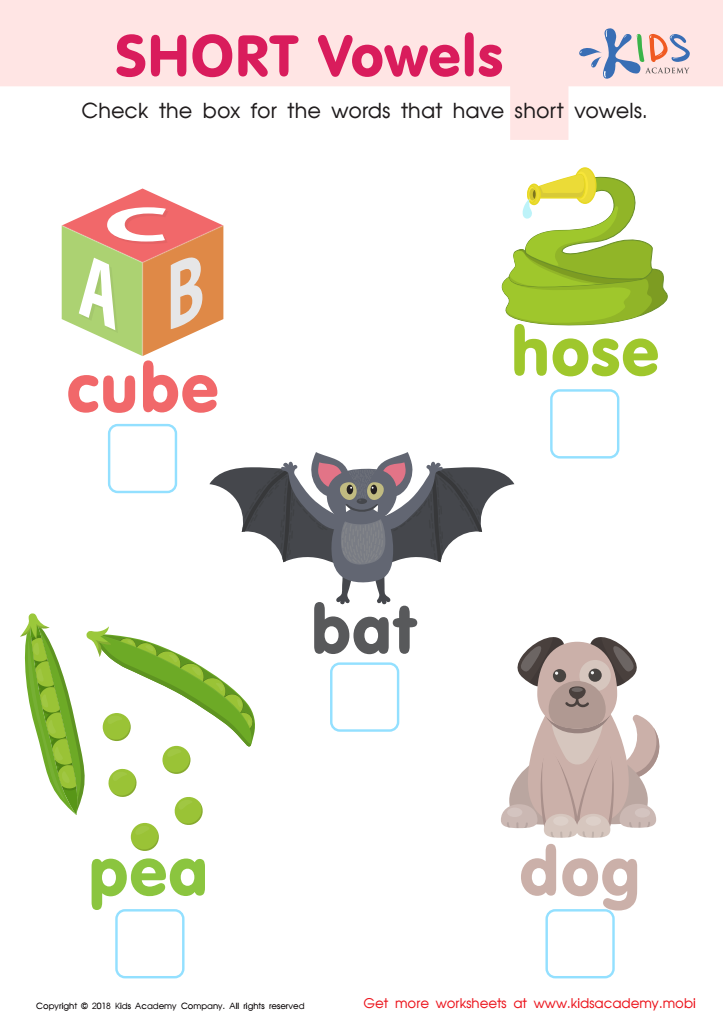
short vowels Worksheet
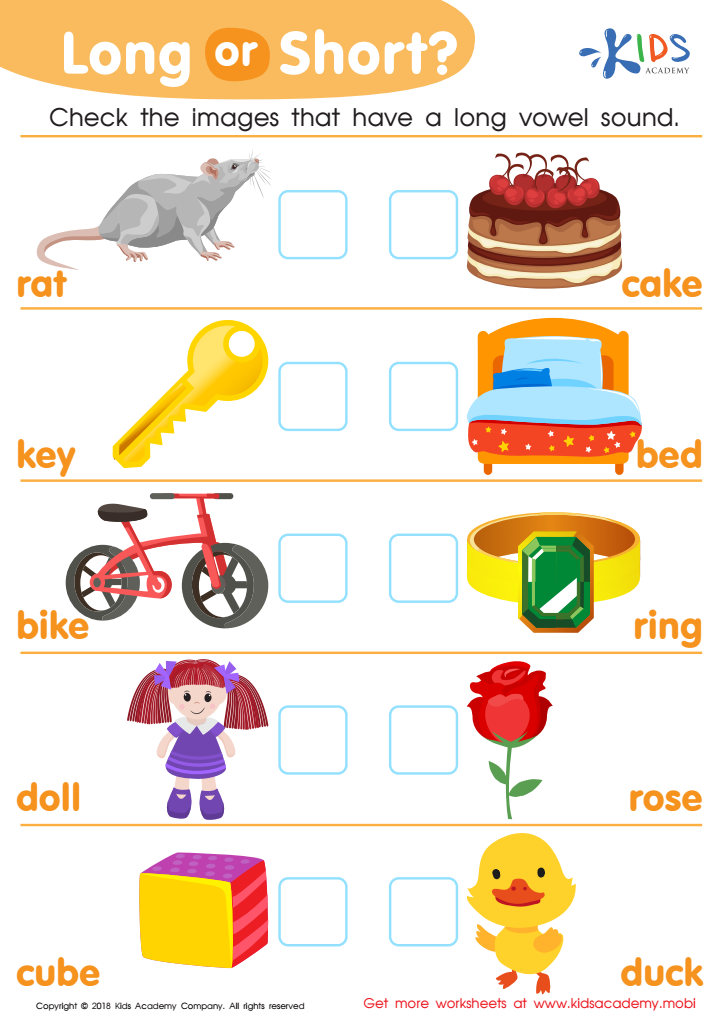
Long or Short Reading Worksheet



Focusing on vocabulary enhancement, particularly with normal short vowels, for children ages 3-4 is crucial for several foundational reasons. At this age, children's brains are highly receptive to new information, and vocabulary serves as the building blocks for effective communication and literacy. Enhancing their vocabulary with an emphasis on short vowels aids in phonemic awareness, which is the ability to recognize and manipulate sounds in spoken words. This awareness is a key precursor to reading skills.
Short vowels, such as "a" in "cat" and "e" in "bed," are fundamental sounds in English and appear frequently in early reading materials. When parents and teachers focus on these sounds, they help children develop accurate pronunciation, improve their ability to decode words, and recognize word patterns. This ultimately makes the process of learning to read smoother and less frustrating.
Moreover, a strong vocabulary can significantly boost a child's confidence and ability to engage in social interactions. They can express themselves more clearly, understand instructions better, and build stronger connections with peers and adults. Prioritizing vocabulary enhancement during these formative years also fosters a lifelong love for learning and reading, setting the stage for academic success and overall intellectual development.