Letter Tracing Practice Normal Tracing Letters Worksheets for Ages 3-4
3 filtered results
-
From - To
Enhance your child's early literacy skills with our "Letter Tracing Practice: Normal Tracing Letters Worksheets" designed for ages 3-4. These engaging worksheets provide a fun and effective way for young learners to practice letter formation and develop fine motor skills. Each worksheet features clear, traceable letters that encourage children to strengthen their pencil grip while fostering a love for writing. Ideal for at-home learning or preschool activities, our resources help prepare little ones for future reading and writing success. Start your child's educational journey with this essential tool and watch their confidence grow as they master the alphabet!

Lowercase Letters j k l Worksheet
 Assign to My Students
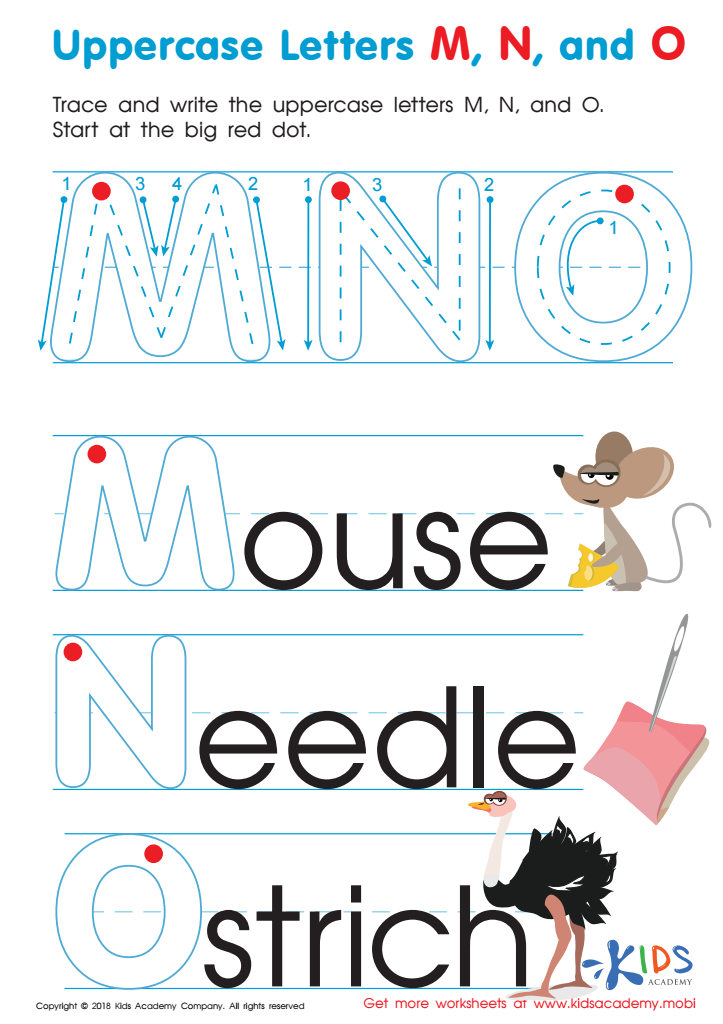
Uppercase Letters M, N, and O Worksheet
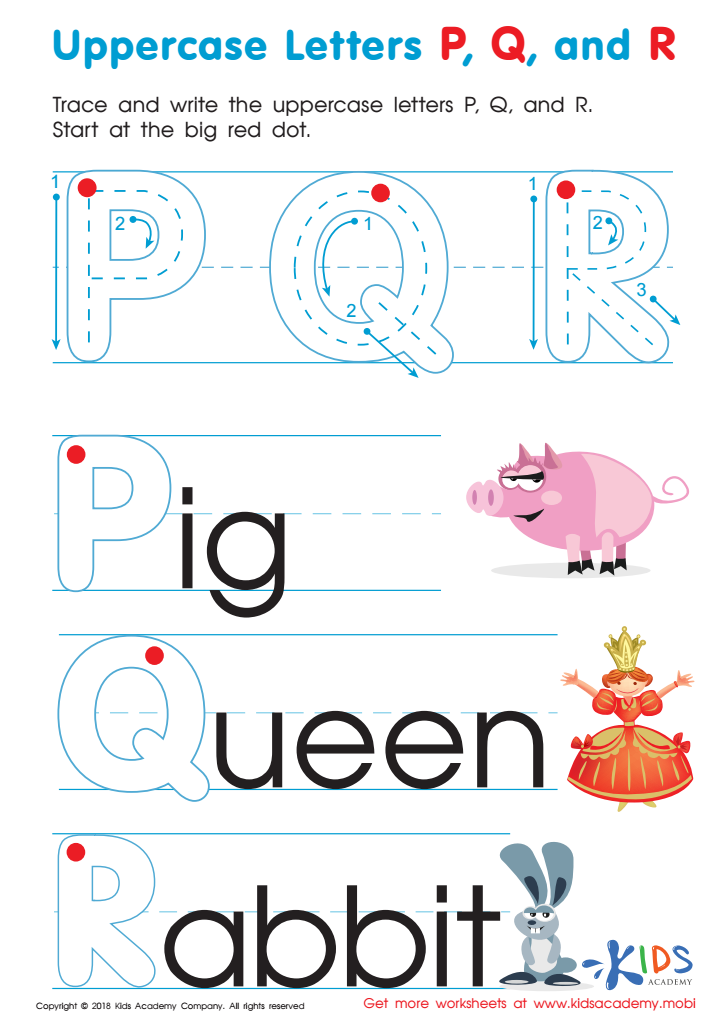
Uppercase Letters P, Q, and R Worksheet








Letter tracing practice is a critical component of early literacy development for children aged 3-4. First and foremost, it enhances fine motor skills, which are essential for writing and other daily tasks. Tracing letters helps young learners develop the hand-eye coordination and muscle memory necessary for forming letters correctly. In an age where writing is a fundamental skill, establishing a strong foundation is essential.
Additionally, letter tracing reinforces letter recognition and sound association, crucial components of early reading and spelling. When children trace letters, they not only see the shape but also practice saying the letters out loud, linking the visual representation to phonetic sounds. This multi-sensory approach engages various learning styles, ensuring a deeper comprehension of the alphabet.
For parents and teachers, supporting letter tracing practice is a meaningful way to foster a love for learning. Engaging children in this activity can promote patience and concentration, timing well with their developmental stage where play serves as a primary learning tool. Furthermore, such practices can pave the way for eventual independent writing skills, setting children up for future academic success. By prioritizing letter tracing at this crucial age, adults play a vital role in shaping confident and skilled learners ready for the challenges ahead.








