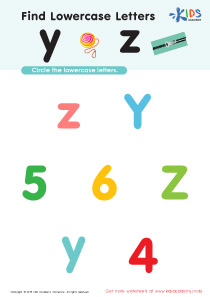
Alphabet familiarity Normal Uppercase Letters Worksheets for Ages 3-4
4 filtered results
-
From - To
Our "Alphabet Familiarity Normal Uppercase Letters Worksheets for Ages 3-4" are expertly designed to engage young learners in recognizing and understanding uppercase letters. Tailored to preschoolers, these worksheets offer fun and interactive activities that build foundational literacy skills. Children will enjoy tracing, matching, and identifying uppercase letters through colorful and captivating exercises. Perfect for early learners, our worksheets make alphabet learning an exciting adventure. Help your child excel in letter recognition and set the stage for future reading success with our comprehensive and educationally rich worksheet collection. Explore now and watch your child’s confidence soar!
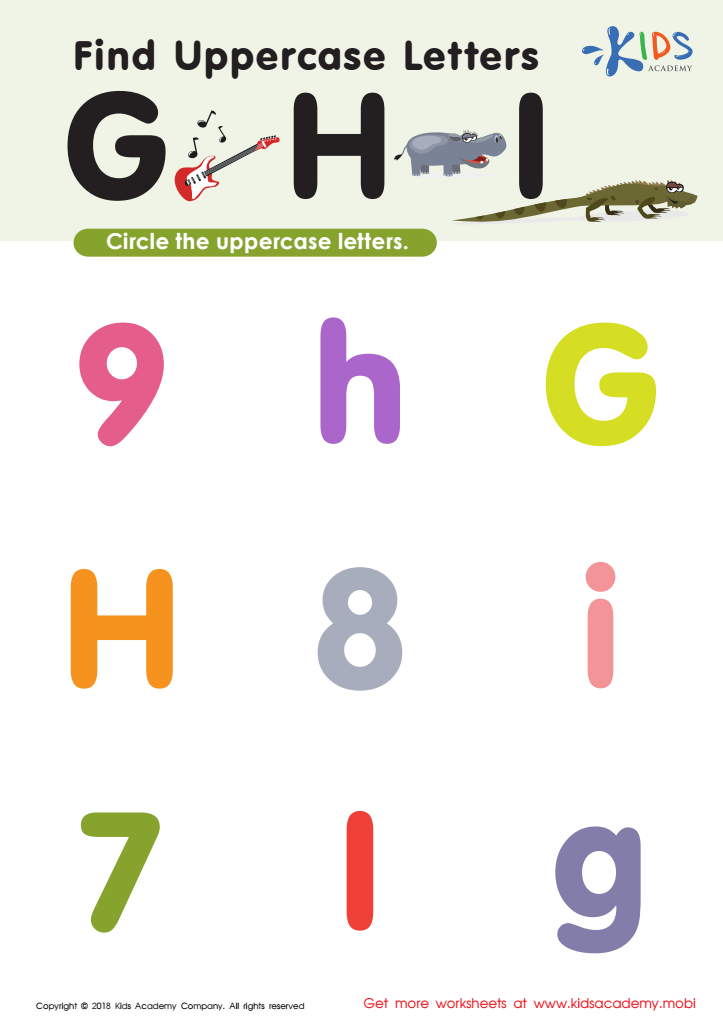
Find Uppercase Letters G, H, and I Worksheet
 Assign to My Students
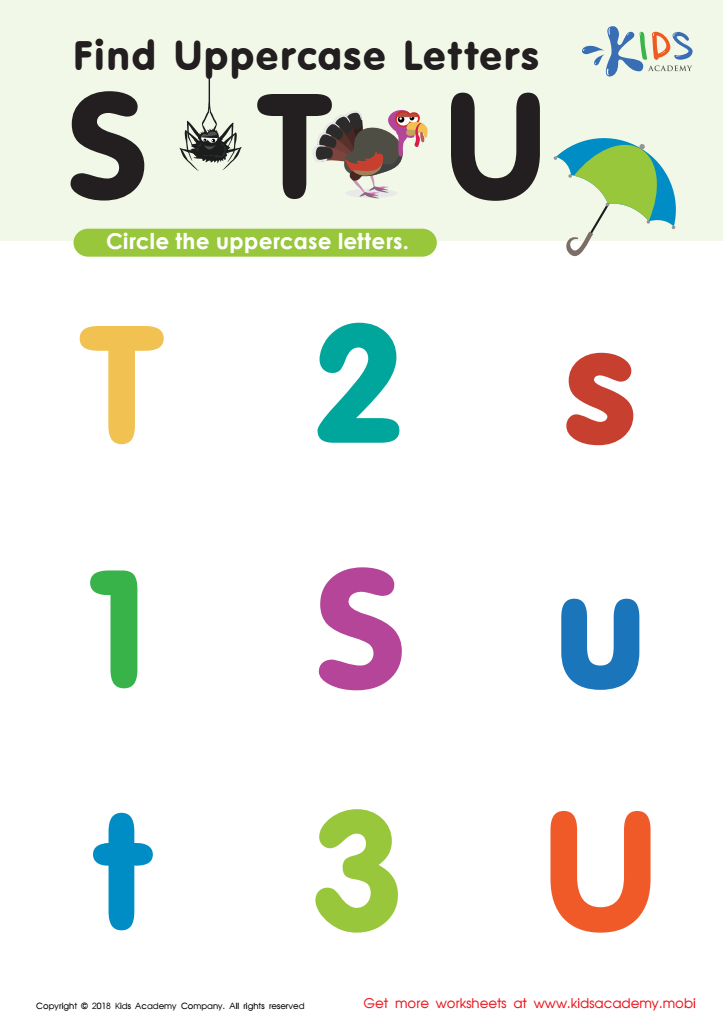
Find Uppercase Letters Worksheet
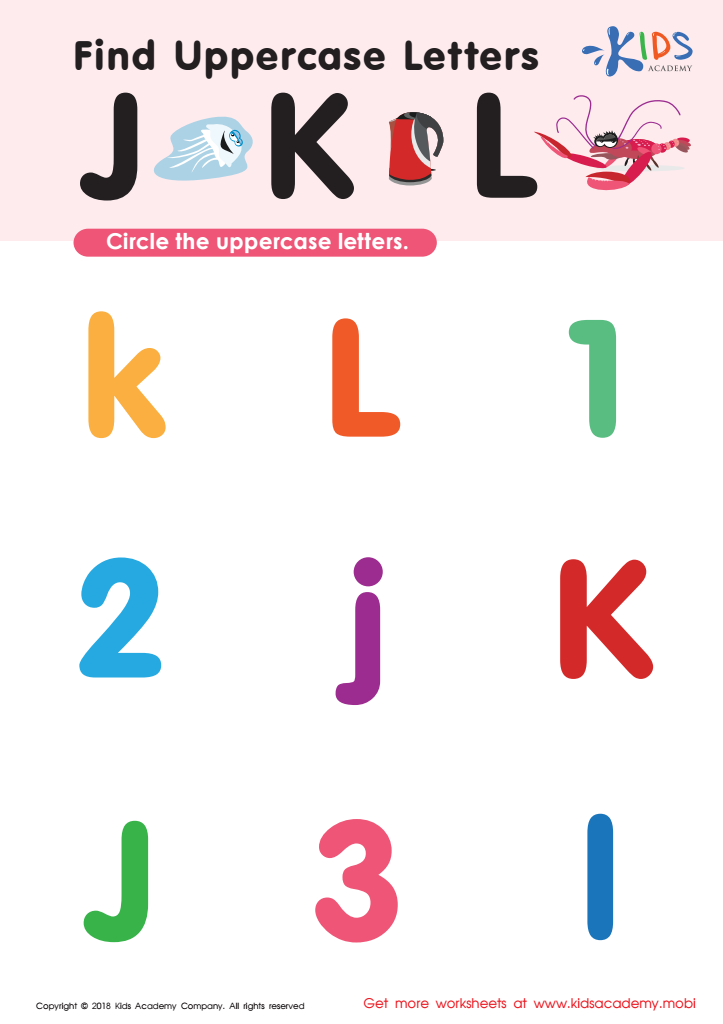
Find Uppercase Letters J, K, and L Worksheet
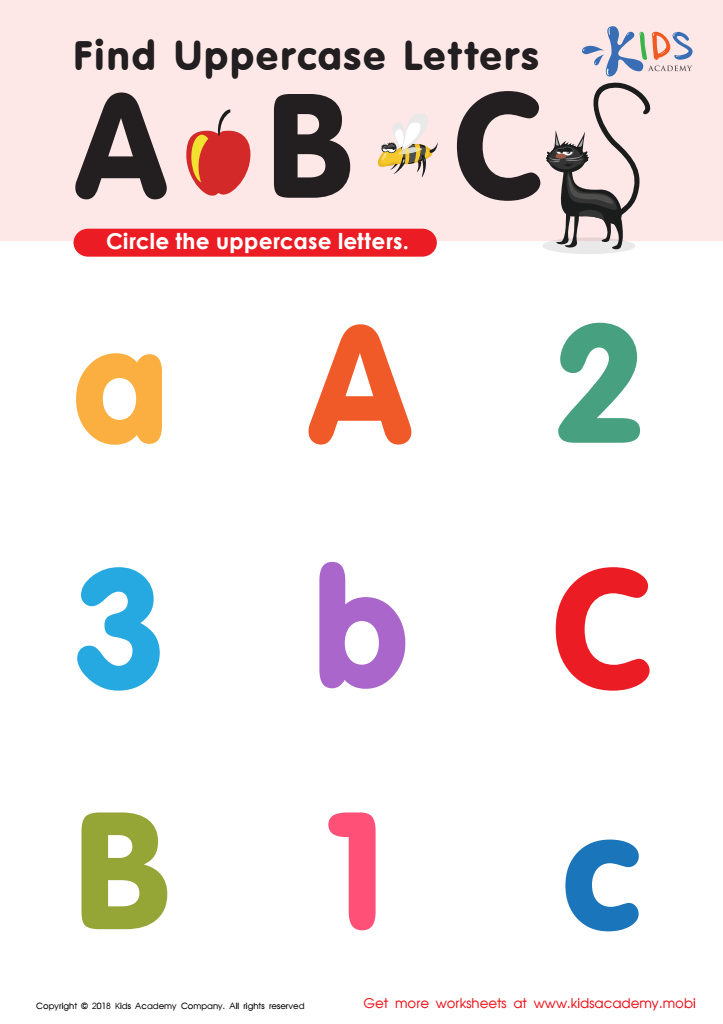
Find Uppercase Letters A, B, and C Worksheet








Alphabet familiarity with normal uppercase letters is crucial for children ages 3-4 as it sets the foundation for early literacy skills. At this developmental stage, children are rapidly acquiring language and cognitive abilities. Recognizing uppercase letters is often easier for young learners due to their simple, clear shapes and standardization across most children’s books and educational materials.
Understanding and identifying uppercase letters enhances children’s ability to associate symbols with sounds, an essential step in phonemic awareness. This awareness ultimately supports skills like reading and writing. Engaging with the alphabet also helps improve fine motor skills through activities like tracing or matching letters, which are vital for overall developmental tasks of this age group.
Moreover, early familiarity with uppercase letters boosts children’s confidence and curiosity about further learning. When children recognize letters, they can begin to understand that these letters make up words, thus unfolding the vast possibilities found in reading. It promotes a love of learning and fosters positive educational experiences from an early age.
Parents and teachers play a key role by providing engaging, consistent, and age-appropriate alphabet-related activities. Doing so supports language development, aids future literacy success, and aligns with critical developmental milestones pertinent to early childhood education.