Uppercase identification Normal Uppercase Letters Worksheets for Ages 3-4
5 filtered results
-
From - To
Discover our engaging Uppercase Identification Worksheets designed for children aged 3-4! These fun, interactive activities help young learners recognize and differentiate normal uppercase letters through vibrant illustrations and simple exercises. Our worksheets foster early literacy skills, enhance fine motor abilities, and boost letter recognition confidence. Perfect for at-home learning or preschool settings, these resources make learning enjoyable while preparing children for future reading success. Pair our worksheets with playful teaching methods to create a dynamic learning experience. Start your child's alphabet journey today with our expertly crafted materials, designed to inspire and cultivate a love for learning in every little one!
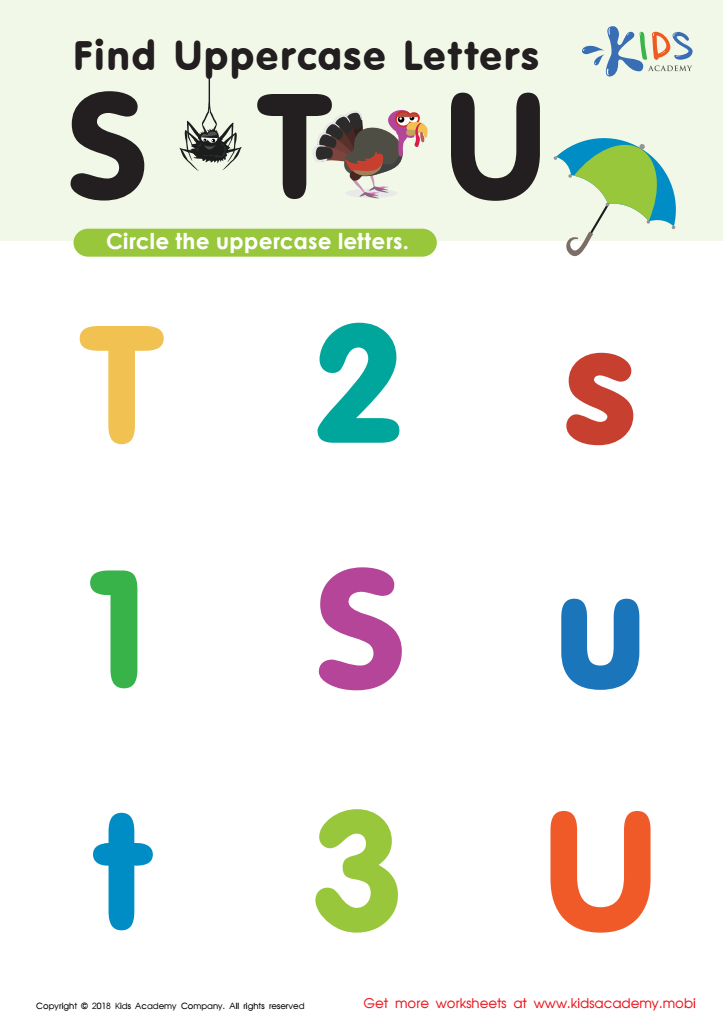
Find Uppercase Letters Worksheet
 Assign to My Students
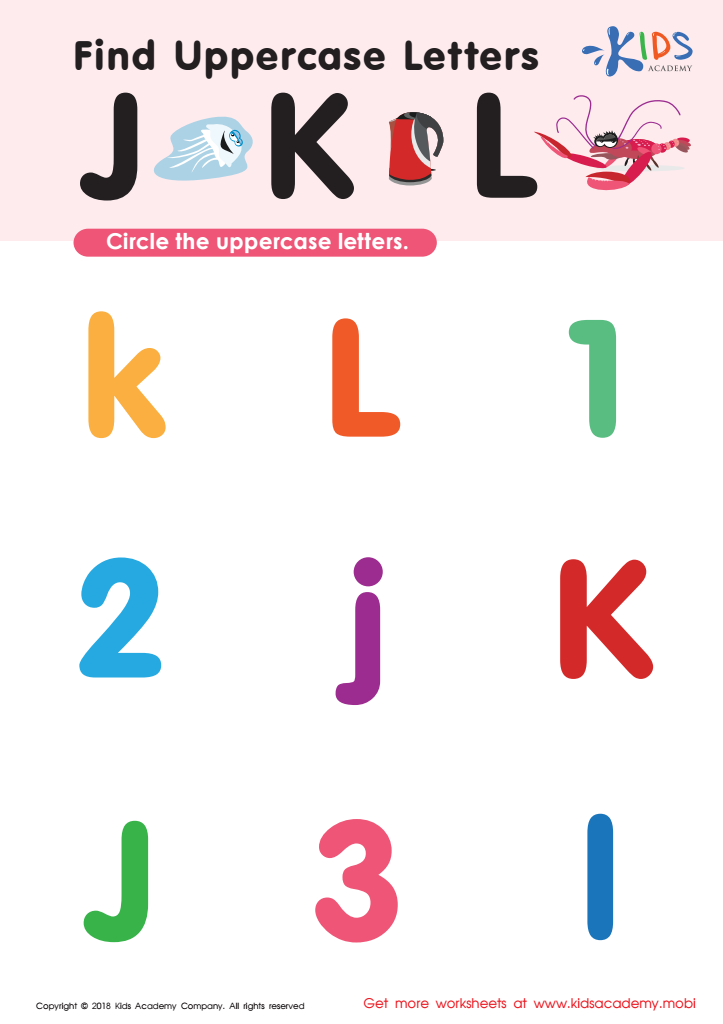
Find Uppercase Letters J, K, and L Worksheet
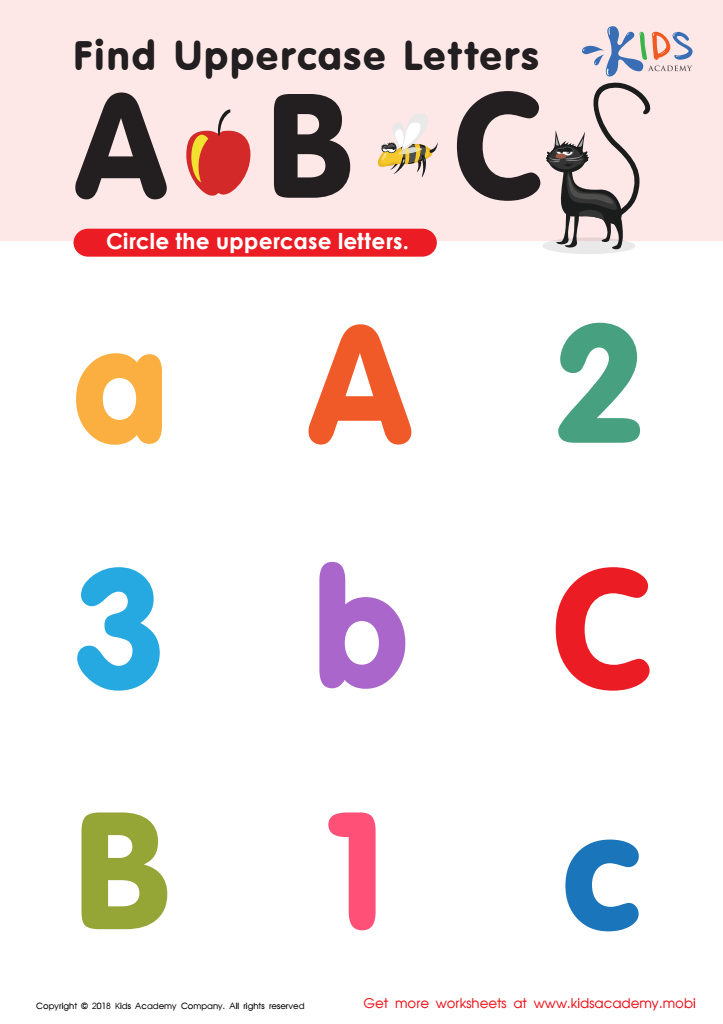
Find Uppercase Letters A, B, and C Worksheet
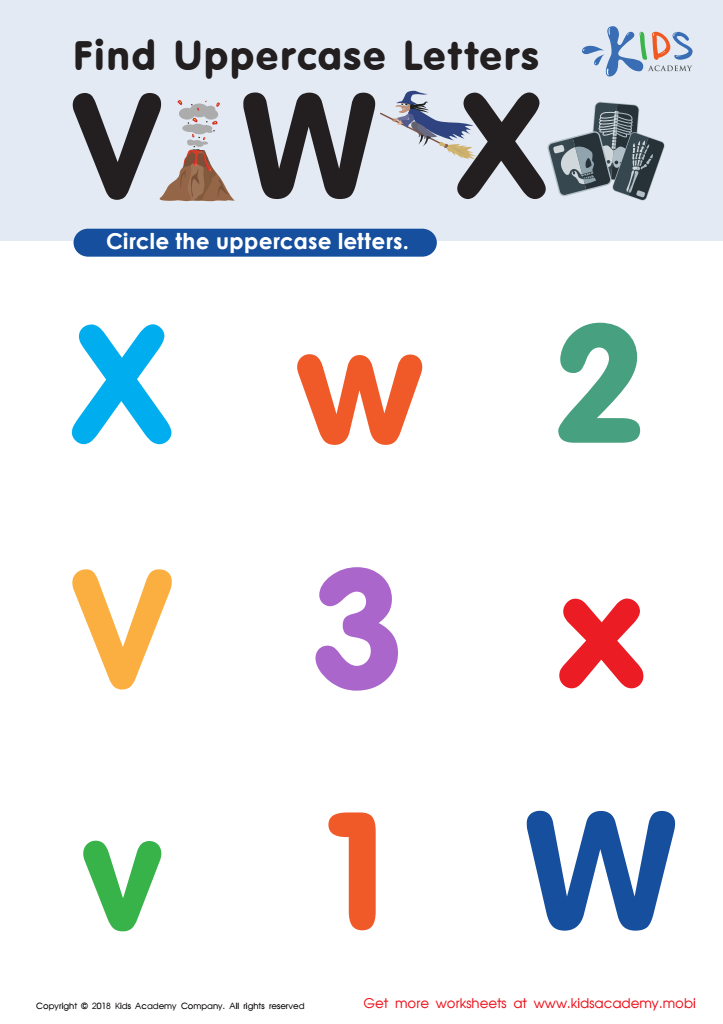
Find Uppercase Letters V, W, X Worksheet
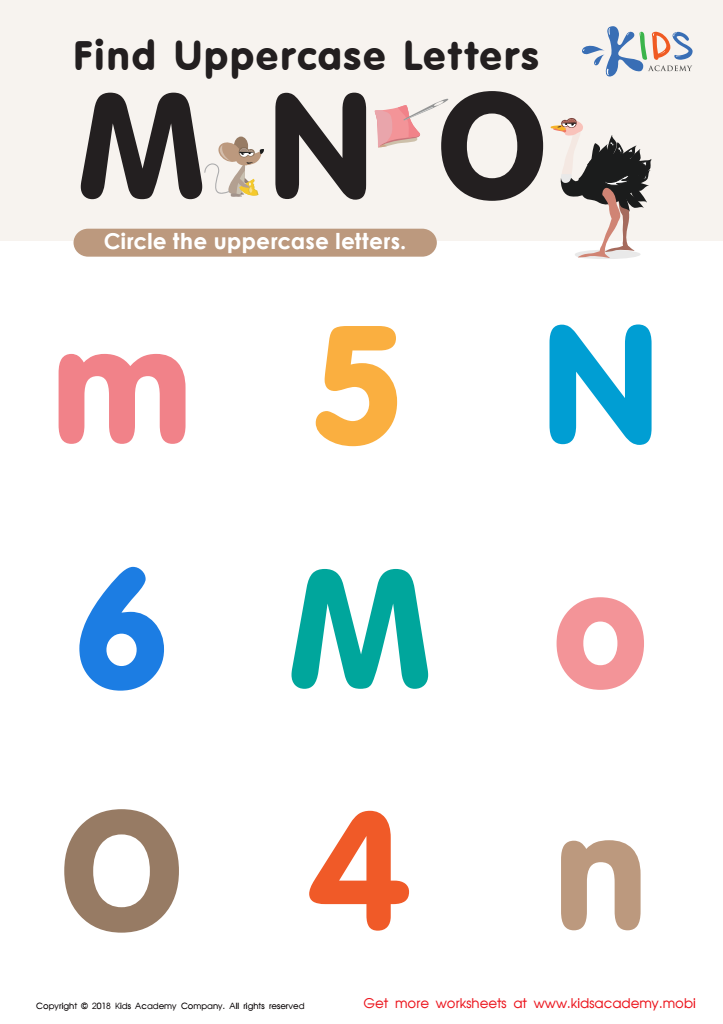
Find Uppercase Letters M, N, and O Worksheet








Understanding uppercase letters is a foundational skill for young children, making it essential for both parents and teachers to prioritize uppercase letter identification for ages 3 to 4. At this age, children are developing critical cognitive and language skills, and recognizing uppercase letters helps them make connections between spoken and written language. These letter forms are often the first ones children encounter, especially in books and educational materials, making recognition crucial for early literacy development.
Familiarity with uppercase letters aids in the formation of words, as many signs, labels, and titles start with capital letters. This exposure not only enhances a child's vocabulary but also fosters an interest in reading and writing. When children learn uppercase letters, it can build their confidence when they see their names or other familiar words in print, creating meaningful contexts for learning.
Moreover, mastering uppercase letter identification supports broader academic success, serving as a stepping stone for lowercase letters and phonics. Parents and teachers can encourage this skill through interactive activities like letter games, reading aloud, and crafts, which can make learning engaging and enjoyable. By investing time in uppercase letter recognition, caregivers and educators set the stage for lifelong skills in literacy.