Spelling practice Normal Vowels Worksheets for Ages 3-4
3 filtered results
-
From - To
Introduce your little learners to the fun world of vowels with our Spelling Practice Normal Vowels Worksheets designed for ages 3-4. These engaging and age-appropriate worksheets help kids recognize and spell words featuring normal vowels while boosting their phonics skills and early literacy. Each activity combines colorful visuals with simple exercises, making learning enjoyable and effective for young minds. Perfect for both classroom and at-home practice, our worksheets promote confidence in reading and writing by focusing on vowel recognition and correct spelling. Get started today and watch your child’s language abilities soar with Kids Academy!
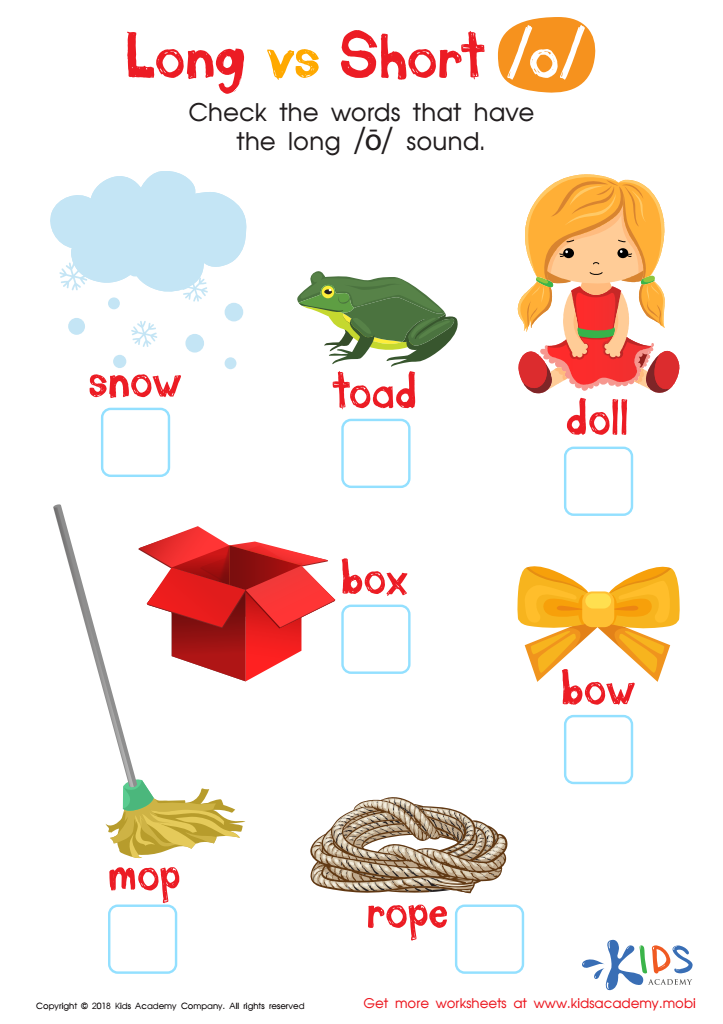
Long vs Short O Reading Worksheet
 Assign to My Students
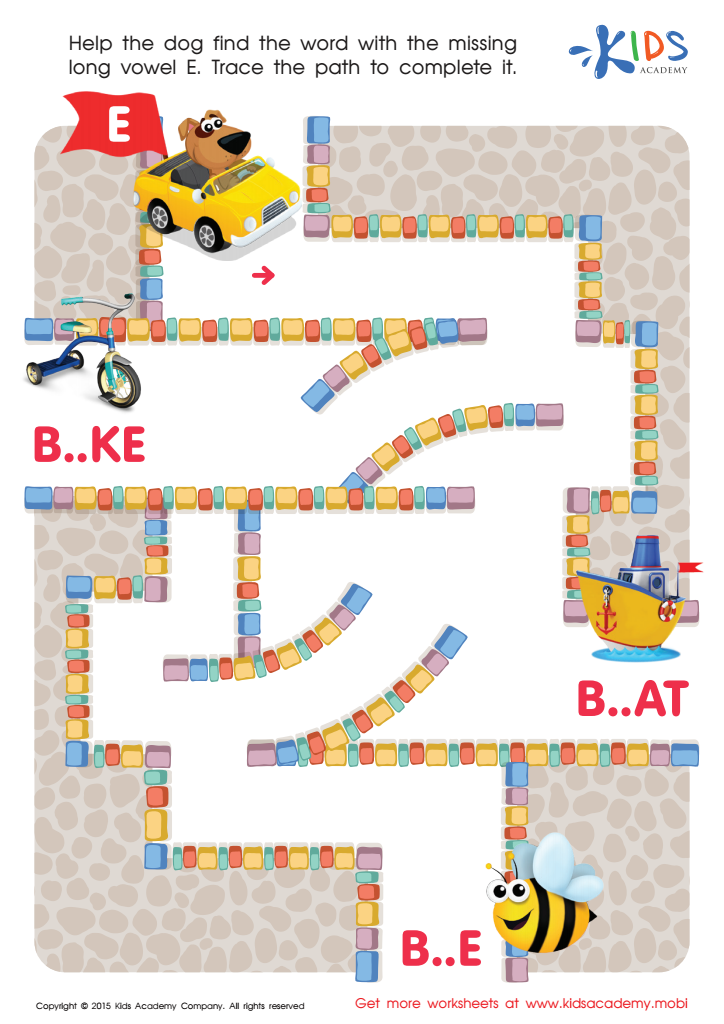
Long Vowel Sound E Worksheet
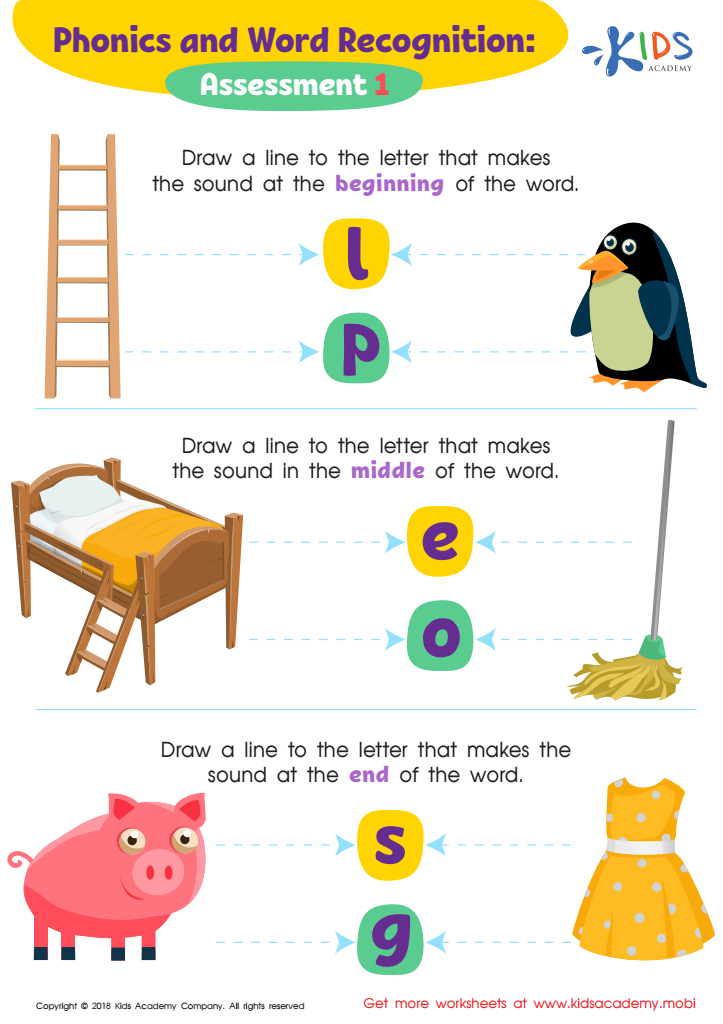
Phonics and Word Recognition: Assessment 1 ELA Worksheet





Spelling practice with normal vowels for children aged 3-4 is crucial for several developmental reasons. First, it helps lay the foundation for essential literacy skills. At this formative age, children are building their understanding of language, and recognizing vowel sounds is vital for phonemic awareness, which is the ability to hear, identify, and manipulate individual sounds in words. This skill is directly linked to later reading success.
Furthermore, engaging with vowels early on aids in vocabulary extension. As children practice spelling simple words that contain common vowels (a, e, i, o, u), they naturally expand their lexicon. This broadens their ability to communicate effectively and comprehend spoken and written language.
Additionally, early spelling practice supports cognitive development by enhancing memory and concentration. When children repeatedly interact with vowel sounds and words, they improve their ability to recall information, follow instructions, and stay focused.
Finally, this practice fosters a sense of accomplishment and builds confidence. As young children successfully spell words, they experience positive reinforcement, which encourages a lifelong love of learning. For parents and teachers, integrating normal vowel spelling practice creates a solid linguistic foundation and fosters a positive educational environment, both of which are essential for ongoing academic success.






