Basic measurement concepts Normal Worksheets for Ages 3-4
3 filtered results
-
From - To
Discover the joy of learning basic measurement concepts with our engaging worksheets designed specifically for ages 3-4! Ideal for young learners, these activities introduce foundational skills such as size, length, weight, and volume through fun and interactive exercises. Our normal worksheets promote hands-on exploration to help children understand and compare measurements in an intuitive way. With colorful illustrations and relatable themes, each sheet encourages creativity while developing critical thinking skills. Perfect for use at home or in preschool settings, these resources will support your child's early education journey, making learning about measurements an enjoyable experience. Start measuring fun today!
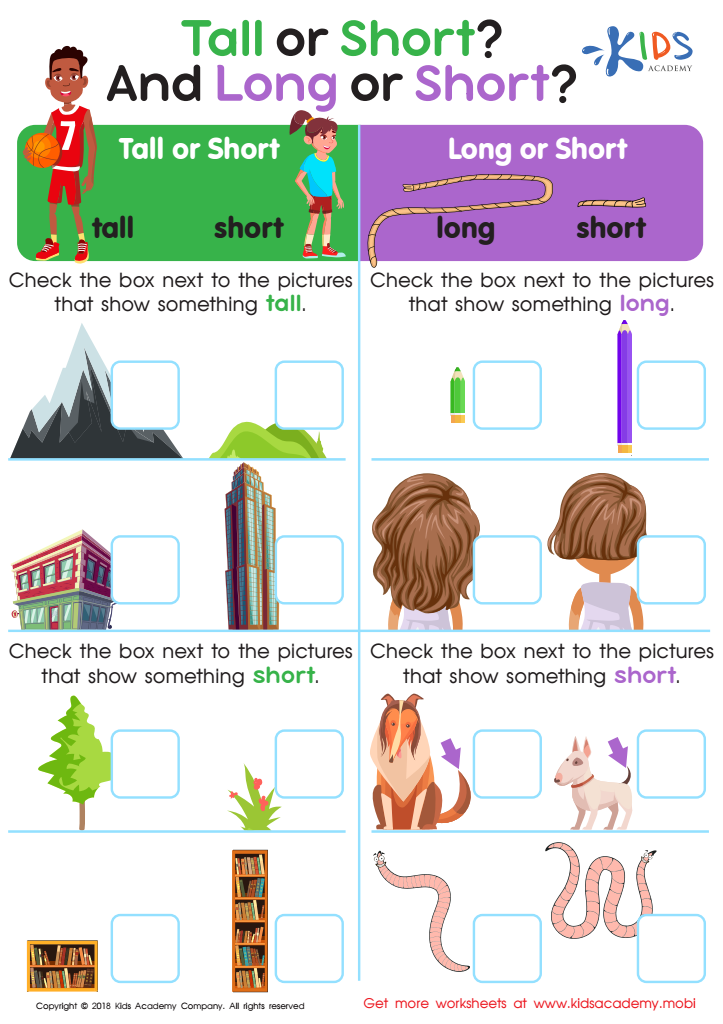
Tall or Short and Long or Short? Worksheet
 Assign to My Students
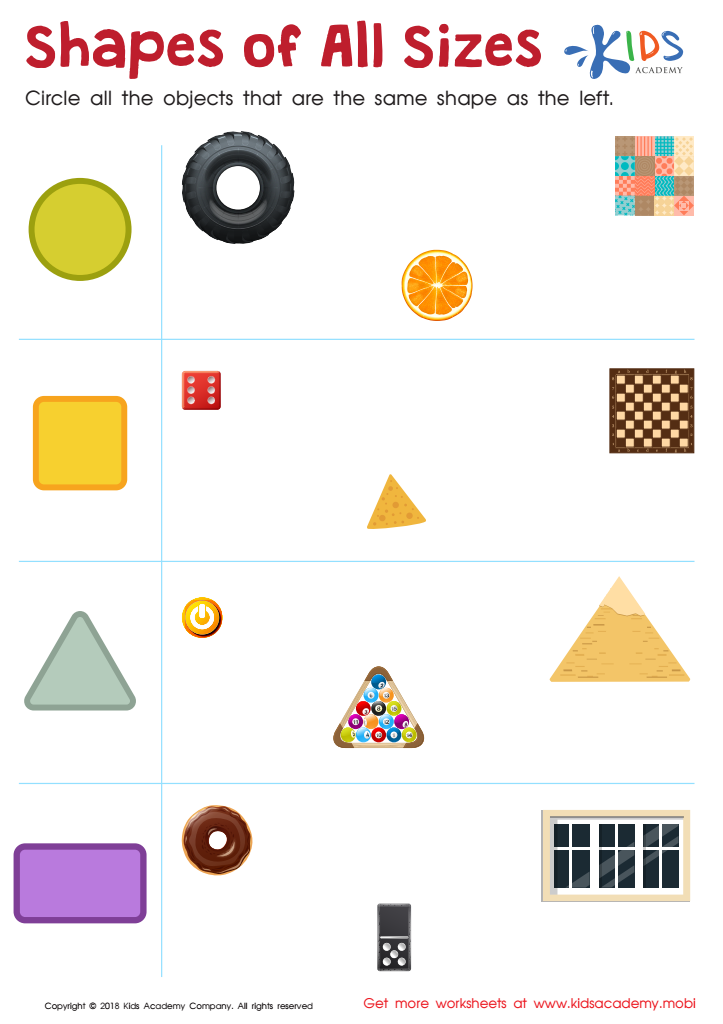
Shapes of All Sizes Worksheet
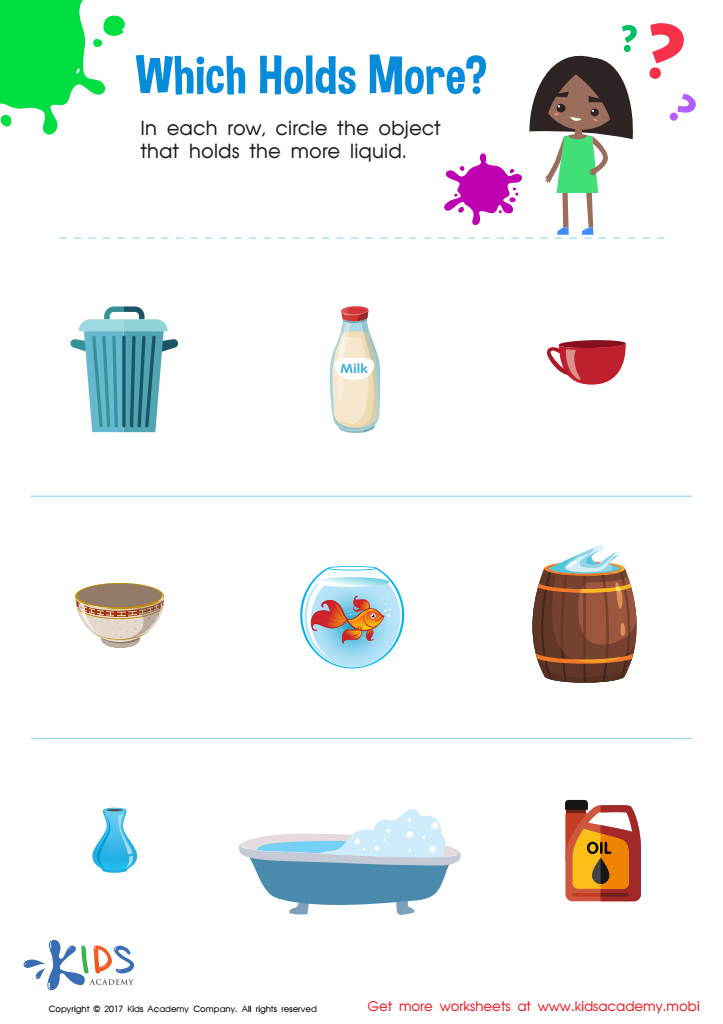
Which Holds More: Capacity Worksheet






Understanding basic measurement concepts is crucial for children aged 3-4 as it lays the foundation for cognitive development and everyday problem-solving skills. At this age, children begin to encounter concepts of size, weight, length, and volume in their play and exploration. For parents and teachers, fostering an early understanding of measurement helps children develop critical thinking abilities and an appreciation for their environment.
Engaging with measurement concepts can be integrated easily into daily activities. For instance, parents can invite children to compare the length of different toys or the weight of various fruits during grocery shopping. In a classroom setting, teachers can create interactive games that involve measuring ingredients for cooking projects or comparing the heights of classmates. Such activities not only promote mathematical understanding but also enhance language development as children learn relevant vocabulary.
Moreover, an early focus on measurement teaches children to classify and organize information, which are essential skills in academic and social settings. This foundational learning promotes confidence and curiosity in exploring the world around them. Ultimately, instilling basic measurement concepts in young children is a vital step toward their future mathematical learning and everyday functional skills.








