Letter-sound association Normal Worksheets for Ages 3-4
6 filtered results
-
From - To
Discover our engaging Letter-Sound Association Normal Worksheets designed specifically for children ages 3-4. These worksheets provide a fun and interactive way to help young learners make connections between letters and their corresponding sounds, enhancing early literacy skills. Each worksheet features bright illustrations and age-appropriate activities that encourage active participation and reinforce learning through play. By practicing letter recognition and sound association, children will build a strong foundation for reading and writing. Ideal for both home and classroom settings, our printable worksheets make early learning exciting and effective. Help your child embark on their literacy journey today!
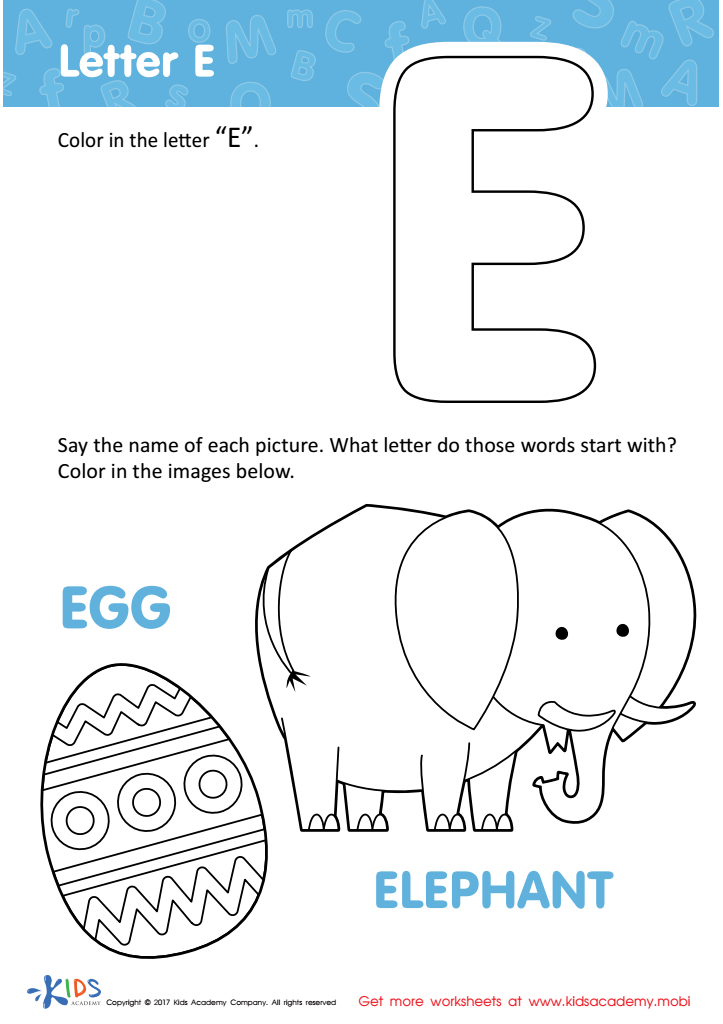
Letter E Coloring Sheet
 Assign to My Students
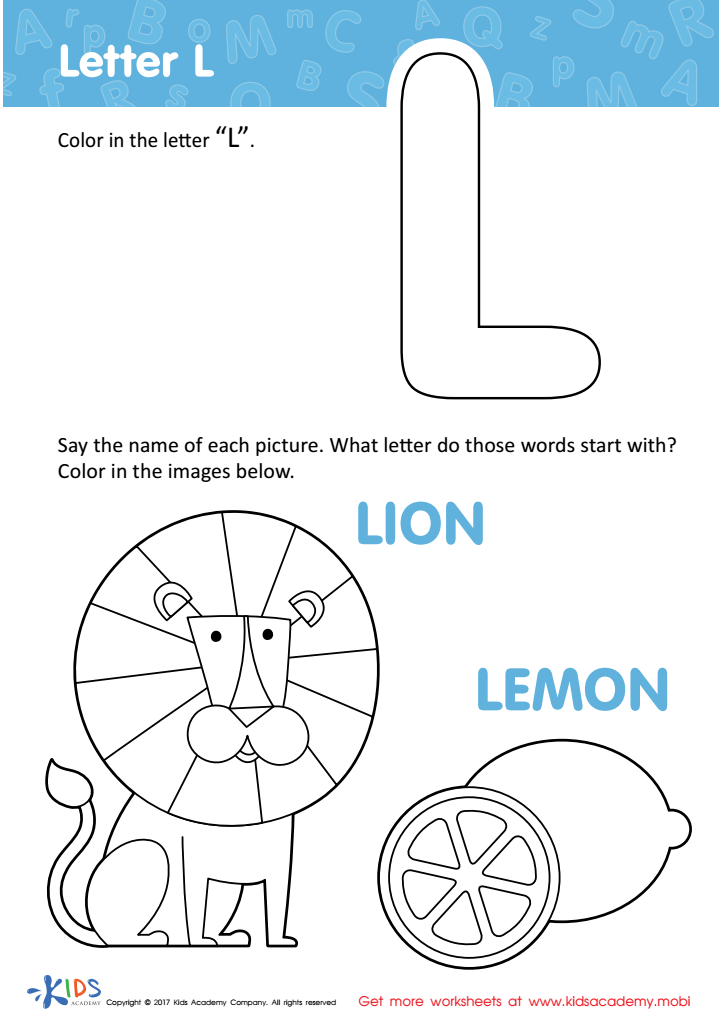
Letter L Coloring Sheet
Assign to My Students
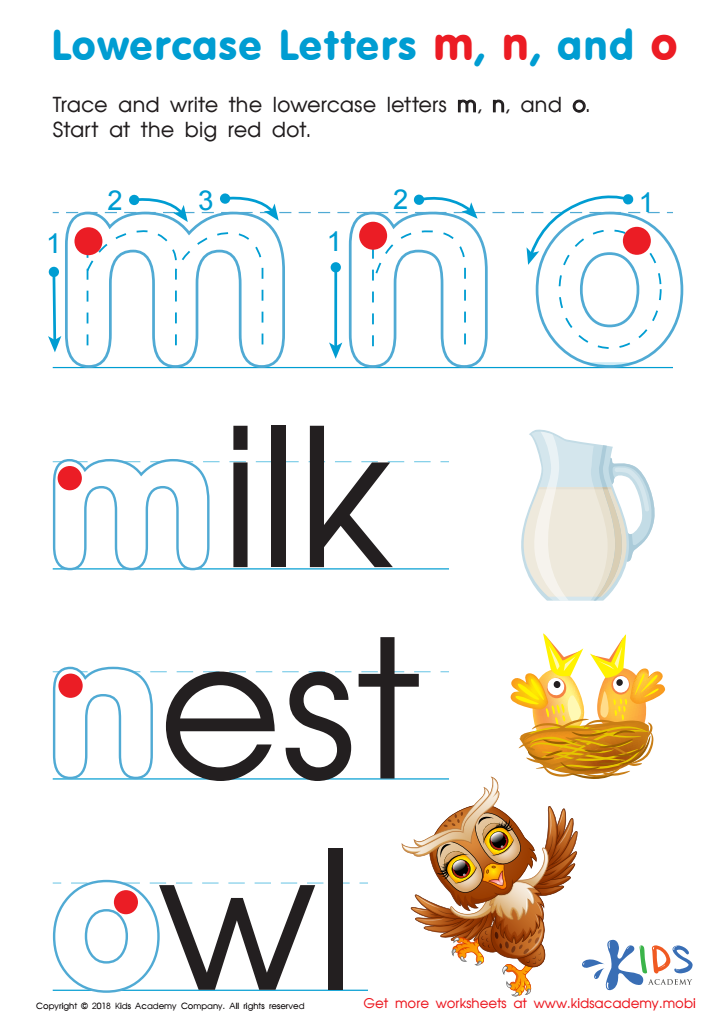
Lowercase Letters m n o Worksheet
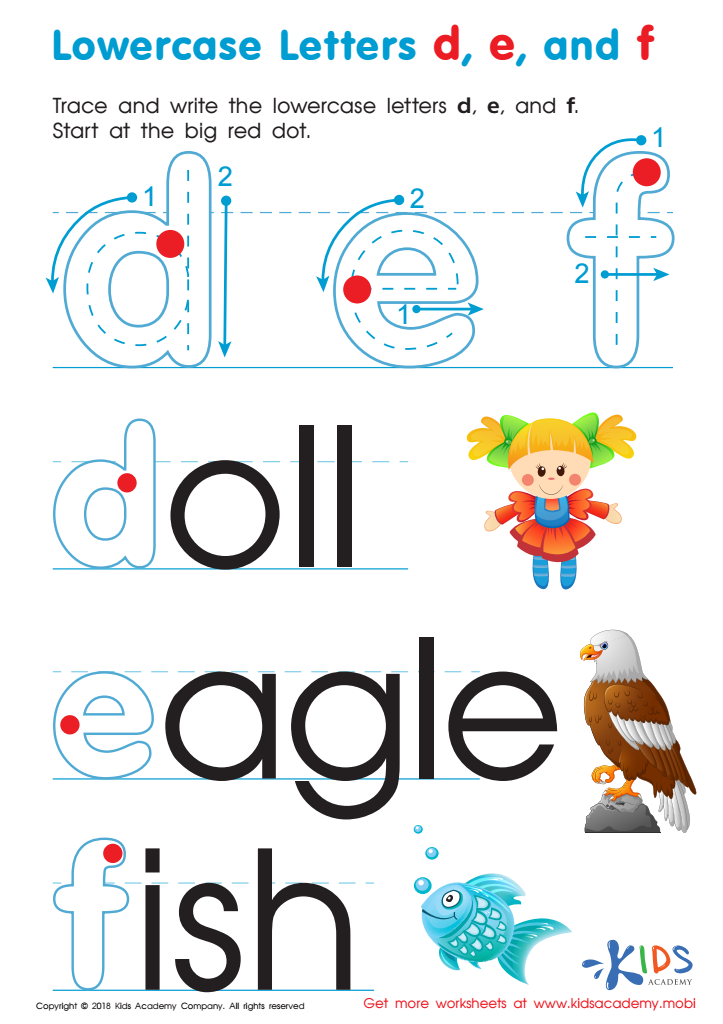
Lowercase Letters d e f Worksheet
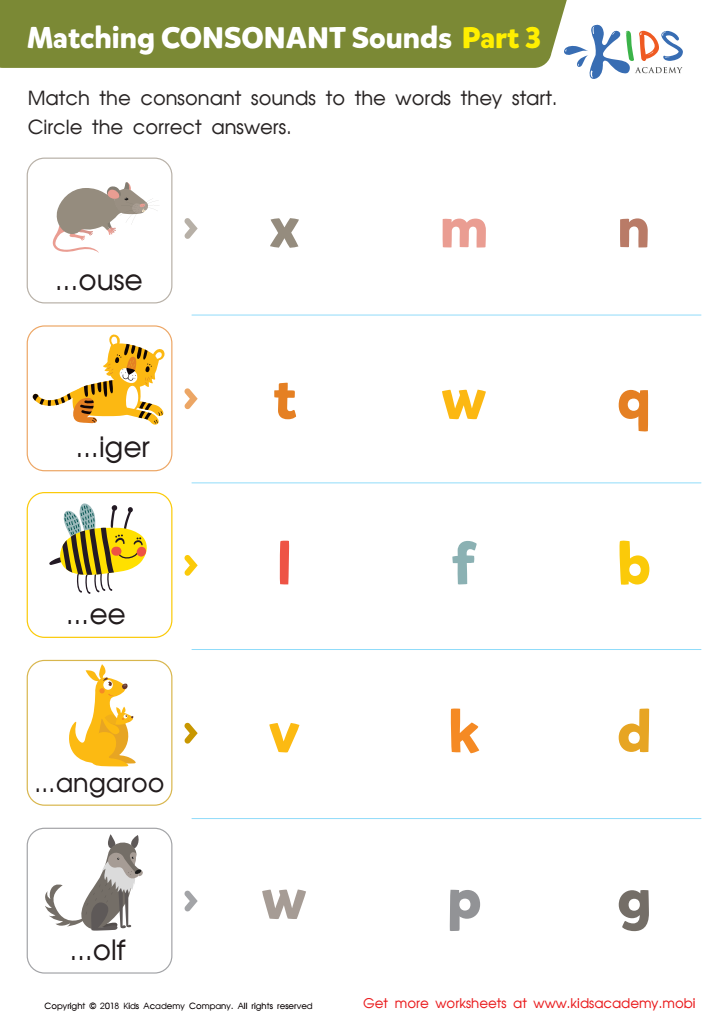
Matching Consonant Sounds: Part 3 Worksheet
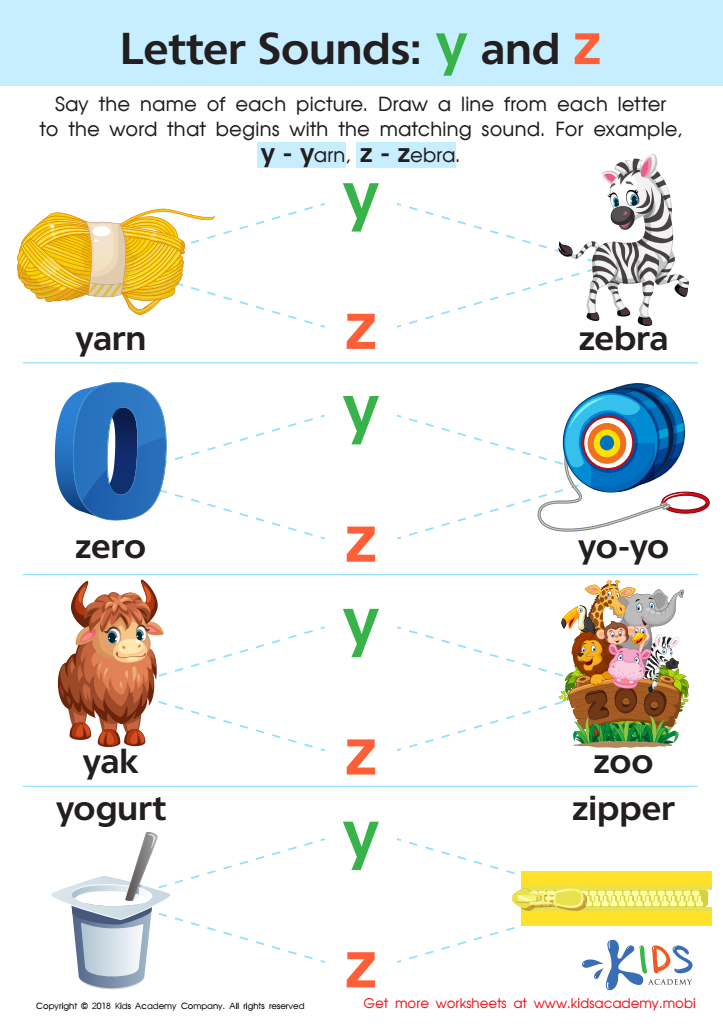
Letter Y and Z Sounds Worksheet








Understanding letter-sound associations is vital for children aged 3-4 as it lays the foundation for their literacy development. At this age, children are at a critical stage for language acquisition and phonemic awareness, which refers to the ability to hear, identify, and manipulate sounds in spoken words. Engaging with letter-sound associations enhances vocabulary building, enables children to decode words, and fosters a love for reading.
Parents and teachers should care about this aspect of early education since strong literacy skills are linked to academic success and lifelong learning. Children who can recognize letter sounds are better equipped to transition into reading and writing, improving their overall communication skills. Incorporating play-based learning, like songs, rhymes, and interactive games, can make learning engaging and fun.
Moreover, fostering letter-sound recognition helps build a child's confidence and motivation towards learning. This is crucial as self-esteem plays a significant role in a child’s drive to explore and utilize language. By prioritizing letter-sound associations during these formative years, parents and teachers set the stage for effective reading habits and critical thinking skills, ultimately supporting children in their educational journeys.








