Mental math practice Normal Worksheets for Ages 3-4
3 filtered results
-
From - To
Discover our engaging Mental Math Practice Worksheets designed specifically for children ages 3-4! These printable worksheets provide a fun and interactive way for young learners to enhance their counting, number recognition, and basic arithmetic skills. Tailored to support early childhood development, our normal worksheets use colorful visuals and age-appropriate exercises to captivate your child's interest while reinforcing essential math concepts. Encourage your little one's cognitive growth and build a strong mathematical foundation from a young age. Perfect for at-home learning or classroom activities, these worksheets will make math enjoyable and accessible. Start your child's journey toward math mastery today!
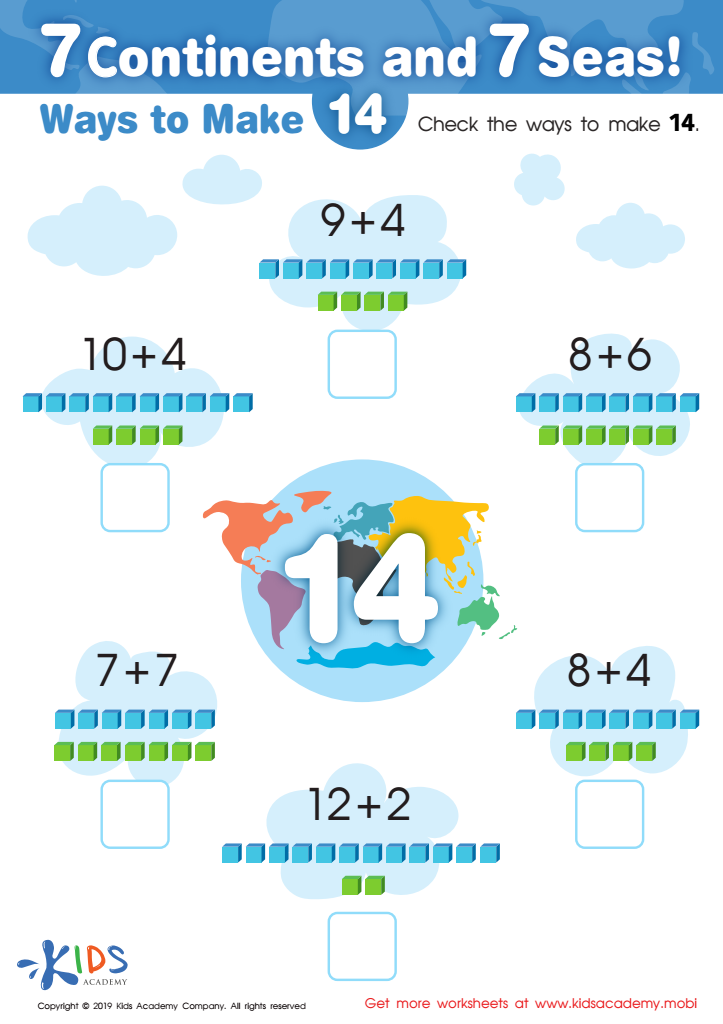
7 Continents and 7 Seas Worksheet
 Assign to My Students
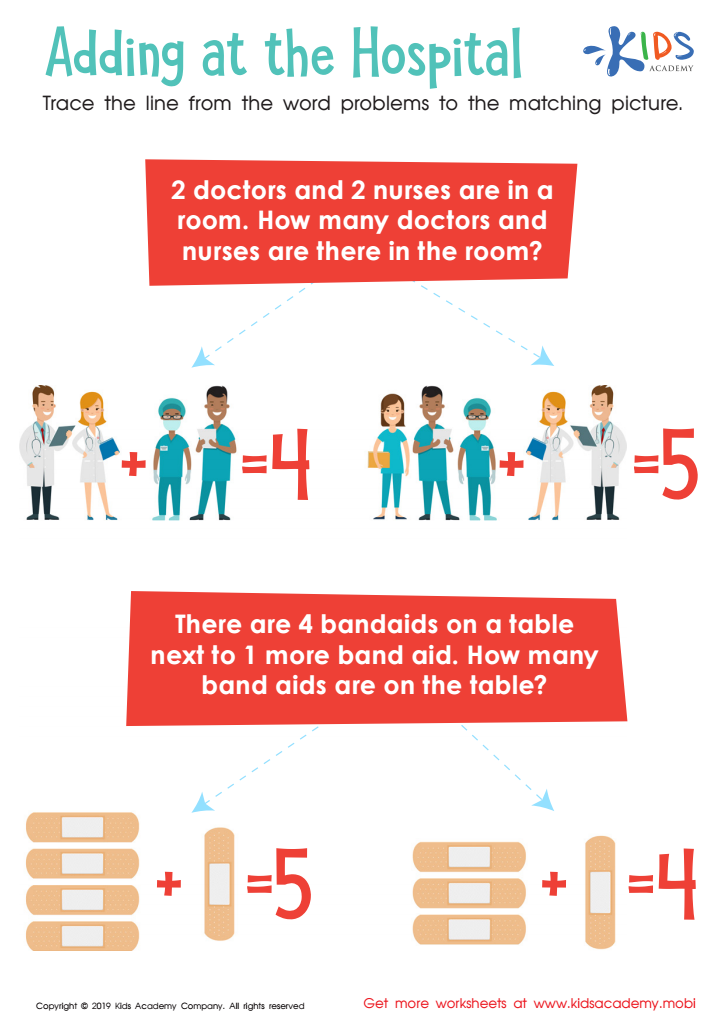
Adding at the Hospital Worksheet
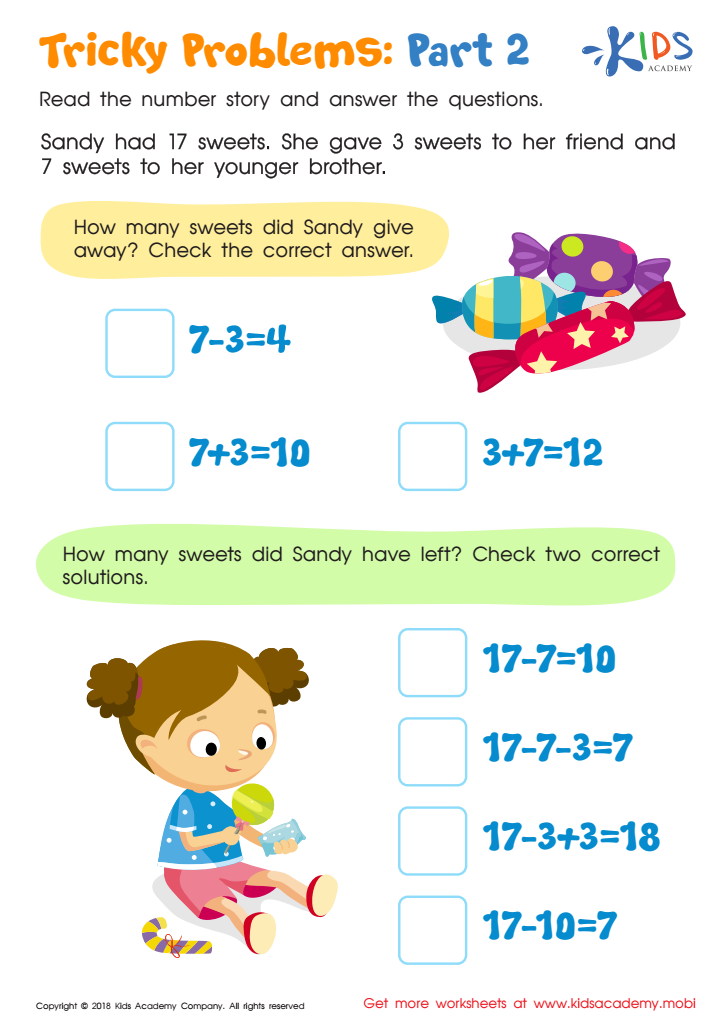
Tricky Problems Worksheet: Part 2







.jpg)
Mental math practice is crucial for children aged 3-4 as it lays the foundation for future mathematical skills and cognitive development. At this age, children are naturally curious and absorb information rapidly. Engaging them in mental math helps strengthen their problem-solving abilities and critical thinking skills.
Additionally, mental math nurtures a positive attitude towards mathematics, making it less intimidating as they grow older. Activities that encourage counting, simple addition and subtraction, and pattern recognition can be woven into everyday experiences, making learning fun and relatable. This practice facilitates the transition from concrete thinking to more abstract mathematical concepts, which is essential as they progress in their education.
Furthermore, mental math enhances memory and concentration skills. As children learn to visualize numbers and manipulate them in their minds, they develop better focus and attention. This skill set is not only applicable to math but also beneficial across all learning areas.
By prioritizing mental math, parents and teachers equip young learners with essential tools for academic success, fostering a lifelong love for learning and a strong foundation in mathematics. Ultimately, investing time in mental math practice cultivates independence, confidence, and intellectual resilience in young children.








