Phonics development Normal Worksheets for Ages 3-4
3 filtered results
-
From - To
Discover our engaging Phonics Development Worksheets tailored specifically for children ages 3-4. These worksheets are designed to nurture early literacy skills through fun, interactive activities that promote letter recognition, sounds, and vocabulary development. Each worksheet encourages children to explore phonics with colorful illustrations and simple exercises, making learning enjoyable and age-appropriate. By incorporating these essential phonics activities into your child's routine, you lay a strong foundation for reading success. Ideal for home or preschool settings, our printable worksheets are a valuable resource for parents and educators seeking to enhance early learning experiences. Start your phonics journey today!
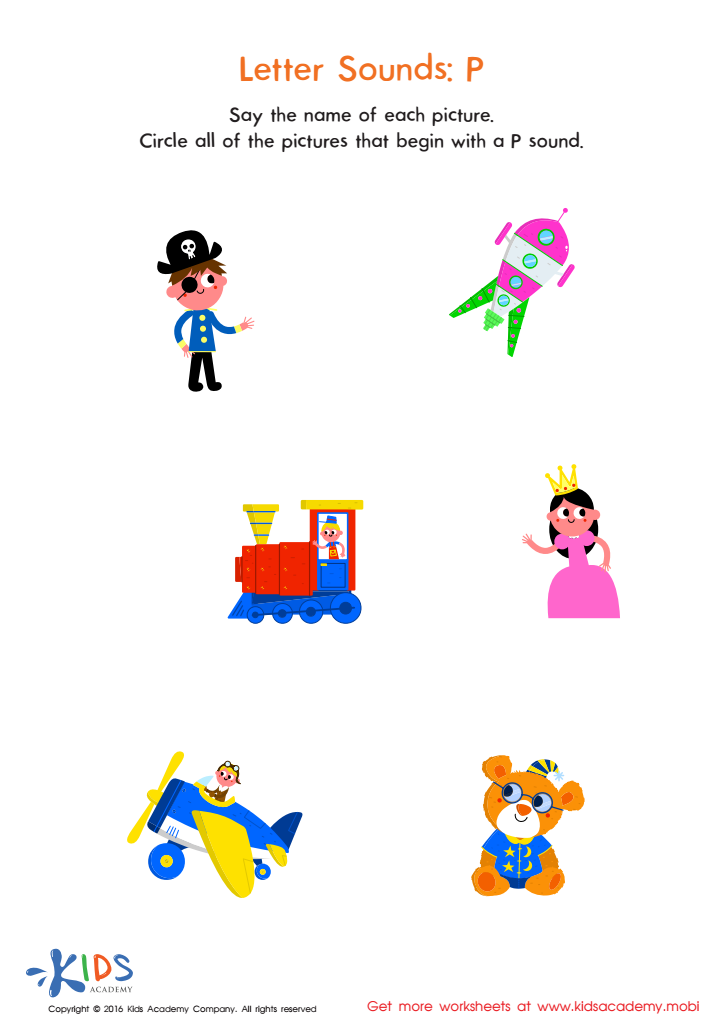
Letter P Sound Worksheet
 Assign to My Students
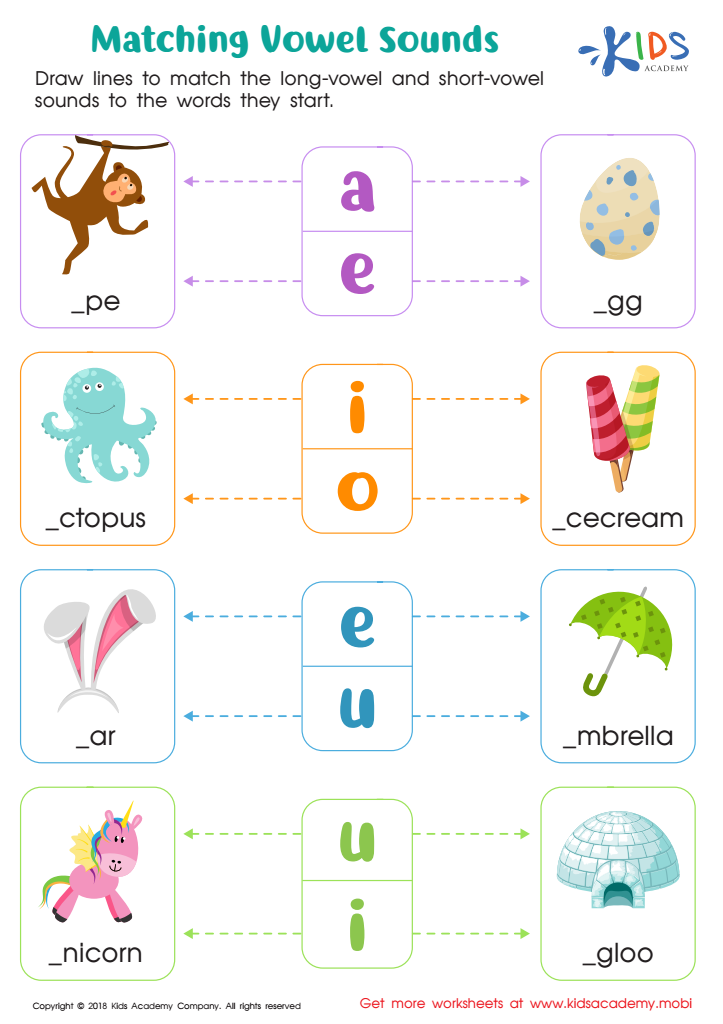
Matching Vowel Sounds Worksheet
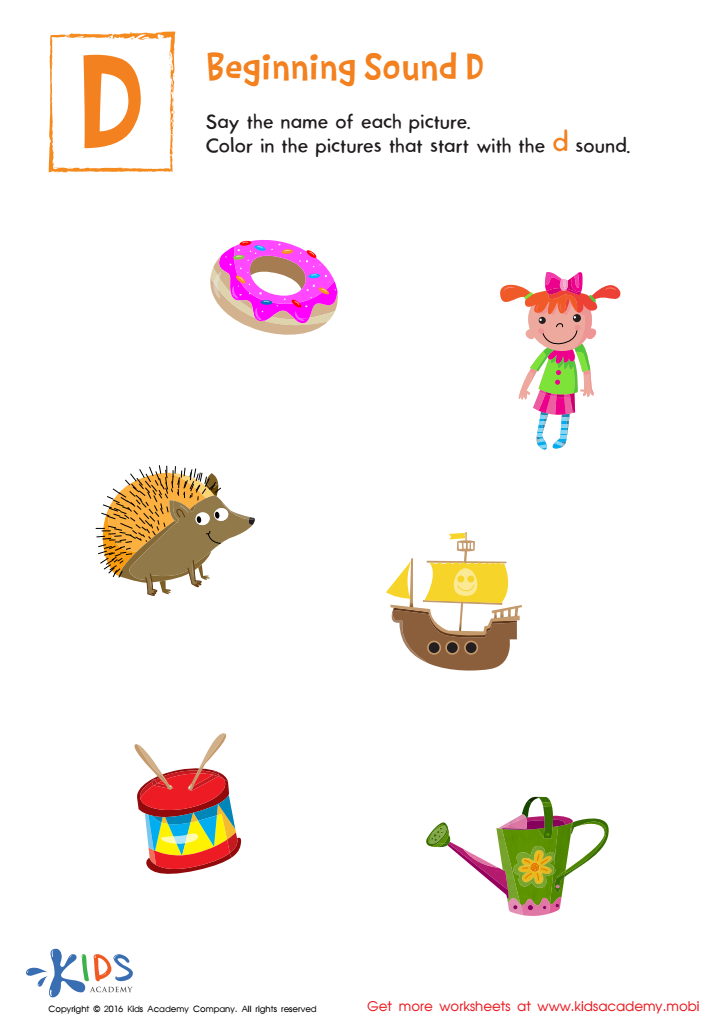
Beginning Sound D Worksheet








Phonics development is crucial for children aged 3-4 as it forms the foundation for future reading and writing skills. At this early stage, children begin to understand the relationships between sounds and letters, which enhances their ability to decode words. This skill not only aids in reading but also boosts their confidence and motivation when exploring books.
Parents and teachers should prioritize phonics development because it supports language acquisition and literacy readiness. Engaging in phonics activities, such as rhyming games or letter-sound recognition, can help children strengthen their auditory processing and language skills, paving the way for more advanced literacy tasks in later years.
Additionally, a solid grasp of phonics can lead to greater academic success, as children are better equipped to tackle reading in school. Early exposure to phonics can reduce feelings of frustration or anxiety associated with learning to read, promoting a positive attitude toward education. Lastly, fostering phonics development allows parents and teachers to instill a lifelong love for reading and learning, instrumental in a child’s overall cognitive development and success in various subjects throughout their schooling journey.








