Understanding communities Normal Worksheets for Ages 3-4
3 filtered results
-
From - To
Explore our "Understanding Communities Normal Worksheets for Ages 3-4" to help your child learn about the world around them! Designed for early learners, these engaging worksheets introduce young kids to various community helpers and everyday environments they encounter. Through fun illustrations and age-appropriate activities, children will enhance their vocabulary, problem-solving, and observational skills. Our worksheets promote critical thinking as kids explore themes like homes, schools, and parks. With easy-to-follow instructions, these resources support both independent and guided learning experiences, making it a perfect tool for parents and educators to foster curiosity and understanding in young learners about their communities. Start the journey today!
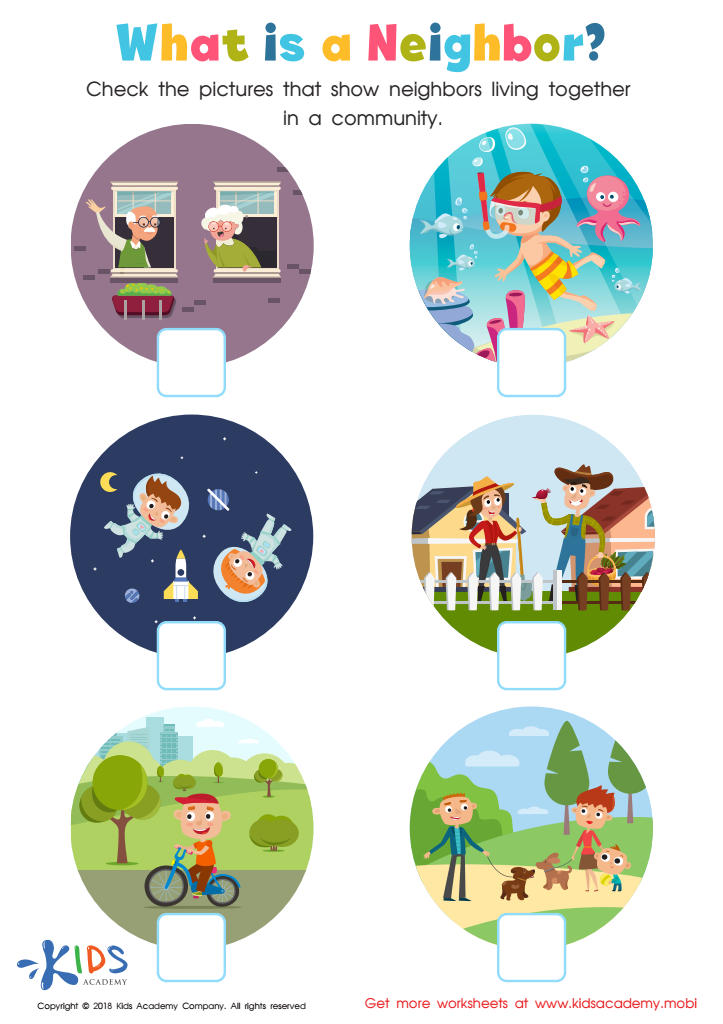
What is a neighbor Worksheet
 Assign to My Students
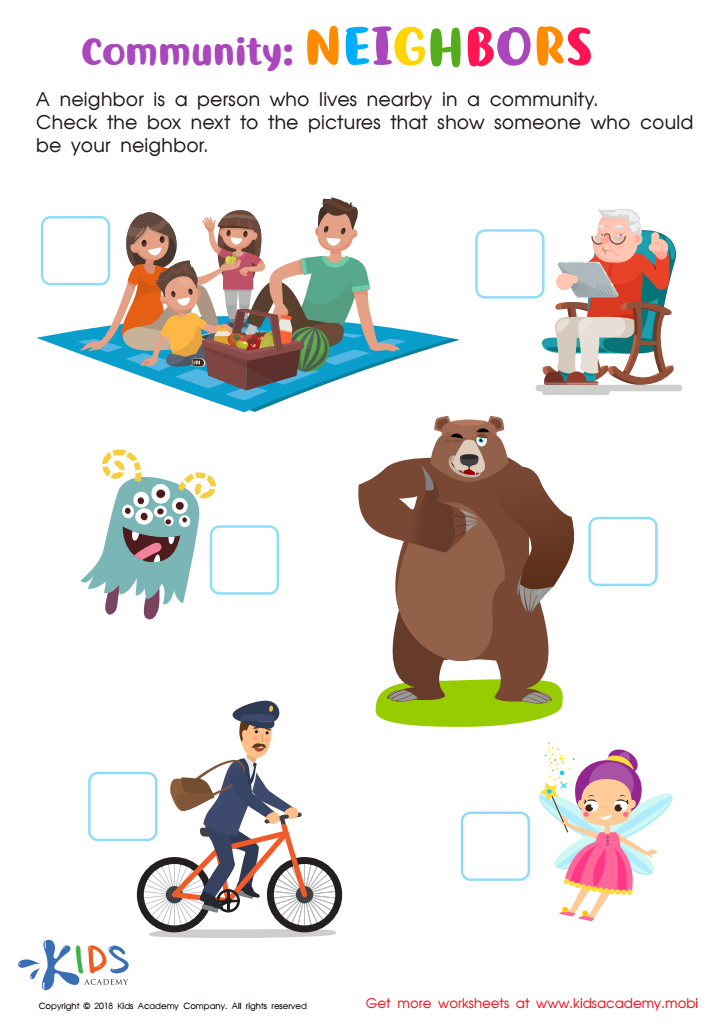
Community: Neighbors Worksheet
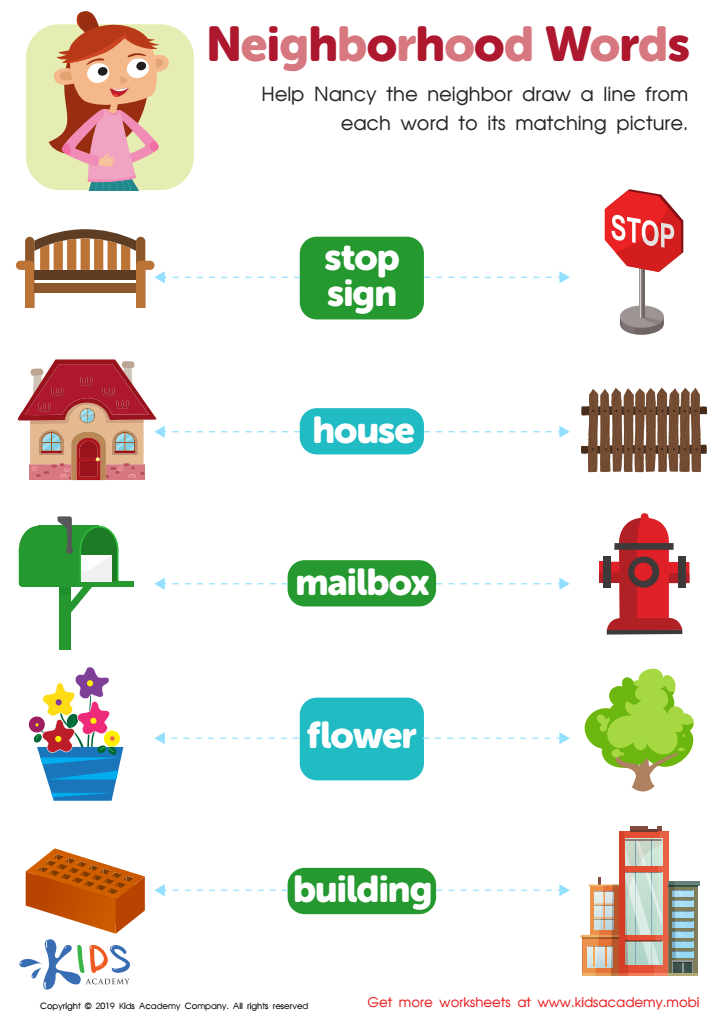
Neighborhood Words Worksheet





Understanding communities is crucial for children ages 3-4, and it's equally important for parents and teachers to engage in this concept. At this developmental stage, children are beginning to explore their surroundings and form connections with people. Awareness of their communities fosters a sense of belonging and identity, helping them understand who they are in relation to others.
By teaching young children about their community—its members, resources, and cultural diversity—we lay the groundwork for essential social skills. Children learn about cooperation, empathy, and respect for differences, which are critical for their emotional and social development. Understanding communities also enhances language skills as children learn new vocabulary and concepts related to their environment.
Moreover, it encourages curiosity and exploration. When parents and teachers highlight community roles, such as the importance of community helpers (e.g., firefighters, teachers, and grocery store workers), children gain a clearer understanding of Societal functions and responsibilities.
As children engage in local activities or explore cultural celebrations, they learn to appreciate their communities and feel empowered to participate. This foundation will not only enrich their current experiences but also build informed and responsible citizens for the future. Therefore, investing time in understanding communities is vital for children's holistic development.








