Uppercase identification Normal Worksheets for Ages 3-4
5 filtered results
-
From - To
Unlock your child's potential with our engaging Uppercase Identification Normal Worksheets designed specifically for ages 3-4! These fun and colorful worksheets help young learners recognize and master uppercase letters through interactive exercises. Perfect for home or classroom use, our materials promote letter recognition skills essential for early literacy development. Each worksheet features a variety of activities, including tracing, matching, and coloring, allowing children to learn while having fun. By incorporating these worksheets into your teaching routine, you provide a solid foundation for reading and writing readiness. Equip your little ones with the skills they need to confidently embark on their educational journey!
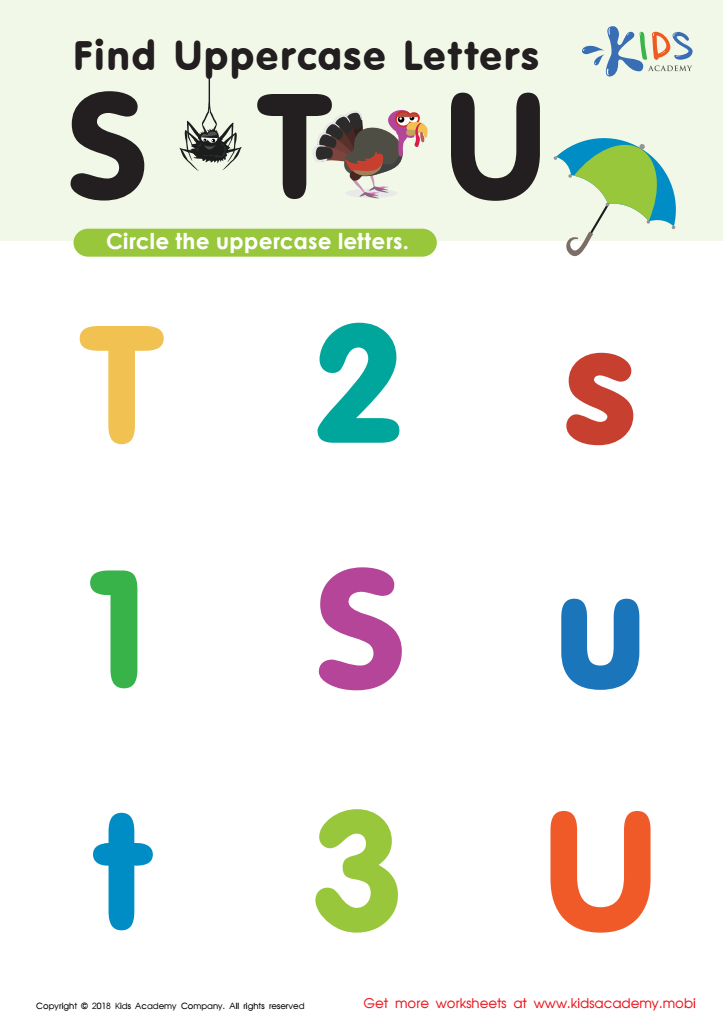
Find Uppercase Letters Worksheet
 Assign to My Students
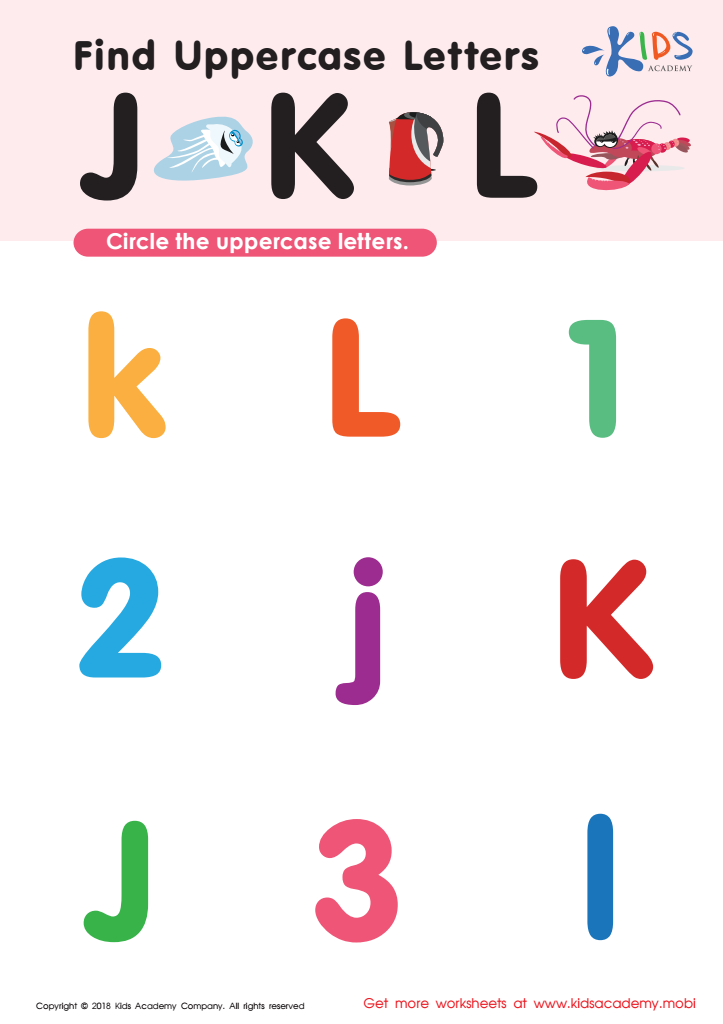
Find Uppercase Letters J, K, and L Worksheet
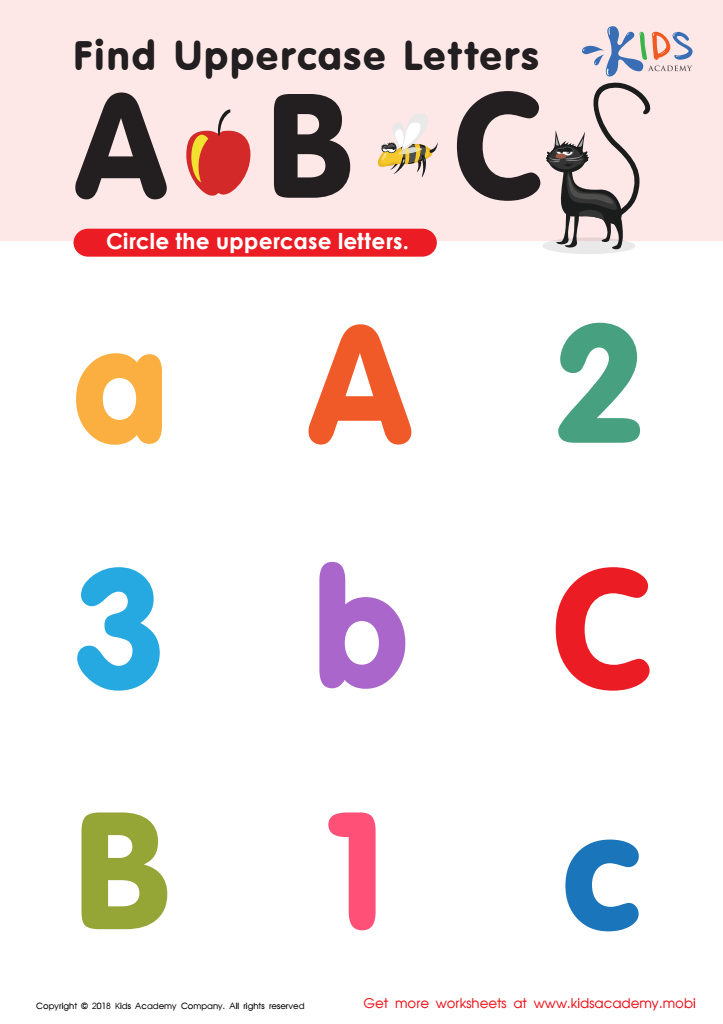
Find Uppercase Letters A, B, and C Worksheet
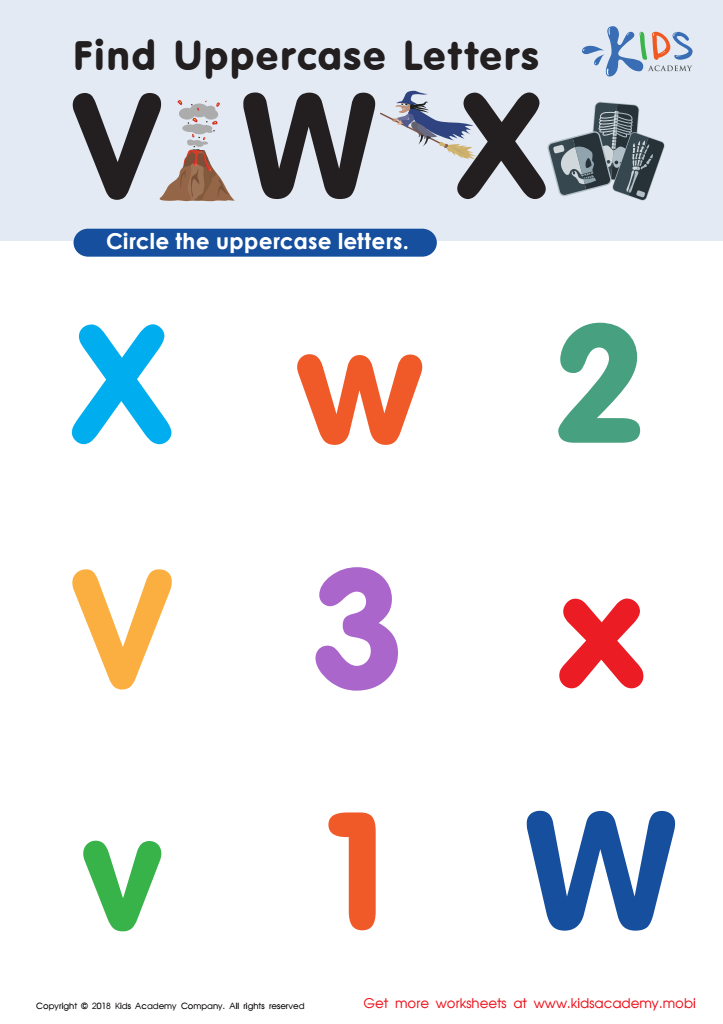
Find Uppercase Letters V, W, X Worksheet
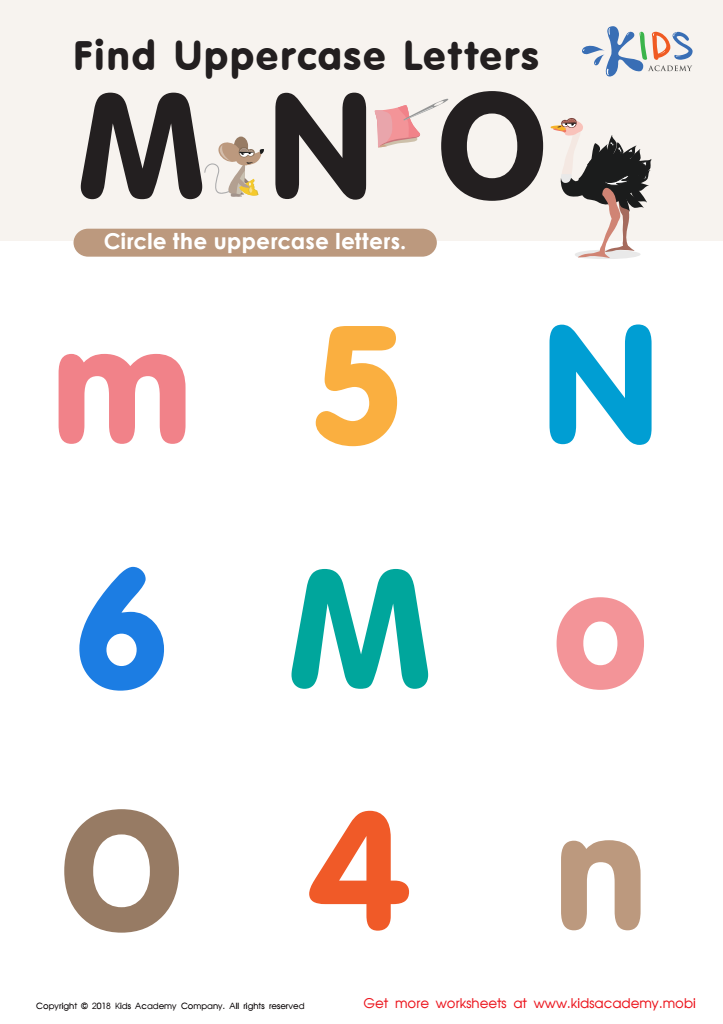
Find Uppercase Letters M, N, and O Worksheet





.jpg)

Uppercase letter identification is a crucial skill for children ages 3-4, as it lays the foundation for literacy development. Parents and teachers should be aware of its importance because it serves as the first step in understanding the alphabet and how letters form words. Recognizing uppercase letters is essential for early reading and writing since many texts and titles begin with capital letters.
At this age, children are naturally curious and eager to learn, making it an ideal time to introduce letters. By engaging in playful activities, such as games or songs, adults can create a positive association with literacy. Additionally, identifying uppercase letters aids in phonemic awareness, enabling children to connect sounds with symbols, which is vital for later reading skills.
Encouraging uppercase letter recognition also fosters communication skills. Children begin to understand that written text conveys messages, which boosts their confidence in sharing their thoughts through writing. Overall, focusing on uppercase identification during ages 3-4 prepares children for their academic journey, fostering a love for reading and writing that can last a lifetime. In essence, investing time in this skill is critical for setting the stage for future educational success.








