Logical Reasoning Normal Two-step Word Problems Worksheets for Ages 3-4
3 filtered results
-
From - To
Discover our engaging "Logical Reasoning Normal Two-Step Word Problems Worksheets" designed specifically for children aged 3-4. These worksheets introduce young learners to fundamental mathematical concepts through fun, relatable scenarios. Each activity encourages children to think critically as they solve two-step problems, enhancing their logical reasoning skills while building confidence in their math abilities. With vibrant illustrations and simple language, these worksheets captivate young minds, making learning a joyous experience! Ideal for parents and educators, these resources promote early problem-solving skills, encouraging children to think deeply and draw connections. Start your child's math journey today with our interactive and enjoyable worksheets!
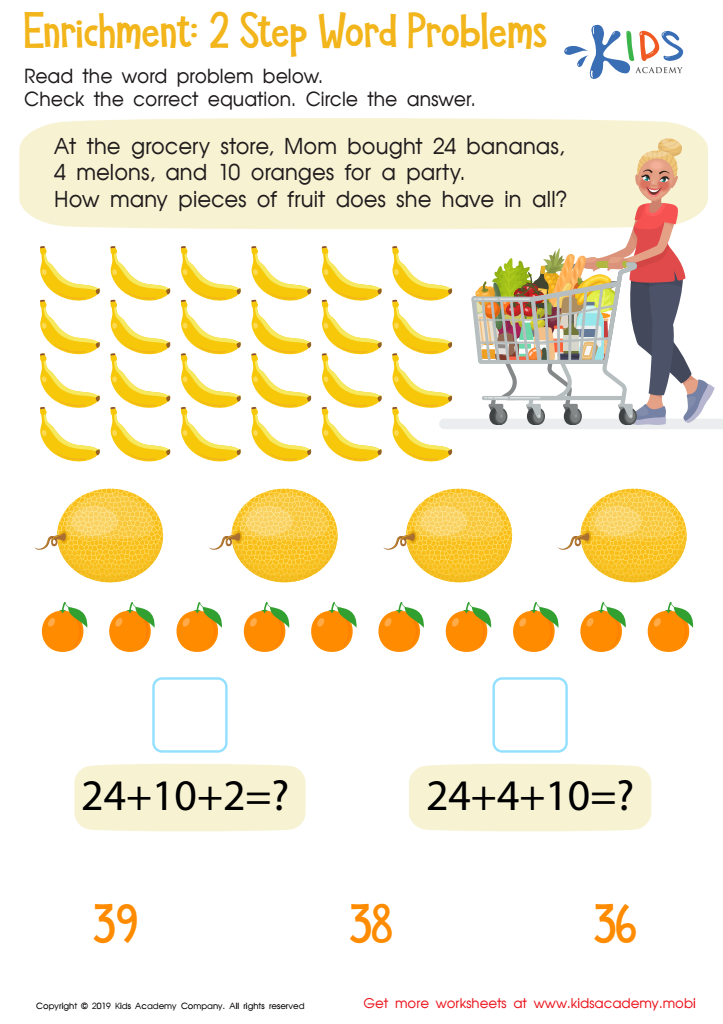
Enrichment -2 Step Word Problems Worksheet
 Assign to My Students
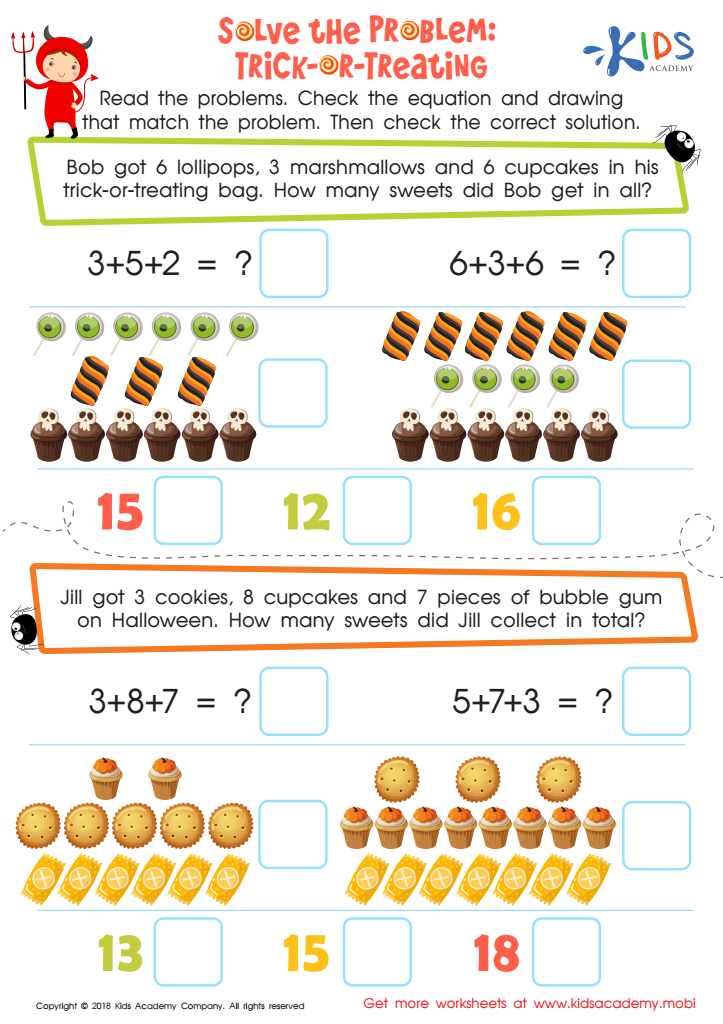
Solve the Problem: Trick–or–treating Worksheet
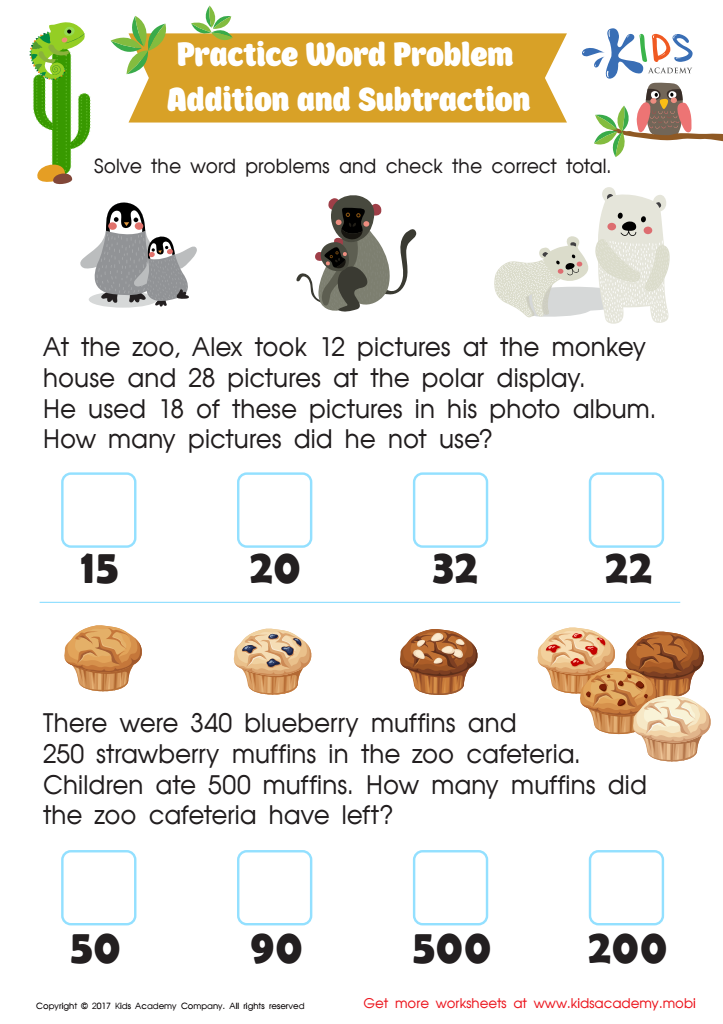
Addition and Subtraction: Word Problems Worksheet



Parents and teachers should care about logical reasoning and normal two-step word problems for ages 3-4 because these skills lay a foundational carpet for critical thinking and problem-solving abilities. At this young age, children are naturally curious and eager to engage with the world around them. Introducing them to two-step word problems harnesses this curiosity, encouraging them to think logically and develop reasoning skills.
Logical reasoning improves a child’s ability to understand relationships between different concepts, enhances their verbal skills, and encourages them to articulate their thoughts. When children tackle word problems, they learn to analyze and break down information into manageable parts, fostering cognitive development. This is essential as many future mathematical concepts build upon these early skills.
Additionally, engaging in logical reasoning activities promotes patience and persistence. Children learn that complex tasks often require multiple steps, teaching them the value of strategy and critical thinking. Moreover, these activities can be a fun, interactive way for parents and teachers to bond with children, making learning a collaborative and enjoyable experience.
Investing time in logical reasoning at this stage not only enriches a child’s learning experience but also prepares them for more complex challenges as they progress in their educational journey.