
Critical Thinking Normal Building Vocabulary Worksheets for Ages 3-4
6 filtered results
Difficulty Level
Grade
Age
-
From - To
Subject
Activity
Standards
Discover our engaging "Critical Thinking Normal Building Vocabulary Worksheets" designed for ages 3-4! These interactive resources promote cognitive development while enhancing vocabulary skills. Through fun activities, children explore words, identify relationships, and solve problems, fostering critical thinking abilities essential for early learning. Our worksheets provide a perfect combination of creativity and educational value, helping young learners build language skills in an enjoyable way. Parents and educators can effortlessly incorporate these worksheets into daily routines to support a love for learning. Elevate your child’s vocabulary and critical thinking skills today with our specially crafted materials tailored for curious minds!
Favorites
With answer key
Interactive
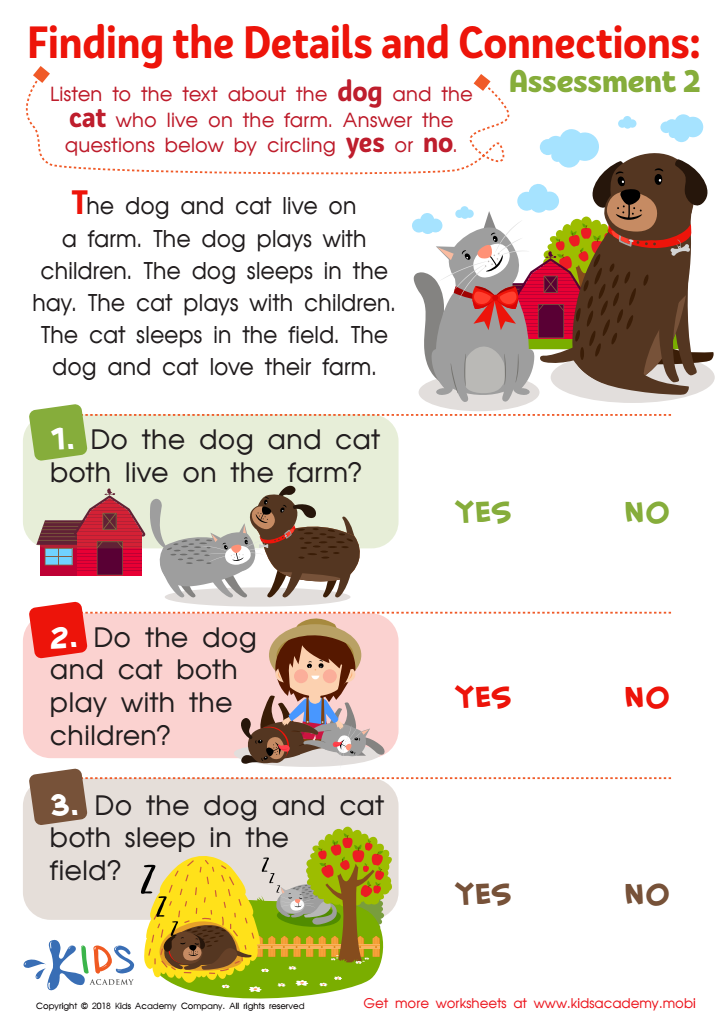
Finding the Details and Connections: Assessment 2 Worksheet
Does your child love animals? If you have pets, they'll relate to the text in this worksheet. Read it aloud to them and help them answer the simple questions by circling yes or no. The story is about a dog and cat living on a farm. Let your child read it aloud to you if they can.
 Assign to My Students
Finding the Details and Connections: Assessment 2 Worksheet
Worksheet











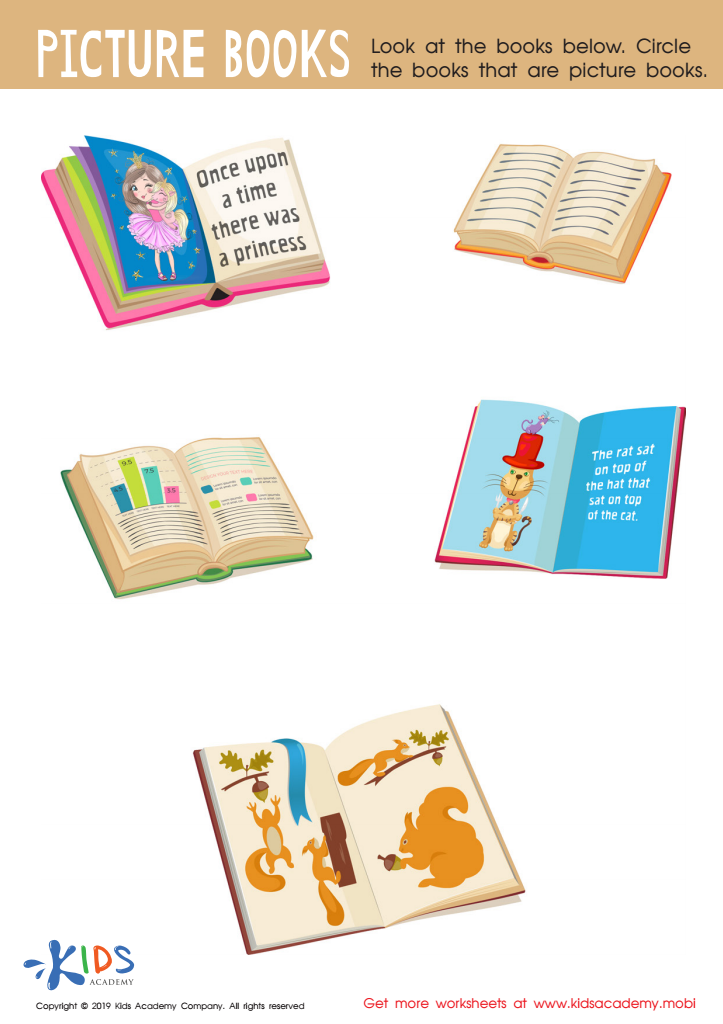
Picture Books Worksheet
Kids will love this exercise! Get their imaginations going with five colorful picture books. Ask them to circle the books that are picture books and have them enjoy the exciting stories, along with the colorful images. Reading can become that much more enjoyable!
Picture Books Worksheet
Worksheet
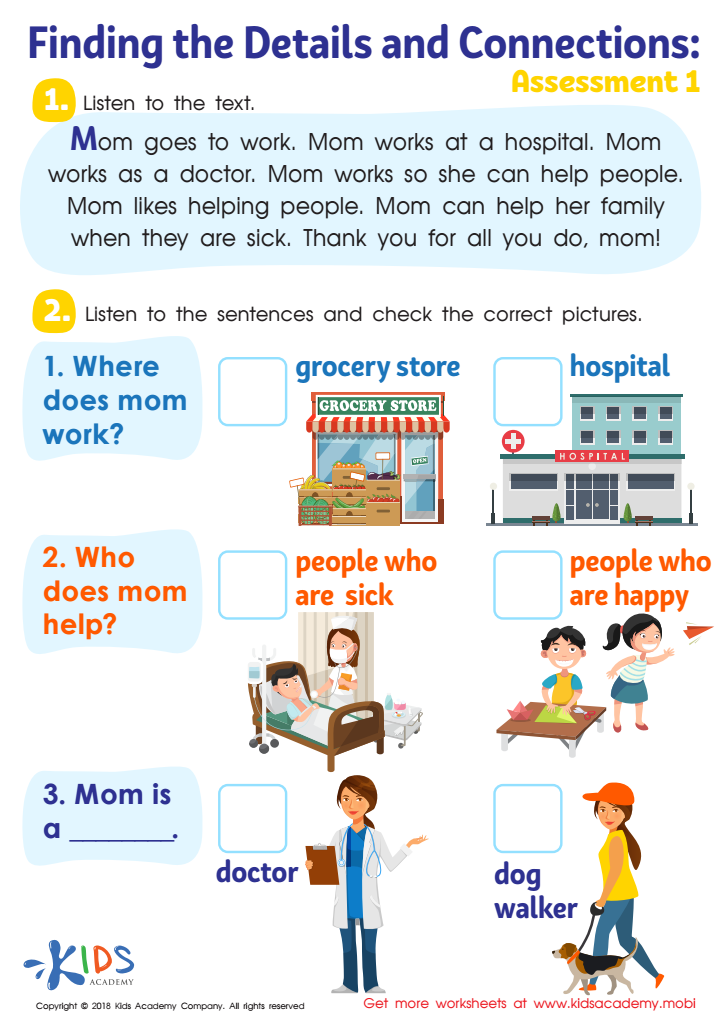
Finding the Details and Connections: Assessment 1 Worksheet
Ask your students what their parents do for a job. Do they know what profession their mom is in and where she works? Professionals have places they go to do their job. In this task, Mom goes to a hospital and is a doctor. Read the text and help them check the right pictures.
Finding the Details and Connections: Assessment 1 Worksheet
Worksheet
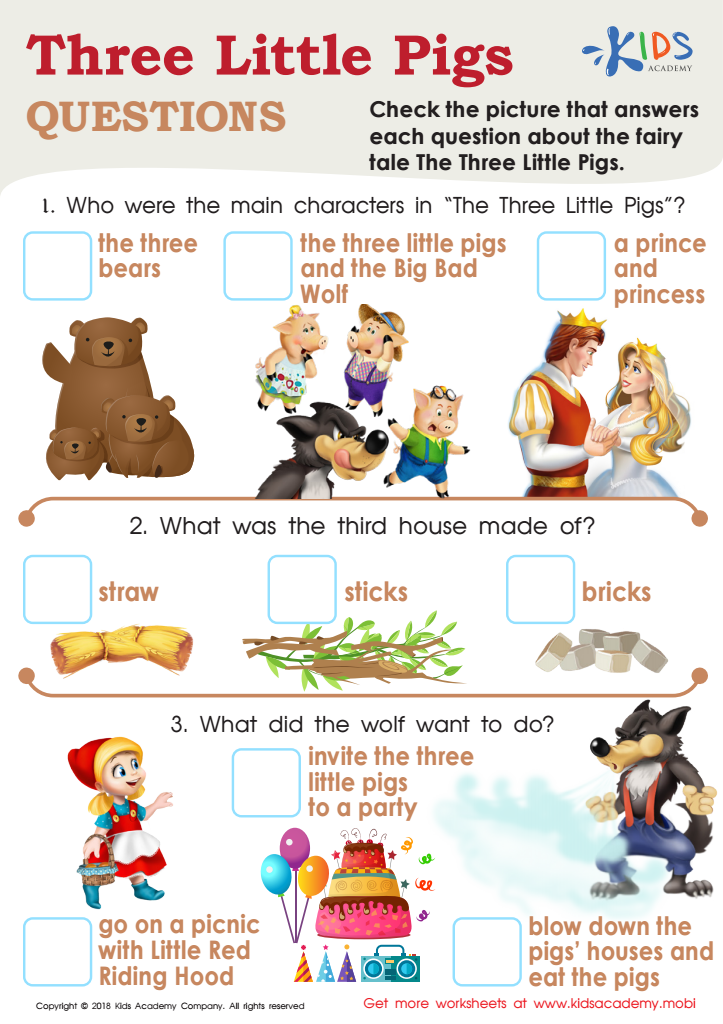
Three Little Pigs Questions Worksheet
Does your kid love bedtime stories? Test their classic fairytale knowledge with this worksheet! If they mention The Three Little Pigs, they're in luck - this pdf has them answering questions based off the classic fairytale. They'll check the picture that answers each question about the story. Is their fairytale knowledge up to scratch?
Three Little Pigs Questions Worksheet
Worksheet
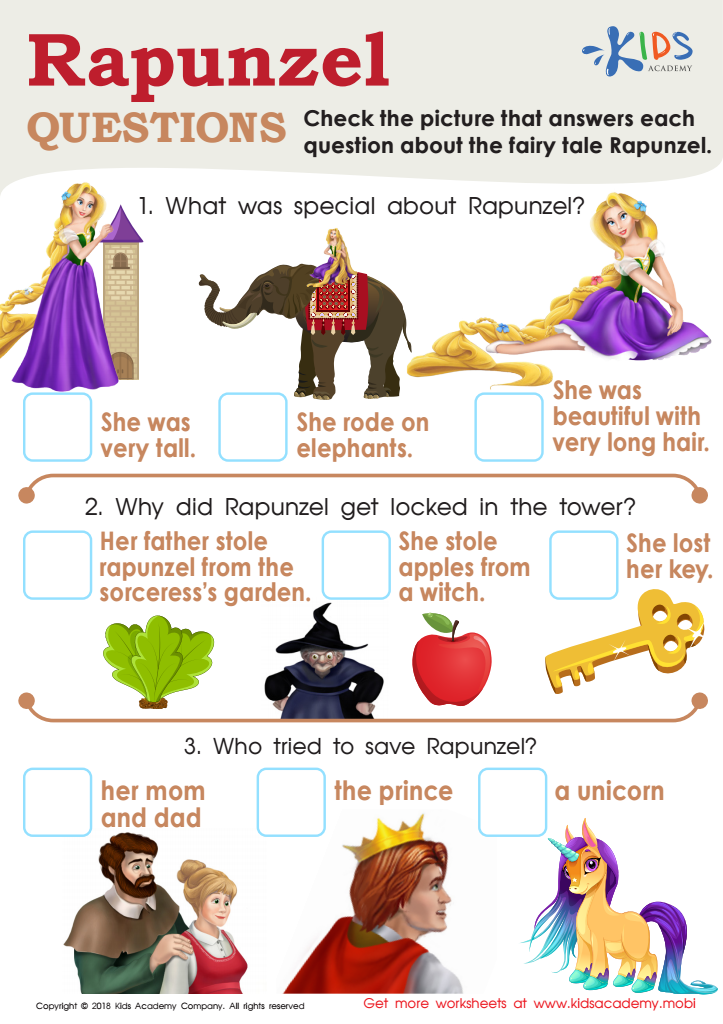
Rapunzel Questions Worksheet
Read the fairy tale 'Rapunzel' to your kids. For those who really enjoyed it, read it twice and ask questions to test their understanding. Then, get them to check the pictures related to the questions to test their comprehension of the story.
Rapunzel Questions Worksheet
Worksheet
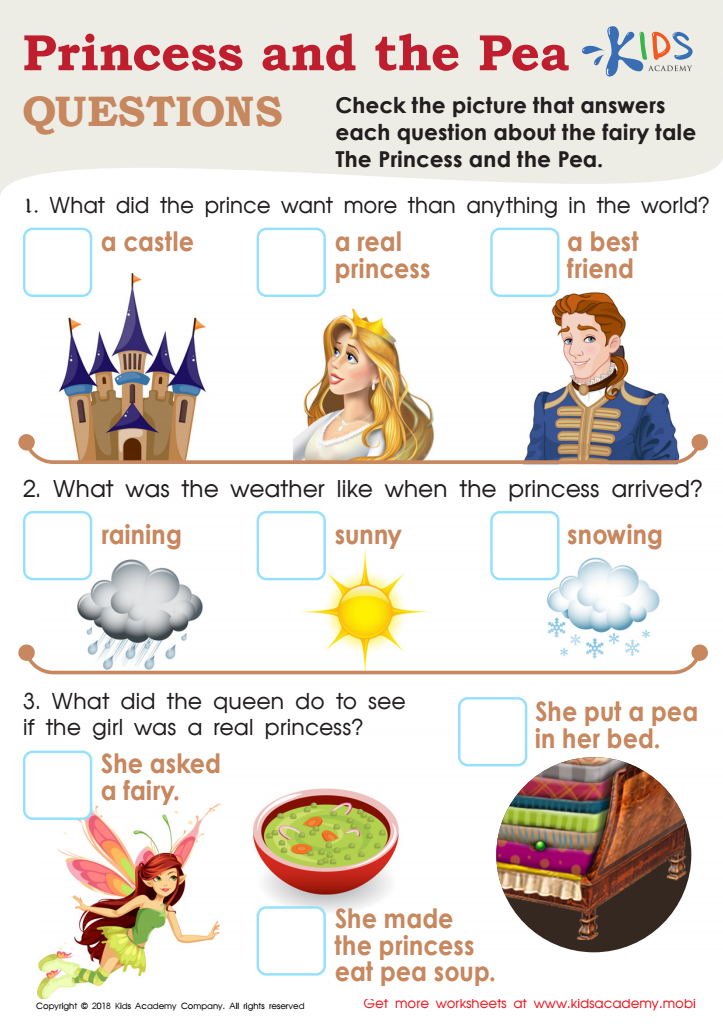
Princess and the Pea Questions Worksheet
Your kid knows The Princess and the Pea inside-out? Test their knowledge with this worksheet. Ask your little one to read the questions and match each one to the picture. It's a fun way to see just how much attention they've paid to their bedtime story.
Princess and the Pea Questions Worksheet
Worksheet
Join Kids Academy for Free
Who is primarily going to use this learning content?


.jpg)





Critical thinking and vocabulary development are crucial for children aged 3-4, laying the foundation for their cognitive, social, and emotional growth. At this stage, children are naturally curious and begin to explore the world around them; fostering critical thinking skills helps them make sense of their environment. By encouraging children to ask questions, solve problems, and evaluate information, parents and teachers can enhance their decision-making abilities and boost their self-confidence.
Building a strong vocabulary during these early years is equally important, as it enables children to express themselves and communicate effectively. An extensive vocabulary helps children articulate their thoughts, emotions, and needs, facilitating successful social interactions. A rich vocabulary also enhances reading and writing skills, paving the way for academic achievement in later years.
When parents and teachers actively engage in activities that promote critical thinking and vocabulary growth, they cultivate an environment thriving on exploration and learning. This strong linguistic foundation forms the basis for more complex thinking processes as children grow older, equipping them with the skills necessary to navigate challenges both in and out of the classroom. Investing in these skills now will empower children to become informed, articulate, and thoughtful individuals in the future.








