
Animal recognition Normal Reading Worksheets for Ages 3-4
3 filtered results
Difficulty Level
Grade
Age
-
From - To
Subject
Activity
Standards
Discover a delightful collection of Animal Recognition Normal Reading Worksheets designed specifically for children aged 3-4. These engaging worksheets foster early literacy skills while introducing young learners to various animals. Each activity features fun illustrations and simple text to help kids recognize animals and develop their vocabulary. Perfect for home or classroom use, these resources encourage interactive learning through coloring, tracing, and word matching. Boost your child's confidence and curiosity about the animal kingdom with our thoughtfully crafted worksheets. Unlock the joy of reading and animal recognition today with our captivating materials that make learning a playful experience!
Favorites
With answer key
Interactive
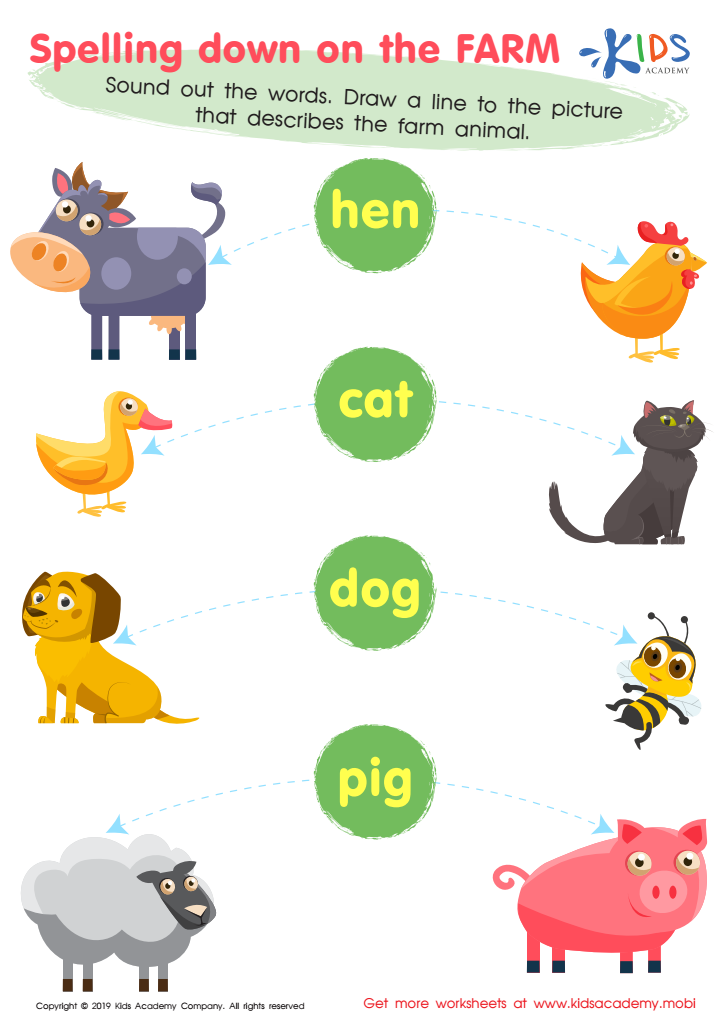
Spelling Down on the Farm Worksheet
Want to help your kids nail their spelling? Introduce them to this farm animal worksheet! Get them to look at the animals in the tracing sheet, name them and then sound out the words. Have them draw a line to the picture that describes it. You'll be surprised at how quickly their skills improve.
 Assign to My Students
Spelling Down on the Farm Worksheet
Worksheet
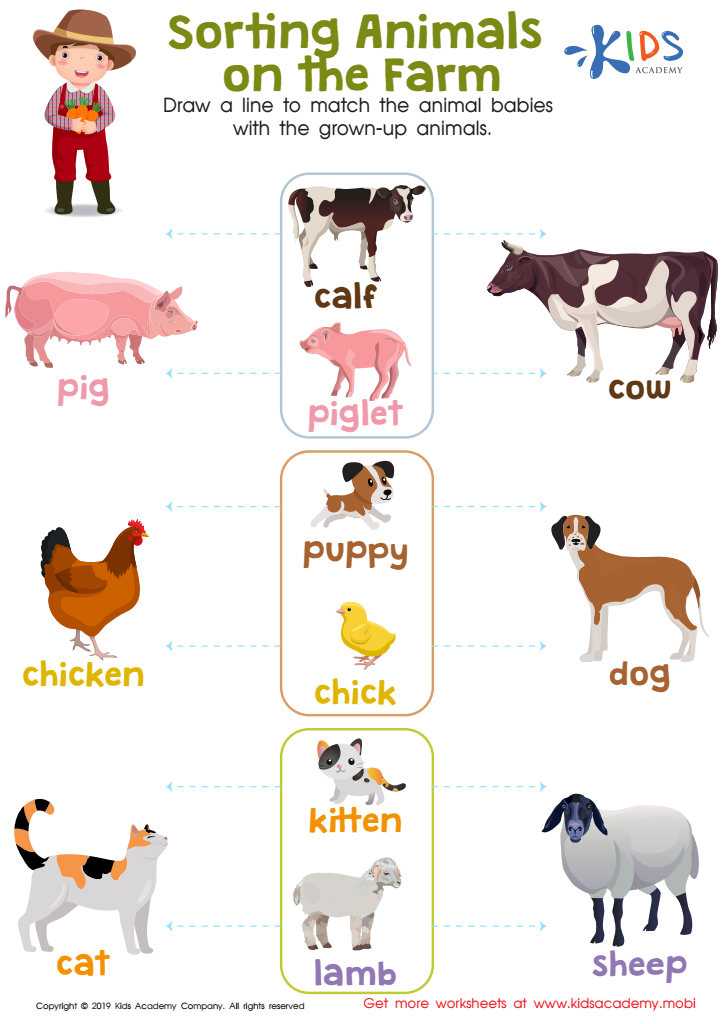
Sorting Animals on the Farm Worksheet
This PDF worksheet engages preschoolers in a fun activity to match Mama farm animals with their babies, strengthening their sorting and patterning skills. They'll learn to recognize rules and relationships, while gaining familiarity with animal-related words.
Sorting Animals on the Farm Worksheet
Worksheet
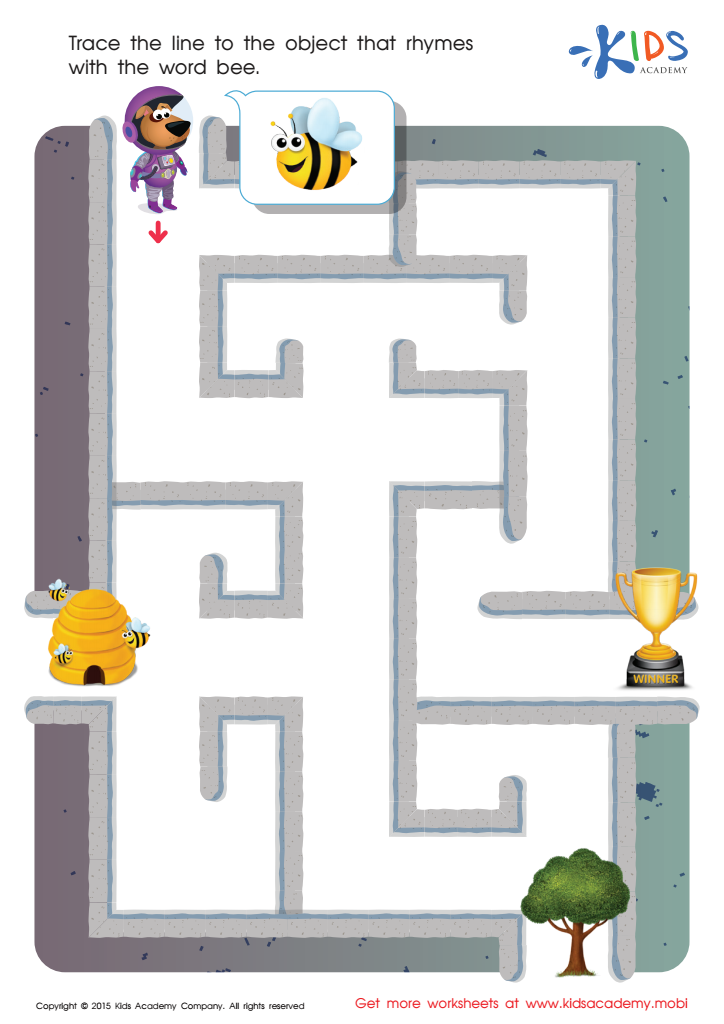
Bee Rhyming Words Worksheet
Download our new vocab builder worksheet and help our pup find rhymes. See how easy it is to trace the root between words! Make learning fun with our collection of English materials and worksheets. Get them now on our web site.
Bee Rhyming Words Worksheet
Worksheet
Join Kids Academy for Free
Who is primarily going to use this learning content?








Animal recognition is an essential aspect of early childhood development, particularly for children aged 3-4. During this critical period, young learners are incredibly curious and eager to explore the world around them. When parents and teachers prioritize animal recognition activities, they fuel this natural curiosity and lay the groundwork for various cognitive and emotional skills.
Firstly, recognizing animals enhances vocabulary development. As children learn the names of different animals, they also begin to understand sounds, colors, and characteristics associated with them, thereby enriching their language skills. Furthermore, animal recognition can introduce young learners to critical thinking by encouraging them to classify animals into groups such as pets, farm animals, or wildlife.
Additionally, through animal-themed stories and activities, children can develop empathy and emotional awareness. Handling discussions about animals' habitats, needs, and feelings nurtures respect for living creatures and promotes a sense of responsibility.
Lastly, animal recognition often includes playful and engaging methods, like games or songs, making learning enjoyable. This enjoyment reinforces positive associations with education, motivating children to explore more. In short, a focus on animal recognition fosters essential language, critical thinking, and emotional skills while making learning a joyful experience.








